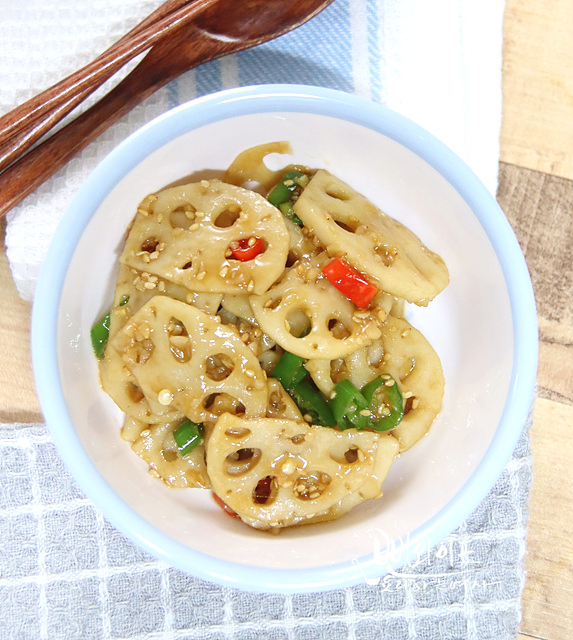
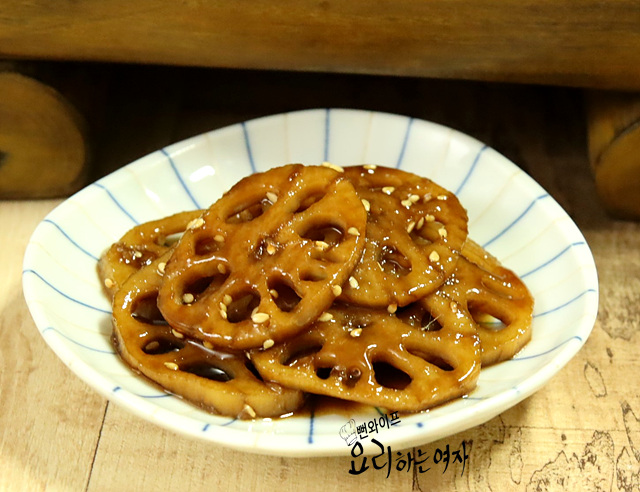
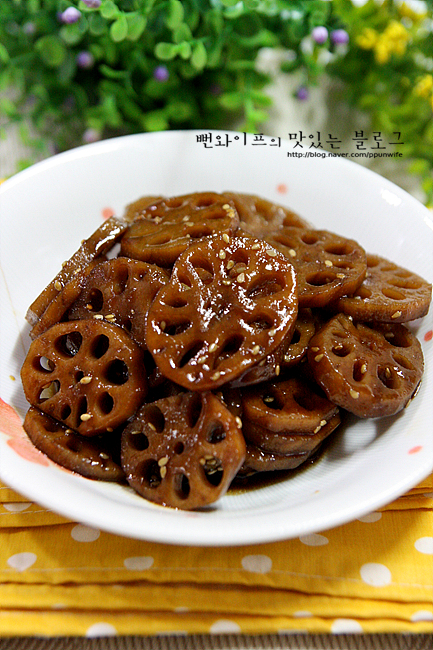
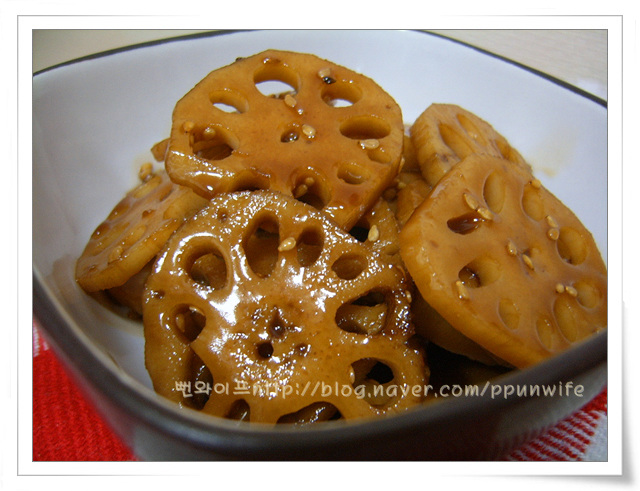
Crisp Yeongeun Bokkeum (Stir Fried Lotus Root)
A simple lotus root side dish stir-fried thin and crisp without blanching.
Translated from Korean by AI and not yet checked by a native speaker. Amounts and numbers are taken directly from the original recipe. Read the Korean original →
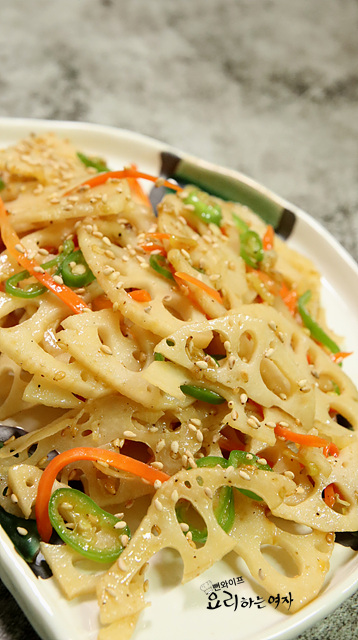
This side dish highlights the crisp texture of lotus root by slicing it thin and stir-frying it in green onion oil without blanching. Lightly seasoned with oyster sauce and soy sauce, it has a mild flavor that pairs well with steamed rice or drinks.
- Servings
- 3–4 servings
- Difficulty
- Easy
- Spiciness
- Mildly spicy
Ingredients
Ingredients
- Lotus root150 g
- Carrot1/5
- Cheongyang chili pepper (hot green chili)1
- Green oniona little (finely chopped)
Seasoning
- Regular soy sauce (jin-ganjang)1 tsp
- Oyster sauce1 tsp
- Mirin (cooking rice wine)1 tbsp
- Sugar1/2 tsp
- Ground black peppera little
- Toasted sesame oil1 tsp
- Toasted sesame seeds1 tsp
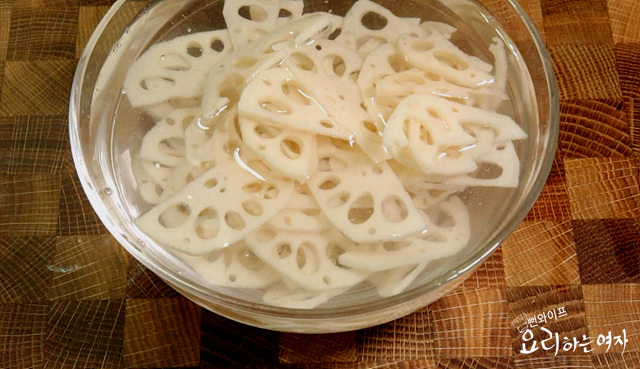
- Since the lotus root is cooked through while stir-frying without blanching, it is best to slice it as thin as possible, about 2 mm thick. To prevent browning, soak the sliced lotus root in water mixed with 1 tbsp vinegar.
- Instead of chili pepper, you can use bell pepper, paprika, or any vegetable that adds nice color.
Steps
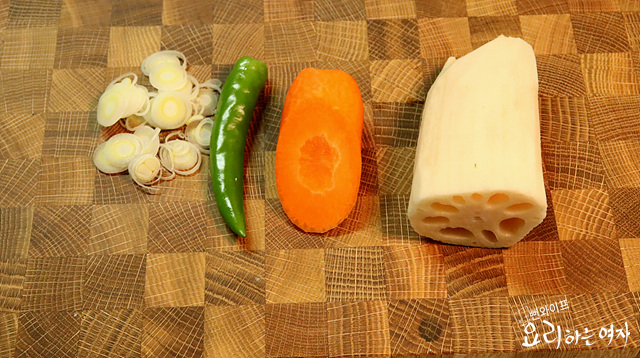
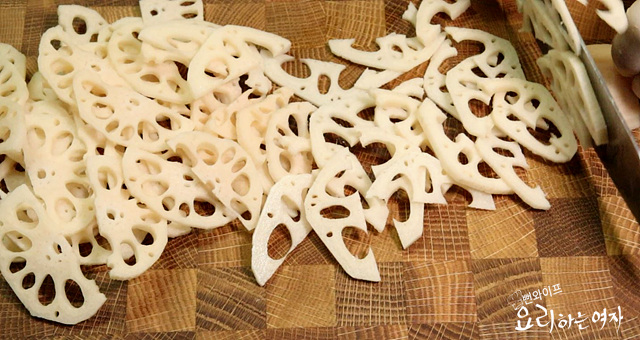
You need 1/2 peeled lotus root (150g), 1/5 carrot, 1 Cheongyang chili pepper (hot green chili), and a little finely chopped green onion to make green onion oil.
Since the lotus root is cooked through while stir-frying without blanching, it is best to slice it as thin as possible, about 2 mm thick.
To prevent browning, soak the sliced lotus root in water mixed with 1 tbsp vinegar.
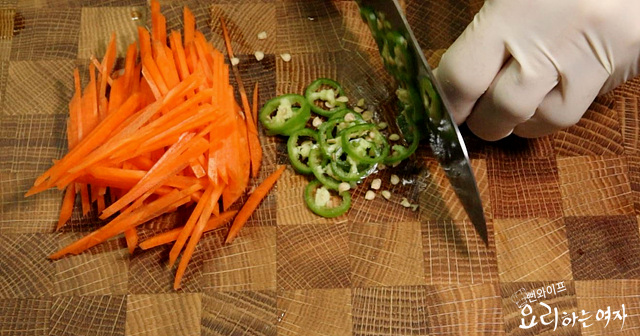
Finely julienne the carrot and finely chop the chili pepper.
(Instead of chili pepper, you can use bell pepper, paprika, or any vegetable that adds nice color.)
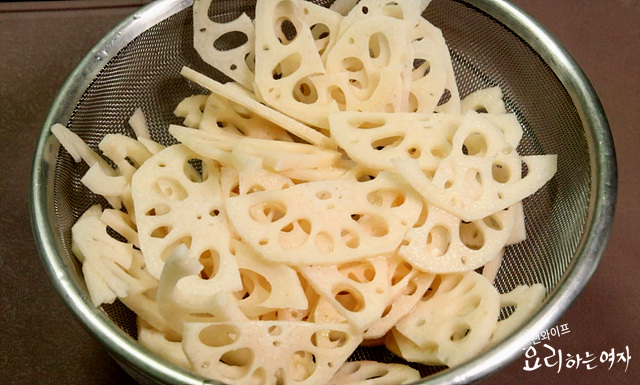
Drain the lotus root in a colander.
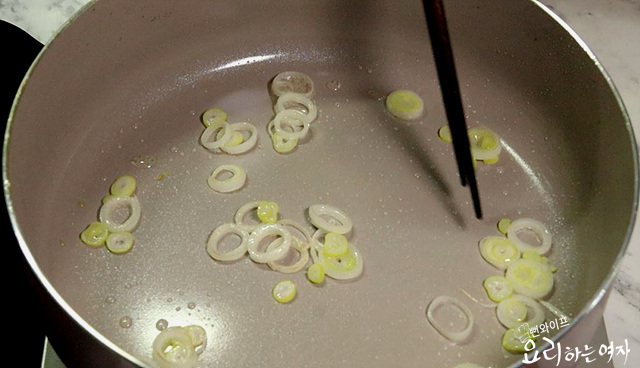
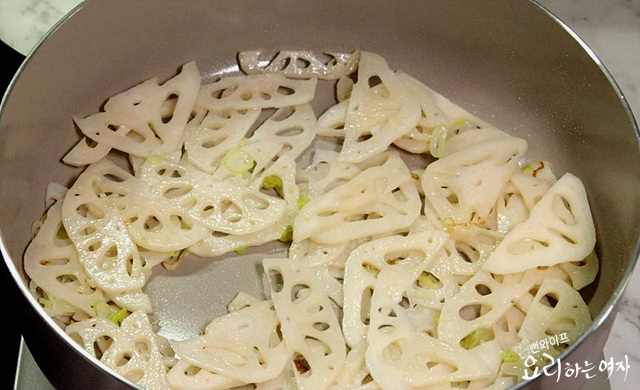
Add the finely chopped green onion to a heated pan and stir-fry until fragrant.
Add the lotus root and stir-fry, tossing evenly.
Once the surface of the lotus root begins to turn translucent...
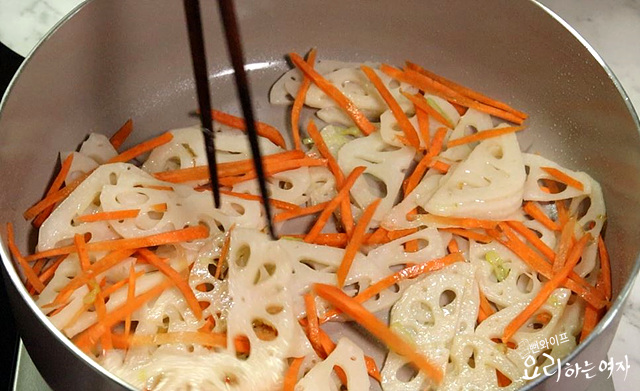
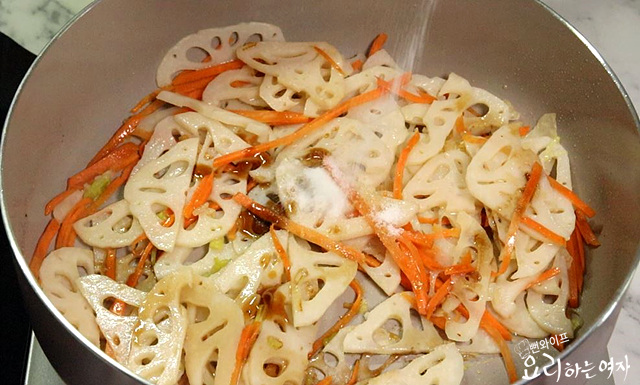
Add the julienned carrot and stir-fry until cooked through.
Add 1 tsp regular soy sauce (jin-ganjang), 1 tsp oyster sauce, 1 tbsp mirin (cooking rice wine), and 1/2 tsp sugar, then toss well so the seasoning coats evenly.
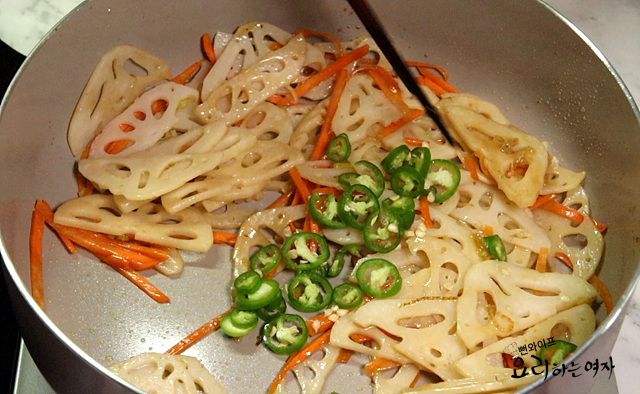
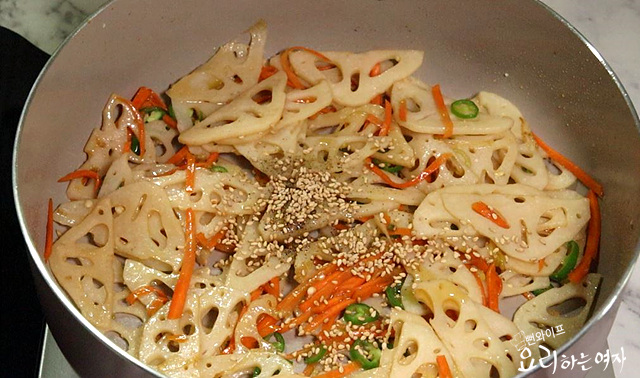
At the end, add the chili pepper and toss until its aroma comes through.
Add toasted sesame oil, toasted sesame seeds, and ground black pepper, then toss to finish.
 Ppunwife's tips
- Since the lotus root is cooked through while stir-frying without blanching, it is best to slice it as thin as possible, about 2 mm thick.
- To prevent browning, soak the sliced lotus root in water mixed with 1 tbsp vinegar.
FAQ
Can I stir-fry the lotus root directly without blanching it first?
Since it needs to cook through while stir-frying, it is best to slice it as thin as possible, to about 2 mm thick.
How do I prevent the sliced lotus root from browning?
You can prevent browning by soaking the sliced lotus root in water mixed with 1 tbsp vinegar.
Can I use other vegetables instead of the spicy chili pepper?
Yes, you can freely use other vegetables that add color instead of chili pepper, such as bell pepper or paprika.