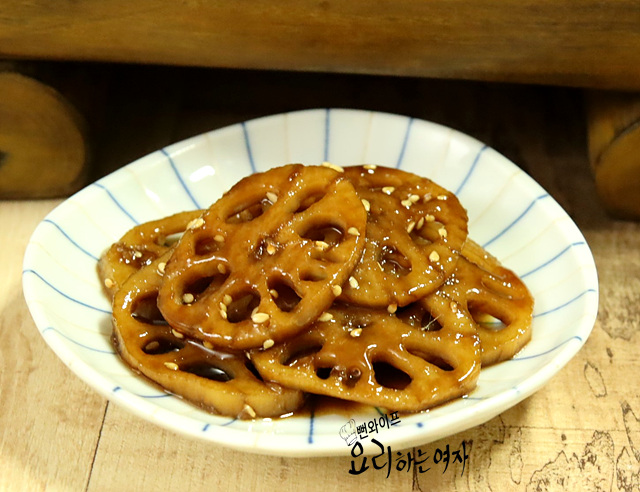
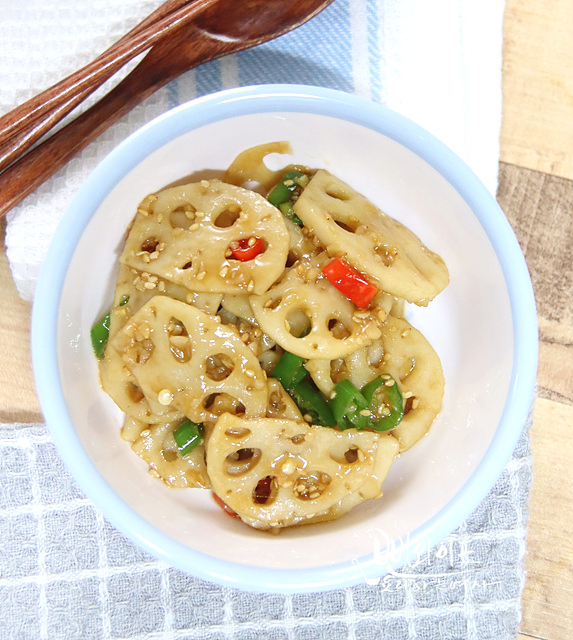
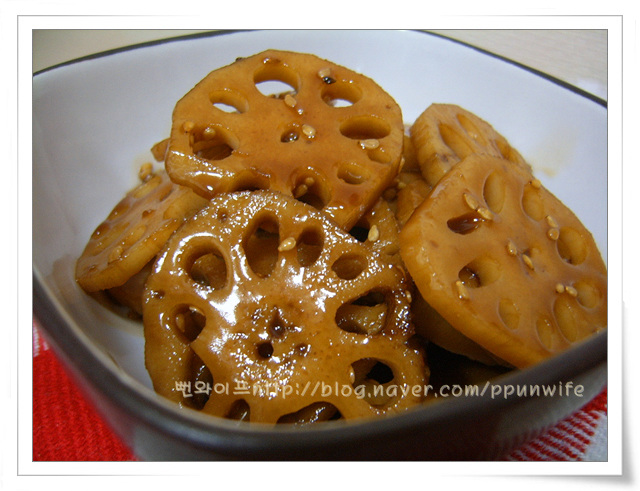
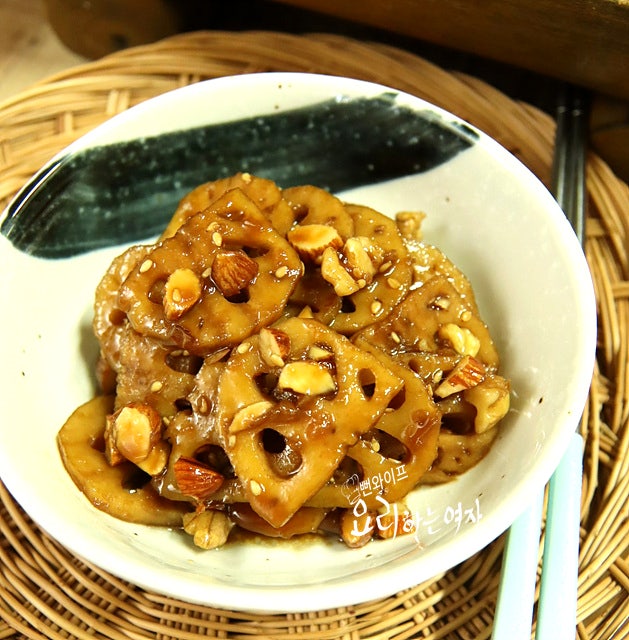
Tender and Chewy Yeongeun Jorim (Braised Lotus Root)
A savory, slightly sweet side dish of lotus root slowly simmered over low heat until deeply colored and chewy.
Translated from Korean by AI and not yet checked by a native speaker. Amounts and numbers are taken directly from the original recipe. Read the Korean original →
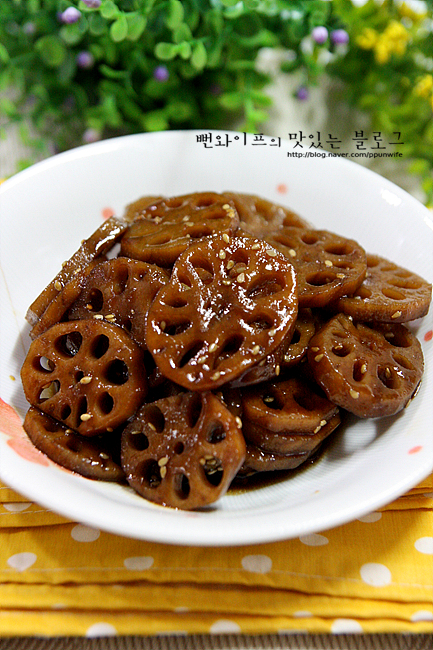
This side dish is made by blanching lotus root to remove its astringency, then simmering it gently in a braising liquid over low heat for more than 30 minutes. Instead of cooking over high heat right away, slowly braising keeps it tender yet delightfully chewy. Finishing over high heat to reduce the sauce adds a lovely glossy shine.
- Servings
- about 3–4 servings
- Cook time
- 32 minprep not included
- Difficulty
- Medium
- Spiciness
- Not spicy
Ingredients
Ingredients
- Lotus root300 g
- Anchovy broth (or kelp broth, water)3 cups
Braising sauce
- Regular soy sauce (jin-ganjang)4 tbsp
- Dark brown sugar2 tbsp
- Mirin (cooking rice wine)2 tbsp
- Corn syrup (mulyeot)2 tbsp
- Toasted sesame oila little
- Toasted sesame seedsa little
- Rinse off the loose dirt from the lotus root and peel it. Before slicing, use a long, thin tool like a chopstick to scrape out any dirt trapped inside the holes.
- The prepped, sliced lotus root weighs 300g. If you prefer a crunchier texture, slice it a bit thicker.
Steps
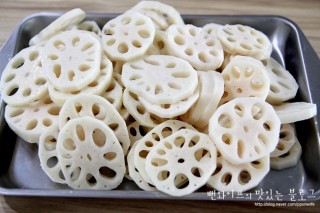
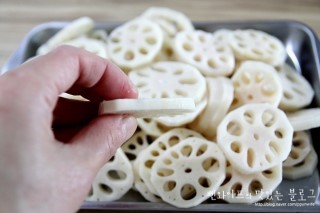
1. Rinse off the loose dirt from the lotus root with water and peel the skin.
Before slicing, it is best to scrape out any dirt inside the holes using a long, thin tool like a chopstick.
2. Rinse in water and slice into rounds about 3mm thick.
If you like a crunchier texture, you can slice them a bit thicker.
The prepped and sliced lotus root weighs 300g.
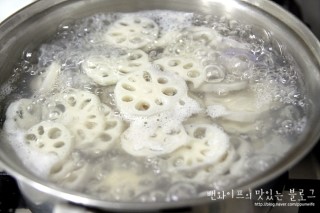
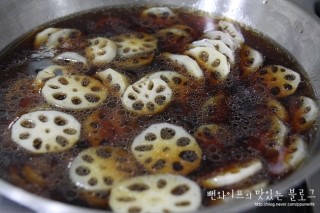
3. Blanch the lotus root to remove its astringent taste.
Add 1 tbsp of vinegar and 1 tsp of coarse sea salt to enough water to submerge it (4-5 cups), and once it comes to a rolling boil, blanch the lotus root for under 2 minutes.
If you add too much vinegar, the lotus root will turn dark.
After blanching, drain roughly in a colander.
4. In a pot, combine the lotus root and all the braising ingredients except the toasted sesame oil and toasted sesame seeds, and start boiling.
If you have prepared broth on hand, use it for richer flavor; if not, plain water works just fine.
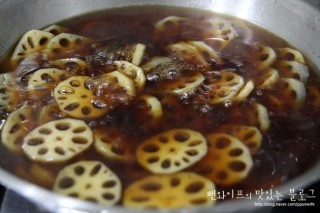

5. Once it begins to boil, lower the heat to low, cover with a lid, and simmer gently.
If you braise it too quickly over high heat, the lotus root will shrivel and turn hard.
6. Braise over low heat with the lid on for at least about 30 minutes, stirring occasionally, and the color will deepen while the liquid reduces significantly.
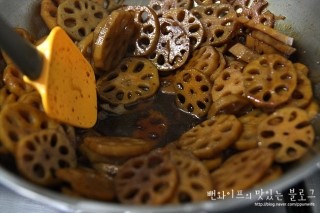
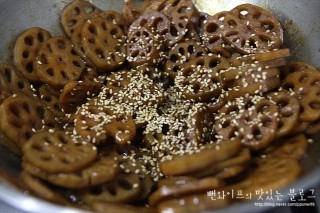
7. In the final step, boil down over high heat until about 2-3 tbsp of liquid remains;
it will become glossy and the remaining liquid will turn slightly thick.
8. Turn off the heat, stir in the toasted sesame oil and toasted sesame seeds, and it is done.
 Ppunwife's tips
- If you add too much vinegar, the lotus root will turn dark.
- If you braise it too quickly over high heat, the lotus root will shrivel and turn hard.
- Do not boil it down completely dry; leave a little braising liquid and spoon it generously over the top right before serving for an appetizing, glossy finish.
FAQ
How do I prep the lotus root to remove its astringent taste?
Bring 4-5 cups of water to a boil with 1 tbsp of vinegar and 1 tsp of coarse sea salt, then briefly blanch the lotus root for under 2 minutes. Adding too much vinegar can make the lotus root turn dark.
Can I cook it quickly over high heat when braising?
If you rush the braising over high heat, the surface of the lotus root may shrivel and the texture can turn hard. Once it boils, it is best to lower the heat to low, cover with a lid, and braise gently for more than 30 minutes.
What should I do if I want a crunchy texture instead of a chewy one?
Slice the lotus root slightly thicker than 3mm and reduce the braising time to keep its crisp, crunchy texture.
What can I substitute if I do not have anchovy broth?
You can use kelp broth or simply simmer it with plain water.