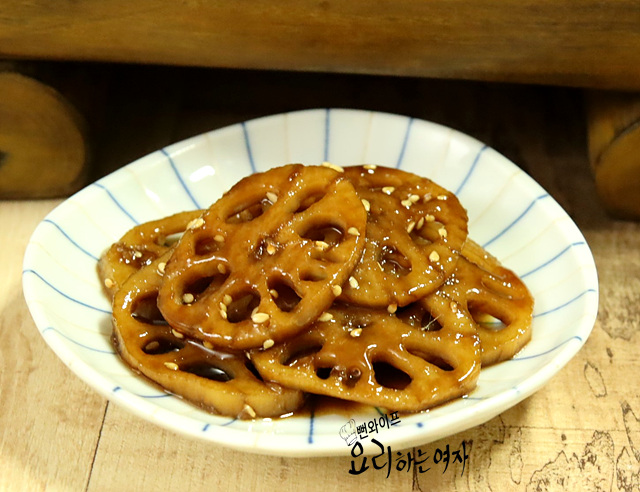
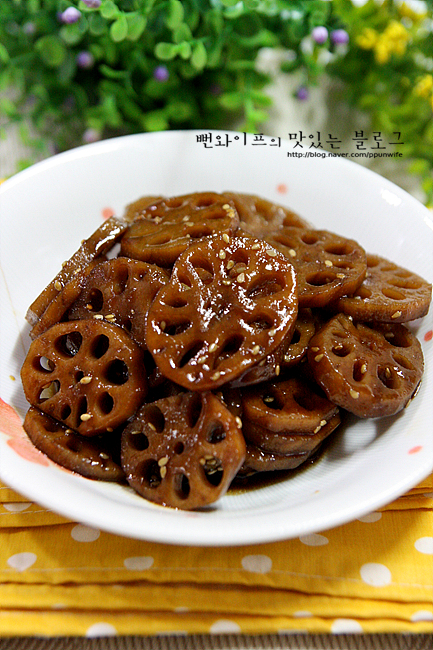
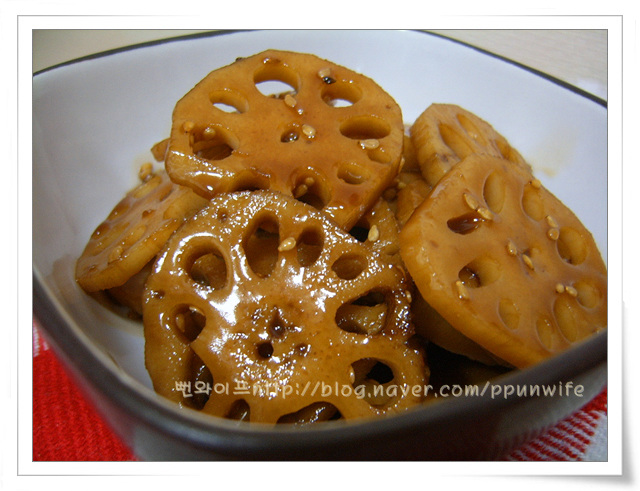
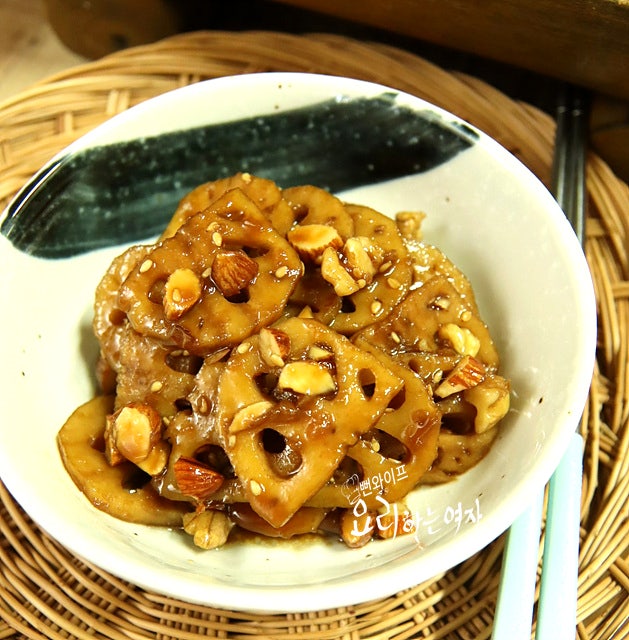
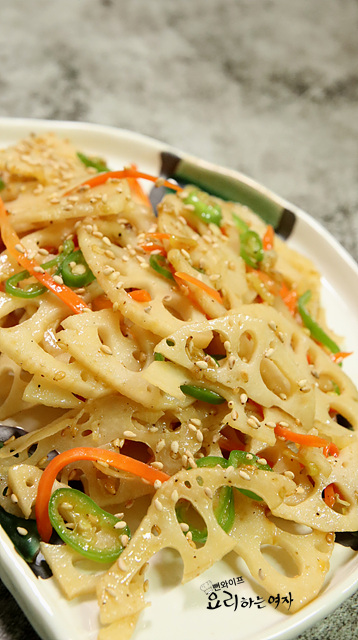
Crisp and Clean Yeongeun Jorim (Braised Lotus Root)
A clean, light side dish made with thinly sliced lotus root lightly stir-fried and quickly braised to keep its crisp bite.
Translated from Korean by AI and not yet checked by a native speaker. Amounts and numbers are taken directly from the original recipe. Read the Korean original →
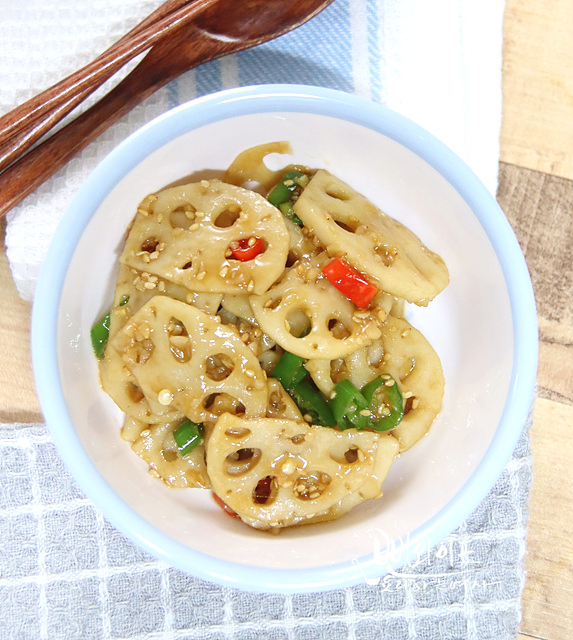
Instead of braising it for a long time until dark and chewy, the lotus root is thinly sliced and lightly stir-fried to bring out its crisp texture. Seasoned lightly with oyster sauce and soy sauce, it has an elegant look like a traditional Korean full-course side dish and is not too salty. You can adjust the chili peppers to your liking to make a mild, kid-friendly banchan.
- Servings
- about 2–3 servings
- Difficulty
- Easy
- Spiciness
- Mildly spicy
Ingredients
Ingredients
- Lotus root1, 160 g (small)
- Red chili pepper1
- Cheongyang chili pepper (hot green chili)1
Seasoning
- Minced garlic1/2 tbsp
- Regular soy sauce (jin-ganjang) (or brewed soy sauce (yangjo-ganjang))1 tbsp
- Oyster sauce1 tbsp
- Mirin (cooking rice wine)1 tbsp
- Corn syrup (mulyeot)1 tbsp
- Water3 tbsp
- Toasted sesame oil1/2 tbsp
- Toasted sesame seeds1/2 tbsp
- If making this for children or if you do not want any spice, you may omit the chili peppers.
- To prevent browning, remove any astringency, and wash away dirt inside the holes, soak the slices in water mixed with 1 tbsp vinegar, then rinse.
Steps
Prepare the ingredients
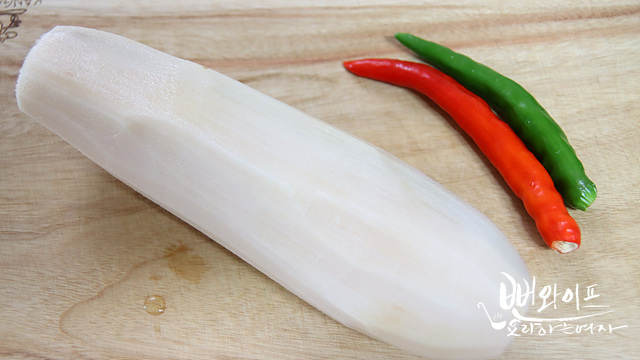
Prepare 1 small peeled lotus root, and 1 each of Cheongyang chili pepper and red chili pepper.
Slice the ingredients
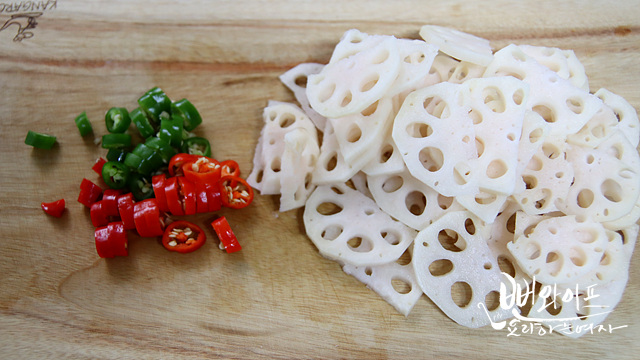
Cut the lotus root in half lengthwise, then slice it thinly into about 2 mm slices rather than thick ones, so it cooks quickly and keeps its crisp bite.
Thinly slice the chili peppers.
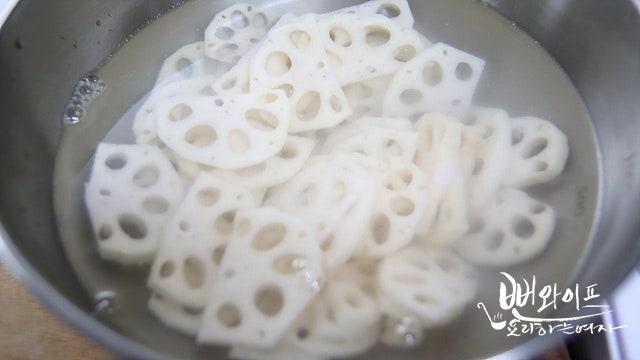
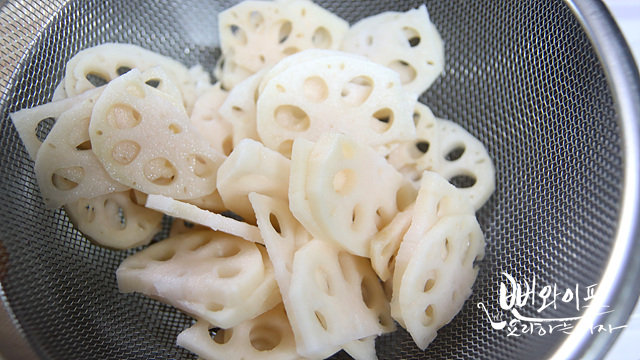
To prevent browning, remove the astringent taste, and wash away any dirt trapped inside the holes, soak the slices in water mixed with 1 tbsp vinegar, then gently swish and rinse. Drain well in a colander.
Stir-fry the lotus root
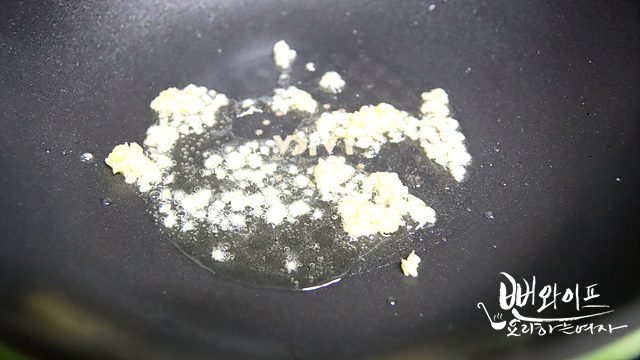
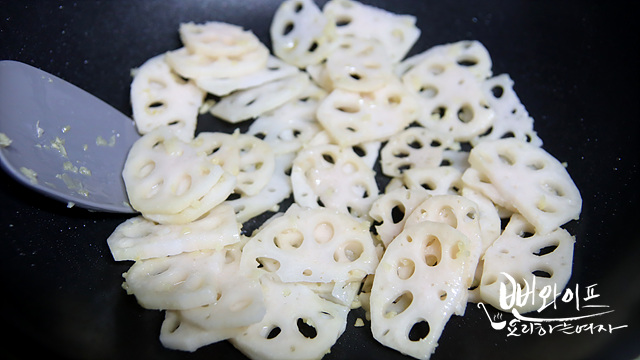
Heat 1 to 2 tbsp cooking oil in a pan, add 1/2 tbsp minced garlic and the lotus root, and stir-fry briskly.
Braise in seasoning
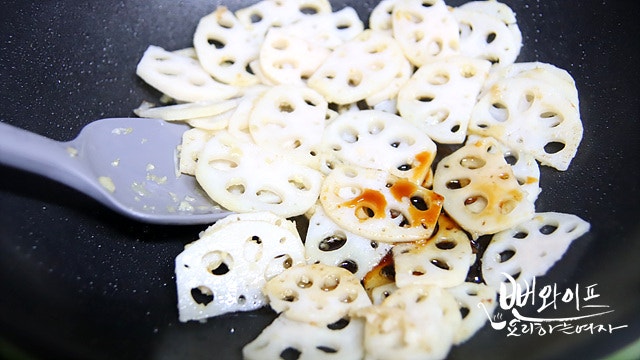
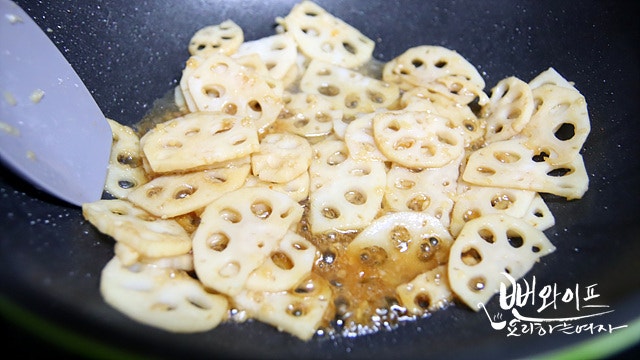
Once the surface of the lotus root turns translucent, add 1 tbsp regular soy sauce (jin-ganjang), 1 tbsp oyster sauce, 1 tbsp mirin (cooking rice wine), 1 tbsp corn syrup (mulyeot), and 3 tbsp water, then stir so the seasoning coats the lotus root evenly.
Turn the heat down to low, cover with a lid for 3 minutes so the lotus root softens all the way through, and then...
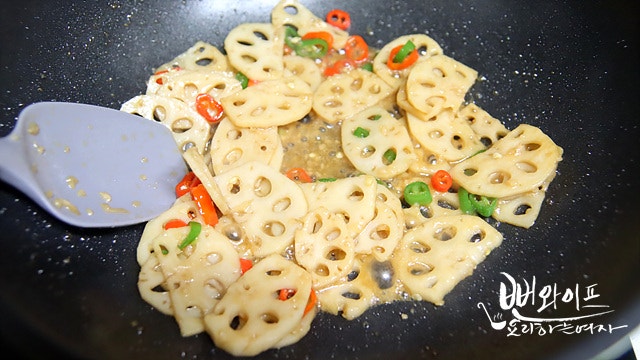
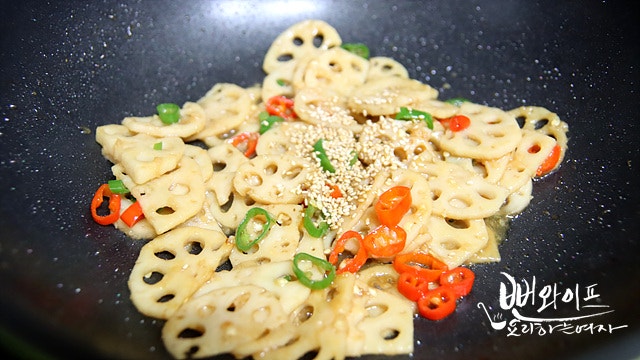
Open the lid, add the chili peppers, braise down until almost dry, and finish with toasted sesame oil and toasted sesame seeds at the end.
Finish
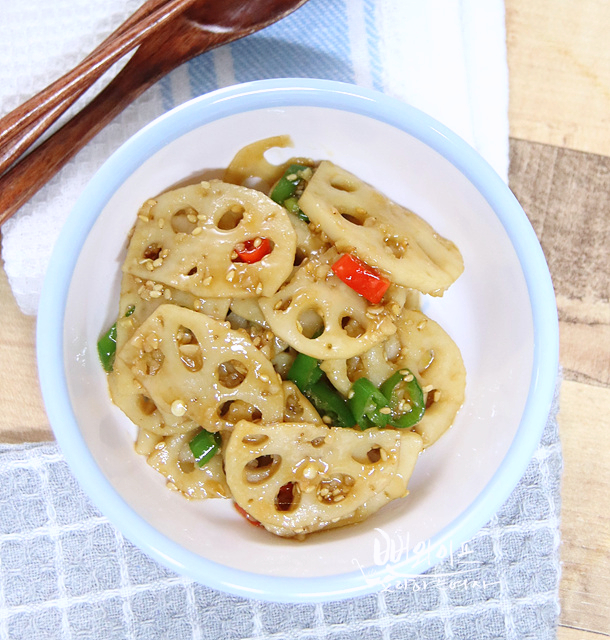
Cut in half, these thin slices do not break apart and make a neat, crisp yeongeun jorim.
 Ppunwife's tips
- Slicing the lotus root thinly to about 2 mm lets you make an easy lotus root side dish without having to braise it for a long time.
FAQ
How thick should the lotus root be sliced?
To keep the crisp texture without braising for a long time, cut it in half lengthwise and slice it thinly to about 2 mm thick.
Why soak the lotus root in vinegar water before cooking?
Rinsing it in vinegar water prevents browning, removes astringency, and washes away any dirt left inside the holes.
How do I adjust this when making it for young children?
Omit the spicy Cheongyang chili pepper and the red chili pepper to make a completely mild version.
Can I use brewed soy sauce instead of regular soy sauce?
Yes, both regular soy sauce and brewed soy sauce are noted for this recipe seasoning, so you can substitute it directly.