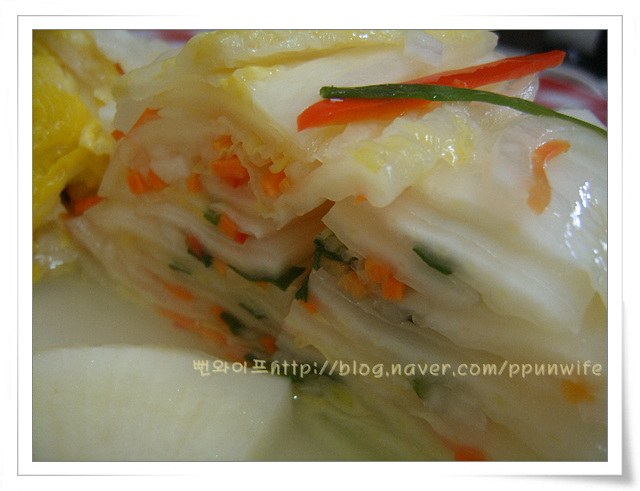
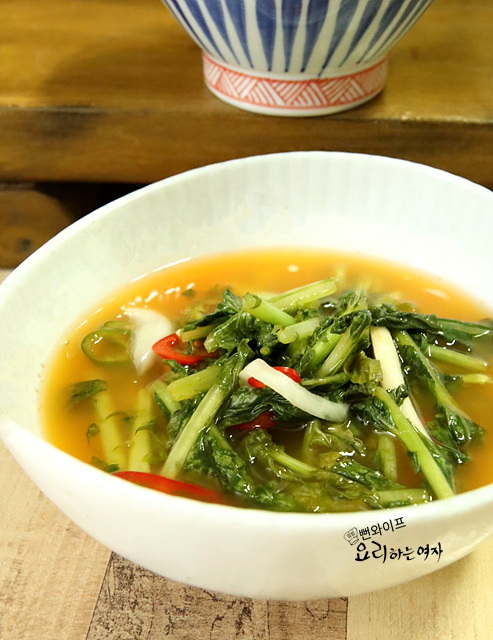
Dongchimi (Radish Water Kimchi)
A refreshing water kimchi made by soaking salted radish in a clean broth infused with blended pear and aromatics.
Translated from Korean by AI and not yet checked by a native speaker. Amounts and numbers are taken directly from the original recipe. Read the Korean original →
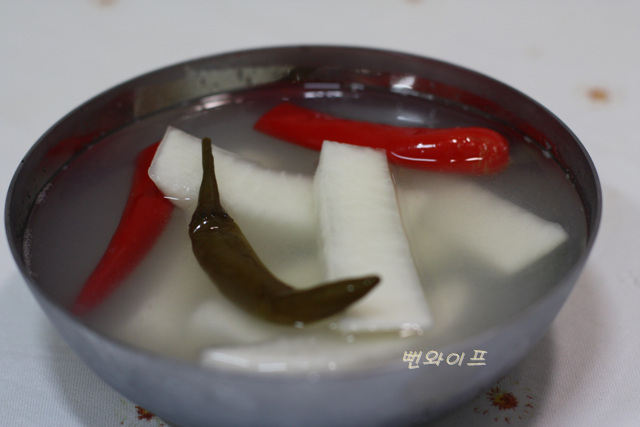
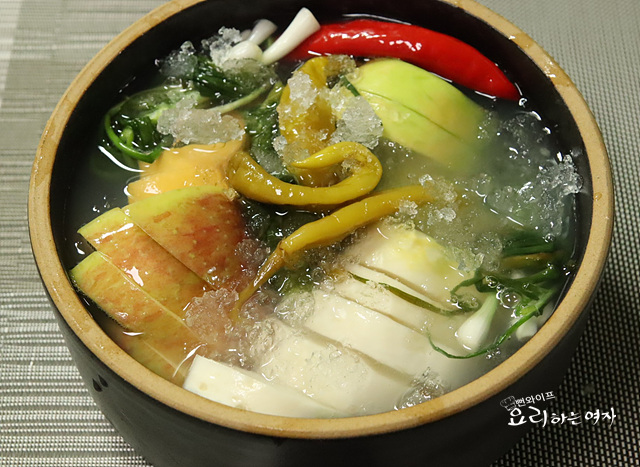
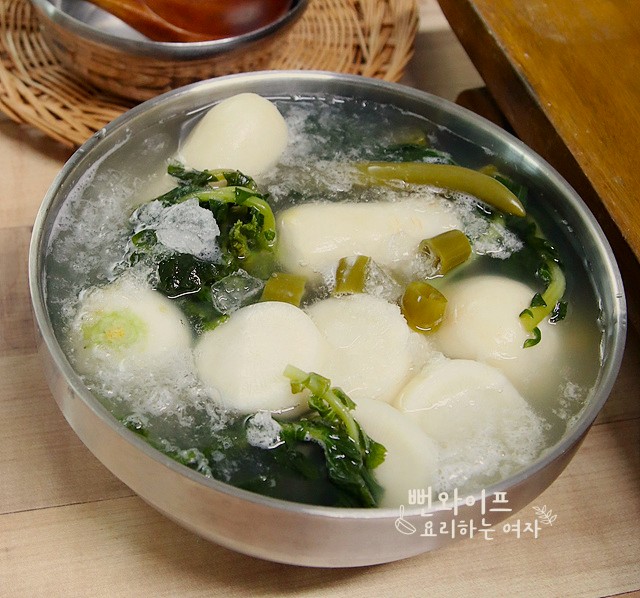
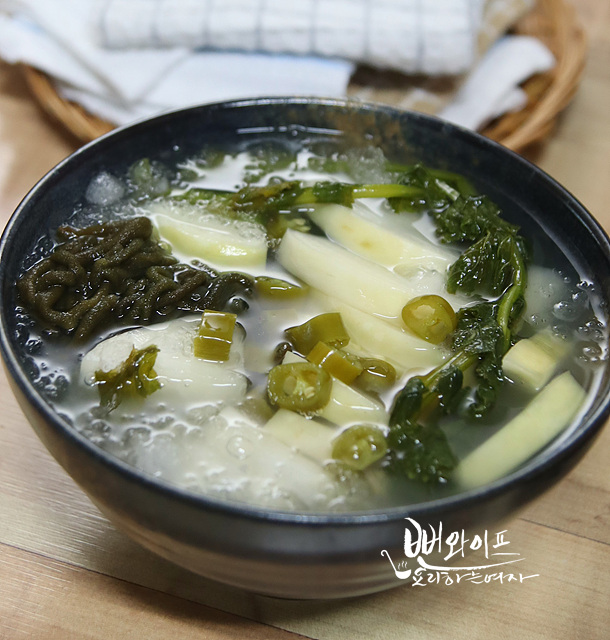
This water kimchi is made by pouring a clean broth infused with pureed pear, garlic, and ginger over salted radish. Fermented at room temperature for a few days, it develops a tart, refreshing flavor that pairs wonderfully with grilled meats like samgyeopsal or served over thin somyeon noodles.
- Servings
- about 10–12 servings
- Difficulty
- Hard
- Spiciness
- Mildly spicy
Ingredients
Ingredients
- Korean radish (mu)2 (1.5 kg)
- Korean pear1
- Whole garlic cloves15 cloves
- Ginger1 knob
- Fermented chili peppers5
- Red chili pepper3–4
For salting the radish
- Coarse sea salt2/3 cup
Dongchimi broth
- Bottled water30 cups
- Salt2/3 cup
- Sugar4 tbsp
- If you do not have fermented chili peppers, you can substitute Cheongyang chili pepper (hot green chili).
- Sprinkle 2/3 cup coarse sea salt over the radish and salt for about 1 hour 30 minutes to 2 hours.
Steps
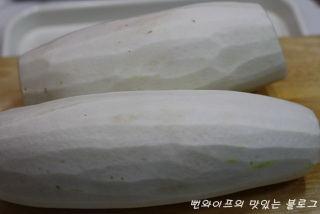
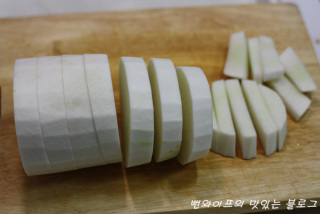
1. Thoroughly clean and trim 2 large Korean radishes (1.5 kg).
2. You can cut them into shapes like the picture, or slice them into flat squares to your preference.
I cut them into long batons about 1.5 cm thick and 6 cm long.
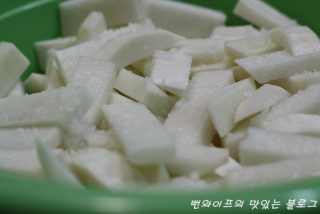
3. The radish needs some surface moisture for the salt to dissolve well.
Sprinkle 2/3 cup coarse sea salt evenly over all the radish to salt it.
Salt for about 1 hour 30 minutes to 2 hours, turning it over once halfway through.
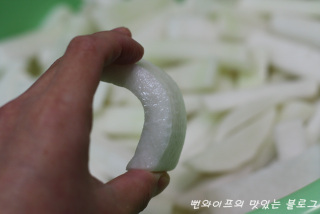
4. It is properly salted when it bends slightly.
Rinse in clear water and take a bite; if it tastes too salty, soak it in water to draw out the excess salt.
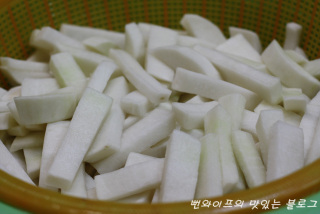
5. Rinse the fully salted radish twice in clear water and drain.
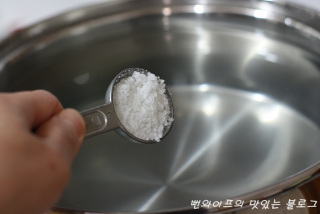
6. To make the dongchimi broth, dissolve coarse sea salt and sugar in bottled water to adjust the seasoning.
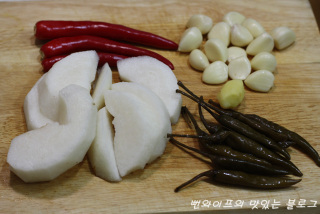
7. Peel and roughly chop the Korean pear; you need about 5 fermented chili peppers, but since mine were small, I used more.
If you do not have fermented chili peppers, you can substitute Cheongyang chili pepper (hot green chili).
Also prepare about 3 to 4 red chili peppers, 15 whole garlic cloves, and 1 knob ginger.
For how to make fermented chili peppers, see here ⇒ http://blog.naver.com/ppunwife/140052630786
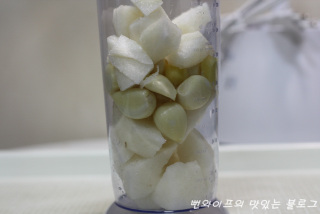
8. Place the pear, whole garlic cloves, and ginger needed for the dongchimi broth seasoning together into a blender and blend finely.
10
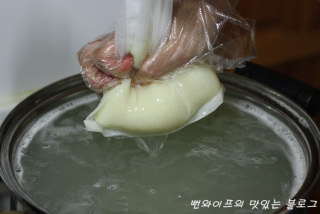
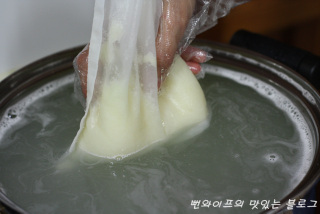
9. Put the blended mixture into a cloth pouch and dip it into the dongchimi broth made in step 6...
10. Squeeze it out firmly, then submerge it in the broth and squeeze again repeatedly so the flavors infuse into the broth.
If it is winter and you are fermenting it for a long time, or if you want a crystal-clear broth, instead of blending them in a mixer,
you can slice the garlic and ginger very thinly, place them in a cheesecloth pouch, and set it at the very bottom of the kimchi container so it steeps into the broth.
11
12
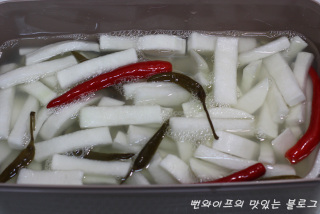
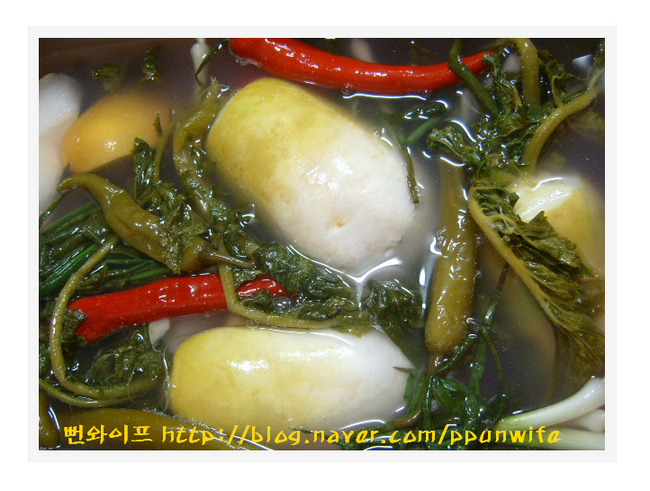
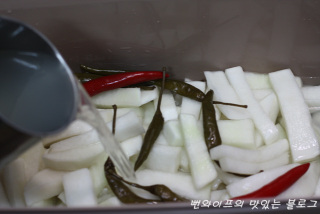
11. Evenly arrange the salted radish, red chili peppers, and fermented chili peppers in a kimchi container, then pour in the dongchimi broth.
12. In weather like this, ferment it at room temperature for about 3 days;
in the cold winter, it will taste good after fermenting for about 1 week.
 Ppunwife's tips
- The radish needs some surface moisture for the salt to dissolve well.
- Rinse in clear water and take a bite; if it tastes too salty, soak it in water to draw out the excess salt.
- If it is winter and you are fermenting it for a long time, or if you want a crystal-clear broth, instead of blending them in a mixer, you can slice the garlic and ginger very thinly, place them in a cheesecloth pouch, and set it at the very bottom of the kimchi container so it steeps into the broth.
FAQ
What should I do if I do not have fermented chili peppers?
You can substitute Cheongyang chili pepper (hot green chili) instead.
How can I keep the broth clear instead of cloudy?
Instead of blending the seasoning in a mixer, slice the garlic and ginger thinly, put them in a cheesecloth pouch, and place it at the bottom of the kimchi container to steep cleanly.
What should I do if the salted radish turned out too salty?
Simply soak it in water for a little while to draw out enough of the saltiness, then lift it out.
How many days should it be left at room temperature to ferment?
In autumn, letting it sit at room temperature for about 3 days allows it to ferment to a pleasant tartness, while in the cold winter, it is best to ferment it for about 1 week.