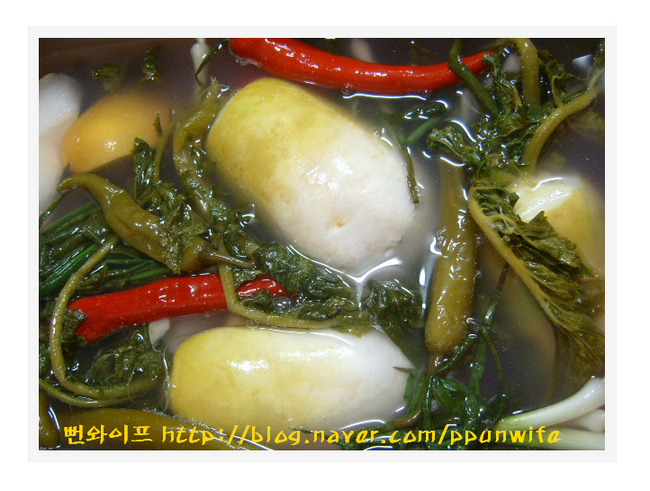
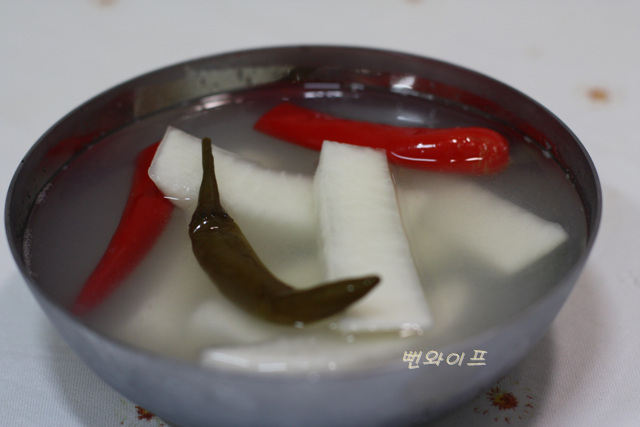
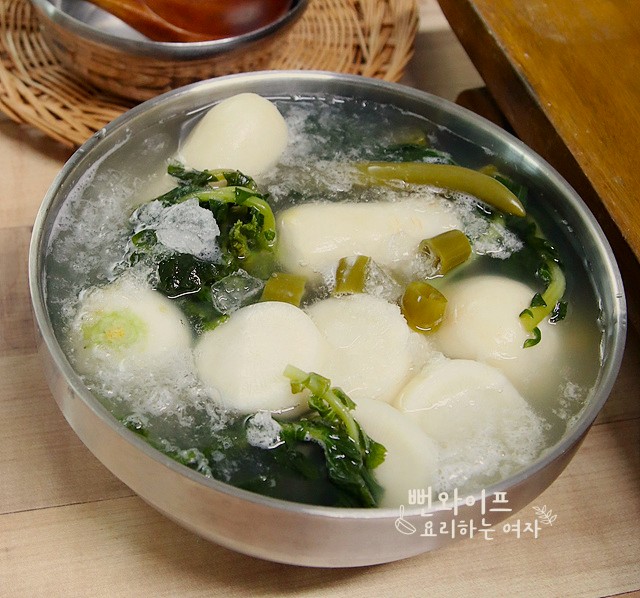
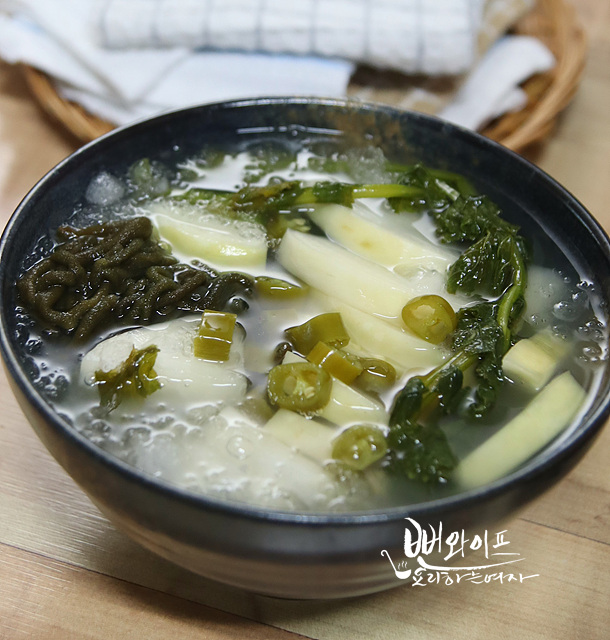
Clean and Refreshing Dongchimi (Radish Water Kimchi)
A winter radish water kimchi naturally infused with fruit and fermented chili peppers for a clean, tangy kick without artificial sweeteners.
Translated from Korean by AI and not yet checked by a native speaker. Amounts and numbers are taken directly from the original recipe. Read the Korean original →
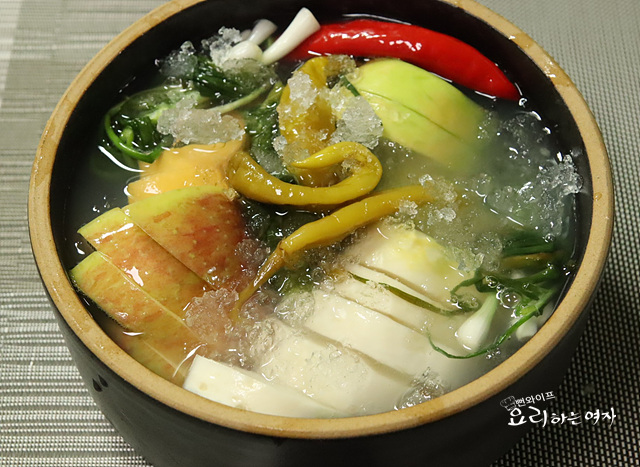
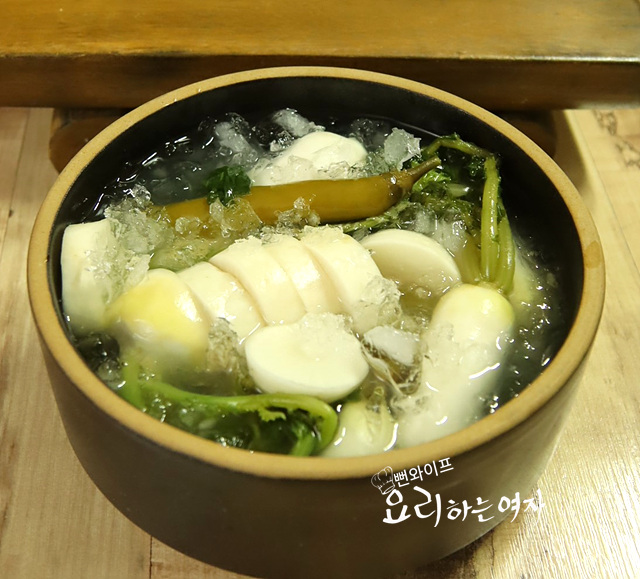
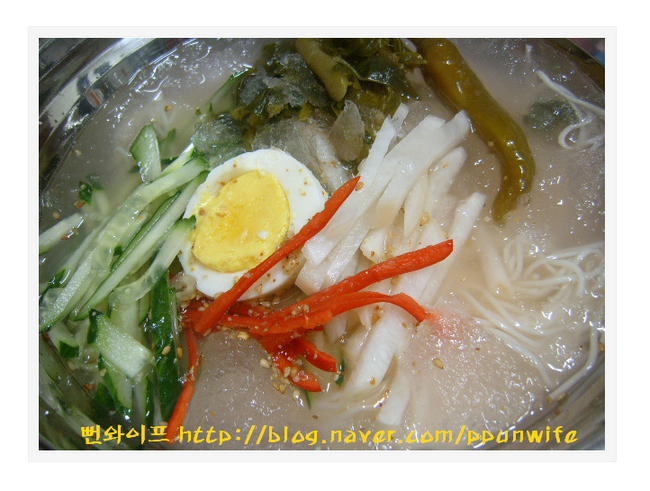
This recipe achieves a clean broth using coarse sea salt and the natural sweetness of fruit rather than artificial sweeteners. Adding fermented chili peppers imparts a deep, tangy kick while keeping the radish delightfully crisp. Made in generous batches during kimchi-making season, it is a wonderfully refreshing winter delicacy.
- Servings
- about 10–12 servingsOriginal: two 14 L kimchi containers
- Difficulty
- Medium
- Spiciness
- Mildly spicy
Ingredients
Ingredients
- Radish from dongchimi (radish water kimchi)2 bunches (500 g, 12)
- Scallions (jjokpa)1/2 bunch, 500 g
- Fermented chili peppers20
- Red chili pepper8
- Korean pear3
- Apple3
- Whole garlic cloves40 cloves
- Ginger2 knobs (2)
For salting
- Salt3 cups
- Water4 cups
Dongchimi broth
- Bottled water60 cups
- Coarse sea salt2 cups
- Sugar1 cup
- Sprinkle the radishes with salt, pour water evenly over the top, and let salt for about 20 hours in total.
- Choose dongchimi radishes that are about a handspan long, smaller, and firmer than regular radishes so they stay crunchy even after sitting in the broth for a long time.
- If using large apples and Korean pears, about 2 of each is enough.
- The red chili pepper is mainly for color; you can omit it if you do not have it on hand.
- Soak the fermented chili peppers in water to tone down the salt, but do not remove all the saltiness—take them out while they are still pleasantly salty.
Steps
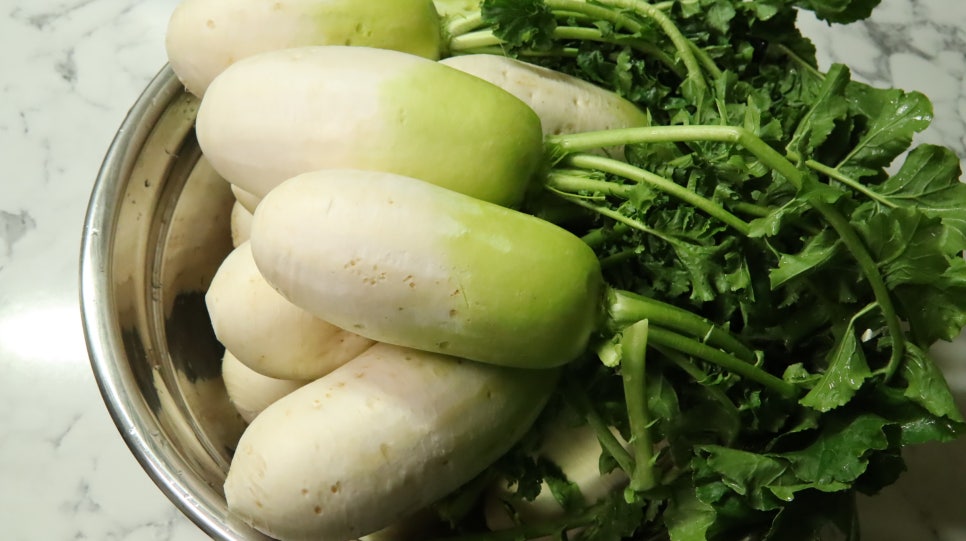
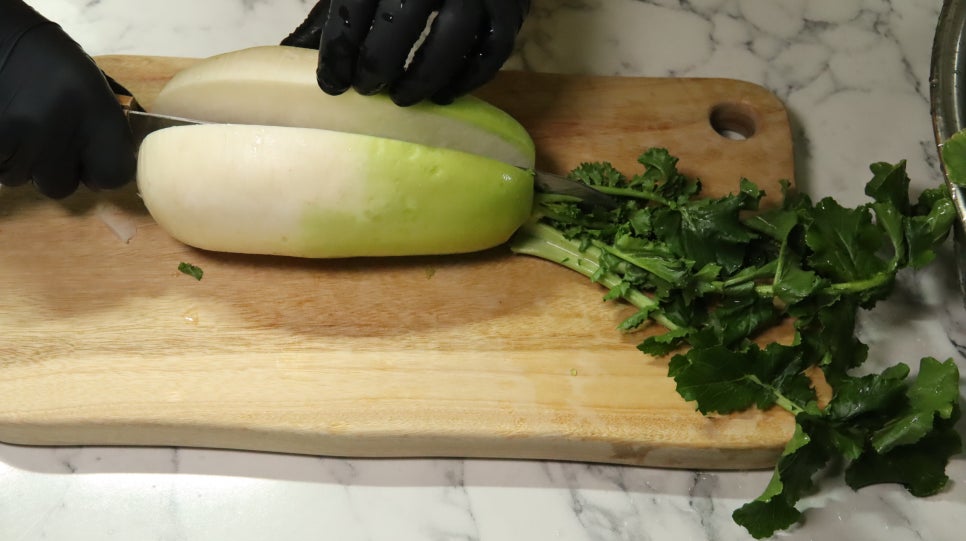
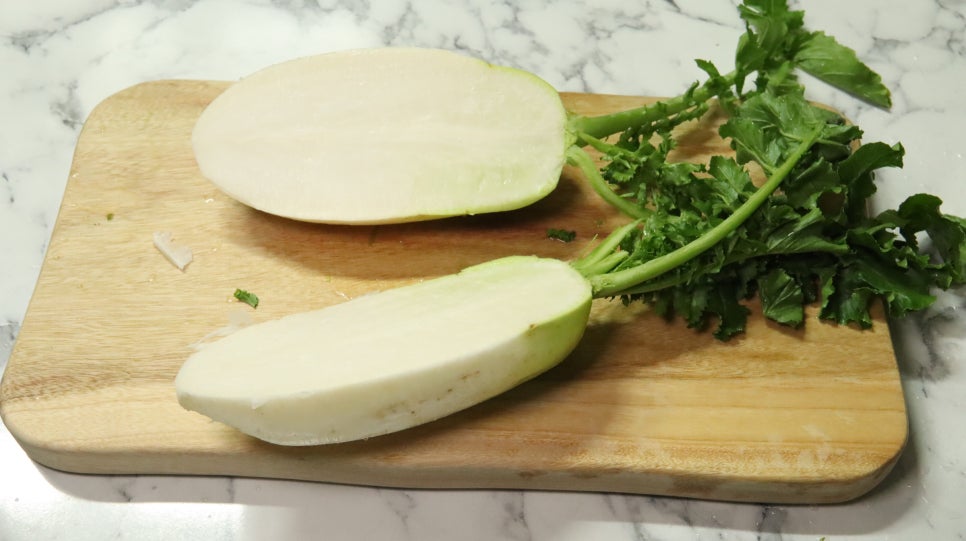
Here are 2 bunches of dongchimi radishes. With 6 radishes in one bunch, two bunches make 12 radishes.
For dongchimi radishes, pick ones about a handspan long that are smaller and firmer than regular radishes so they stay crunchy and delicious even after sitting in broth for a long time.
Keep the tender parts of the radish greens to make dongchimi together.
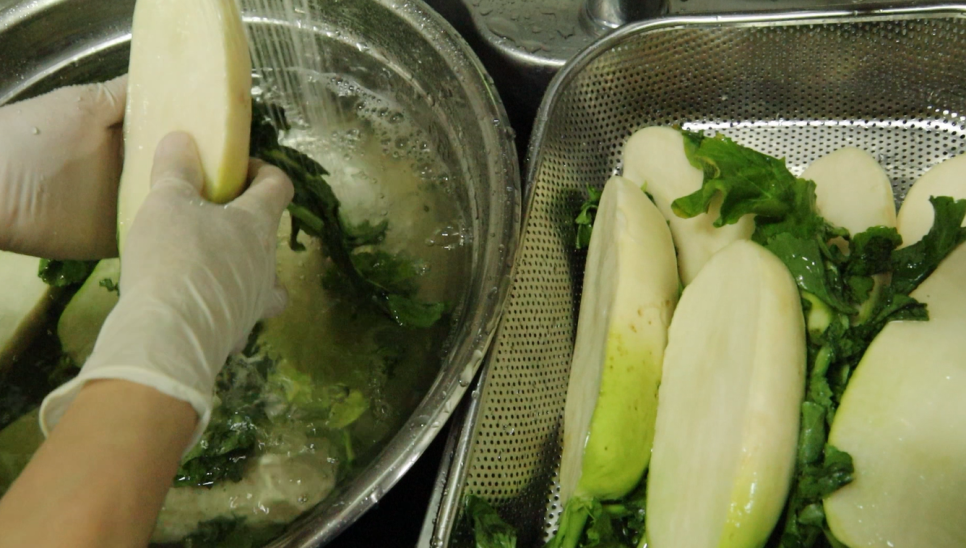
Trim away only blemished spots with a knife, scrub the radishes with a sponge, and rinse them in water.
I cut the radishes in half so they salt faster.
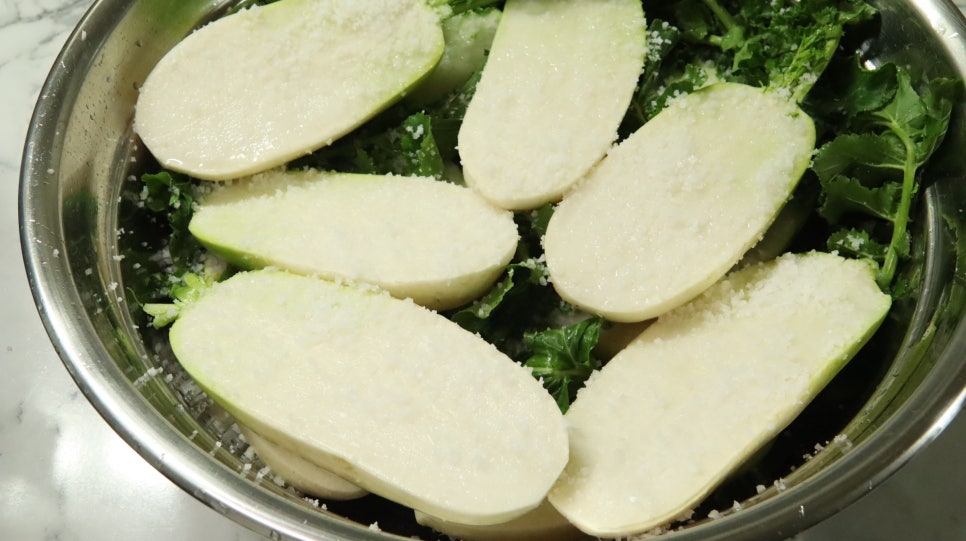
Spread out a layer of radishes and sprinkle salt evenly over them, then add another layer of radishes and sprinkle more salt.
Finally, sprinkle water evenly over the top and let salt for about 20 hours.
After 10 hours, when the salt has dissolved and brine has formed at the bottom, flip the top and bottom layers so they salt evenly.
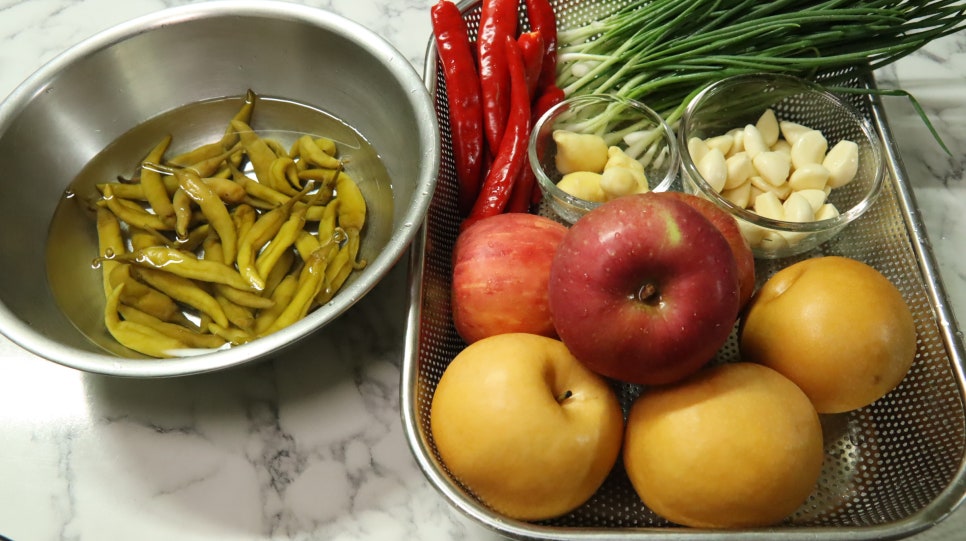
These are the secondary ingredients for the dongchimi.
The apples and Korean pears were small, so I prepared 3 of each, but about 2 will do if they are large.
Prepare whole garlic cloves and ginger. We will also use about half a bunch of scallions.
I also prepared red chili peppers for color, but you can omit them if you do not have any.
Fermented chili peppers must go into dongchimi to create that tangy, deep flavor, so prepare them and soak them in water without removing all the salt—leave enough so they are still pleasantly salty before taking them out.
Follow along here for how to make fermented chili peppers: https://blog.naver.com/ppunwife/140052630786
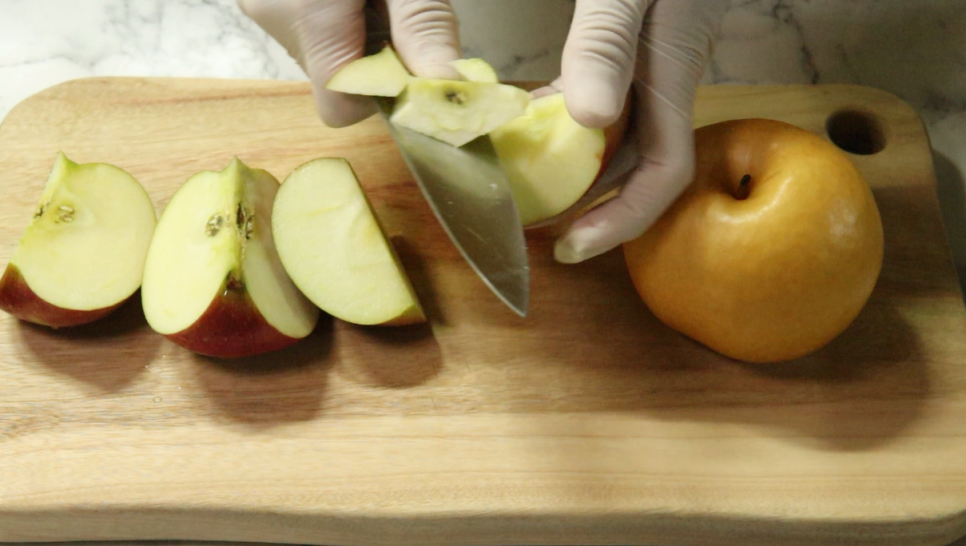
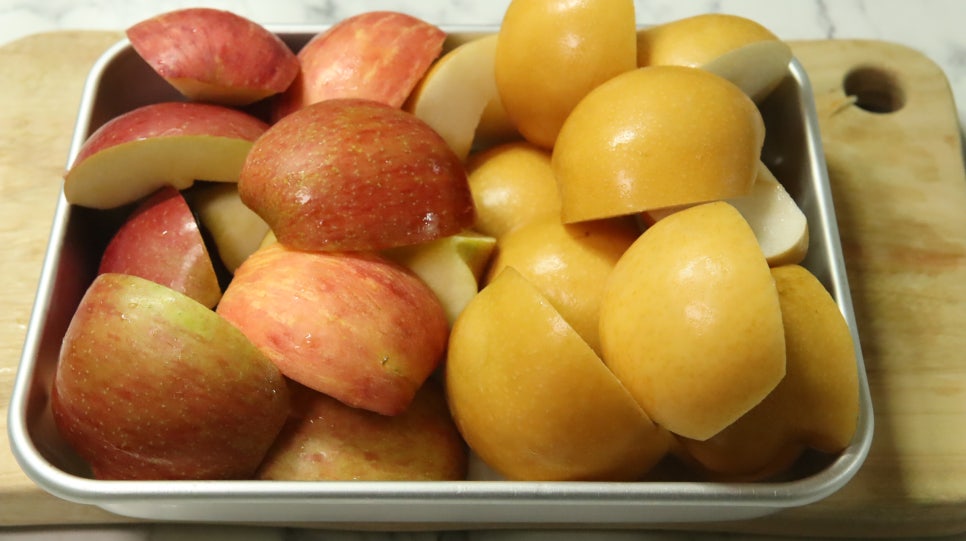
Quarter the apples and Korean pears, and core out the seeds in the center.
You do not need to peel them.
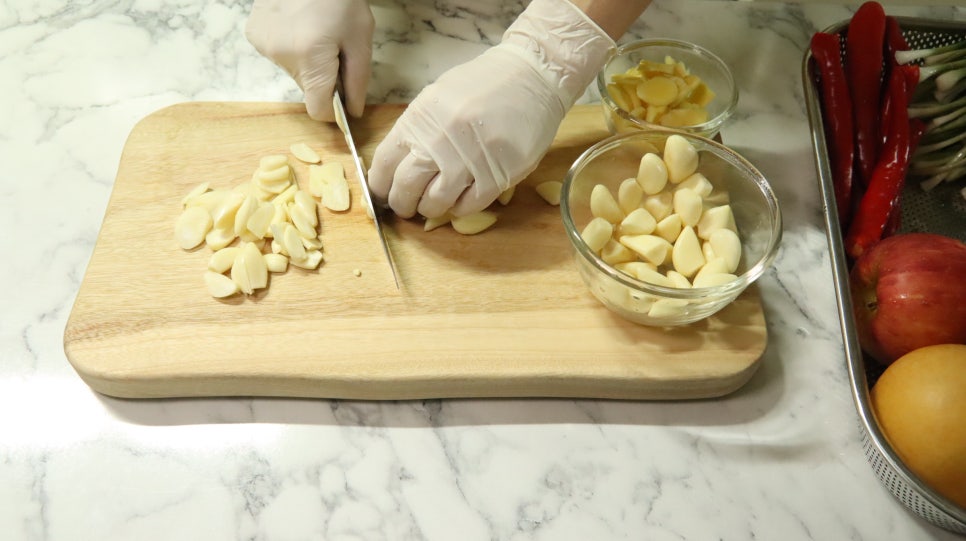
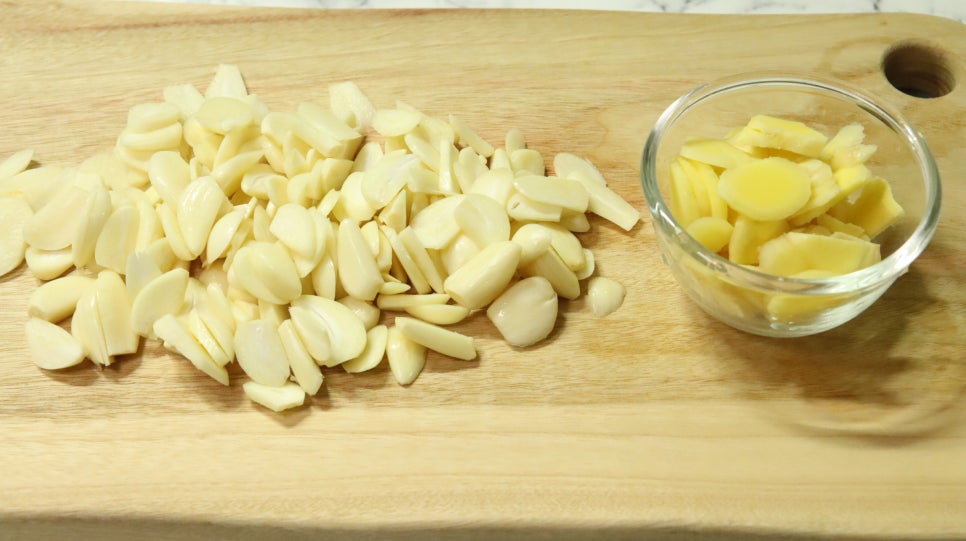
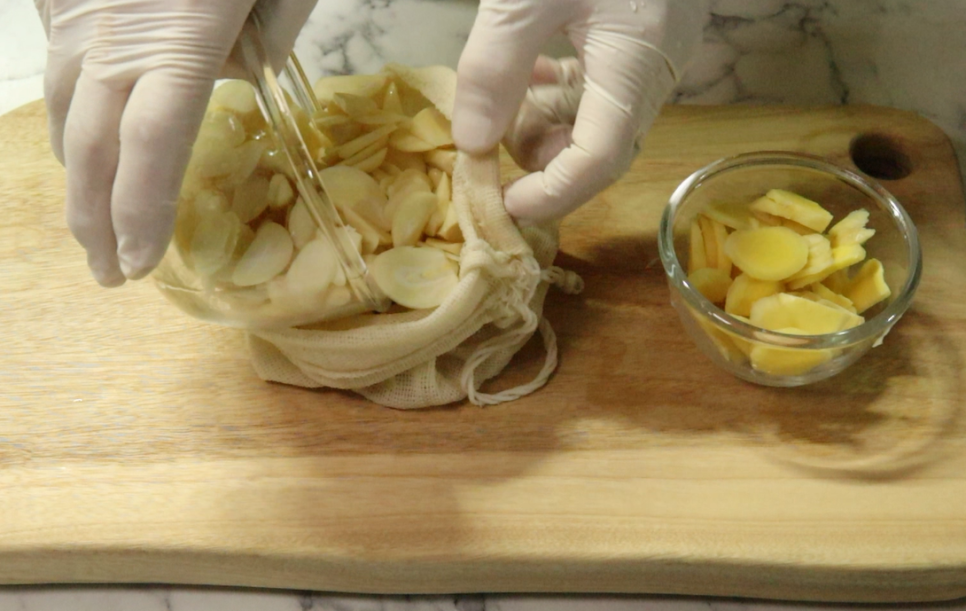
Slice the garlic and ginger, then place them into a cotton pouch.
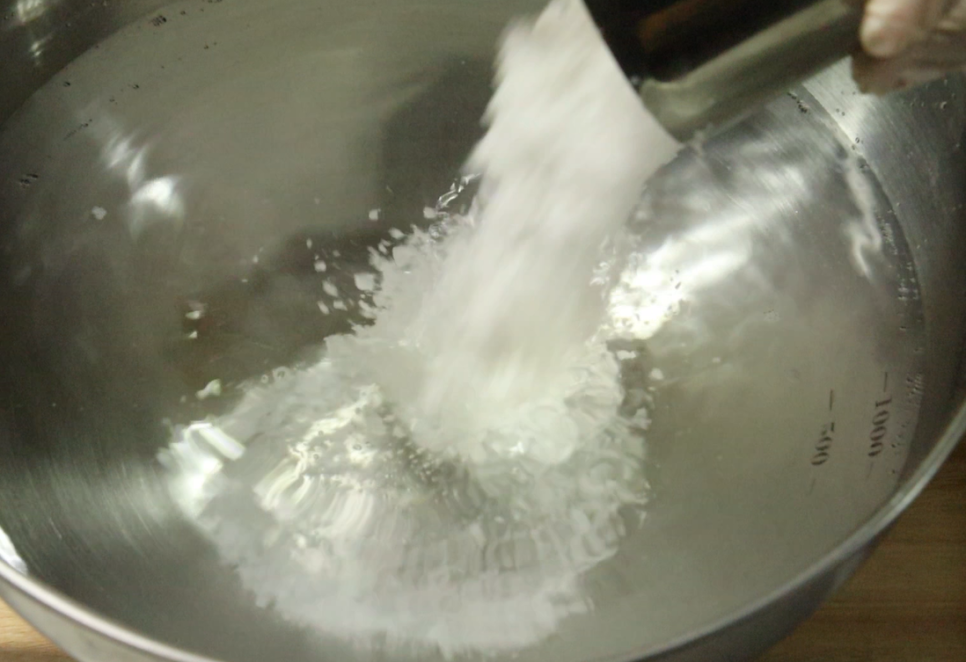
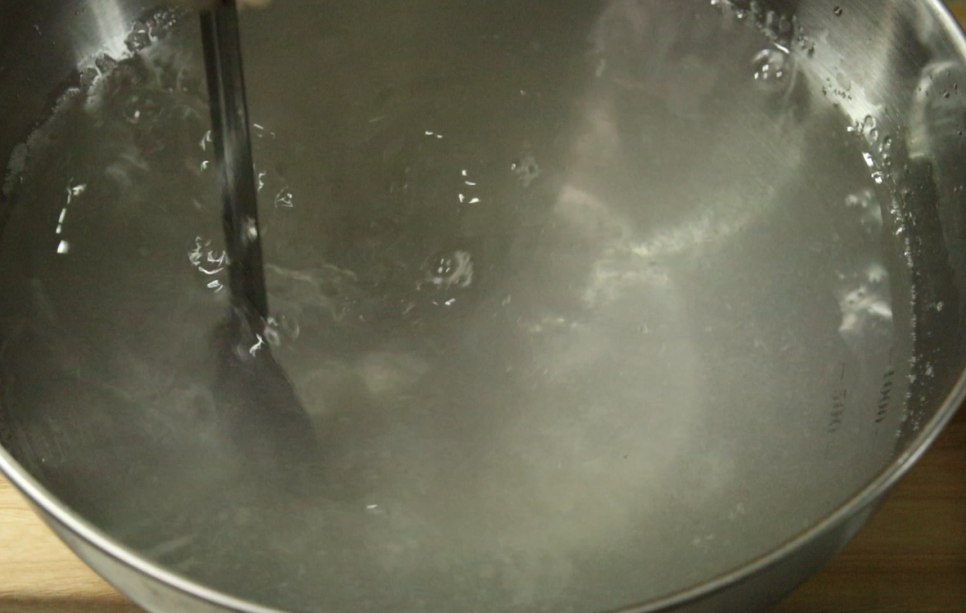
Take about 15 cups from the total water meant for the dongchimi broth, add the salt and sugar, and stir well to dissolve.
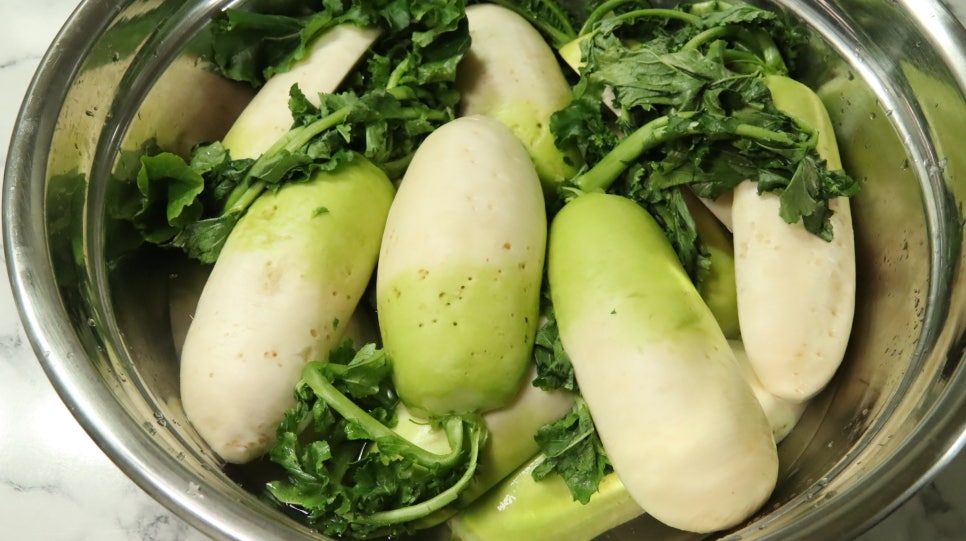
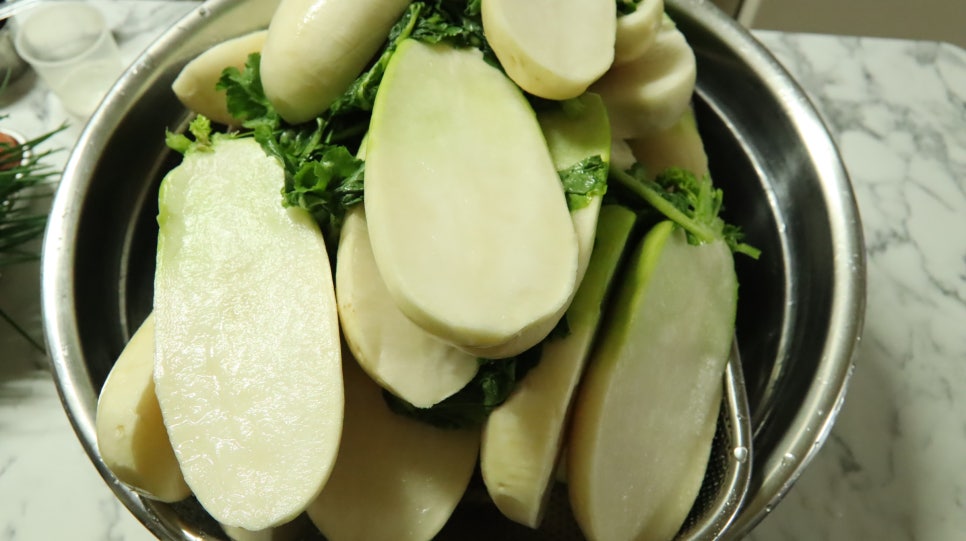
Once the salt on the radishes dissolves and shallow brine pools at the bottom, flip them after 10 hours, then salt for another 10 hours or so.
Rinse the salted radishes once under running water and drain them in a colander.
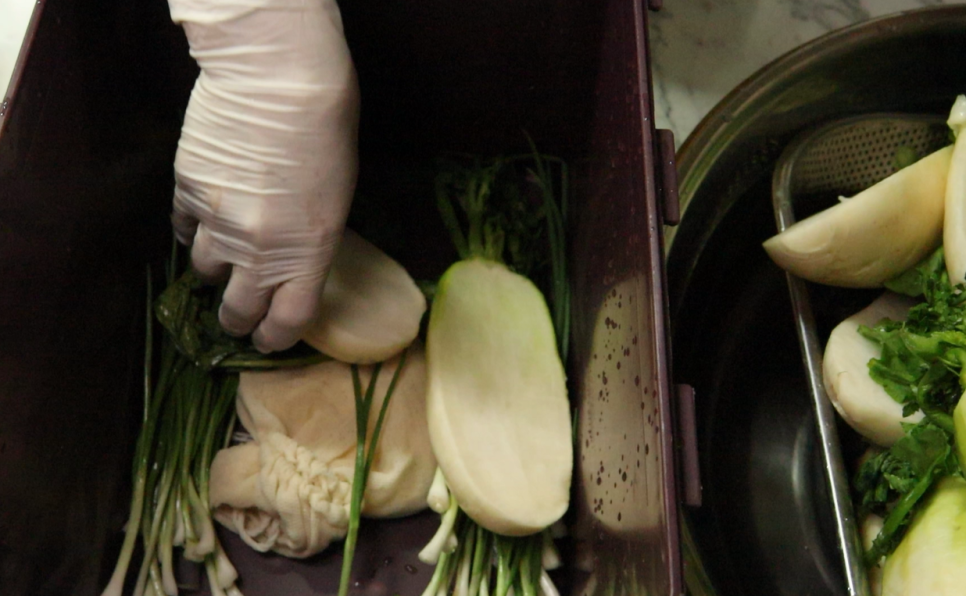
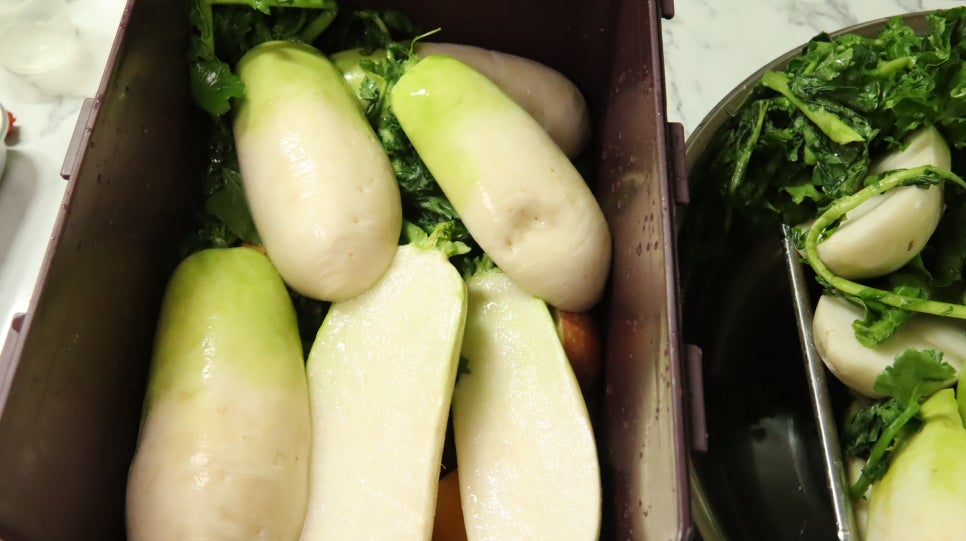
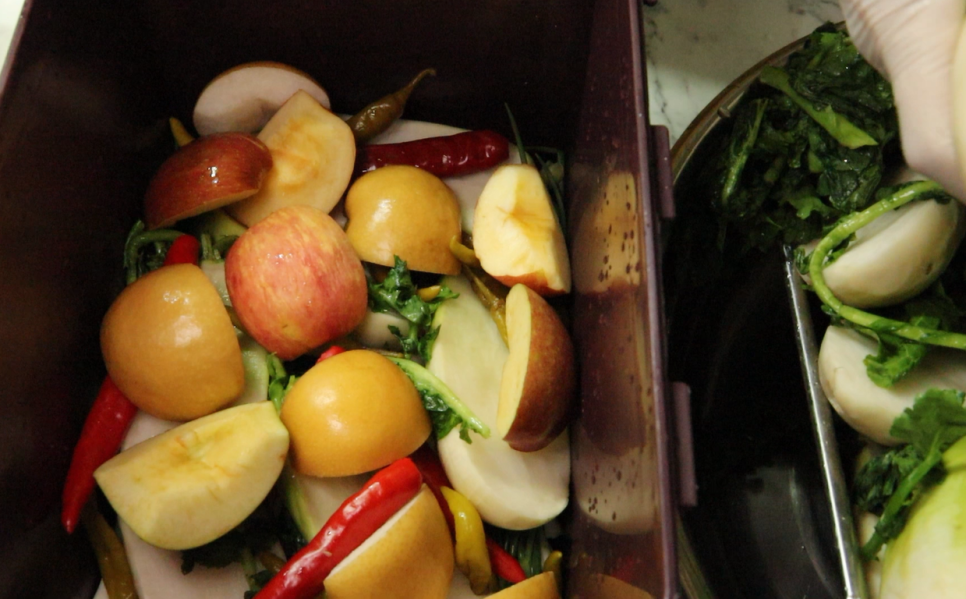
At the very bottom of the kimchi container, place the cotton pouch with the ginger and garlic, along with the scallions, then weigh them down with radishes so they do not float.
Add all the fruit, red chili peppers, and fermented chili peppers.
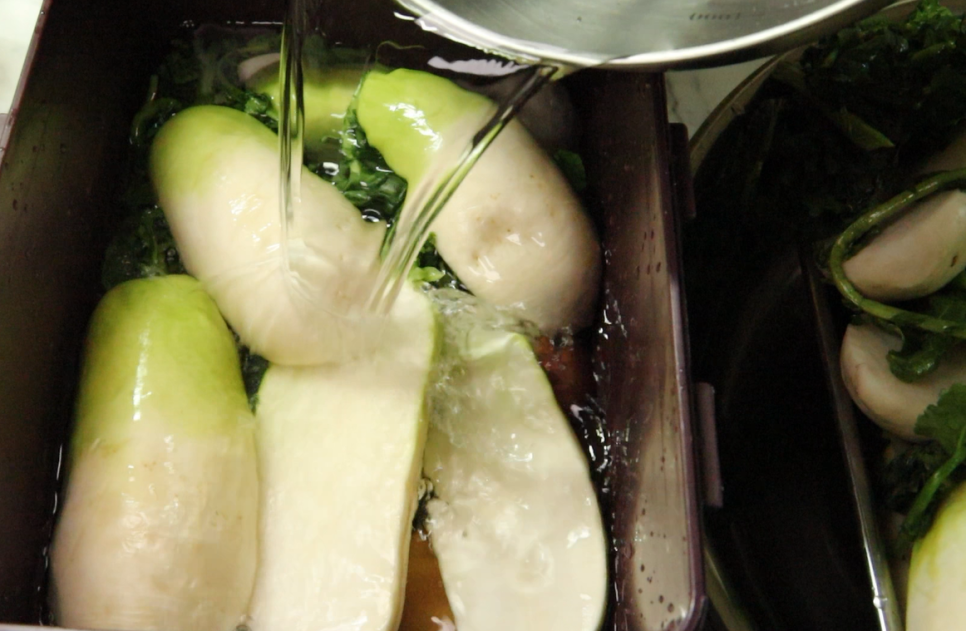
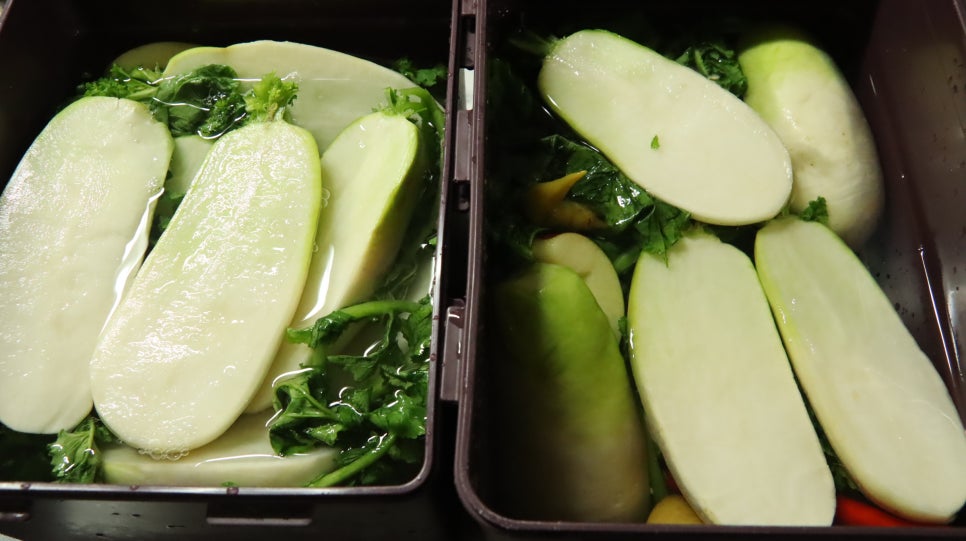
Top with the remaining radishes so the other ingredients do not float, then pour in the dissolved salt water and all the remaining bottled water.
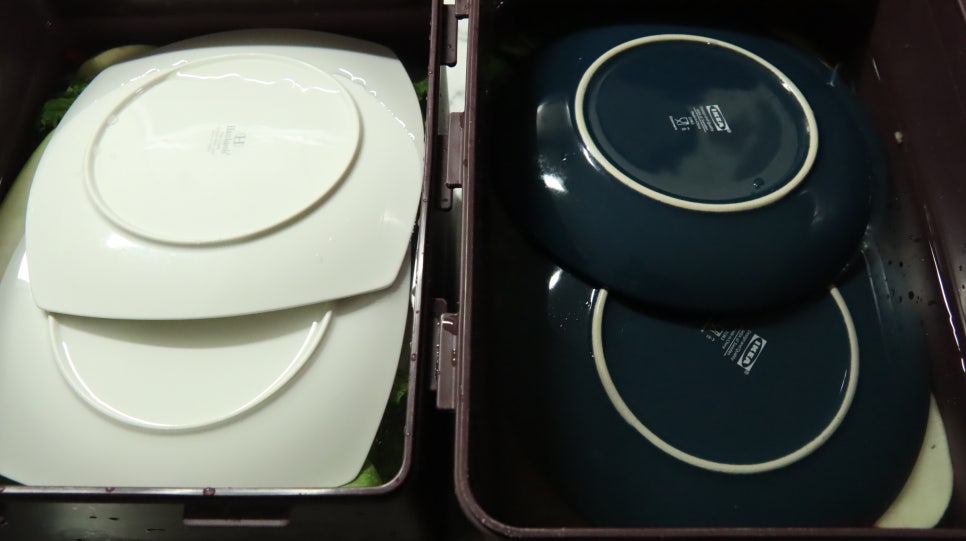
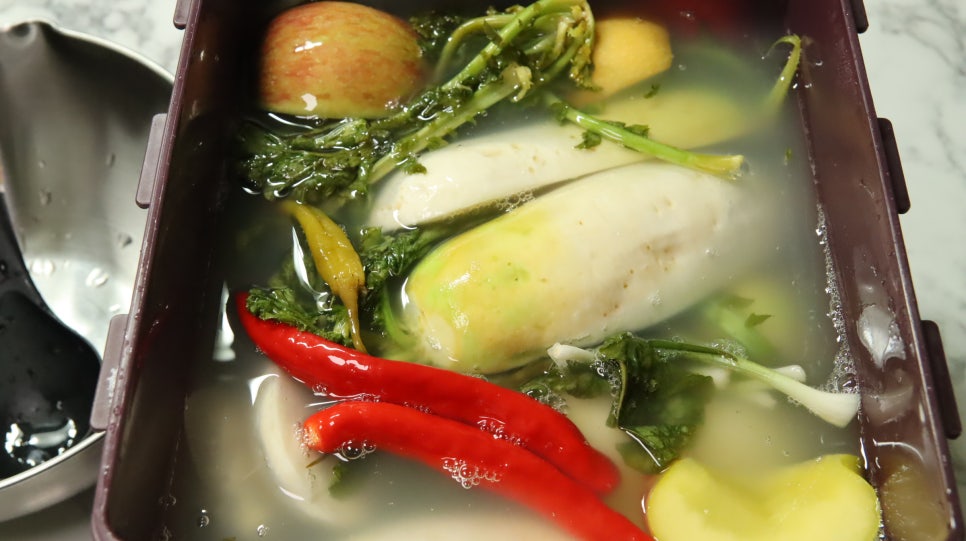
If the radishes and ingredients rise above the water, they can spoil, so cover them with stacked heavy plates to weigh them down.
Close the lid and let ferment at room temperature in a cool spot away from direct sunlight.
Since the weather has not been cold enough to drop below freezing lately, you will smell the broth fermenting in 2 to 3 days.
In the dead of winter when temperatures drop below freezing, you will need to ferment it for over 1 week.
Open the lid, and once small bubbles form around the edges with a tangy aroma, check the taste of the broth.
Once it suits your taste, transfer it to the kimchi refrigerator and enjoy.
 Ppunwife's tips
- Cover with stacked heavy plates to weigh the ingredients down, as radishes and other ingredients can spoil if exposed above the water.
- Open the lid, and once fine bubbles appear around the edges accompanied by a tangy aroma, check the taste of the broth.
FAQ
What kind of radishes should I choose for dongchimi?
Choose radishes about a handspan long that are smaller and firmer than regular radishes so they maintain their crunch even after sitting in broth for a long period.
Should I soak all the salt out of the fermented chili peppers?
Do not remove all the salt; take them out and add them while a pleasantly salty seasoning still remains.
How can I tell when fermentation is complete?
When small bubbles form along the edges of the container and a tangy fermented aroma arises, taste the broth; if it matches your preference, store it in the refrigerator.
Why place a heavy plate on top of the ingredients?
If the radishes or secondary ingredients float above the broth and are exposed to air, they can spoil, so the plate keeps them submerged.