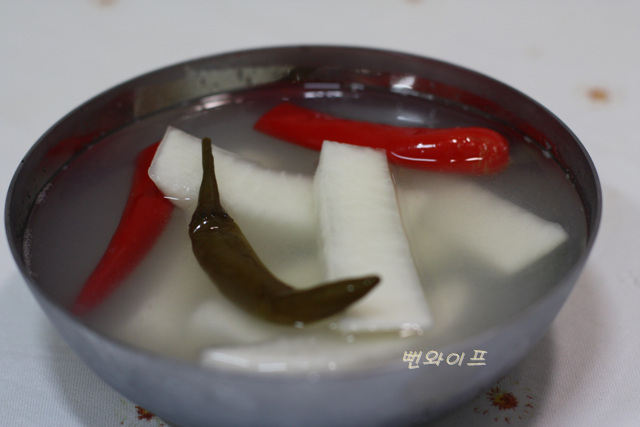
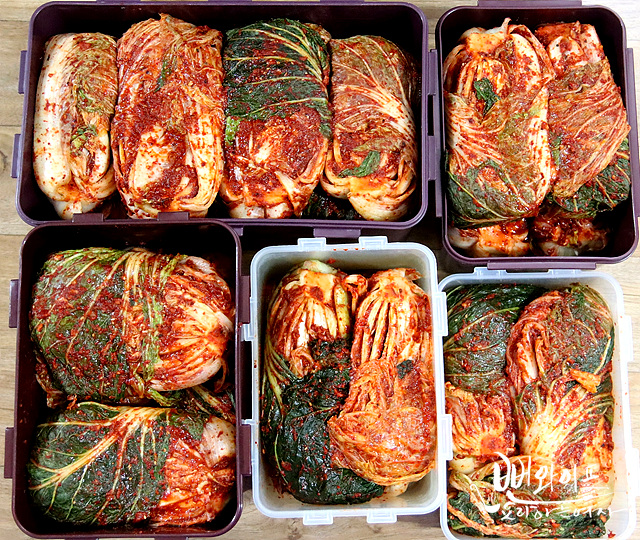
Winter Dongchimi (Radish Water Kimchi) with Cheonggak
A winter dongchimi with a clean, tangy broth flavored with sea staghorn seaweed and fermented chili peppers.
Translated from Korean by AI and not yet checked by a native speaker. Amounts and numbers are taken directly from the original recipe. Read the Korean original →
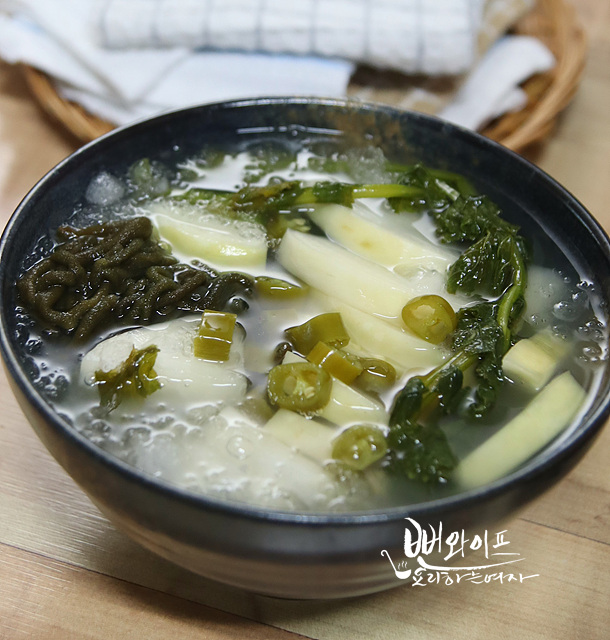
This winter kimchi skips complicated sub-ingredients, using sea staghorn seaweed and fermented chili peppers to bring out a clear, tangy broth. Firm in-season radishes are thoroughly salted in brine before the liquid is poured over them to ferment cold and crisp. It pairs wonderfully with roasted sweet potatoes or as the broth for cold noodles (mul naengmyeon).
- Servings
- about 10–12 servings
- Difficulty
- Medium
- Spiciness
- Mildly spicy
Ingredients
Ingredients
- Korean radish (mu)4 kg (bundled radish)
- Fermented chili peppers (or cheongyang chili pepper (hot green chili))10 (or so)
- Dried sea staghorn seaweed (cheonggak)50 g
- Peeled garlic20 cloves
- Ginger2 knobs
- Coarse sea salt1 1/2 cups
- Water3 cups
Dongchimi broth
- Bottled water30 cups
- Coarse sea salt2/3 cup
- Green plum syrup (maesil-cheong)2/3 cup
- Sugar1/2 cup
- I sprinkled 1 1/2 cups of salt, poured in about 3 cups of water, mixed evenly, and salted it for about 5 hours.
- If you do not have fermented chili peppers, you can use Cheongyang chili peppers instead; and in place of sea staghorn seaweed, you can add salted mustard greens.
- The radish greens are also fresh and tender, so using them together gives a nice chewy texture and pleasant bitterness.
Steps
Prepare the ingredients
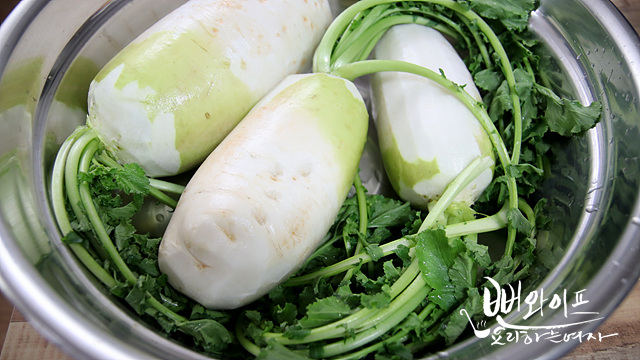
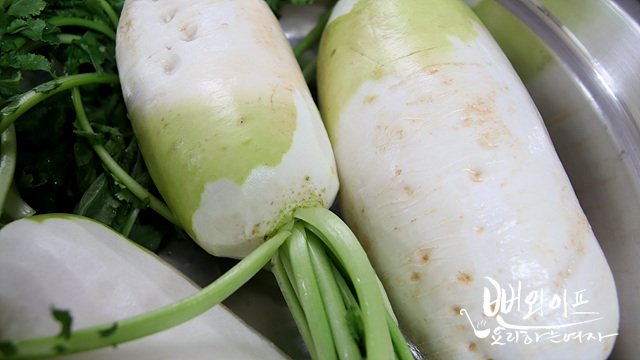
I will make dongchimi with 3 large bundled radishes.
Standard dongchimi radishes are about 1/3 smaller than these, so just weigh yours accurately and follow along.
The radish greens are also fresh and tender, so using them together gives a nice chewy texture and pleasant bitterness.
The part connecting the greens to the radish tends to be dirty, so trim it away with a knife, scrub clean with a sponge, peel off any bruised areas, and wash well.
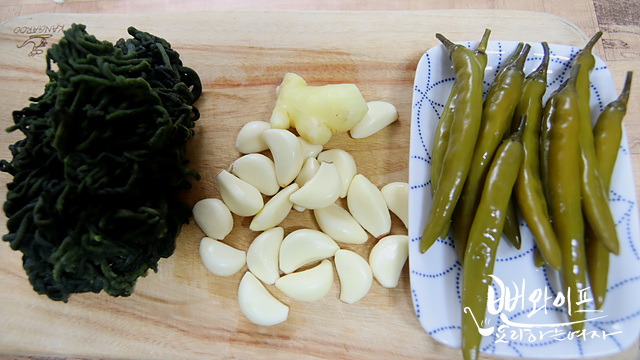
These are the secondary ingredients that make the dongchimi broth cool and tangy. I skipped fruit, mustard greens, and scallions.
They are dried sea staghorn seaweed (cheonggak), fermented chili peppers, peeled garlic, and ginger.
If you do not have fermented chili peppers, you can use Cheongyang chili pepper (hot green chili), and in place of sea staghorn seaweed, you can add salted mustard greens.
Related post on the blog (Korean)blog.naver.com/ppunwife/224067781318Related post on the blog (Korean)blog.naver.com/ppunwife/224034127934For trimming and prepping the fermented chili peppers and sea staghorn seaweed for dongchimi, please refer to the two photos above.
Cut the ingredients
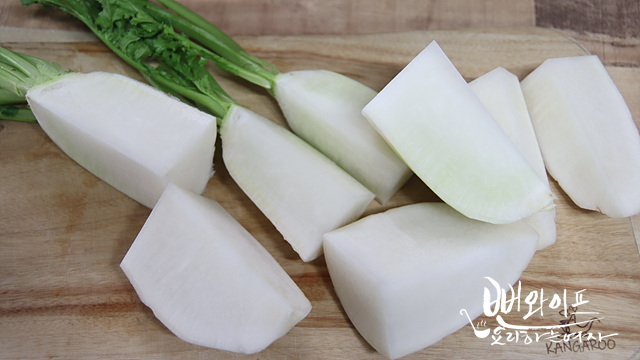
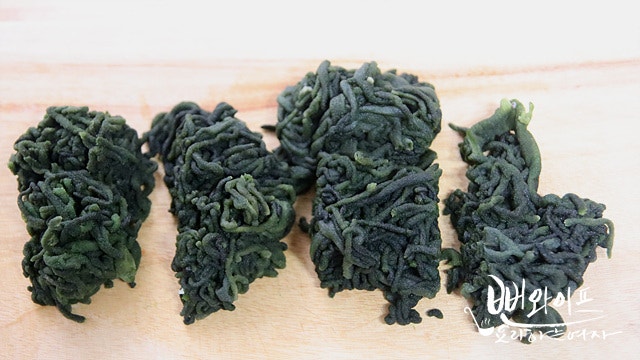
The radishes were too large and firm to pickle whole, so I cut them.
I sliced them a bit larger than ponytail radishes (altari).
Since the sea staghorn seaweed is added to make the broth refreshing and aromatic, you do not need to chop it finely; to keep it tidy, you can divide it into portions and roll them up.
Salt the radishes
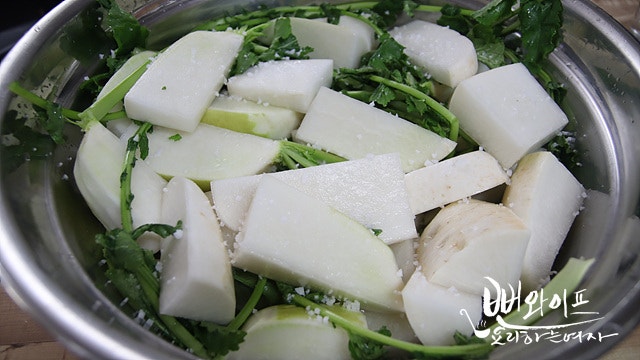
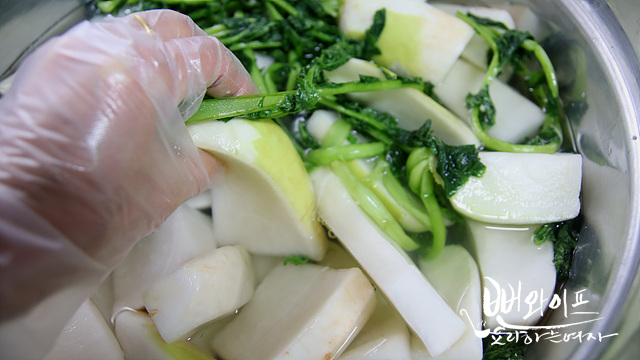
I sprinkled 1 1/2 cups of coarse sea salt, poured in about 3 cups of water, mixed well, and salted them for about 5 hours.
Because their texture is firm and they are thicker and larger than radishes for seokbakji, salt them for longer than you would for regular kkakdugi or seokbakji.
Toss once or twice midway through so they salt evenly. You can tell they are done when the largest radish bends pliably, or you can cut a piece to taste.
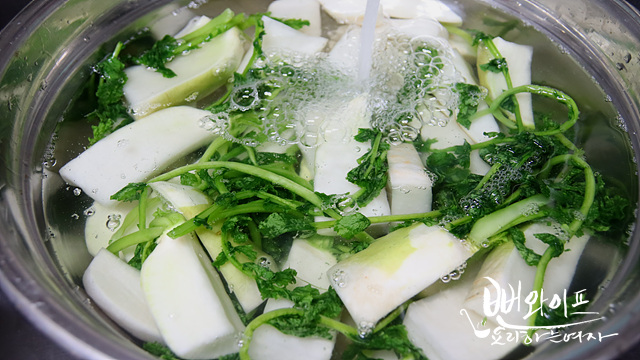
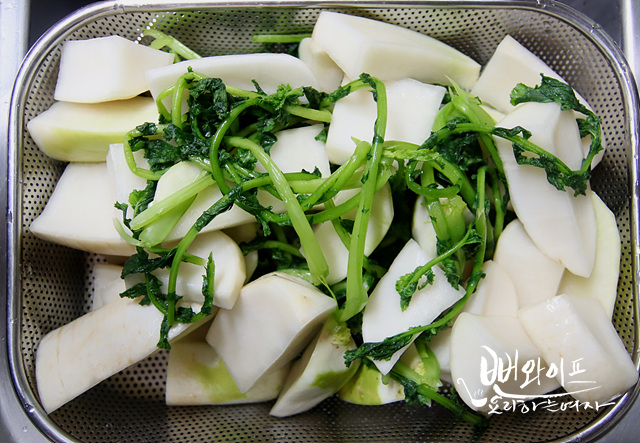
Rinse once in water, drain, and let the excess moisture drip off.
Make the spice pouch
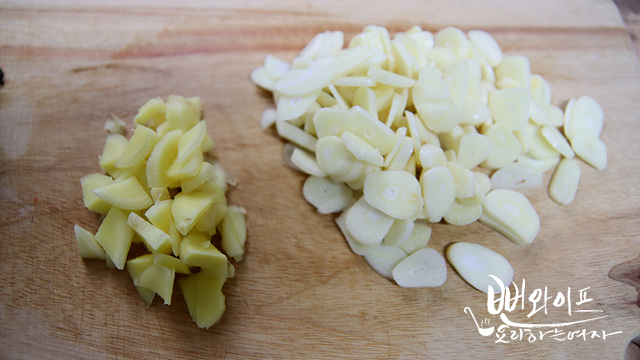
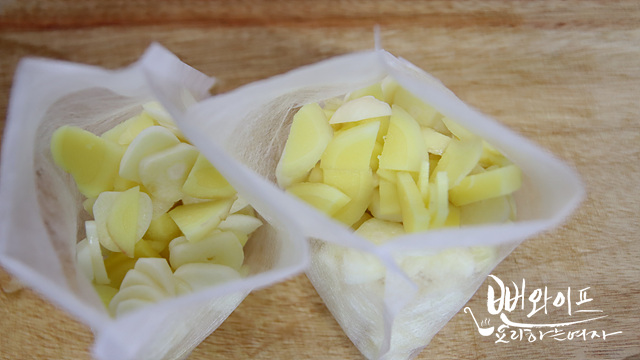
To keep the dongchimi broth clean, thinly slice the ginger and garlic instead of mincing them.
Divide them into small cheesecloth pouches and...
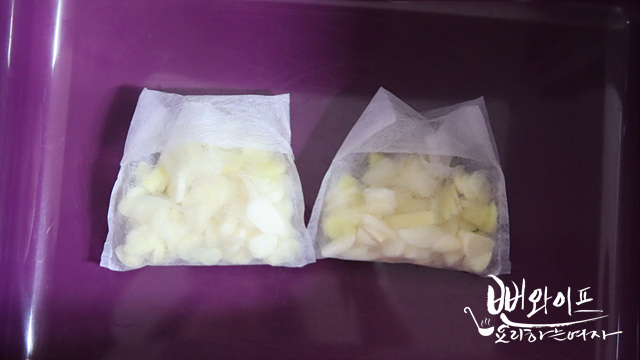
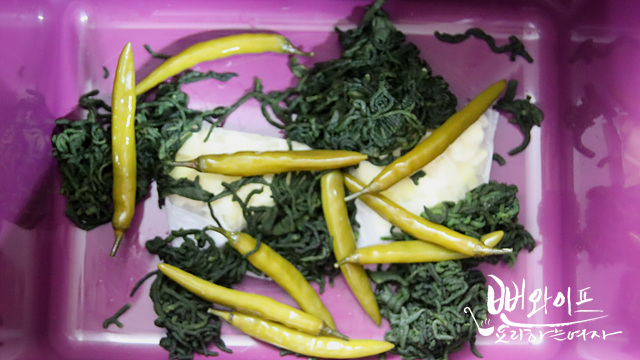
Place the spice pouches at the bottom of the container first so they do not float, and add the sea staghorn seaweed and fermented chili peppers as well.
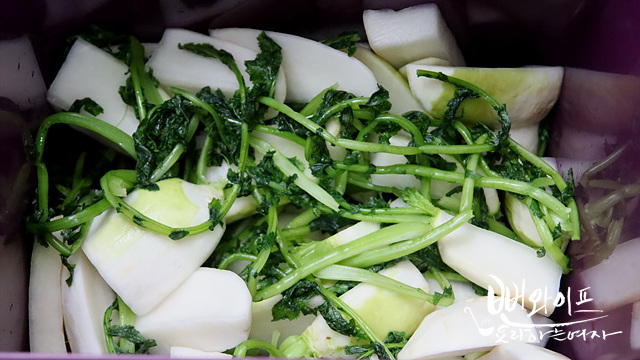
Placing the heavy salted radishes on top keeps the other ingredients from floating up, preventing the broth from spoiling or going off during fermentation.
Make the dongchimi broth
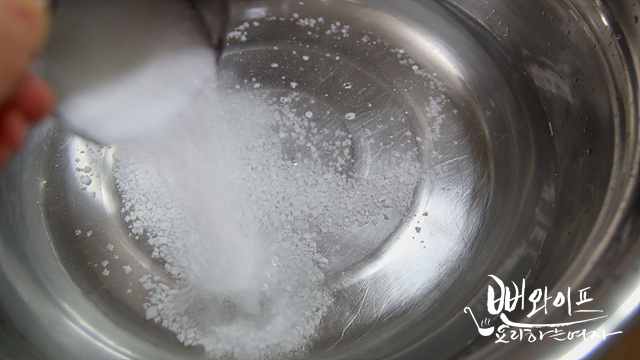
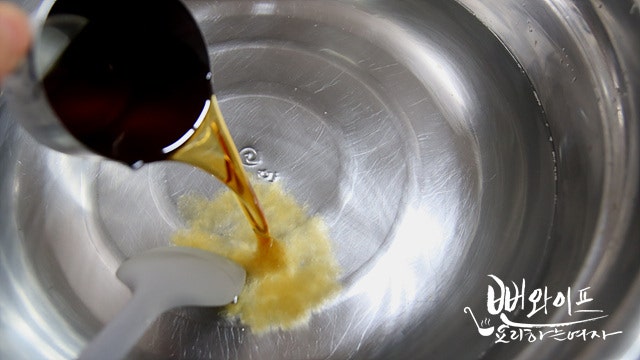
In a large basin, pour in 30 cups of bottled water, 2/3 cup of coarse sea salt, 2/3 cup of green plum syrup (maesil-cheong), and 1/2 cup of sugar.
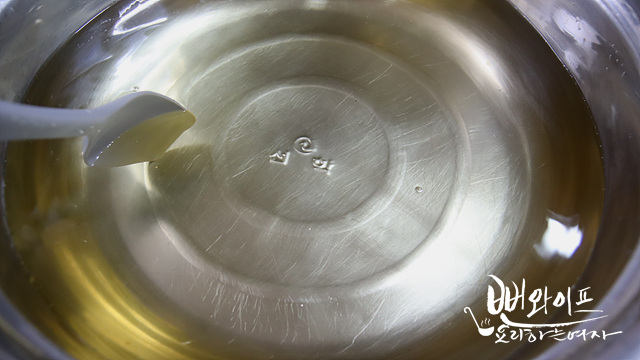
Stir well so the salt and sugar dissolve, then taste it and adjust so it feels slightly on the salty side.
Pour the broth and ferment
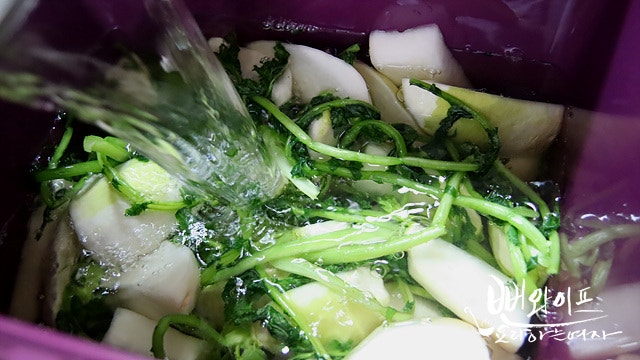
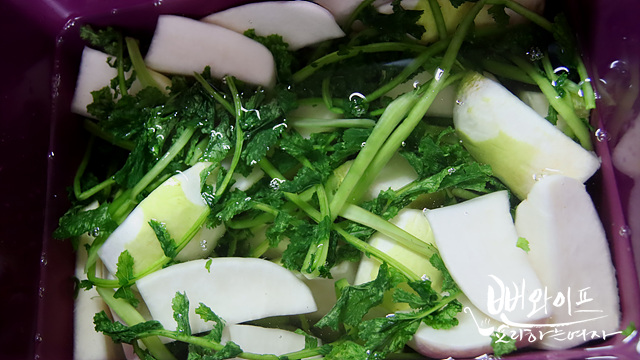
Gently pour the broth over the ingredients.
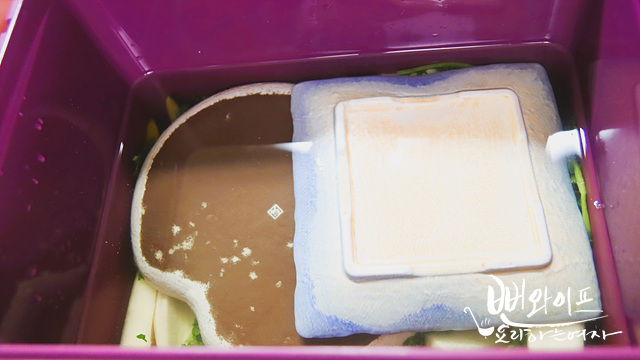
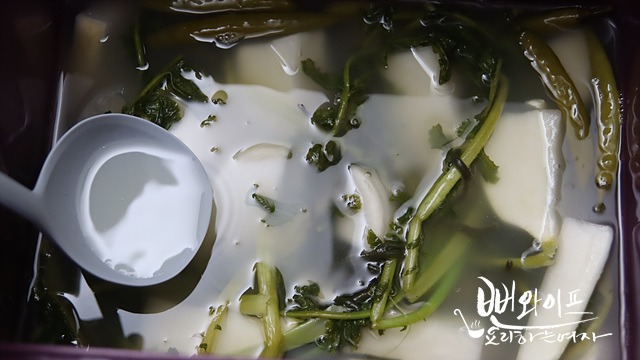
Press down with a plate so the ingredients do not float, and let ferment in a cool spot until it turns pleasantly sour.
In current temperatures, fermenting for 4 to 5 days is sufficient, while in freezing winter weather, it takes about a week to 10 days.
Open the lid once a day to check the broth and see if tiny bubbles are rising. Once it has fermented properly, keep it chilled in the refrigerator for a few days and enjoy.
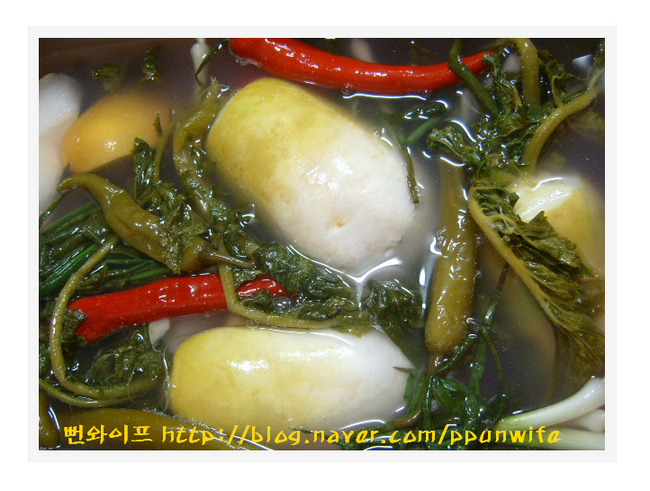
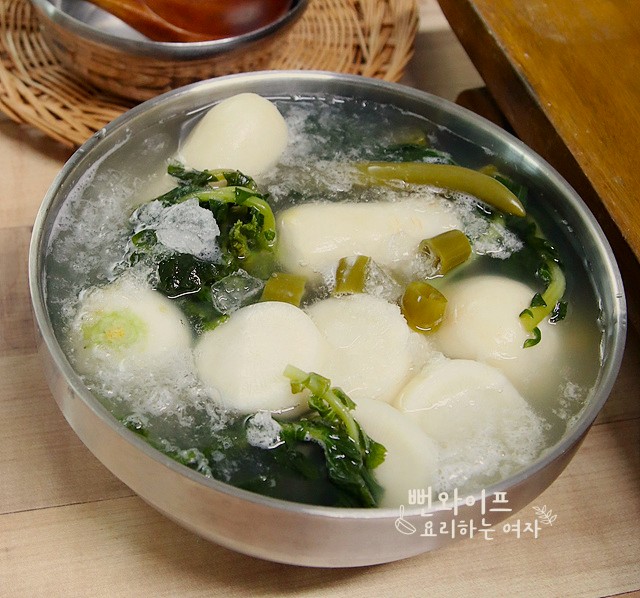
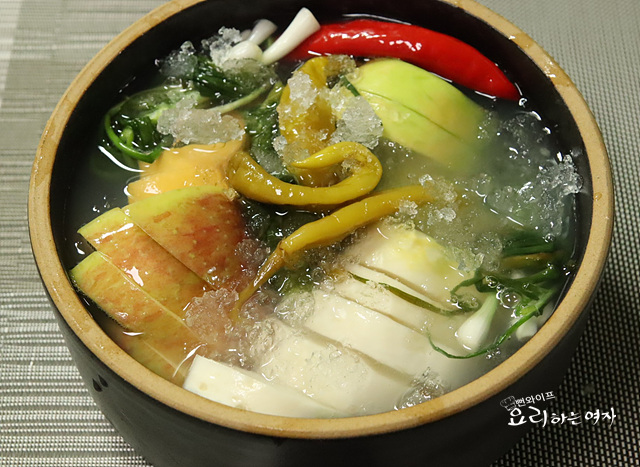
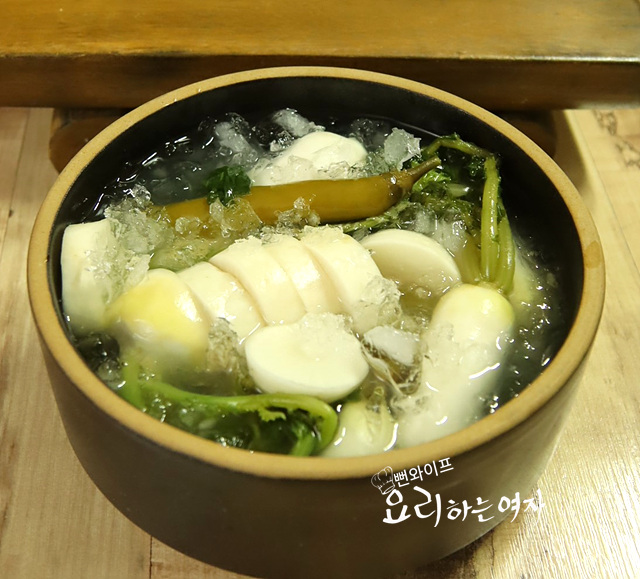
When I opened it on the 5th day, a clean broth and a delightfully sour aroma greeted me.
My first dongchimi of the year turned out beautifully successful.
 Ppunwife's tips
- Sugar or adding too many sub-ingredients and seasonings can make the broth cloudy or thick.
- To keep the dongchimi broth clean, slice the ginger and garlic thinly instead of mincing them.
- Placing the heavy salted radishes on top keeps the other ingredients from floating up, preventing the broth from spoiling or deteriorating during fermentation.
FAQ
What can I do if I do not have fermented chili peppers?
You can substitute them with Cheongyang chili peppers.
Can I use something else instead of sea staghorn seaweed?
If sea staghorn seaweed is hard to find, you can make it using salted mustard greens instead.
What is the secret to keeping the broth clear instead of cloudy?
Thinly slice the garlic and ginger instead of mincing them, put them in a cheesecloth pouch, and skip excessive sub-ingredients to produce a clean, clear broth.
How long does dongchimi take to ferment?
It depends on the temperature, but usually let it ferment in a cool spot for 4 to 5 days, or a week to ten days during sub-zero cold weather, before transferring it to the refrigerator.