Winter Altari Dongchimi (Radish Watery Kimchi)
A crisp winter altari dongchimi fermented clean and cool with green plum syrup and fermented chili peppers instead of glutinous rice paste.
Translated from Korean by AI and not yet checked by a native speaker. Amounts and numbers are taken directly from the original recipe. Read the Korean original →
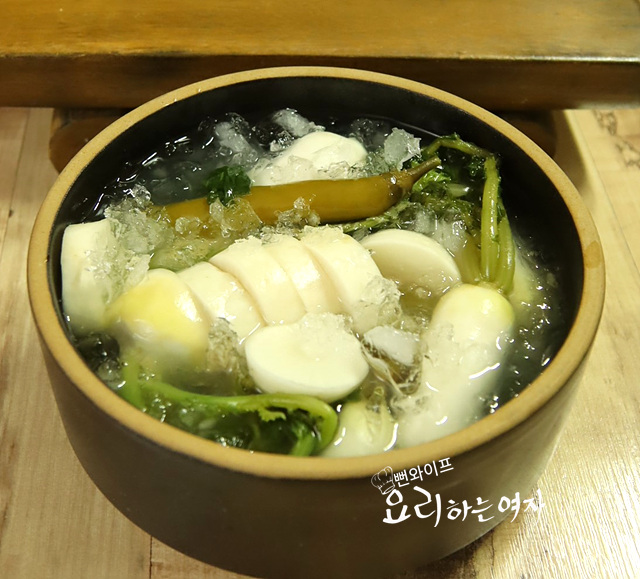
This winter watery kimchi skips starch porridge and expensive fruit, using green plum syrup and fermented chili peppers to bring out deep flavor. Because it pickles faster than regular Korean radish, it comes together in about 3 hours. You will love the tangy, refreshing broth paired with the firm, crunchy texture unique to altari radish.
- Servings
- about 10–12 servings
- Cook time
- 180 minprep not included
- Difficulty
- Hard
- Spiciness
- Mildly spicy
Ingredients
Ingredients
- Altari radish (ponytail radish)2 bunches, 4 kg (2 kg × 2 bunches)
- Coarse sea salt1 cup
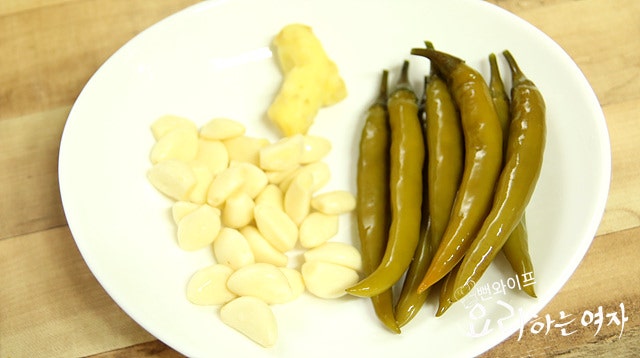
- Fermented chili peppers10
- Garlic20 cloves
- Ginger2 pieces (thumb-sized)
Dongchimi broth
- Bottled water20 cups
- Green plum syrup (maesil-cheong)1/2 cup
- Salt1/2 cup
- Sugar1/3 cup
- Prepare about 15 small fermented chili peppers.
- Fermented chili peppers are salty from high-salinity brining, but do not soak out the salt; just rinse them lightly so the salinity infuses into the dongchimi broth.
- Prepare about 25 cloves if the garlic is small, or 20 cloves if medium-sized.
Steps
Prepare the ingredients
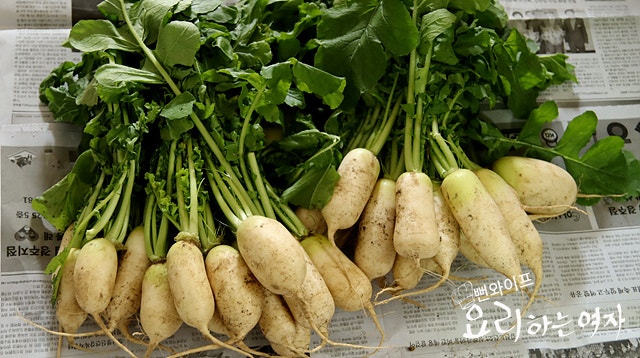
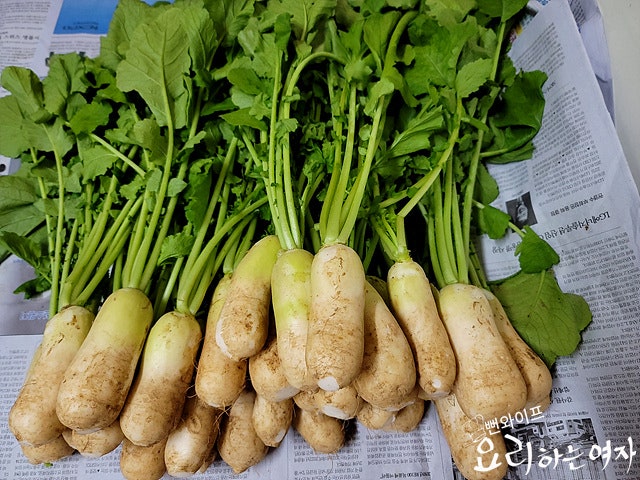
Here are 2 bunches of altari radish (ponytail radish). The radishes are firm, and the stems and leaves are fresh.
They were clean, easy to trim, and had very little waste.
About a month ago, I fermented some Cheongyang chili peppers to make dongchimi, and they are finally seeing the light of day. Prepare about 15 small ones.
They were brined in high salinity so they are salty, but instead of soaking out the salt, I just rinsed them lightly so their flavor infuses into the dongchimi broth.
My garlic cloves were small, so I used about 25 cloves, but 20 cloves are enough if medium-sized. Prepare 2 pieces of ginger.
Related post on the blog (Korean)blog.naver.com/ppunwife/223619430546If you would like to make the fermented chili peppers that go into dongchimi, please refer to the recipe.
Trim the altari radish
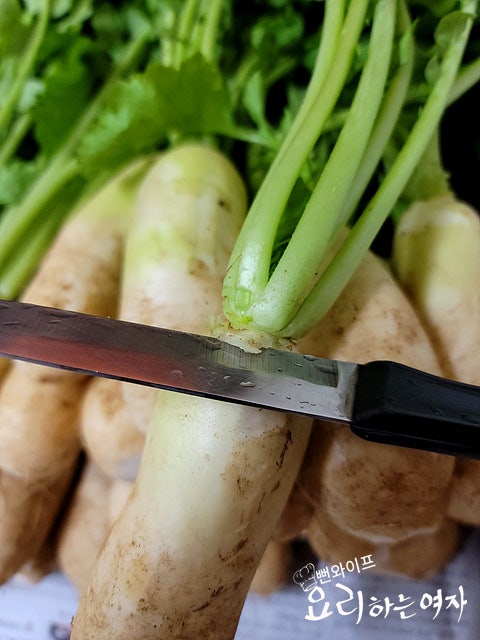
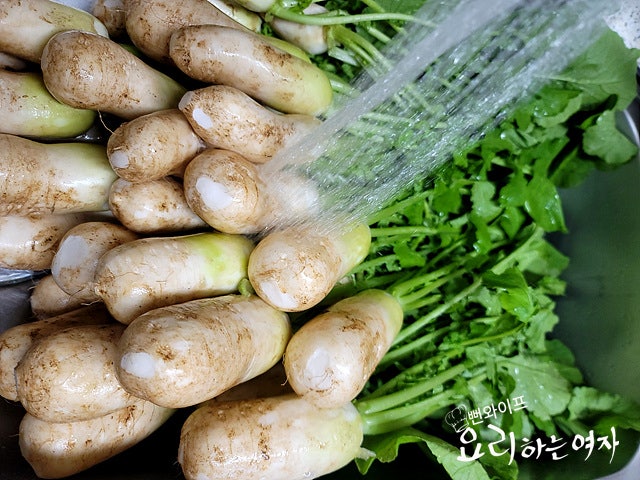
First, pull off any yellowed or tough stems from the altari radish. (The removed stems are delicious boiled soft and used in doenjang soup or braised fish.)
Use a knife to neatly trim away the dirty crevices between the radish and the stems.
To keep them crunchy and prevent them from turning mushy, do not peel the skin completely; just scrape off the fine side roots and the tail end root with a knife.
Rinse off the soil under running water, soak briefly so the clinging dirt loosens, and then rub with a soft scouring pad to clean them cleanly.
Salt the radish
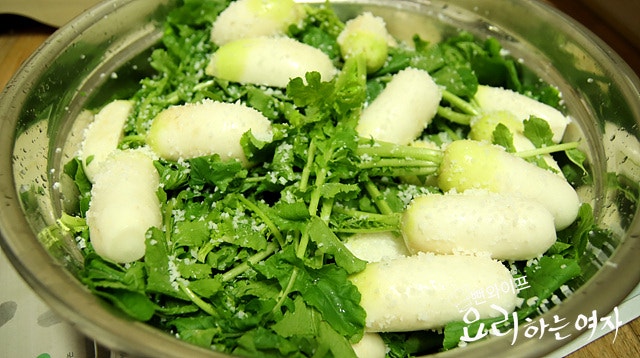
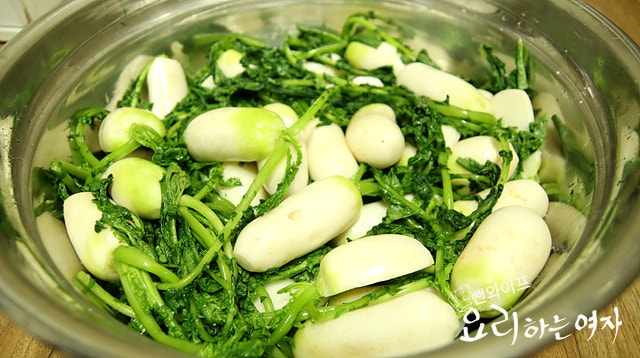
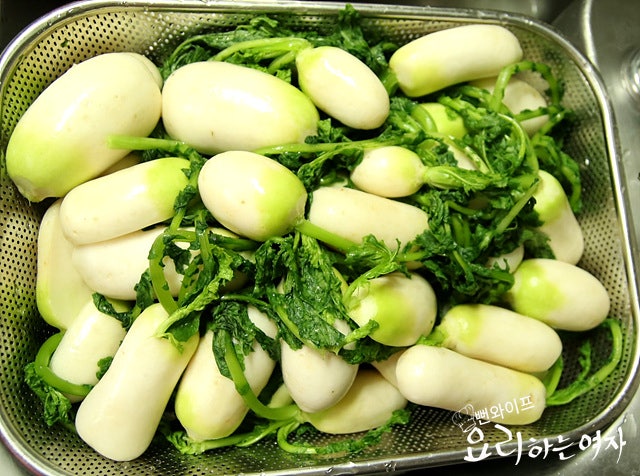
Without draining the washed radishes, salt them right away.
Spread a layer of ponytail radish in a large bowl, sprinkle about 2 tbsp of coarse sea salt evenly over them, and lightly scatter a little water on top.
Repeat this process in layers to salt them.
It will vary depending on the size of the radishes, but in weather like this, salt for about 2 to 3 hours, turning them over once after 1 hour so they salt evenly.
When the hard surface of the radish yields softly with a slight bounce and the stems have wilted reasonably, do not rinse; simply drain the water as is.
Make the dongchimi broth
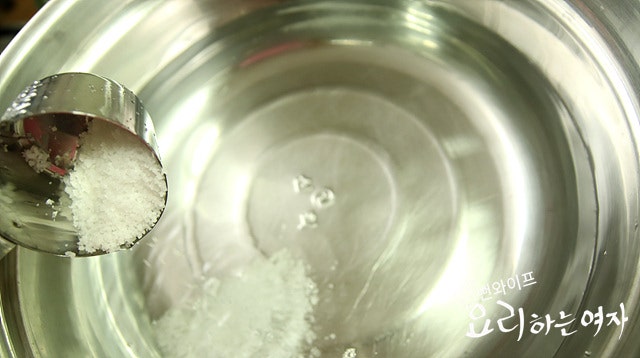
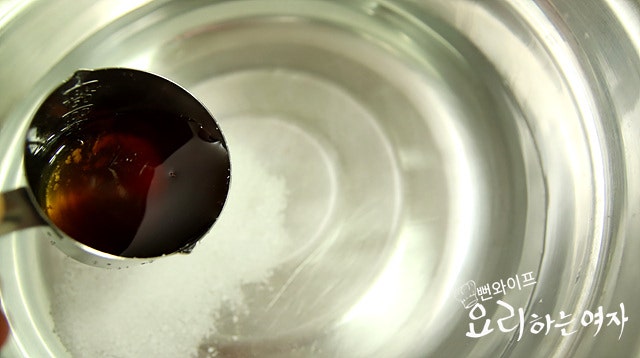
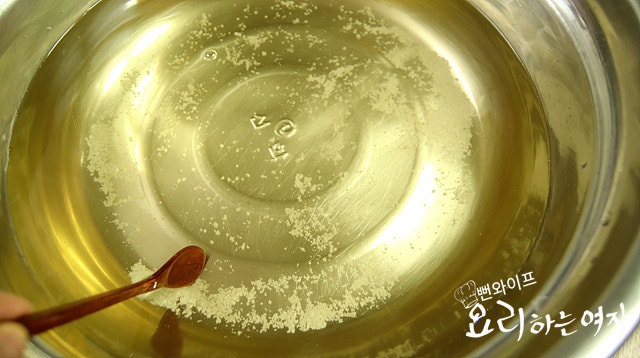
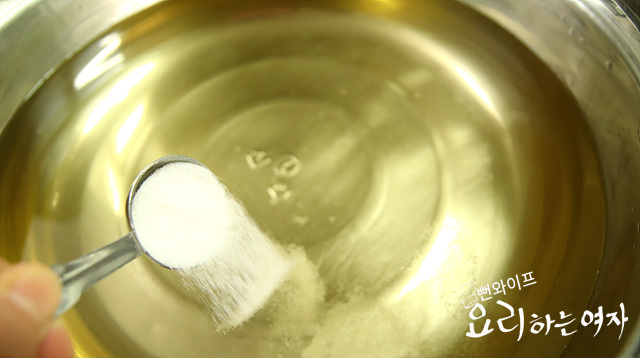
Pour 20 cups of bottled water into a large bowl, add 1/2 cup of green plum syrup (maesil-cheong), 1/2 cup of salt, and 1/3 cup of sugar, then stir well to dissolve.
This time, I added green plum syrup instead of apples or other fruit to add a natural sweetness.
The broth seasoning must not be bland.
It needs to taste slightly salty so that white film (golmaji) does not form on the dongchimi broth, the salted radish does not turn bland, and it matures well without spoiling.
Make the seasoning pouch
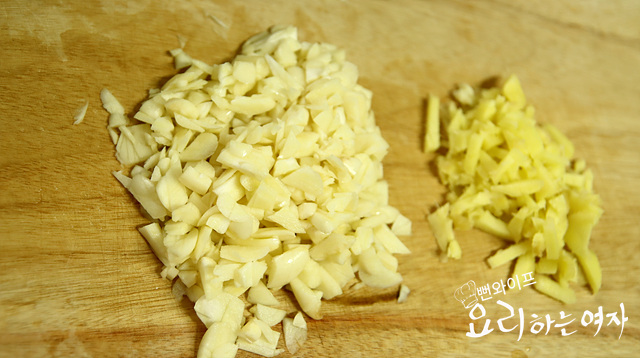
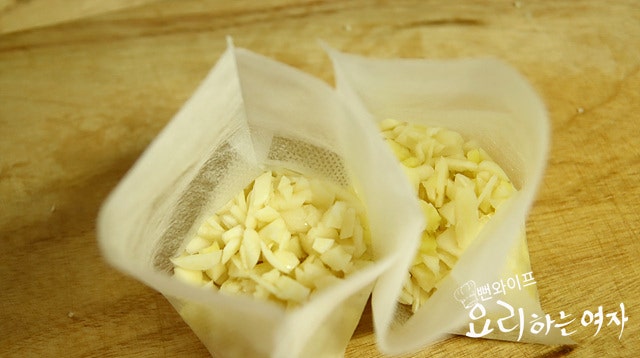
Finely slice the garlic and ginger so they infuse into the broth better.
If you mince them until their juices come out, the broth will turn thick or cloudy and lose its clarity.
I mixed the garlic and ginger and divided equal amounts into pouches.
Pack the ingredients into a container
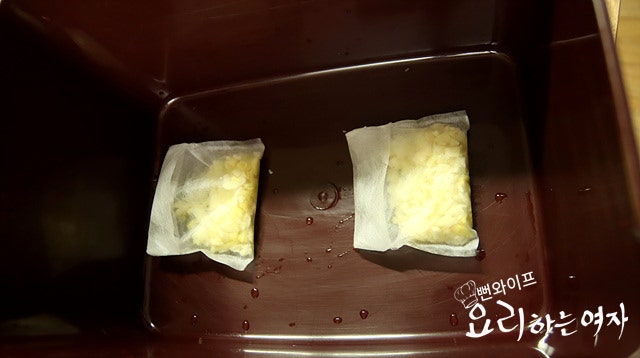
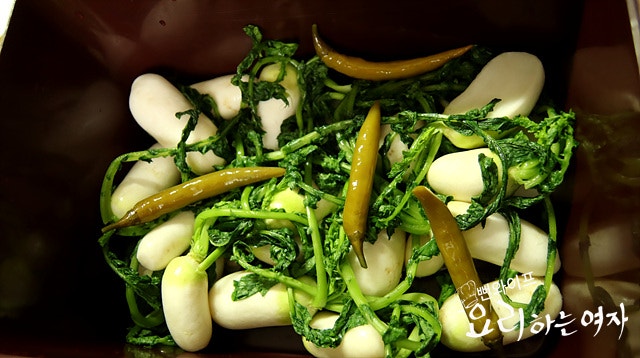
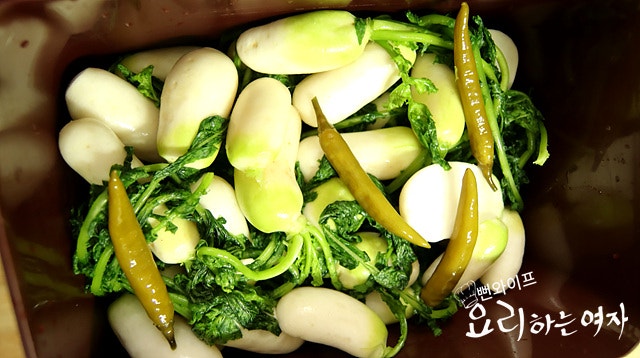
Place the garlic and ginger pouches at the bottom of the kimchi container first, and place some salted radish on top so they do not float.
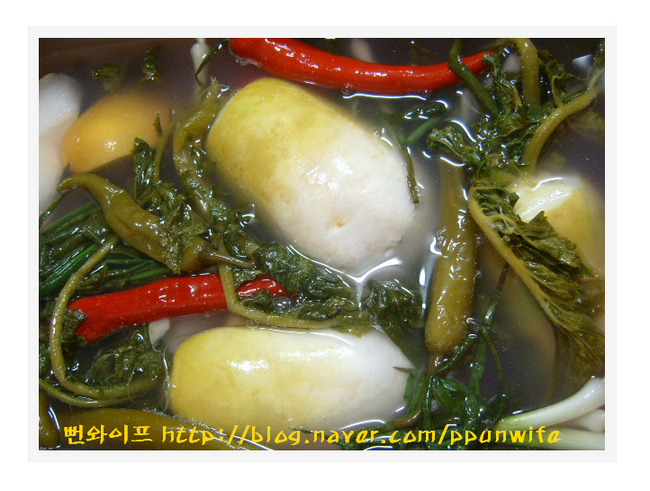
Evenly layer fermented chili peppers, more salted radish, and fermented chili peppers over them.
Pour the broth and ferment
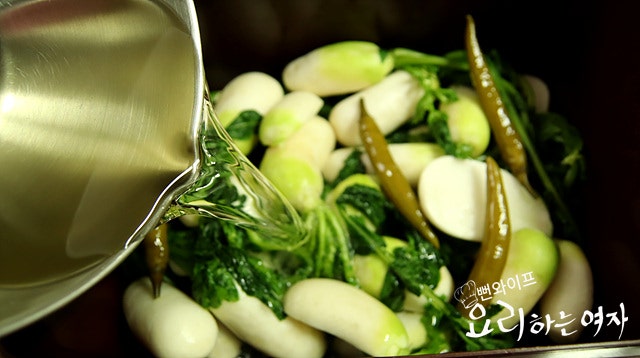
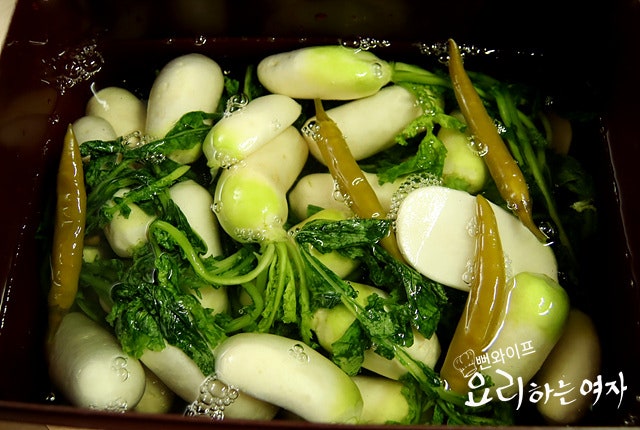
Carefully pour in the prepared broth.
Make plenty of broth so it rises well above the radishes.
If the amount seems short, make more at the same ratio and pour it in.
If you taste the broth at this point, it will just taste like salty water. You will see how important fermentation is.
After a few days, the flavor transforms completely.
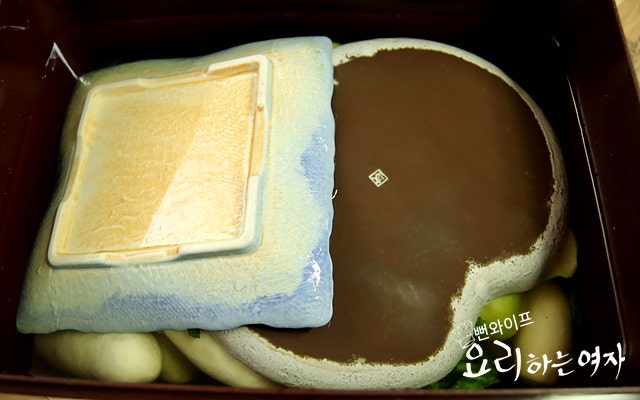
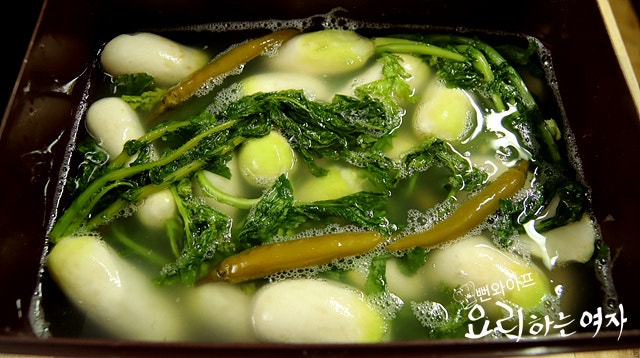
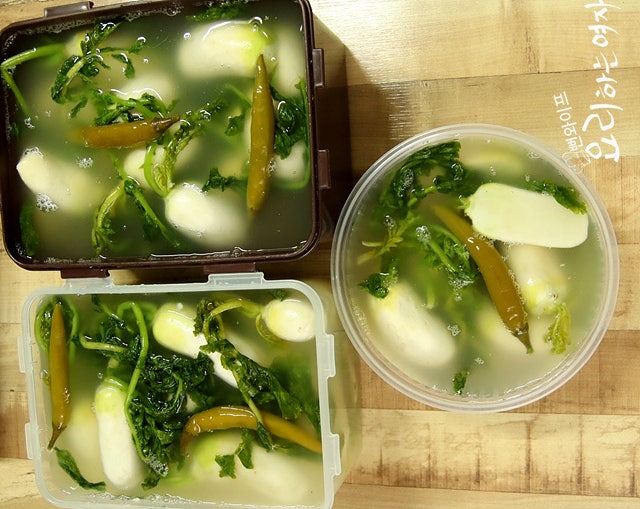
Place a heavy plate on top so the radishes and peppers do not float, then let it ferment for 2 to 3 days in a cool spot out of direct sunlight.
Ferment watery kimchi, regular kimchi, or pickled dishes at room temperature.
When temperatures drop below freezing, it can take 5 to 7 days.
The broth will turn slightly milky, bubble gently, and give off a tangy aroma.
Taste the broth, and once it has matured nicely, divide it into several small containers and store them in the refrigerator.
If you scoop repeatedly from a large tub, the souring accelerates and you cannot maintain the initial refreshing, clean flavor for long.
Complete
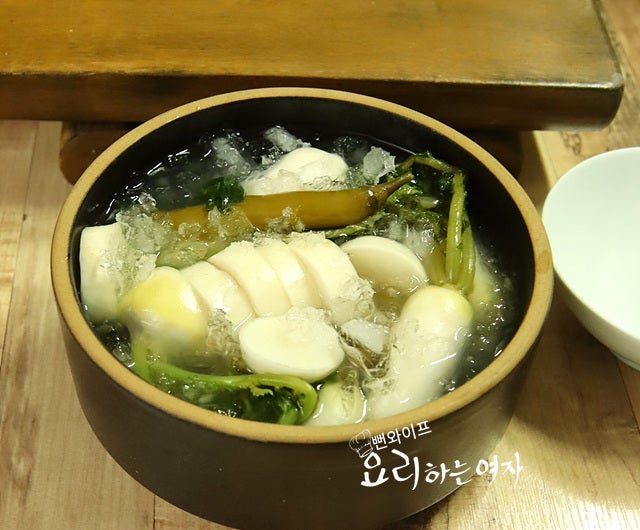
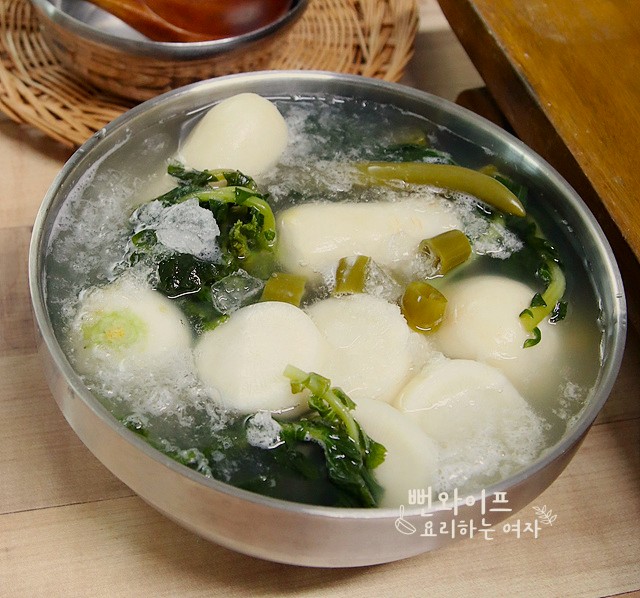
The radish is so crunchy your jaw almost aches.
The salty flavor and distinct aroma of the fermented chili peppers infuse into the broth, adding deep savoriness.
Having released their saltiness into the broth, the fermented chili peppers are not salty at all when eaten after aging.
Though it takes some time, it matures wonderfully without cooking any starch porridge.
Because the broth was seasoned slightly salty, you can adjust the taste by adding more bottled water when you serve it.
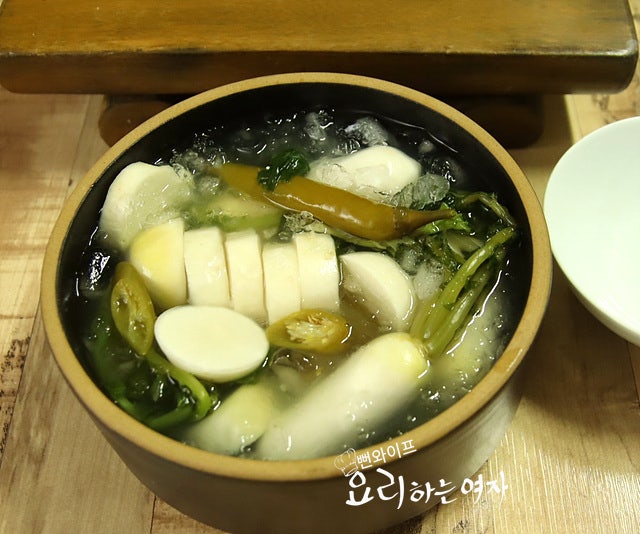
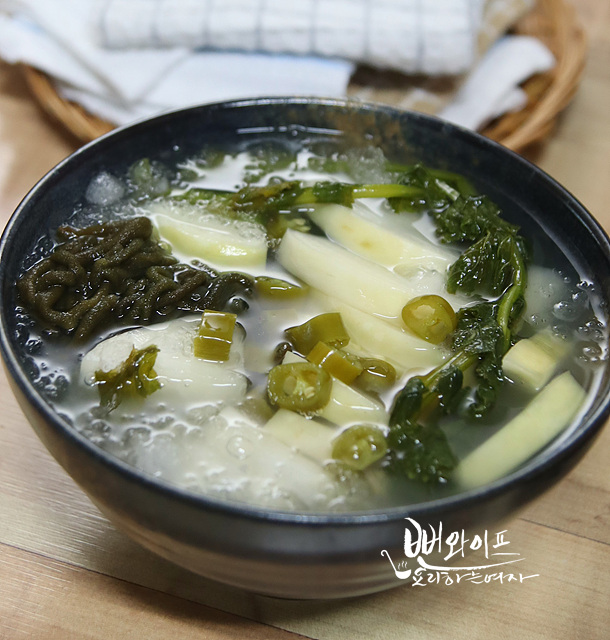
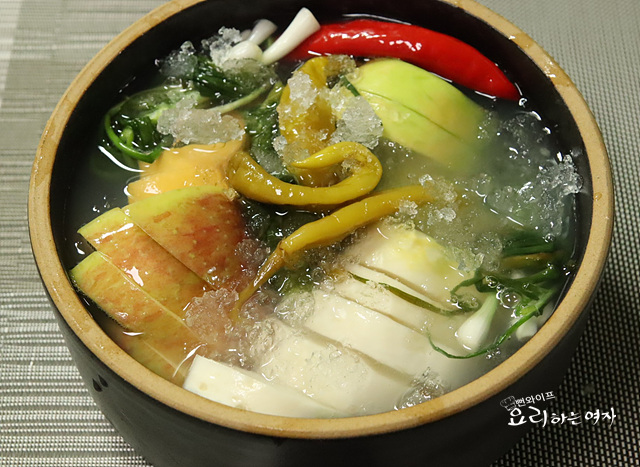
Slice the fermented chili peppers, cut the radish and stems into bite-sized pieces, and serve with floating ice; you will crave somyeon noodles in it and think of roasted sweet potatoes.
Replacing the fruit used previously with green plum syrup, a wonderful dongchimi is completed with just radish and fermented chili peppers.
Now you feel confident about making dongchimi, don't you?
When the cold wind blows and the radishes are firm and delicious, it is the best season to make dongchimi, so be sure to try it.
 Ppunwife's tips
- To keep them crunchy and prevent them from turning mushy, do not peel the skin completely; just scrape off the fine roots and tail roots with a knife.
- The seasoning must taste slightly salty so that white film does not form on the broth, the salted radish does not turn bland, and it ferments well without spoiling.
- If you mince the garlic and ginger until their sap releases, the broth will turn thick or cloudy rather than clean.
- If you scoop repeatedly from a large tub, souring accelerates and you cannot keep the initial crisp, clean flavor for long.
- Since the broth was seasoned slightly salty, simply add more bottled water to taste when serving.
FAQ
Should I completely peel the radish skin?
To preserve a crunchy texture and prevent the radish from softening quickly, it is best not to peel the skin; simply scrape away the fine side roots with a knife before washing.
Can I finely mince the garlic and ginger?
Finely mincing garlic and ginger releases juices that can make the broth thick or cloudy, so it is cleaner to slice them finely and steep them in a seasoning pouch.
Why is the dongchimi broth seasoned slightly salty at first?
If the broth is too bland, a white film (golmaji) may form on the surface or seasoning can leach out of the radish and cause spoilage; seasoning it slightly salty at the beginning ensures safe fermentation.
Why divide it into smaller containers after fermentation for storage?
Opening a large container frequently exposes it to air and speeds up souring, so portioning into small containers for refrigeration keeps its fresh flavor much longer.