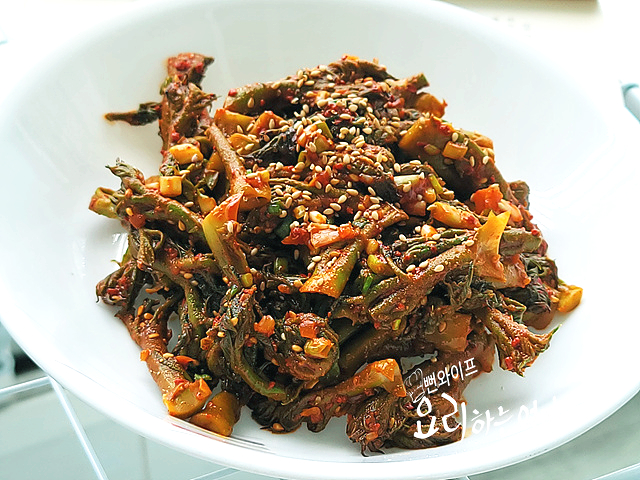
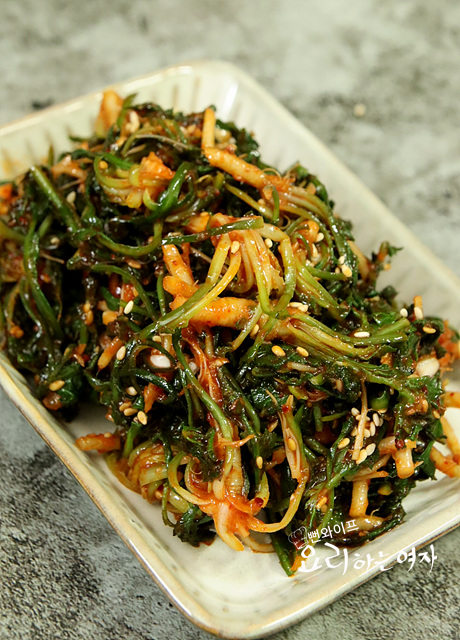
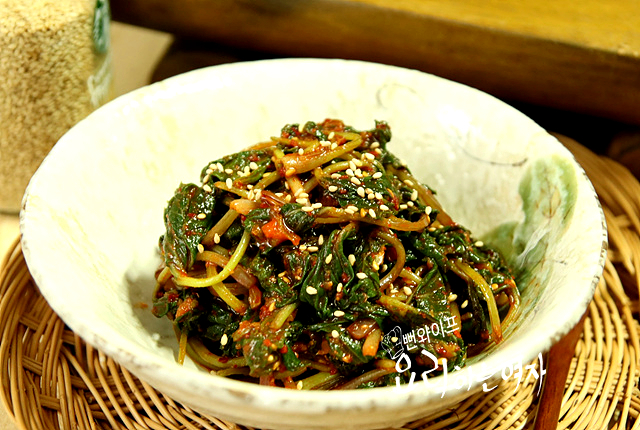
Fragrant Bangpungnamul Muchim (Seasoned Coastal Glehnia Greens)
A spring greens side dish of blanched coastal glehnia tossed in a sweet and spicy gochujang seasoning to highlight its distinct aroma.
Translated from Korean by AI and not yet checked by a native speaker. Amounts and numbers are taken directly from the original recipe. Read the Korean original →
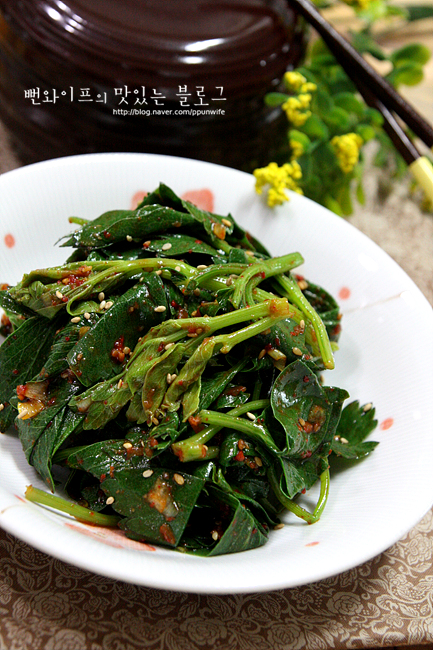
This spring side dish features coastal glehnia greens prized for their fragrant aroma and pleasantly bitter finish. Blanch the greens lightly in boiling water for about 1 minute to preserve their crisp texture, then toss them in a spicy seasoning. Made with simple everyday ingredients, it is a great dish to revive your appetite.
- Servings
- about 1–2 servingsOriginal: 1 plate
- Difficulty
- Medium
- Spiciness
- Mildly spicy
Ingredients
Ingredients
- Coastal glehnia leaves (bangpung-namul)100 g
- Coarse sea salt1/2 tbsp
Seasoning
- Gochujang (Korean red chili paste)1/2 tbsp
- Regular soy sauce (jin-ganjang)/12 tbsp
- Gochugaru (Korean chili flakes)1 tbsp
- Minced green onion1 tbsp
- Minced garlic1/2 tbsp
- Corn syrup (mulyeot)1/2 tbsp
- Ground toasted sesame seedsa little of each
- Toasted sesame oila little of each
Ingredients for coastal glehnia pancakes
- Coastal glehnia leaves (bangpung-namul)50 g
- Flour2 tbsp
Batter
- Egg1
- Korean pancake mix (buchim-garu)1/2 cup
- Anchovy broth2/3 cup
- Best enjoyed when the leaves are fresh and tender.
- Trim away withered leaves and tough stems, then cut into bite-sized pieces.
Steps
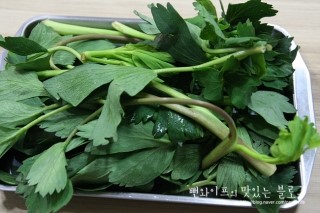
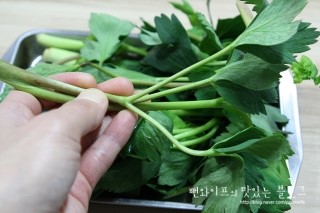
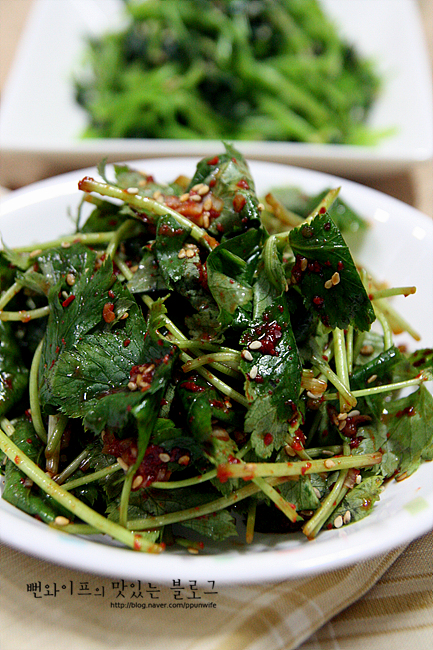
1. This is what coastal glehnia greens look like.
To my eyes, their shape looks quite similar to dureup (angelica tree shoots).
They are readily available in supermarkets these days, and they are best eaten while the leaves are fresh and tender.
2. Trim away withered leaves and tough stems, then cut them by hand into bite-sized pieces.
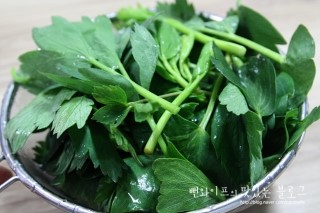
3. After trimming, they weigh 100g.
When I bought them at the market, two packs weighed 200g, but after trimming, they came out to 150g...
I used 100g for this seasoned dish and made savory pancakes with the remaining 50g.
Rinse thoroughly in water and drain off the excess moisture loosely.
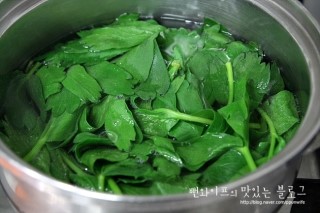
4. Add enough water to submerge the greens, bring to a rolling boil, add a little coarse sea salt,
and add the coastal glehnia leaves to blanch for under 1 minute.
You can extend the blanching time depending on how tough the greens are,
but right now they are tender and need only a brief blanch; blanching too long will ruin their characteristic texture.
Rinse quickly in cold water and squeeze out the water.
If you squeeze too firmly, they will get crushed, and keeping a little moisture makes for a moist seasoned dish, so be careful not to press down too hard.
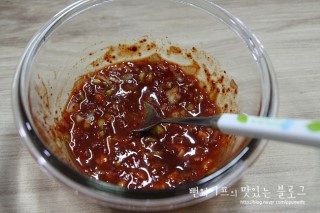
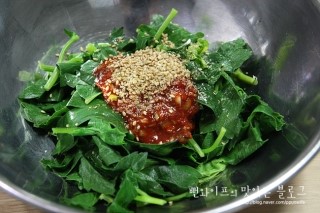
5. Add the seasoning ingredients (except the ground toasted sesame seeds and toasted sesame oil) and mix.
6. Add the coastal glehnia leaves and the seasoning...
If possible, add the ground toasted sesame seeds and toasted sesame oil right when tossing so you can enjoy a rich, nutty flavor even with a small amount.
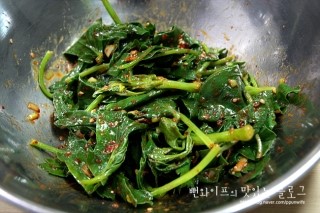
Toss gently by hand, and it is done.
Coastal glehnia pancakes (1 plate)
Ingredients: coastal glehnia leaves 50g, flour 2 tbsp
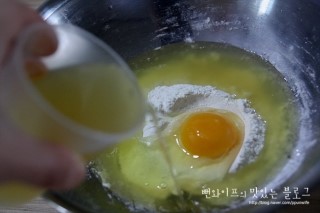
Batter: 1 egg, Korean pancake mix (buchim-garu) 1/2 cup, anchovy broth 2/3 cup
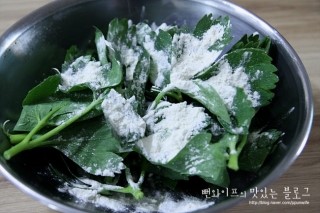
1. Take the trimmed coastal glehnia leaves from step 3 while still damp and coat them in flour.
Gently shake off excess flour with your hands so it does not coat too thickly,
or you can place them in a large plastic bag and shake it.
2. Usually when making savory pancakes, a 1:1 ratio of mix to water works well,
but when pre-coating the ingredients in flour, you should make the batter slightly thinner.
If you make the batter as thick as usual after dusting with flour, the pancakes will turn out too thick to let the ingredients shine.
If you prefer to season directly rather than dipping in vinegared soy sauce, add about 1 tsp of soup soy sauce (guk-ganjang) to the batter
and the seasoning will be just right without dipping sauce.
For pancakes without seafood or meat, mixing the batter with rich anchovy broth or seafood broth
makes them far more delicious.
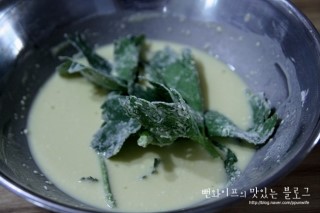
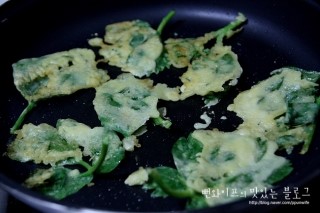
3. Dip the lightly floured greens into the batter to coat evenly, wipe off any excess batter on the rim of the bowl,
and pan-fry.
4. Heat a pan and fry over medium heat until golden brown on both sides, and your delicious coastal glehnia pancakes are done.
 Ppunwife's tips
- You can increase the blanching time depending on how tough the greens are, but when they are tender, a brief blanch is enough; overcooking will ruin their characteristic texture.
- If you squeeze too firmly, they will get crushed, and keeping a little moisture makes for a moist seasoned dish, so be careful not to press down too hard.
- If possible, add the ground toasted sesame seeds and toasted sesame oil right when tossing so you can enjoy a rich, nutty flavor even with a small amount.
- When pre-coating ingredients in flour, make the batter slightly thinner than usual.
- If you prefer not to dip in vinegared soy sauce, add about 1 tsp of soup soy sauce (guk-ganjang) to the batter for a perfectly balanced flavor on its own.
- For pancakes that do not contain seafood, mixing the batter with rich anchovy broth or seafood broth makes them much more delicious.
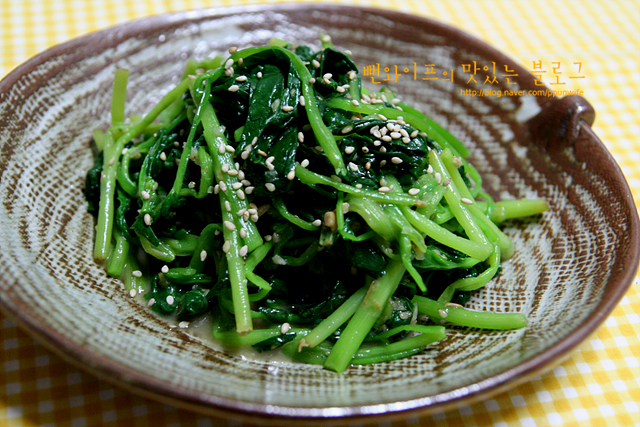
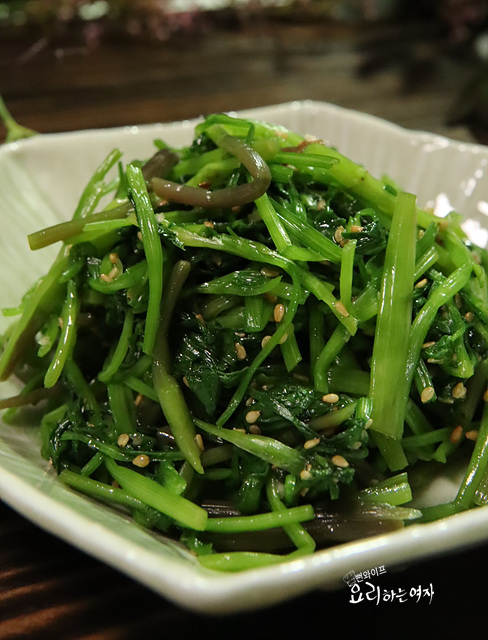
- It is also delicious tossed with doenjang and perilla oil for a rich, savory taste, or simply seasoned cleanly with soup soy sauce and salt.
FAQ
What should I keep in mind when blanching coastal glehnia leaves?
Add coarse sea salt to boiling water and blanch lightly for under 1 minute so the leaves do not become tough and retain their natural crisp texture.
How firmly should I squeeze the blanched greens?
Squeezing too hard will crush the leaves, so squeeze gently and leave a little moisture behind to keep the seasoned dish moist.
Can I season these greens without gochujang?
Yes. You can toss them with doenjang and perilla oil for a deep, savory flavor, or keep it clean and light with just soup soy sauce and salt.
How should I adjust the batter consistency for coastal glehnia pancakes?
Since the greens are lightly dusted with flour beforehand, it is best to mix the batter slightly thinner than usual.