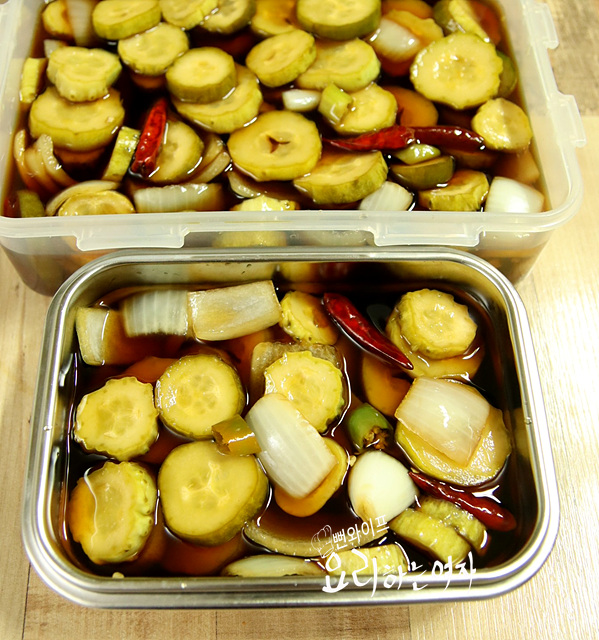
Modeum Jangajji (Assorted Pickled Vegetables)
A crunchy pickled vegetable side dish made by pouring hot seasoned soy brine over cucumbers and garlic scapes.
Translated from Korean by AI and not yet checked by a native speaker. Amounts and numbers are taken directly from the original recipe. Read the Korean original →
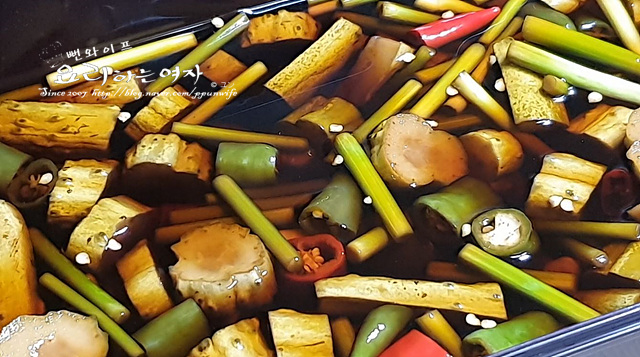
This pickled side dish is made by preparing seasonal cucumbers and garlic scapes and pouring boiling soy brine straight over them. Pouring it hot without letting it cool keeps the vegetables wonderfully crunchy. Age it at room temperature for one day, then store in the refrigerator to enjoy anytime.
- Servings
- about 6–8 servings
- Difficulty
- Medium
- Spiciness
- Mildly spicy
Ingredients
Ingredients
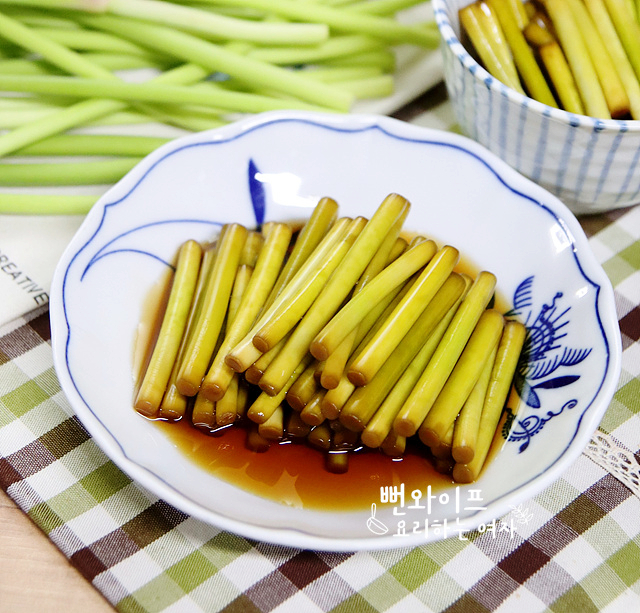
- Garlic scapes1 handful, 200 g
- Cucumber5
- Cheongyang chili pepper (hot green chili)10
- Red chili pepper2
Soy Brine
- Water4 cups
- Regular soy sauce (jin-ganjang) (or brewed soy sauce (yangjo-ganjang))2 cups
- Vinegar1 cup
- Sugar1 cup
- Soju1/3 cup
- Firm white cucumbers (baek-oi) work best for pickling.
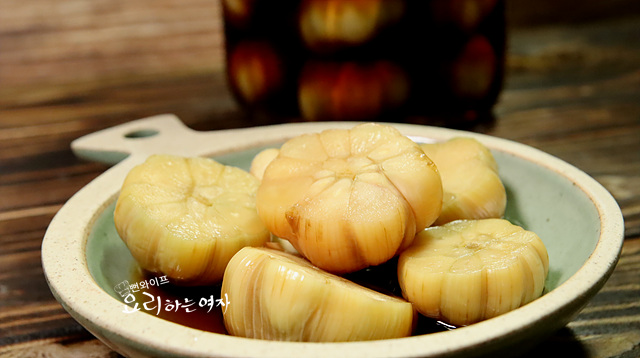
- If you have small, firm pickling onions, you can prepare those as well.
Steps
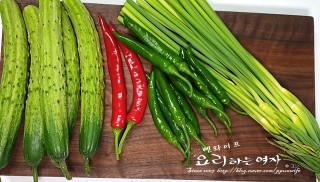
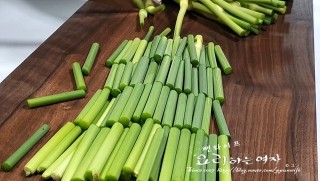
1. Firm white cucumbers are best for pickling.
You will need a large handful of garlic scapes while still tied in a bundle. Cheongyang chili peppers are added for a spicy kick.
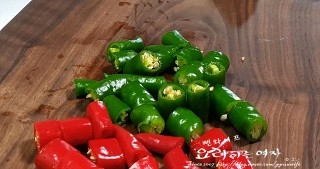
Red chili peppers are for color.
If you have small, firm pickling onions, you can prepare those too.
2. It is convenient to cut the garlic scapes into 3 to 4 cm lengths while still tied, then wash them in water.
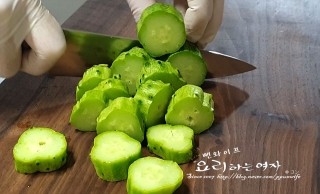
3. Cut the cucumbers thickly into rounds about 2 cm thick, or quarter them lengthwise into long spears.
4. Slice the chili peppers into large rounds of about 3 cm.
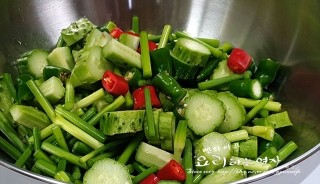
5. Place all the sliced ingredients into a container.
You will need a stainless steel bowl or container since you will be pouring hot soy brine over them.
If you do not have one, you can add the vegetables directly into the pot where you boiled the brine.
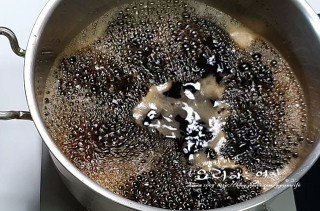
6. Add 4 cups water, 2 cups regular soy sauce (jin-ganjang) or brewed soy sauce, 1 cup vinegar, 1 cup sugar, and 1/3 cup soju, then boil vigorously for about 3 minutes.
If you like it tarter, increase the amount of vinegar.
I did not make it overly sweet, so add more sugar if you prefer it sweeter.
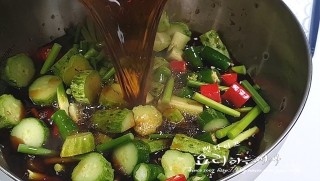
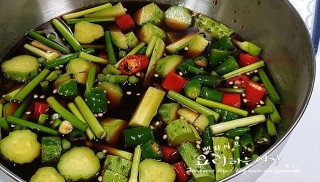
7. Pour the boiling soy brine directly over the ingredients.
Pour it straight while it is boiling hot without cooling it down.
8. Mix well top to bottom so the soy brine coats the ingredients evenly.
Leave it at room temperature for about one day to absorb the seasoning before eating.
If you want to keep it for a long time, drain the soy brine after 3 days, boil it vigorously for 5 minutes, let it cool completely, pour it back in, and store it in the refrigerator.
 Ppunwife's tips
- You will need a stainless steel container because you will be pouring hot soy brine. If that is difficult, you can pour the vegetables directly into the pot where you boiled the brine.
- If you like it tarter, increase the vinegar; if you like it sweeter, add more sugar.
- If keeping it for a long time, pour off the soy brine, boil it vigorously, let it cool, and store in the refrigerator.
- While eating, you can use the brine as a dressing for green onion salad when eating meat, or once the vegetables are finished, strain the remaining brine through cheesecloth or a fine sieve, boil it vigorously, and reuse it. Reusing the brine about once seems just right.
FAQ
How should I care for the soy brine for long-term storage?
After 3 days, drain only the soy brine, boil it vigorously for 5 minutes, let it cool completely, pour it back over the vegetables, and store in the refrigerator.
Should the boiled soy brine be cooled before pouring?
No, pour it straight over the ingredients while it is still boiling hot without letting it cool.
What kind of cucumbers work best?
White cucumbers with firm flesh are best suited for pickling.
How can leftover soy brine be reused?
You can use it as a dressing for sliced green onions when eating meat, or strain it through a fine sieve, boil it vigorously, and reuse it once for another batch of pickles.