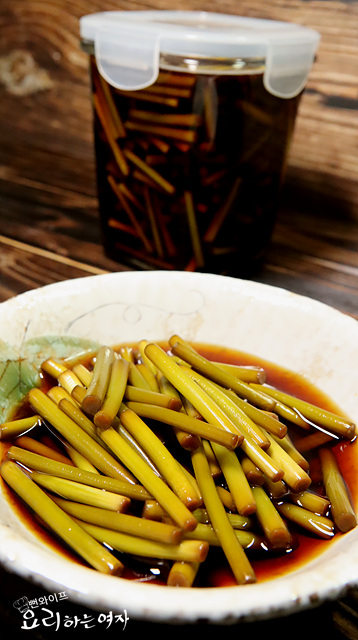
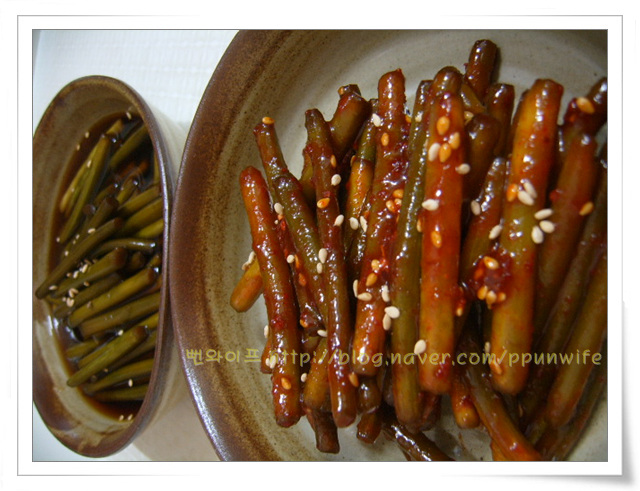
Crisp Pungmaneul Jangajji (Pickled Green Garlic)
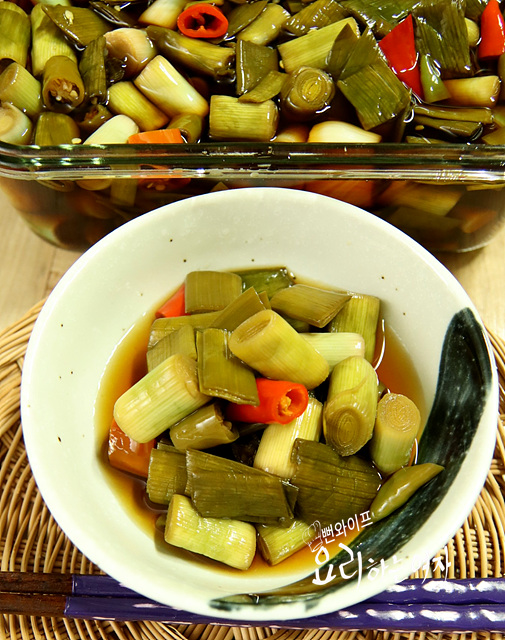
A preserved side dish made by pouring hot boiled soy brine and soju over tender in-season green garlic for a crisp texture.
Translated from Korean by AI and not yet checked by a native speaker. Amounts and numbers are taken directly from the original recipe. Read the Korean original →
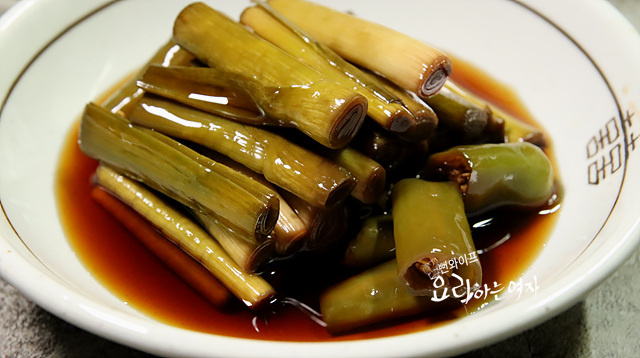
This easy jangajji is made by pouring boiled soy brine over tender early spring green garlic and Cheongyang chili peppers. Adding soju at the end prevents white film (mold) from forming, so there is no need to reboil the brine later. It is a wonderful special side dish that cuts through grease when paired with grilled meats.
- Servings
- about 5–6 servings
- Difficulty
- Easy
- Spiciness
- Mildly spicy
Ingredients
Ingredients
- Green garlic25 stalks, 500 g
- Cheongyang chili pepper (hot green chili)10
Soy sauce brine
- Water1 1/2 cups
- Regular soy sauce (jin-ganjang) (or brewed soy sauce (yangjo-ganjang))1 1/2 cups
- Vinegar1 cup
- Sugar1/2 cup
- Soju1/2 cup
- Trim off the roots covered in dirt, peel away about one layer of the stalk, and wash thoroughly under running water, running your hands along where the stalk meets the leaves to rinse away any clinging dirt.
- Cut from the root end up through the moderately thick stalk for the pickles, and save the remaining thin leafy tips for doenjang jjigae or soups.
Steps
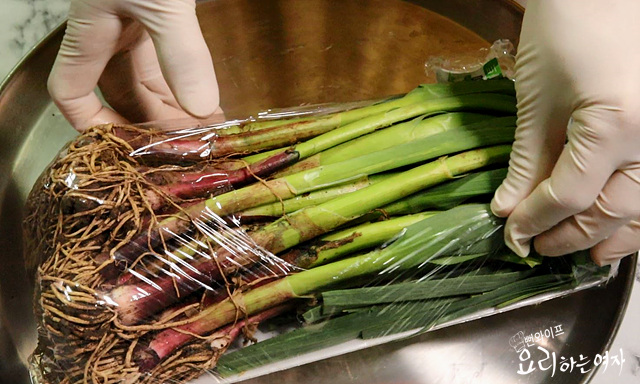
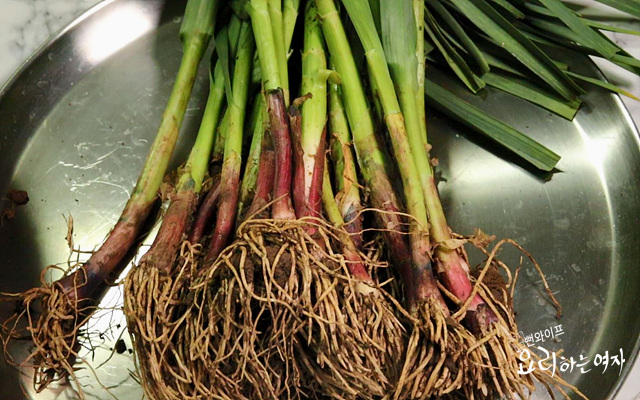
This is 1 pack of green garlic. It contains 25 stalks.
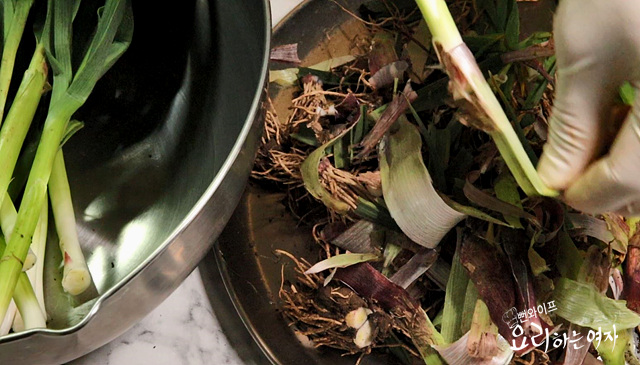
Trim off the roots covered in dirt and peel away about one layer of the stalk.
They are fresh, so there is hardly anything to trim.
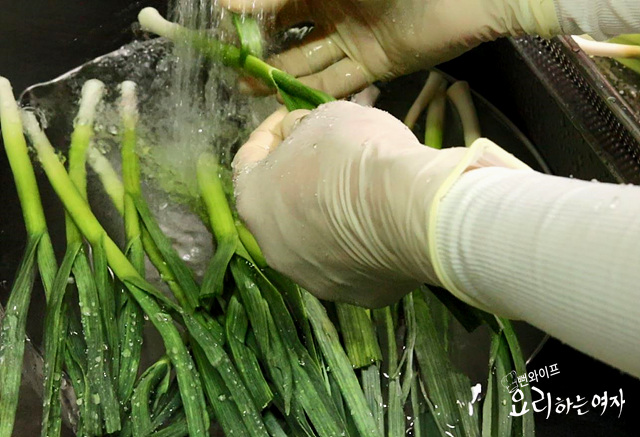
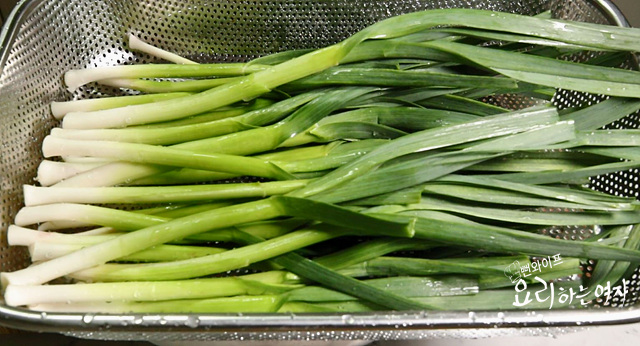
Dirt clings between the stalks and leaves, so wash them
thoroughly under running water, running your hands along them.
Right now they look like thin scallions, but in a month or two garlic scapes will grow from the center,
and with more time the roots turn into garlic bulbs—it is quite fascinating.
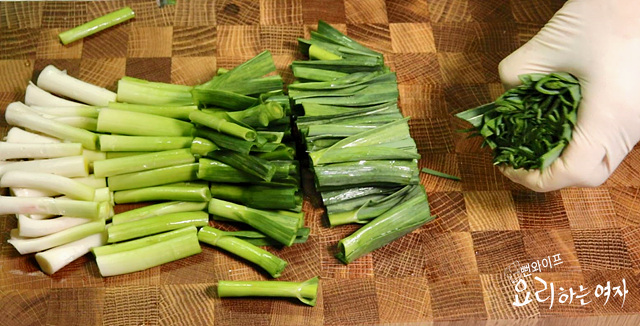
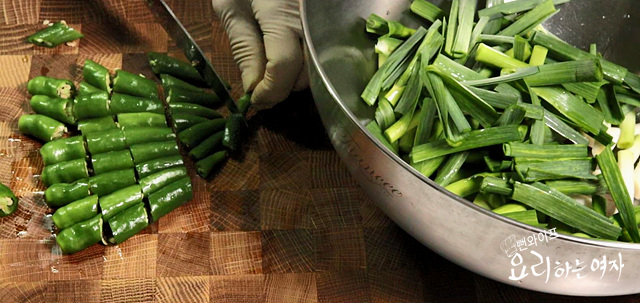
Cut from the root end up through the moderately thick stalk,
and use the remaining thin leafy parts in doenjang jjigae or soups.
Cut the Cheongyang chili pepper (hot green chili) to a similar size.
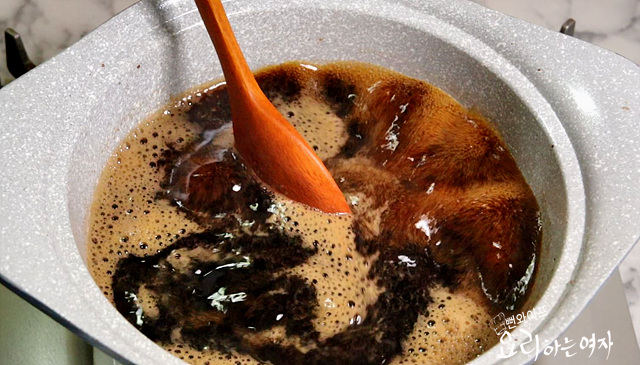
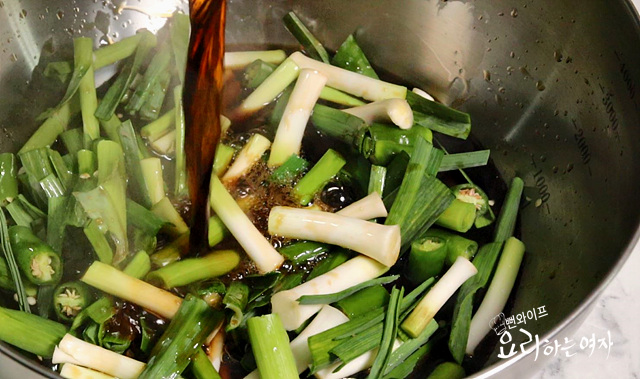
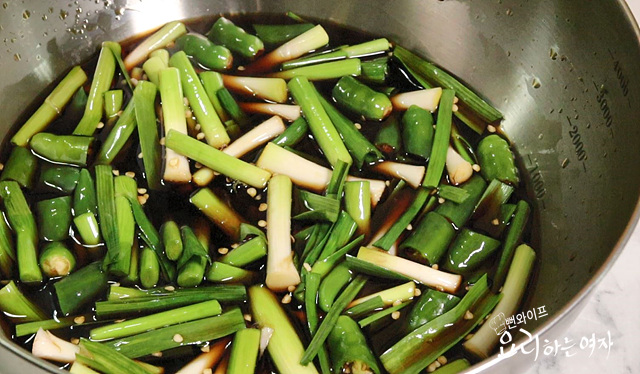
Add all the soy sauce brine ingredients: 1 1/2 cups water, 1 1/2 cups regular (or brewed) soy sauce, 1 cup vinegar, and 1/2 cup sugar,
and bring to a rolling boil.
Once it starts to boil, it may foam up and boil over, so stay by the stove and let it boil for about 1 minute.
Pour the boiling hot soy sauce brine directly over the green garlic in the bowl.
Then pour in 1/2 cup soju as well.
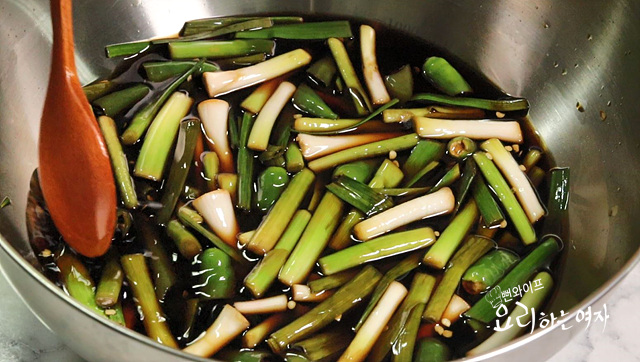
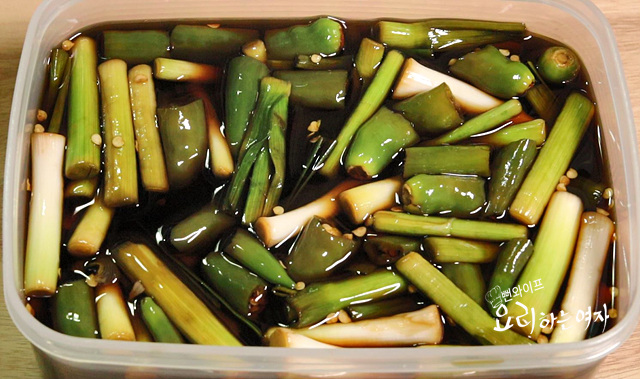
Mix well, let it cool completely, and transfer to a storage container.
After about 3 hours, the green leafy parts are ready to eat,
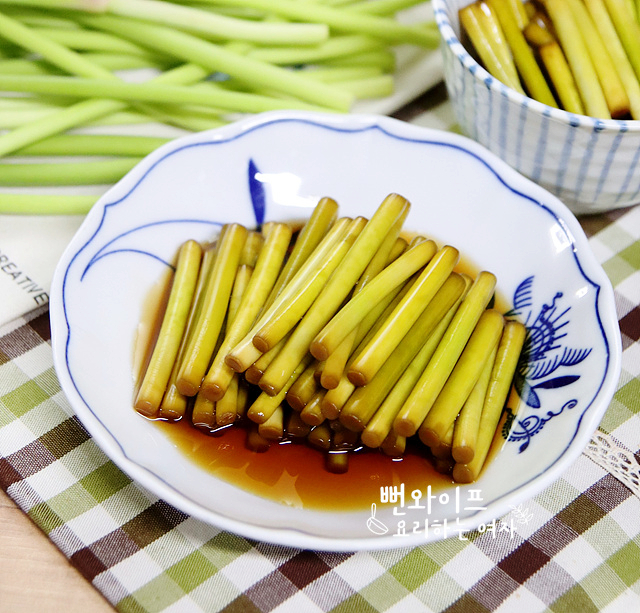
and the stalk portions can be eaten after 3 days.
Keep it in the refrigerator until finished; you do not need to reboil the brine along the way.
Adding soju at the end prevents white film from forming.
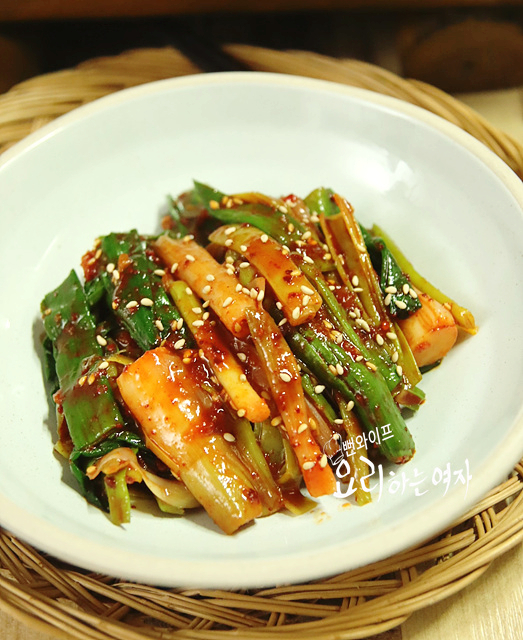
You can also use this soy sauce brine to toss sliced green onions or buchu for grilled meats.
Once you have eaten all the solid ingredients, bring the leftover brine to a rolling boil and reuse it.
 Ppunwife's tips
- Pickles draw moisture out of vegetables, so making them when the vegetables are tender ensures they will stay tender and delicious rather than tough, even after 1 or 2 years.
- Once the soy sauce brine starts boiling, it can foam up and boil over, so do not leave the stove and let it boil for about 1 minute.
- The green leafy parts can be eaten after about 3 hours, and the stalk parts are ready after 3 days.
- Keep it in the refrigerator until finished. Because soju is added at the end to prevent white film from forming, you do not need to reboil the brine along the way.
- You can use this brine to dress sliced green onions or buchu to serve with meat, and once all the greens are eaten, bring the leftover brine to a rolling boil to reuse it.
FAQ
When can I start eating pungmaneul jangajji after making it?
The green leaf portions can be eaten after about 3 hours, and the thicker stalk portions are ready to enjoy after 3 days.
Do I need to reboil and pour the soy sauce brine again while storing?
Soju is added at the final step to prevent white surface mold, so you can simply keep it refrigerated until finished without having to boil the brine again.
How can I use the leftover pickle brine?
You can toss it with sliced scallions or garlic chives to serve with meat, and once all the solids are eaten, bring the leftover brine to a rolling boil to reuse it.
How do I use the leftover thin green garlic leaves?
The thin leafy ends left over after cutting the pickle portions can be added to doenjang jjigae or various soups.