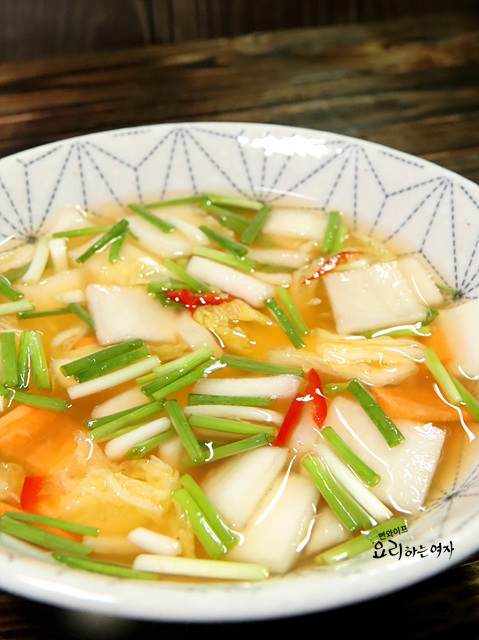
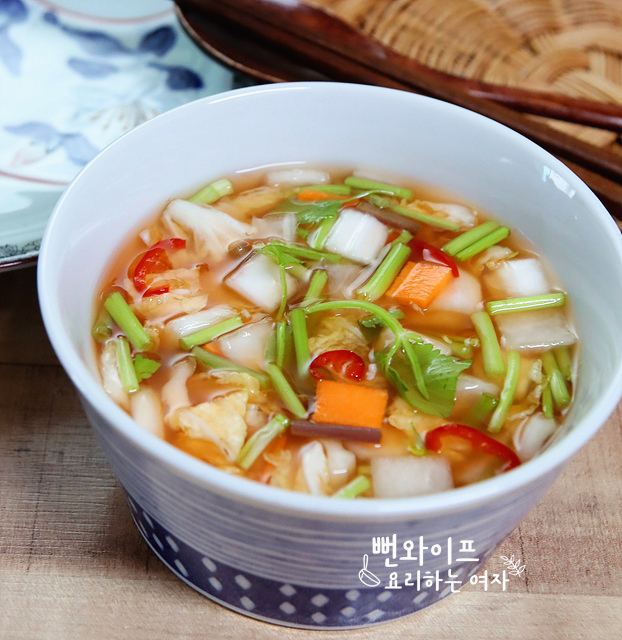
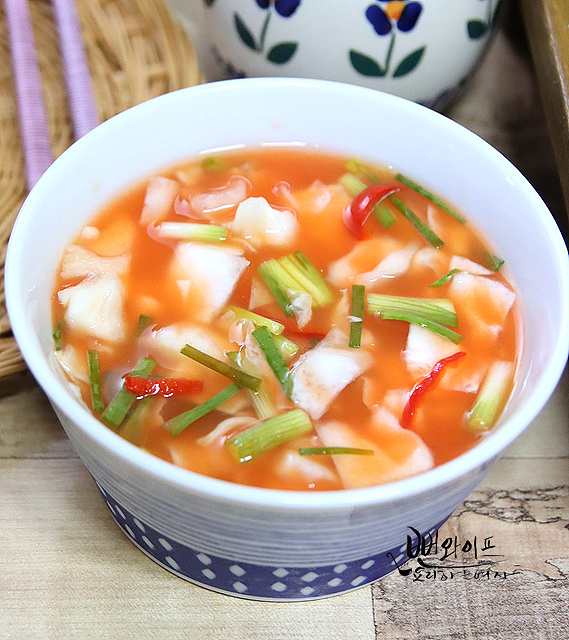
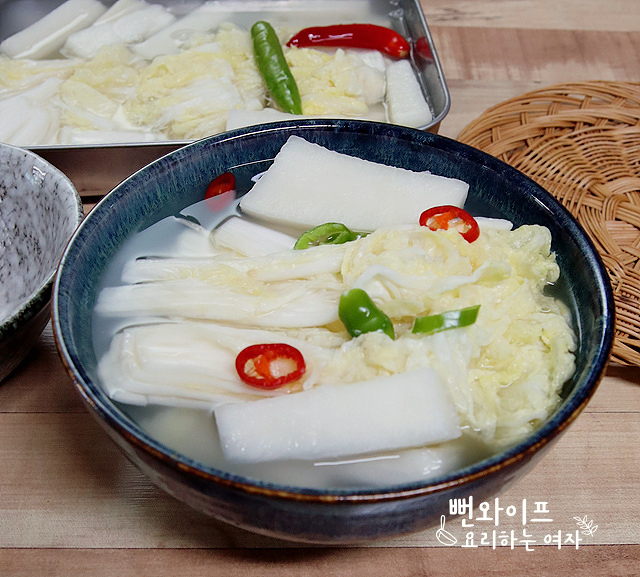
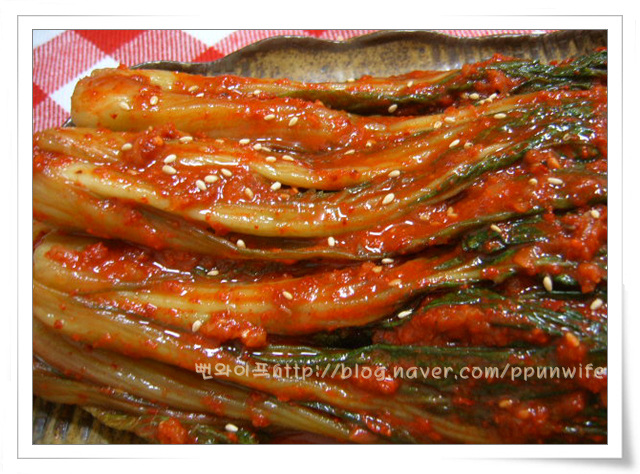
Clean Nabak Kimchi (Water Kimchi with Radish) without Paste
A holiday cabbage water kimchi made clean and refreshing without glutinous rice paste by blending and straining the seasoning.
Translated from Korean by AI and not yet checked by a native speaker. Amounts and numbers are taken directly from the original recipe. Read the Korean original →
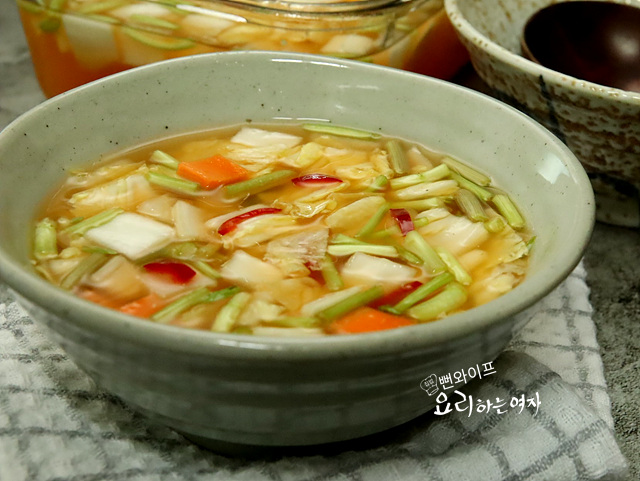
This water kimchi is made by lightly salting baby napa cabbage and Korean radish, keeping the extracted liquid without rinsing. Blending Korean pear, garlic, and red chili pepper without any rice paste and straining it through a sieve creates a clear, refreshing broth with no muddiness. It is wonderful paired with rich holiday dishes or served with thin wheat noodles.
- Servings
- about 8–10 servings
- Cook time
- 30 minprep not included
- Difficulty
- Easy
- Spiciness
- Not spicy
- Keeps
- 10 days
Ingredients
Ingredients
- Baby napa cabbage1 head, 500 g
- Korean radish (mu)1/3, 500 g
- Carrot1/2, 80 g
- Water dropwort (minari)30 stalks
- Red chili pepper1
- Coarse sea salt2 tbsp
Kimchi Broth
- Red chili pepper2
- Garlic10 cloves
- Ginger1/2 knob (size of a thumbnail)
- Korean pear (or pear juice 1 cup)1/2 (1 cup)
- Bottled water12 cups
- Coarse sea salt2 tbsp
- Sugar1 tbsp
- You can use pear juice instead of fresh Korean pear, or if that is not available, simply add 1 tbsp sugar to the broth.
- If you do not have red chili peppers, you can substitute 2 tbsp gochugaru (Korean chili flakes).
- It is best to use the stems of the water dropwort.
- Rather than keeping and eating this nabak kimchi for a long time like dongchimi, it is best to make it a few days before holidays and finish it quickly within ten days.
Steps
Prepare ingredients
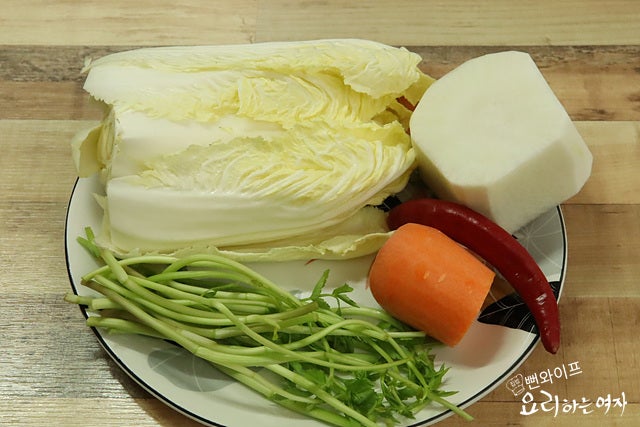
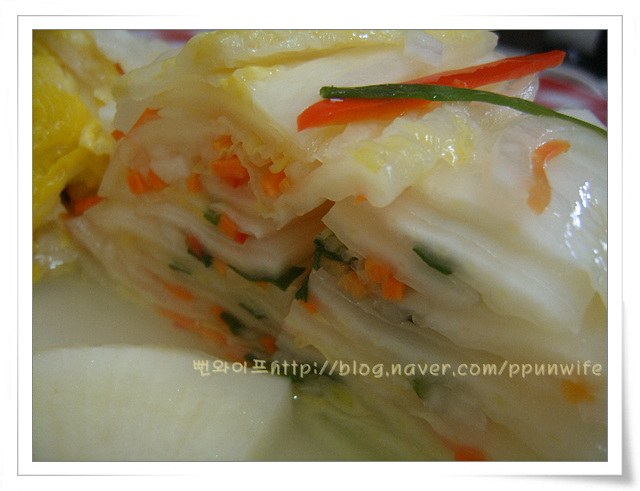
Prepare cabbage with yellow inner leaves, pull the leaves off one by one, and wash them thoroughly.
You need about 1/3 of a medium Korean radish and 1/2 of a medium carrot. I used 1 red chili pepper, but 2 would also work well. It is best to use the stems of the water dropwort.
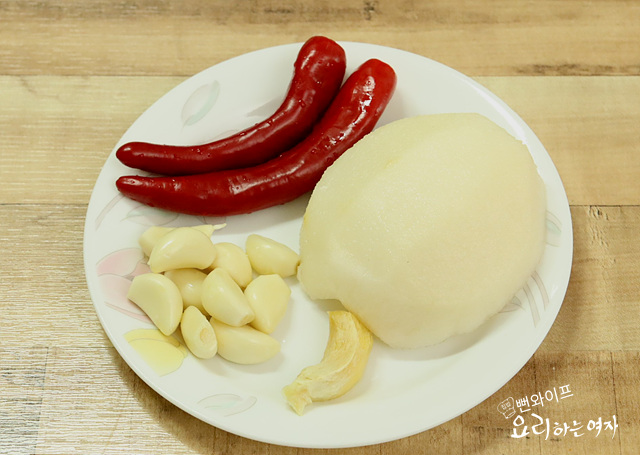
These are the Korean pear, garlic, ginger, and red chili pepper for the broth. You can use pear juice instead of fresh Korean pear, or if that is not available, add 1 tbsp sugar to the broth.
If you do not have red chili peppers, you can substitute 2 tbsp gochugaru.
Slice ingredients
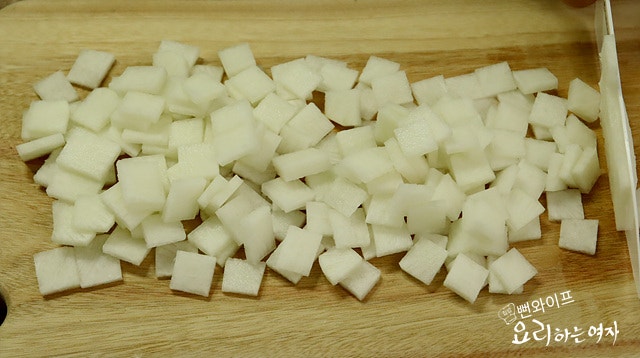
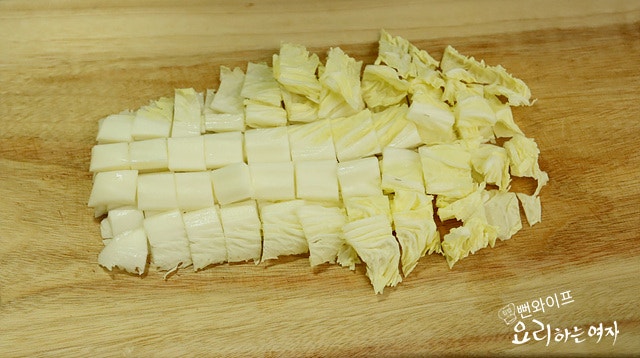
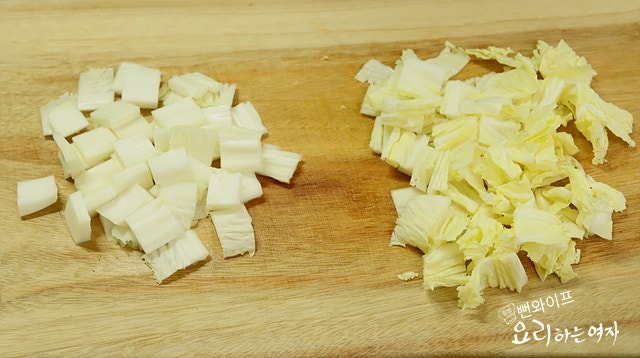
Cut the Korean radish thinly into 1.5 to 2 cm squares. You can cut it however you like.
Cut the cabbage into the same size as the radish, separating the stems and leaves. (We will salt the stems and leaves at different times.)
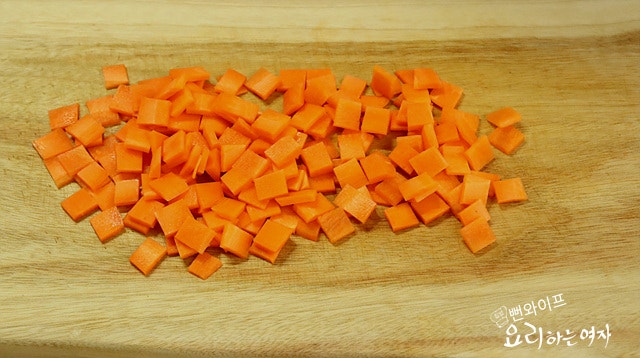
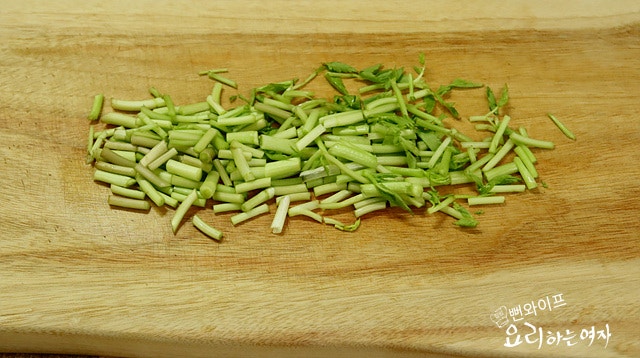
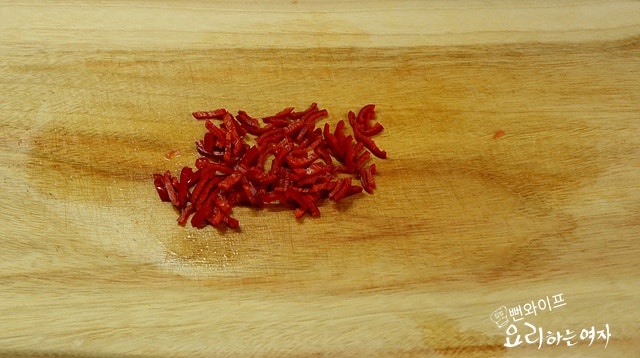
Slice the carrot for the nabak kimchi thinner and slightly smaller than the radish. Since it is not salted, a comfortable thickness for chewing is best. Cut the water dropwort to a similar length, and remove seeds from the red chili pepper and slice thinly into strips.
Salt
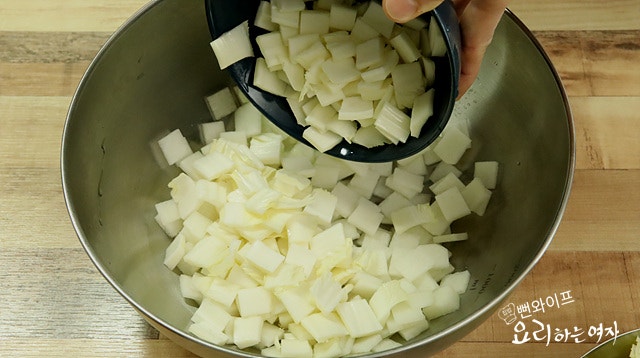
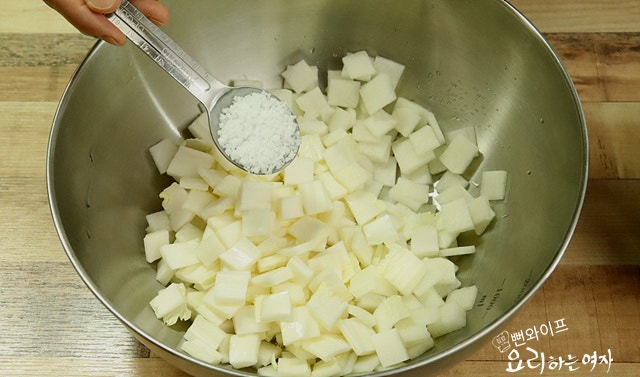
Place the radish and cabbage stem pieces together and add 2 tbsp coarse sea salt.
Mix evenly and let salt for about 20 minutes.
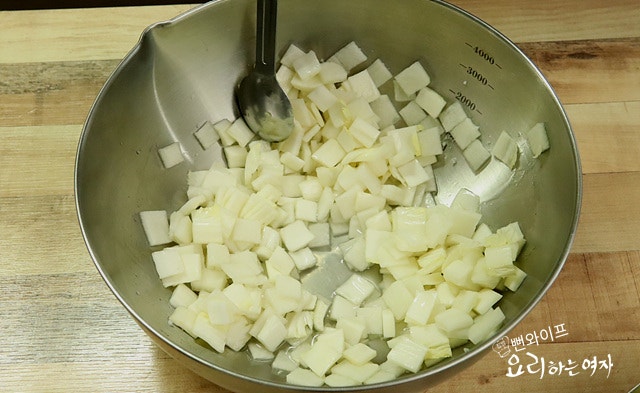
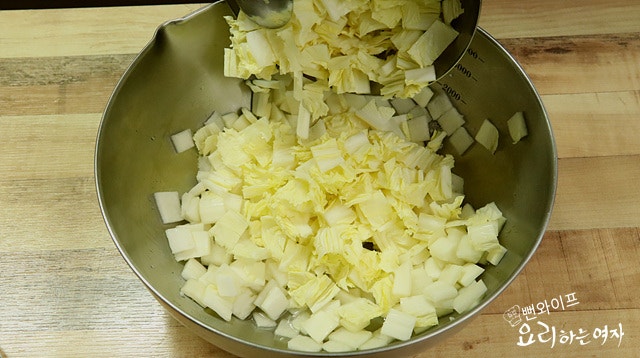
Some liquid has formed and the radish has softened. Adjust the time so they do not wilt too much.
Now add the remaining cabbage leaves and salt for 10 minutes more.
Make kimchi broth
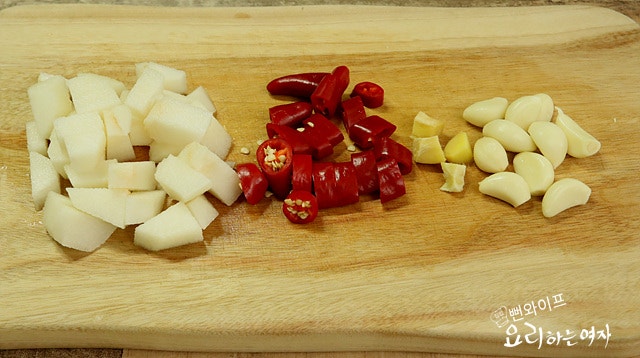
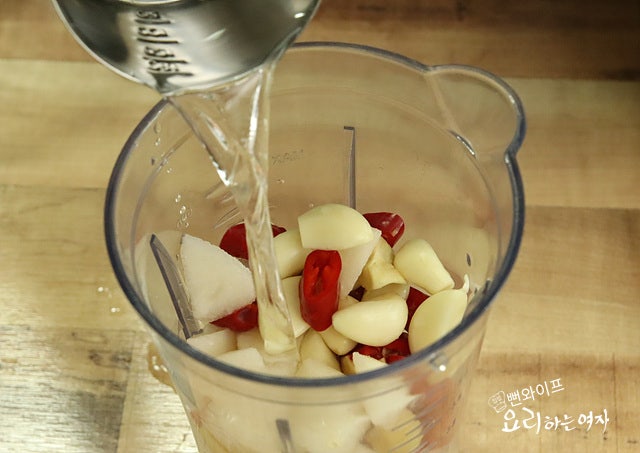
Make the seasoning broth while the vegetables are salting.
Put the peeled Korean pear, red chili pepper, garlic, and ginger into a blender. Pour in about 1 cup water and blend finely.
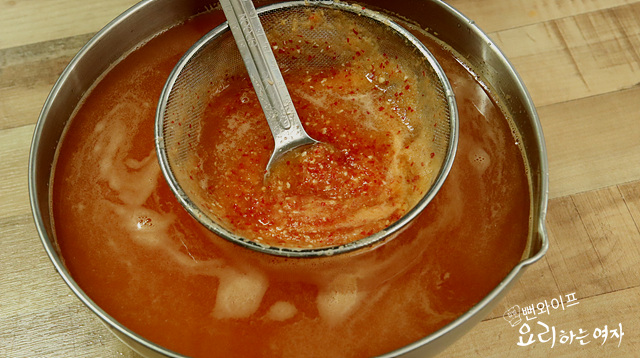
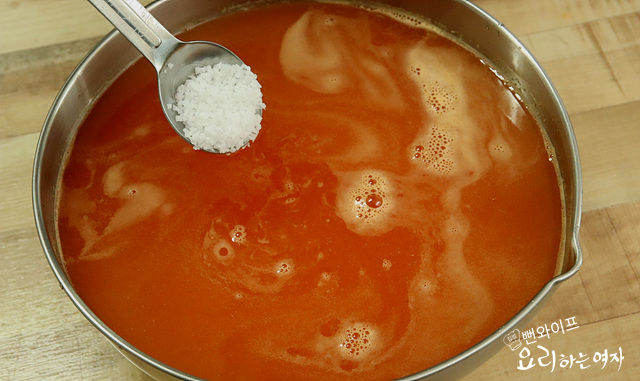
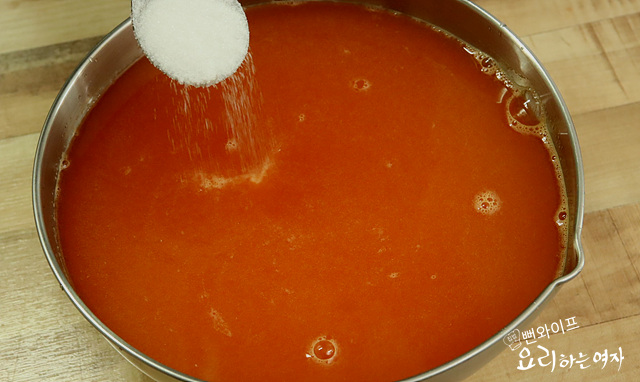
Add 12 cups bottled water to a bowl, and strain the blended seasonings through a sieve so the flavor infuses into the broth. Doing this keeps the broth clean and prevents any gritty texture when eating, making it pleasant to enjoy.
Add coarse sea salt and sugar, stirring well to dissolve.
Combine vegetables and broth
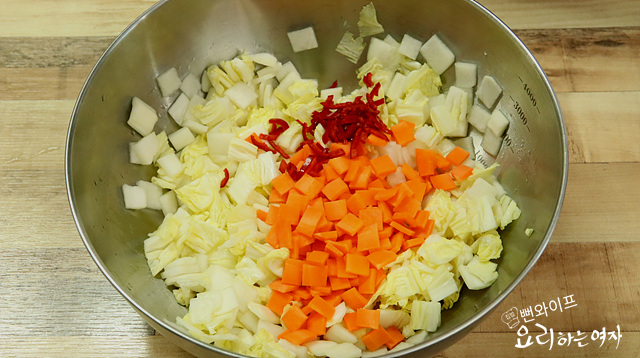
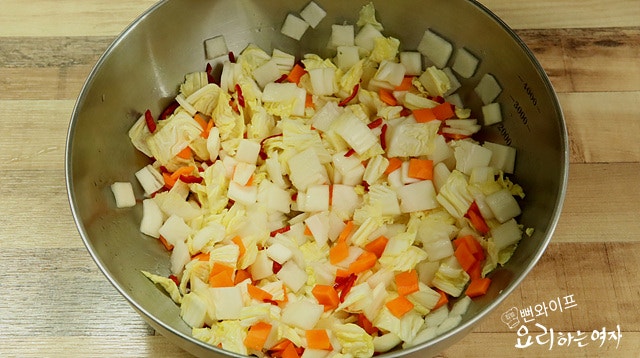
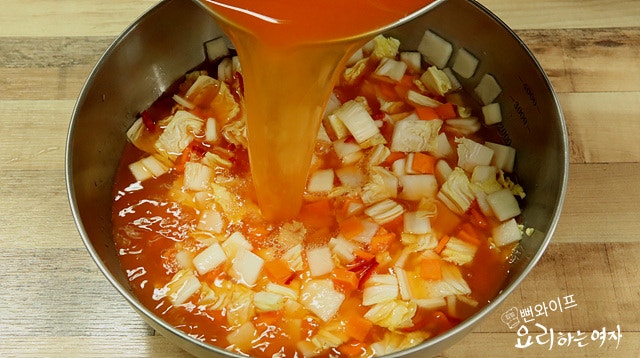
Use the salted radish and cabbage without rinsing. The moisture drawn out during salting is refreshing and tasty.
Add the sliced carrot and red chili pepper, then pour in all the kimchi broth.
Mix evenly, taste the broth, and adjust with salt if it is too light.
Ferment and store
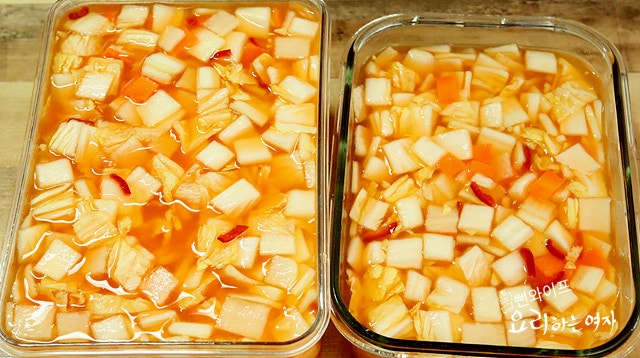
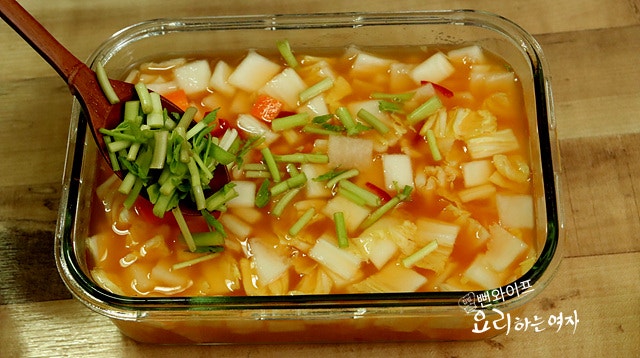
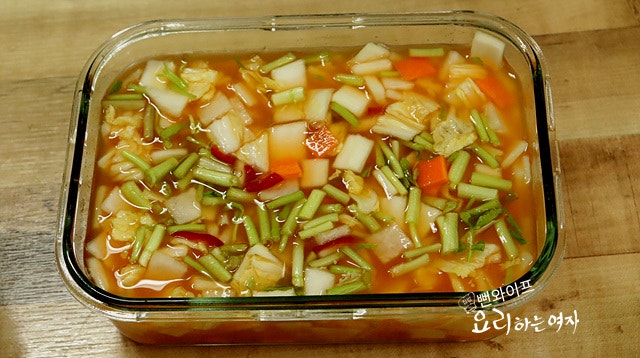
Transfer to a container and let ferment on a cool veranda for 24~48 hours. When I made it last week when temperatures dropped the lowest, it took two days.
Once the broth develops a tart aroma, add the water dropwort (minari) and keep it in the refrigerator to eat.
If you ferment it together with the water dropwort, it discolors and the texture suffers. Adding it later also preserves the aroma of the water dropwort.
That is why when making nabak kimchi, water dropwort is added at the end after fermentation.
 Ppunwife's tips
- Use the salted radish and cabbage without rinsing. The moisture drawn out during salting is refreshing and tasty.
- If you ferment with the water dropwort added, it discolors and the texture spoils. It also helps preserve its fresh aroma. This is why water dropwort is added at the very end after fermentation when making nabak kimchi.
FAQ
Do you rinse the salted cabbage and radish in water?
Add them as they are without rinsing. The moisture drawn out as the vegetables salt makes the broth even more refreshing and delicious.
Why is the water dropwort not added from the start?
If fermented together from the beginning, its color changes and its texture turns mushy. To preserve its distinctive aroma and crisp crunch, add it when moving to refrigerator storage after room-temperature fermentation is finished.
How can I substitute if I don't have fresh Korean pear for the broth?
You can substitute 1 cup of store-bought pear juice, or if you do not have pear juice either, adjust the sweetness by adding 1 tbsp sugar to the broth.
How many days can the finished nabak kimchi be kept and eaten?
Unlike dongchimi meant for long storage, this is a kimchi meant to be enjoyed fresh, so consuming it within a short period of ten days is recommended.