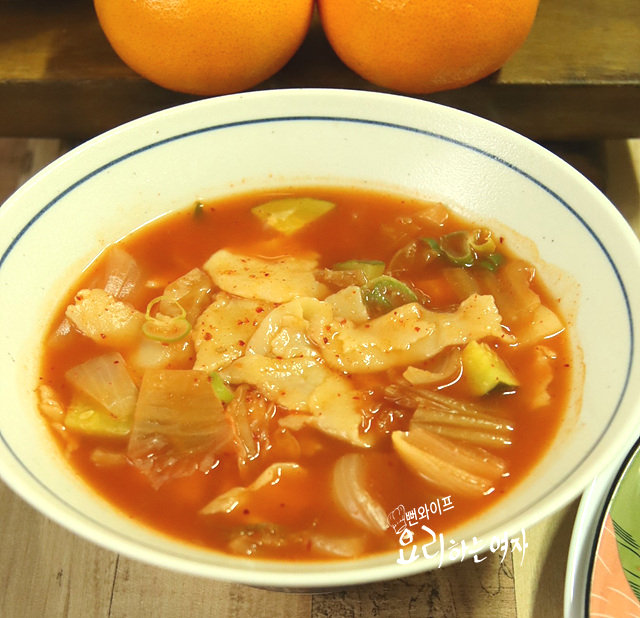
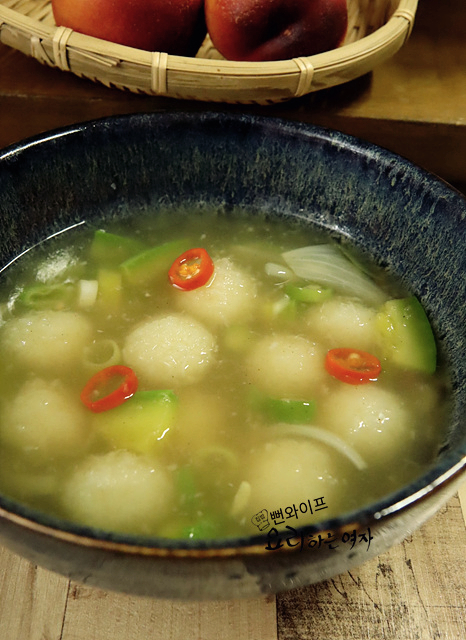
Rich and Nutty Deulkkae Sujebi (Hand-Torn Noodles in Perilla Broth)
A hearty one-bowl dish of chewy hot-water kneaded noodles simmered with anchovy broth and perilla seed powder.
Translated from Korean by AI and not yet checked by a native speaker. Amounts and numbers are taken directly from the original recipe. Read the Korean original →
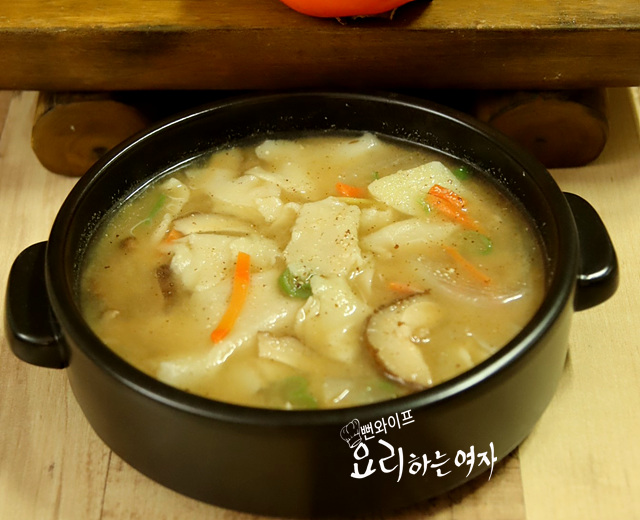
Tender and chewy hand-torn noodles made with a hot-water dough are simmered in a rich broth flavored with nutty perilla seed powder and anchovy broth. It makes for an easy, comforting, and hearty meal on chilly days.
- Servings
- 2 servings
- Difficulty
- Medium
- Spiciness
- Not spicy
Ingredients
- Sujebi (hand-pulled pasta dough)2 servings, 200 g
- Shiitake mushrooms2
- Potato1/2
- Onion1/4
- Carrota little
- Large green onion (daepa)a little
- Perilla seed powder1/2 cup
- Anchovy broth6 cups
- Soup soy sauce (guk-ganjang)1 tbsp
- Minced garlic1/2 tbsp
- Salt1/2 tsp
- Place the dough in a ziplock bag, cover it with a towel, step on it firmly for at least 10 minutes, and let it rest in the refrigerator for at least 1 hour.
- You can prepare the vegetables for the sujebi based on whatever you have in the refrigerator.
- You can also use kalguksu noodles instead of sujebi.
Steps
Rest the sujebi dough
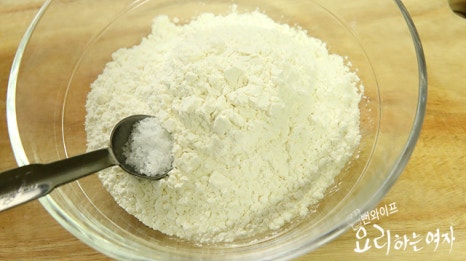
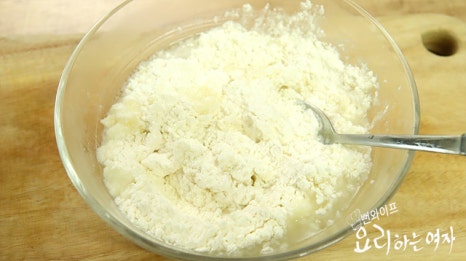
Add 2 cups of flour, 1/2 tsp of salt, and 1 tbsp of cooking oil, then pour in 8 tbsp of rolling-boiling hot water and mix with a spoon.
Kneading kalguksu or sujebi dough with hot water makes the dough much chewier and more elastic, so it does not get soggy while you eat and maintains a delightful texture throughout.
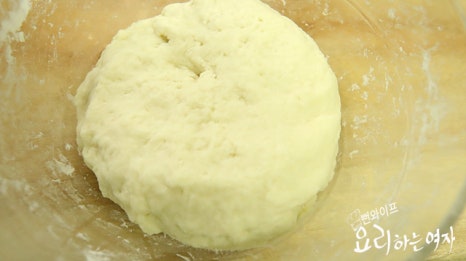
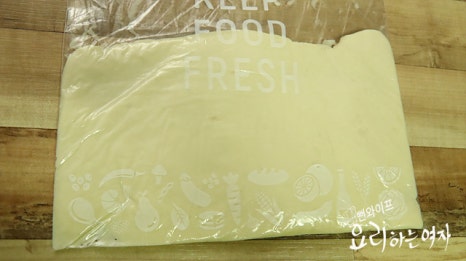
Once the dough roughly comes together, it can be tough to knead by hand, so you can place it into a ziplock bag, cover it with a towel, and knead it by stepping firmly on it with your feet.
Stepping on it for over 10 minutes makes the dough chewy, and resting it in the refrigerator for over 1 hour turns it into an elastic yet tender dough.
If you make it ahead of time and let it rest overnight or for two days, you can enjoy noodles with the texture of store-bought hand-pulled noodles.
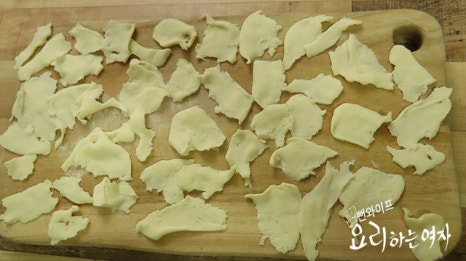
If you roll it thin with a rolling pin and slice it, it becomes kalguksu, and if you tear it into bite-sized pieces by hand, it becomes sujebi.
Rolling it thin with a rolling pin before tearing it by hand ensures an even thickness, and it is much easier because you can just drop everything into the boiling broth all at once rather than tearing dough pieces over the boiling pot.
Slice the vegetables
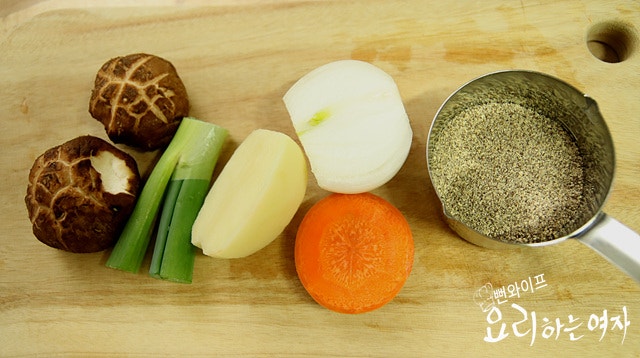
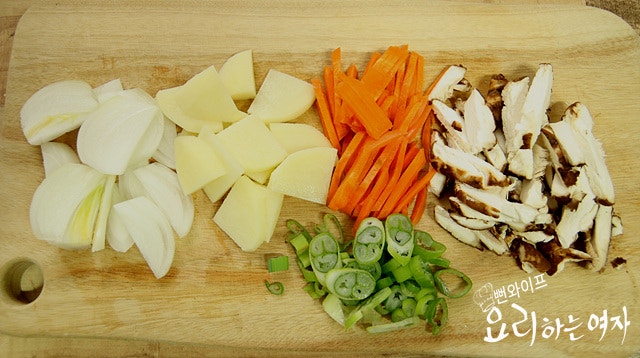
You can prepare whatever ingredients you have in the refrigerator for the sujebi.
Here are the small leftover bits of onion, potato, carrot, mushrooms, large green onion, and 1/2 cup of perilla seed powder.
Cut the vegetables into bite-sized pieces.
Boil
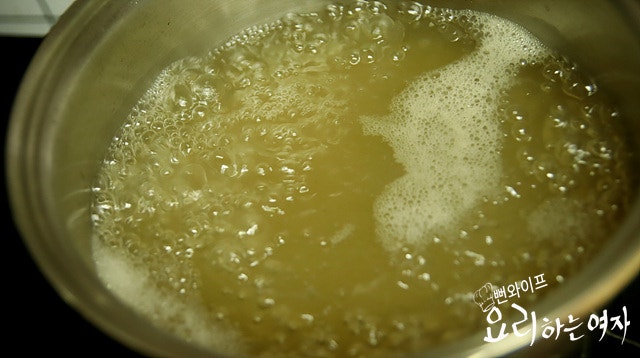
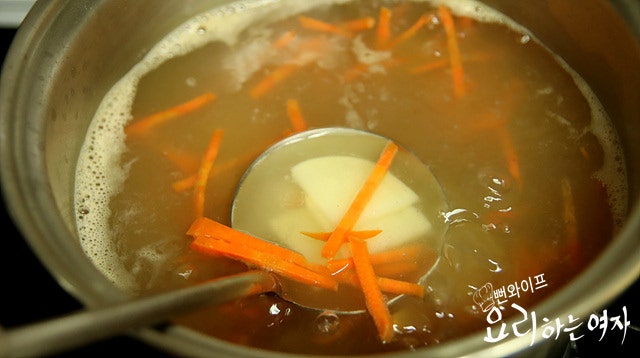
Add the firm vegetables, potato and carrot, to 6 cups of anchovy broth.
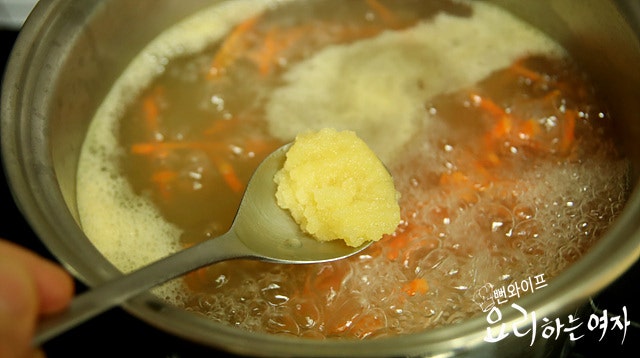
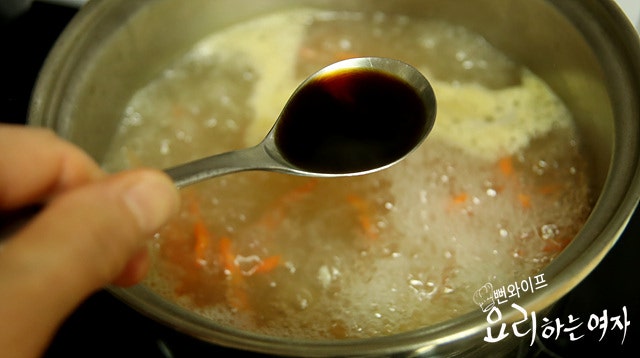
Add 1/2 tbsp of minced garlic and 1 tbsp of soup soy sauce, then boil until the vegetables are cooked. (Garlic can overpower the aroma of the perilla seed powder, so you may add just a little or omit it entirely.)
I tasted it and it was slightly bland, so I adjusted the seasoning with 1/2 tsp of salt.
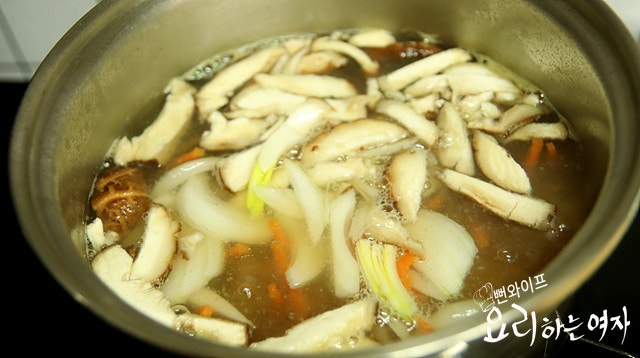
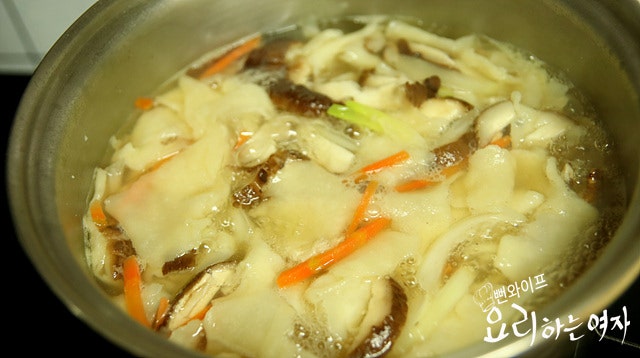
Add the remaining vegetables, mushrooms and onion, along with the sujebi dough, and once they are cooked through...
Add the perilla seed powder
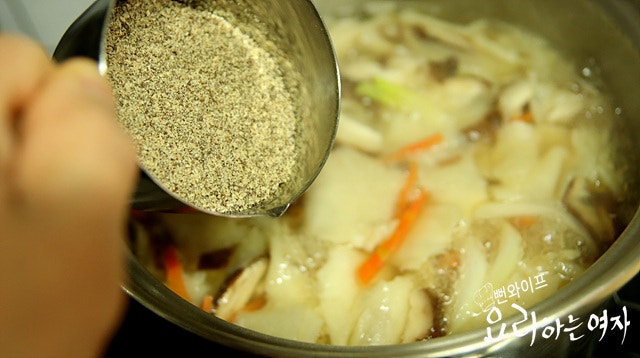
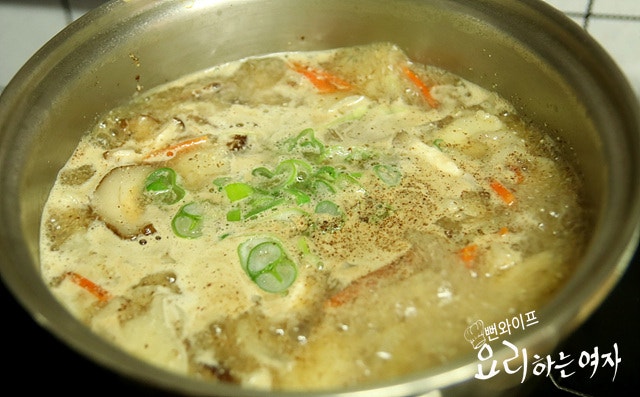
Add 1/2 cup of perilla seed powder and large green onion, then bring it to a quick boil.
Finish
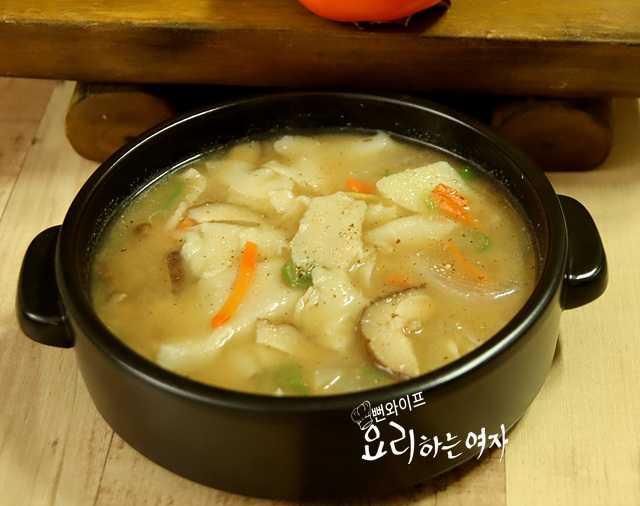
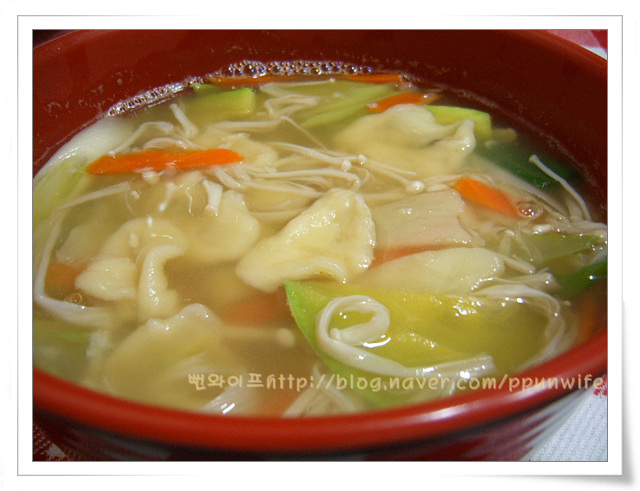
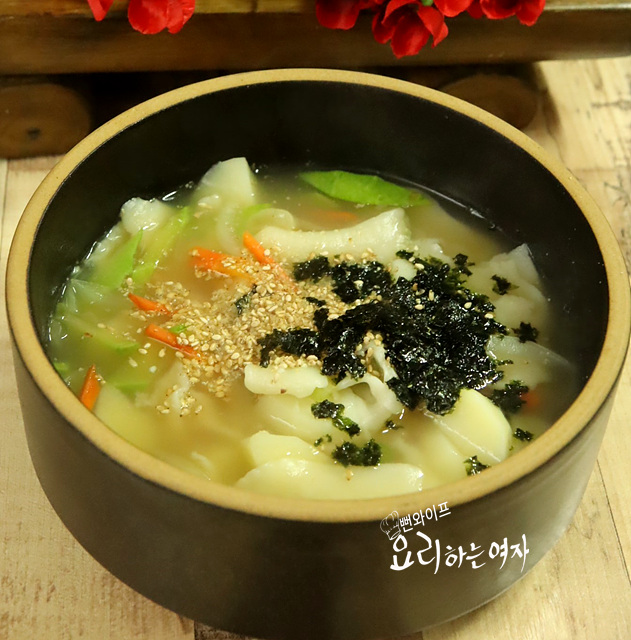
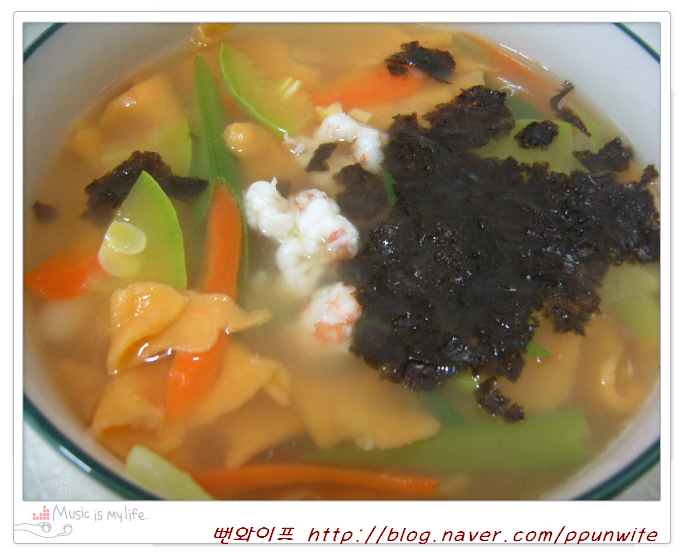
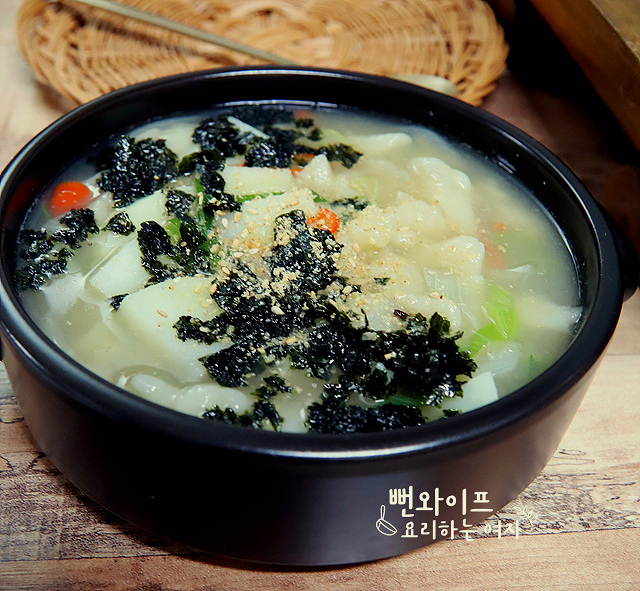
It was snowing outside and the air felt crisp and chilly, so this deulkkae sujebi was truly the perfect meal.
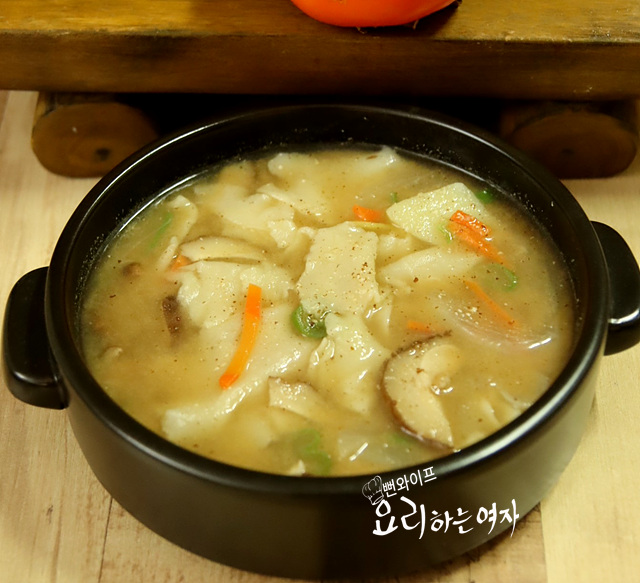
On these chilly days, try making this simple one-bowl dish with delicious deulkkae sujebi, where you will want to drink up every last drop of the nutty, rich broth.
 Ppunwife's tips
- Kneading kalguksu or sujebi dough with hot water makes the dough much chewier and more elastic, so it does not get soggy while you eat and maintains a delightful texture throughout.
- Rolling it thin with a rolling pin before tearing it by hand ensures an even thickness, and it is much easier because you can just drop everything into the boiling broth all at once rather than tearing dough pieces over the boiling pot.
- Garlic can overpower the aroma of the perilla seed powder, so you may add just a little or omit it entirely.
FAQ
Why use hot water when kneading sujebi dough?
Kneading with boiling hot water makes the dough significantly chewier and more elastic, helping it retain its texture without getting soggy easily before you finish eating.
How long should sujebi dough be rested?
Chilling it in the refrigerator for at least 1 hour makes it elastic and tender, and preparing it a day in advance to rest overnight or for about two days will yield an even chewier texture.
Is minced garlic necessary?
Because the aroma of garlic can mask the distinct nutty flavor of perilla seed powder, you can reduce the amount or omit it according to your preference.
Can I use kalguksu noodles instead of sujebi?
Yes, if you roll out the same dough thinly with a rolling pin and slice it, it becomes kalguksu noodles, which also pair wonderfully with the broth.