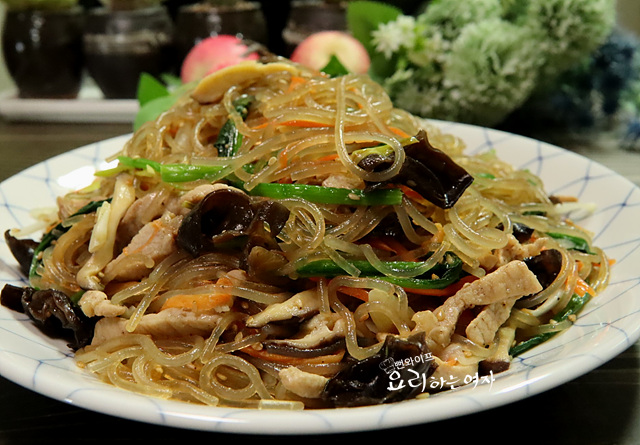
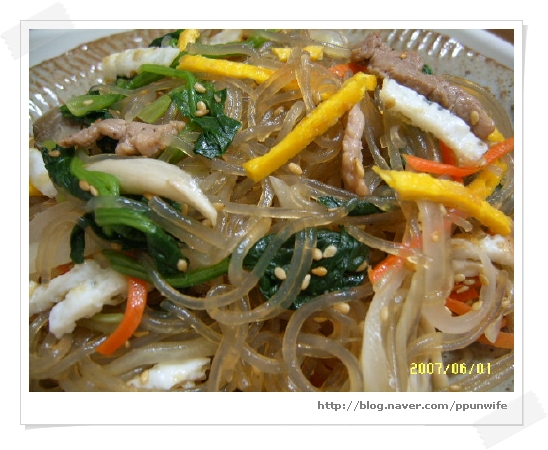
Japchae (Stir-Fried Glass Noodles) with Chewy Shiitake
A clean-tasting japchae tossed with thickly sliced shiitake mushrooms and stir-fried vegetables instead of meat.
Translated from Korean by AI and not yet checked by a native speaker. Amounts and numbers are taken directly from the original recipe. Read the Korean original →
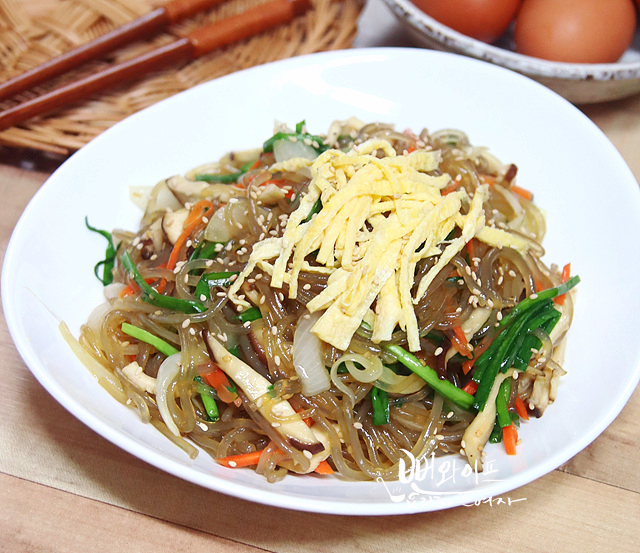
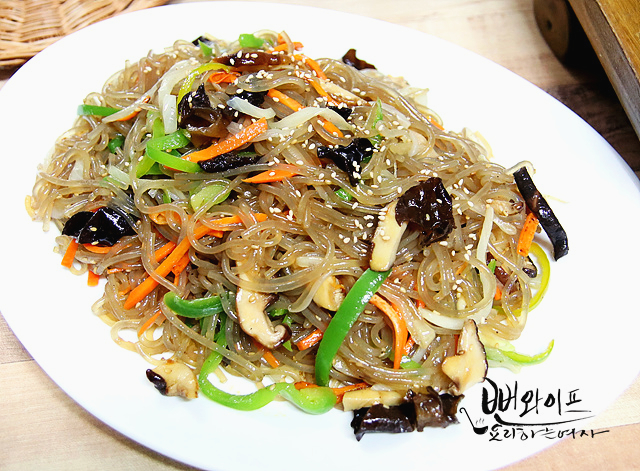
This japchae skips the meat and highlights the rich flavor and chewy texture of fragrant, thick-cut shiitake mushrooms. Slightly undercooking the noodles before stir-frying them with seasoning keeps them springy without getting soggy. Made simply with approachable vegetables, it yields a generous 5 to 6 servings as a wonderful one-dish meal.
- Servings
- 5–6 servings
- Difficulty
- Medium
- Spiciness
- Not spicy
Ingredients
Ingredients
- Sweet potato glass noodles (dangmyeon)300 g
- Fresh shiitake mushrooms4, 160 g
- Carrot1/2, 100 g
- Onion1/2, 100 g (large)
- Garlic chives (buchu)1 handful, 100 g
Noodle seasoning
- Regular soy sauce (jin-ganjang) (or brewed soy sauce (yangjo-ganjang))3 tbsp
- Oyster sauce1 tbsp
- Brown sugar (or white sugar)1 1/2 tbsp
Japchae seasoning
- Regular soy sauce (jin-ganjang) (or brewed soy sauce (yangjo-ganjang))1 tbsp
- Toasted sesame oil2 tbsp
- Toasted sesame seeds2 tbsp
- Shiitake mushrooms are prepared instead of meat.
Steps
Prepare the ingredients
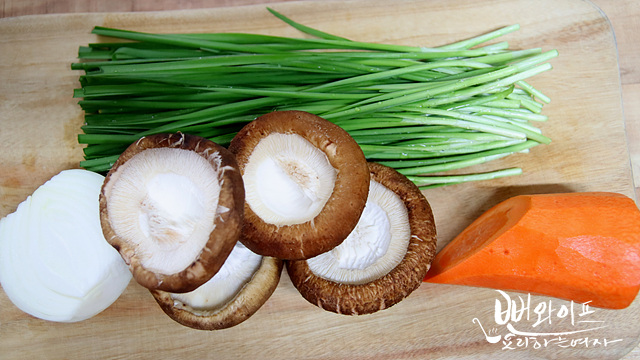
There are many ingredients that can go into japchae, but today I kept it simple.
I prepared shiitake mushrooms instead of meat. Aside from that, there are onion, carrot, and garlic chives (buchu). There are also 300g of sweet potato glass noodles (dangmyeon).
Slice the ingredients
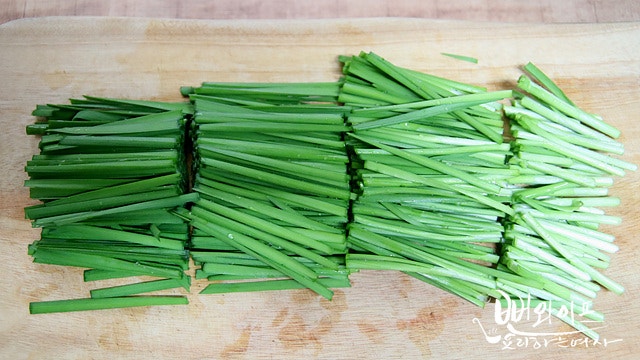
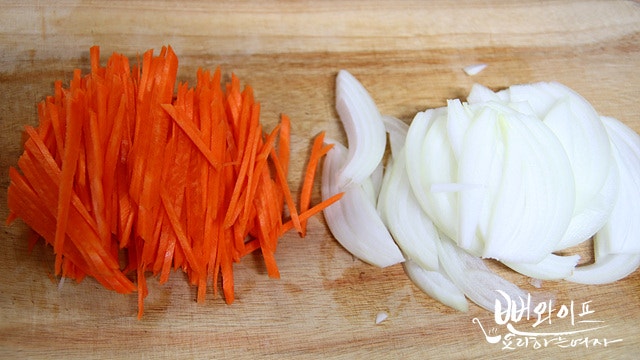
Cut the garlic chives into 4 to 5cm lengths, and finely julienne the carrot into similar lengths.
Finely slice the onion as well.
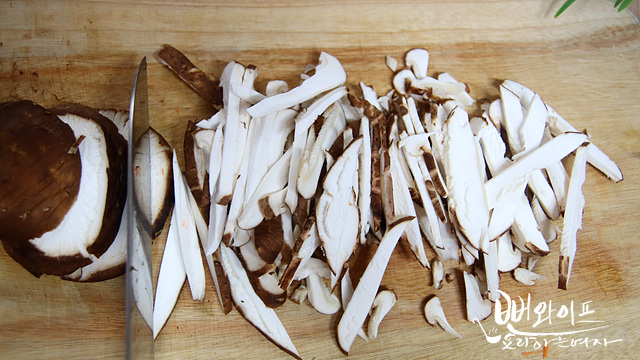
Shiitake mushrooms are thick, so slice them horizontally once or twice, then slice them into thick strips.
If you julienne them too thinly, they shrink down when stir-fried, losing both texture and appearance.
Stir-fry the vegetables
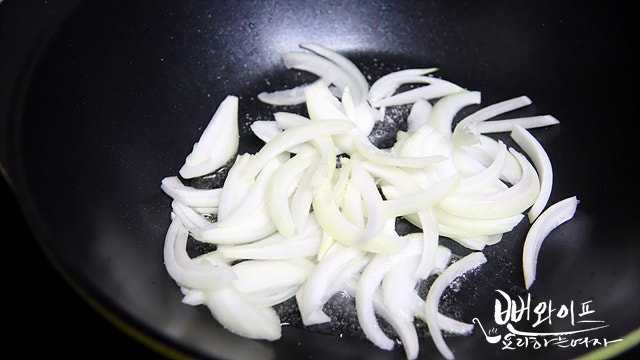
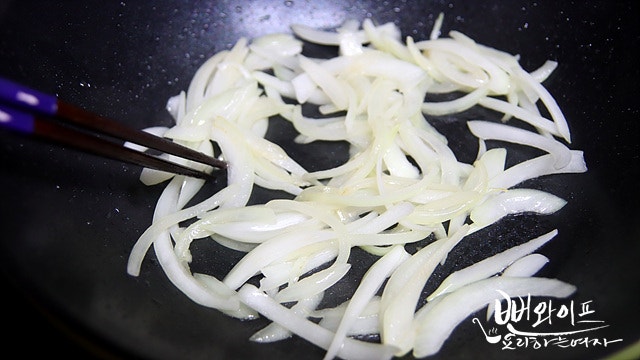
Heat a pan, add the onion with two or three pinches of salt for a light seasoning, and stir-fry just until slightly softened.
Spread onto another plate to let the heat dissipate.
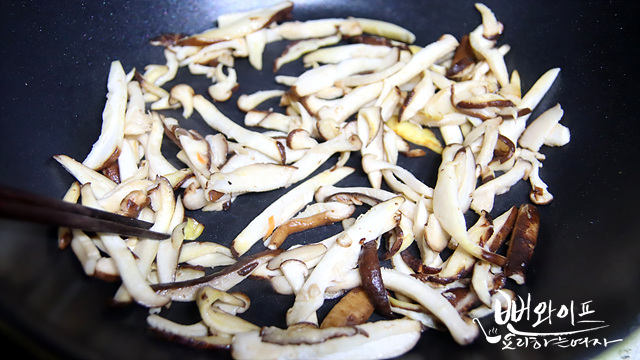
Add a little salt to the shiitake mushrooms as well, and stir-fry just until slightly softened.
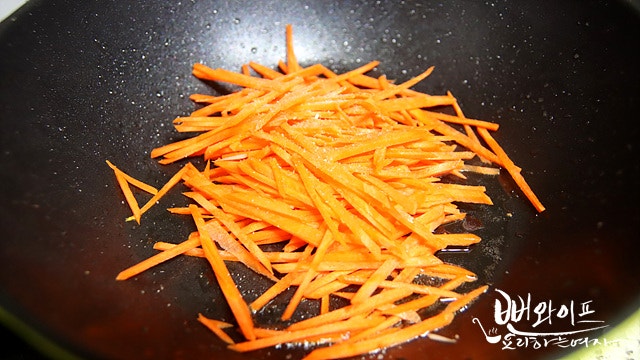
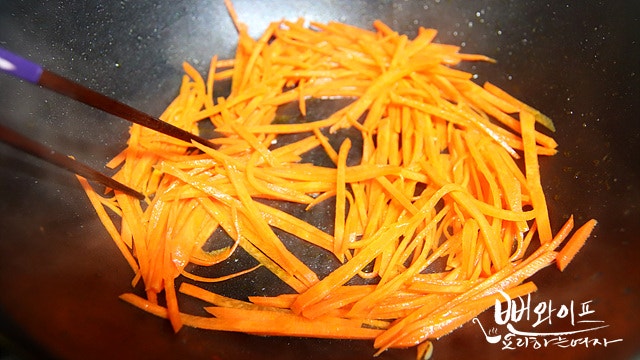
Add a little salt to the carrot and stir-fry until slightly softened, and...
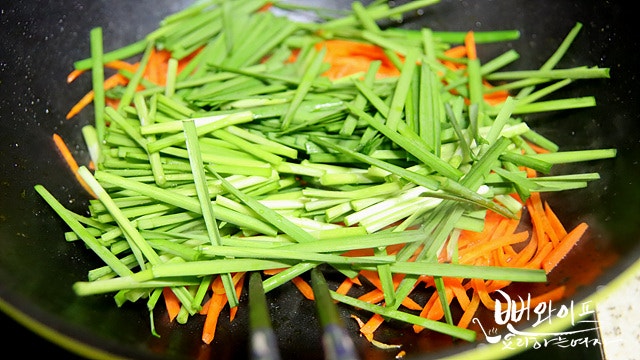
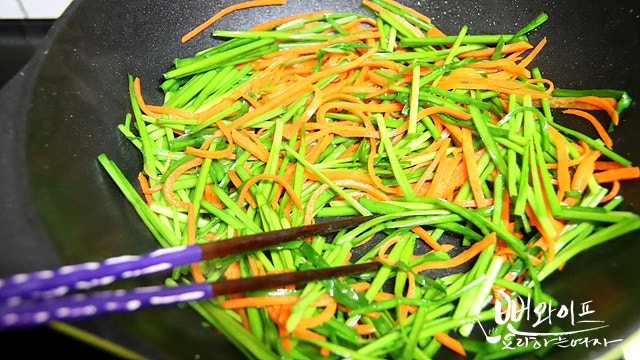
Add the garlic chives and stir-fry together. Garlic chives wilt quickly, so do not cook them for long.
You can stir-fry the vegetables one by one, but staggering them so their colors and traits do not interfere saves much more time and is far easier.
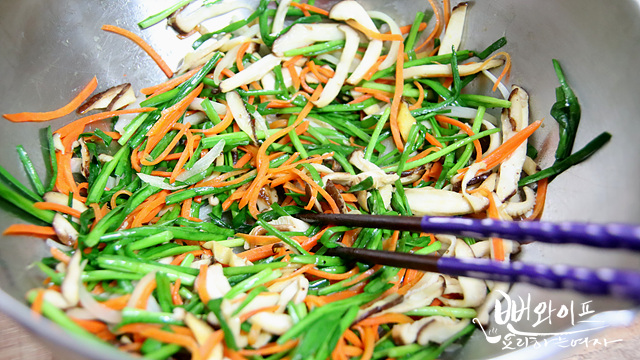
Let the stir-fried ingredients cool down somewhat, then toss them lightly so they blend together well.
Boil the noodles
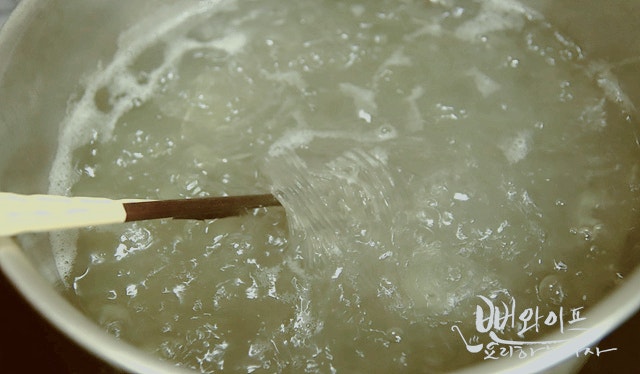
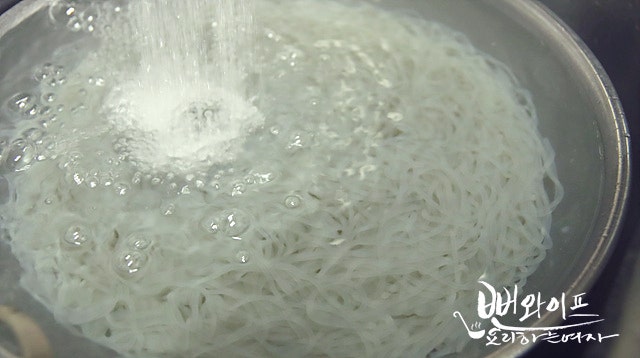
Add the glass noodles to rolling boiling water and boil them, referring to the time indicated on the package.
Since they need to be seasoned and stir-fried in a pan after boiling, undercooking them by about 1 to 2 minutes lets you enjoy a bouncy, chewy texture without the japchae getting soggy once finished.
Rinse in cold water several times to cool them down quickly.
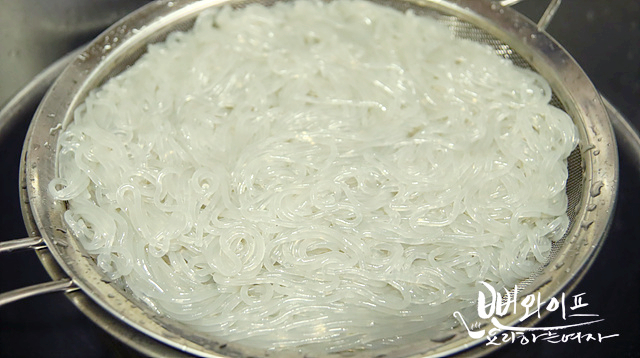
Drain well in a colander, and cut with kitchen shears into bite-sized lengths.
Stir-fry the noodles
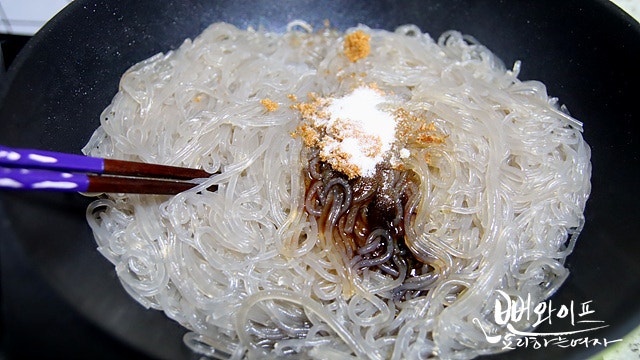
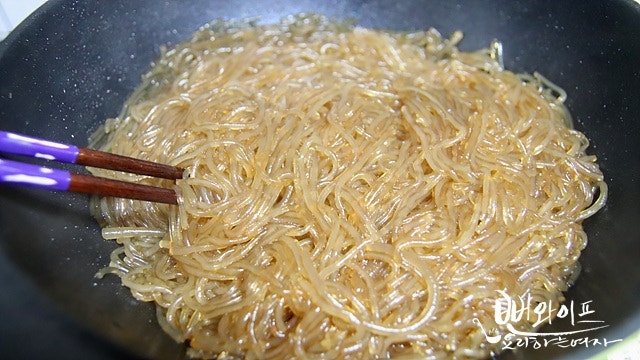
Heat a pan, add a generous amount of cooking oil, add the noodles, and toss to coat with oil. Then add the seasoning (3 tbsp regular soy sauce (jin-ganjang), 1 tbsp oyster sauce, 1 1/2 tbsp brown sugar) and stir-fry while mixing so they season and color evenly. You can use brown sugar or dark brown sugar for a deeper color.
Now you see why the noodles need to be undercooked by 1 to 2 minutes.
Season the japchae
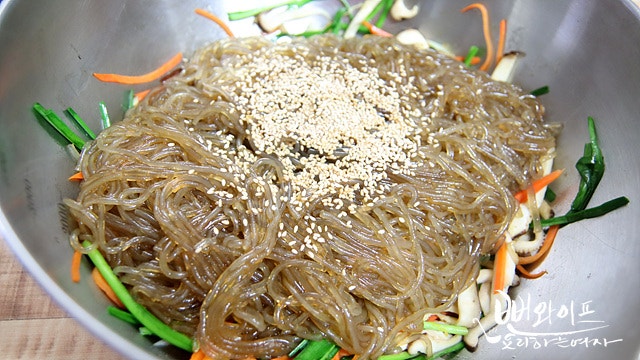
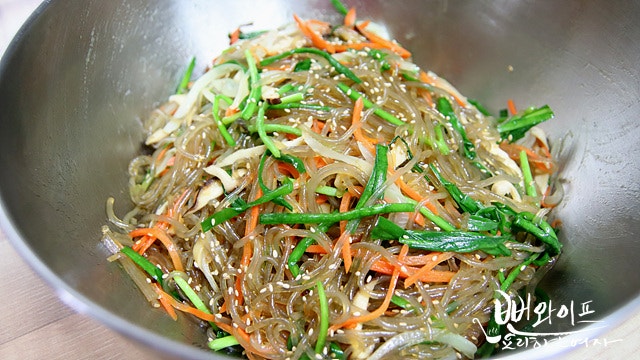
Add the toasted sesame oil and toasted sesame seeds to the noodles and stir-fried ingredients, and mix everything evenly.
Taste a bite of the noodles and vegetables together to check the seasoning, then finish by adding 1 tbsp regular soy sauce (jin-ganjang).
Finish
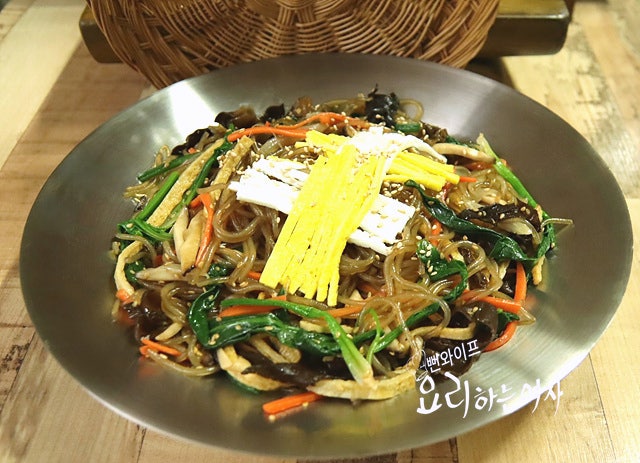
Wanting a bit more yellow, I quickly made an egg garnish with 2 eggs and placed it on top.
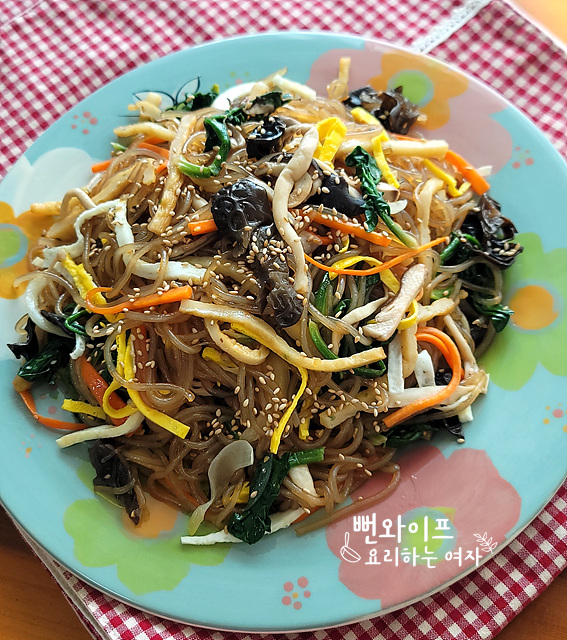
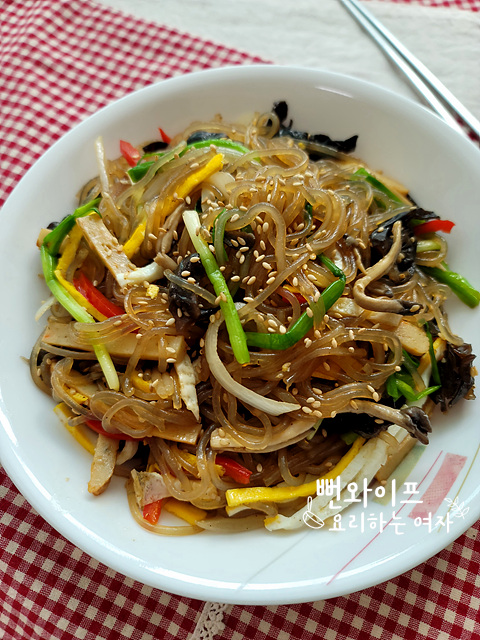
Making it like this, japchae is truly easy to make.
 Ppunwife's tips
- If you julienne the shiitake mushrooms too thinly, they shrink down when stir-fried, losing both texture and appearance.
- Garlic chives wilt quickly, so do not stir-fry them for long.
- You can stir-fry the vegetables one by one, but staggering them so their colors and traits do not interfere saves much more time and is far easier.
- Since the noodles need to be seasoned and stir-fried in a pan after boiling, undercooking them by about 1 to 2 minutes lets you enjoy a springy, chewy texture without them getting soggy once finished.
- You can use brown sugar or dark brown sugar for a deeper color.
FAQ
Is there a trick to keep the glass noodles from getting soggy?
Undercook the noodles by 1 to 2 minutes compared to the package instructions, rinse in cold water, and stir-fry them in a pan with oil and seasonings. This keeps their chewy, springy texture for a long time.
Is there anything to keep in mind when cutting shiitake mushrooms?
If you slice them too thinly, they shrink during cooking and lose texture and presence, so it is best to slice them horizontally first and cut them into thick strips.
What kind of sugar is best for giving the noodles a rich color?
Using brown sugar or dark brown sugar instead of white sugar when stir-frying helps produce an appetizing, deep color.