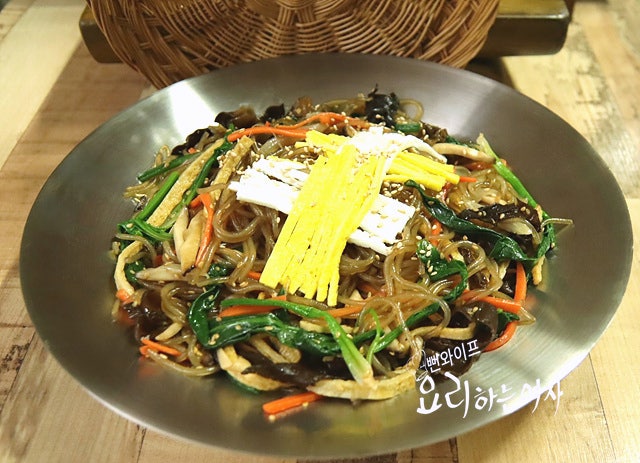
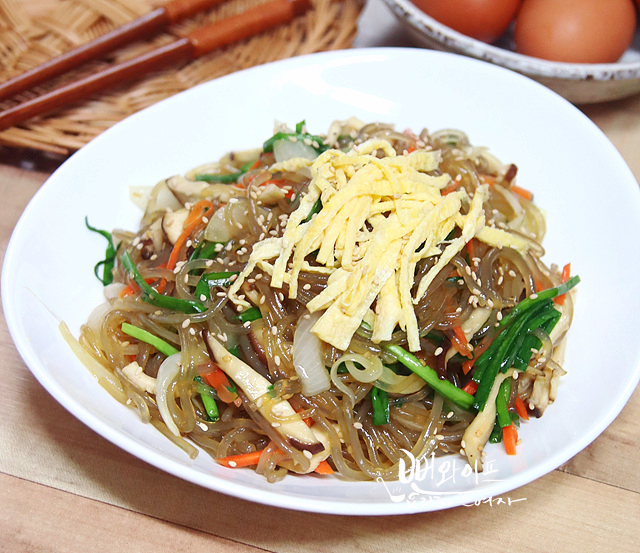
Springy Japchae (Stir-Fried Glass Noodles)
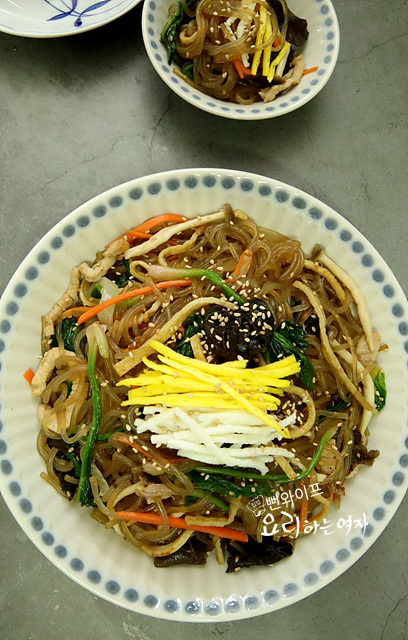
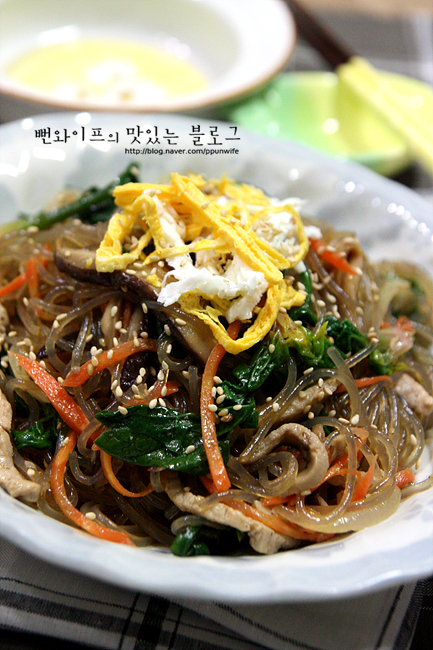
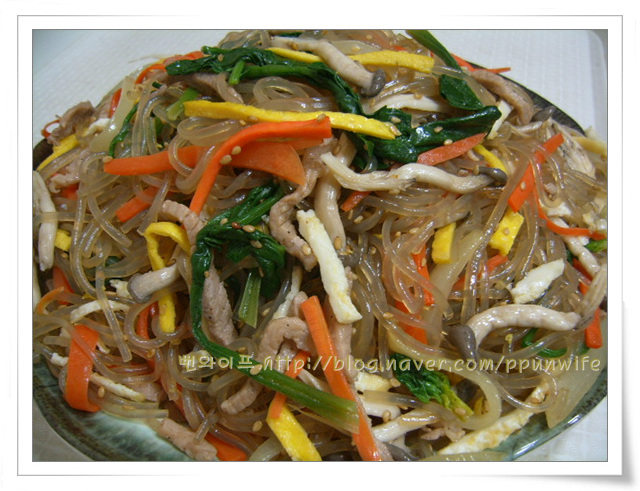
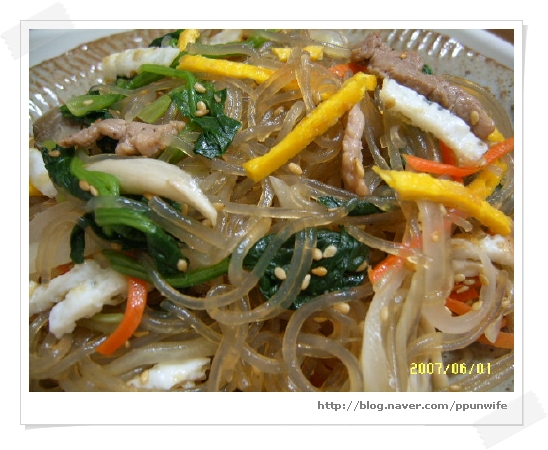
A classic japchae made by slightly underboiling the glass noodles and stir-frying them so they stay pleasantly springy and never soggy.
Translated from Korean by AI and not yet checked by a native speaker. Amounts and numbers are taken directly from the original recipe. Read the Korean original →
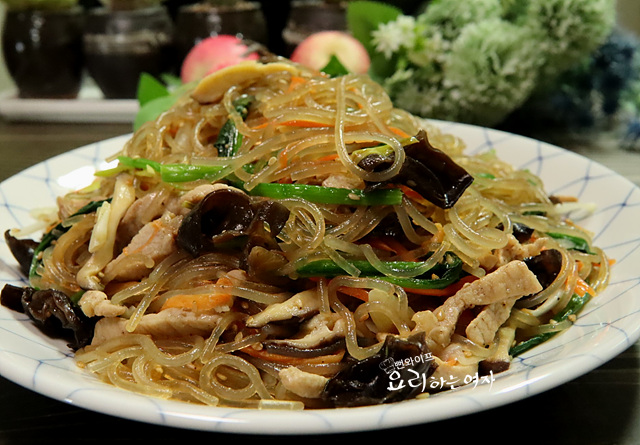
This japchae boils sweet potato glass noodles for 8 minutes, rinses them in cold water, and stir-fries them with seasoning to keep them springy and delightfully chewy without getting soggy. A tablespoon of oyster sauce adds deep savory umami, and the vegetables are cooked in stages in a single pan to streamline the process. It makes a generous 7 to 8 servings, perfect for Seollal holidays or entertaining guests.
- Servings
- 7–8 servings
- Difficulty
- Medium
- Spiciness
- Not spicy
Ingredients
Ingredients
- Sweet potato glass noodles (dangmyeon)300 g
- Pork150 g
- Spinach150 g
- Shiitake mushrooms2
- Carrot1/2
- Onion1/2
- Wood ear mushrooms5, 10 g
Meat marinade
- Regular soy sauce (jin-ganjang)1/2 tbsp
- Mirin (cooking rice wine)1 tbsp
- Ground black peppera little
Noodle seasoning
- Regular soy sauce (jin-ganjang) (or brewed soy sauce (yangjo-ganjang))4 tbsp
- Oyster sauce1 tbsp
- Sugar1 tbsp
Japchae seasoning
- Regular soy sauce (jin-ganjang) (or brewed soy sauce (yangjo-ganjang))1/2–1 tbsp
- Toasted sesame oil3 tbsp
- Toasted sesame seeds2 tbsp
- You can also use king oyster mushrooms or oyster mushrooms.
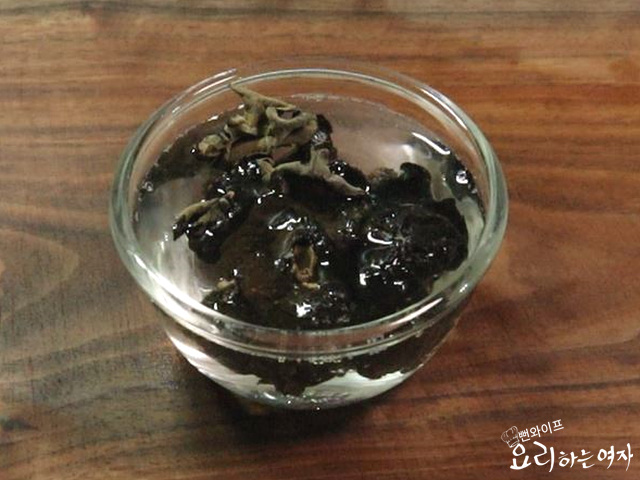
- Dried wood ear mushrooms take time to rehydrate, so soak them first in lukewarm water for 30 minutes to 1 hour. They expand dramatically, so make sure to soak them in a large bowl with plenty of water.
Steps
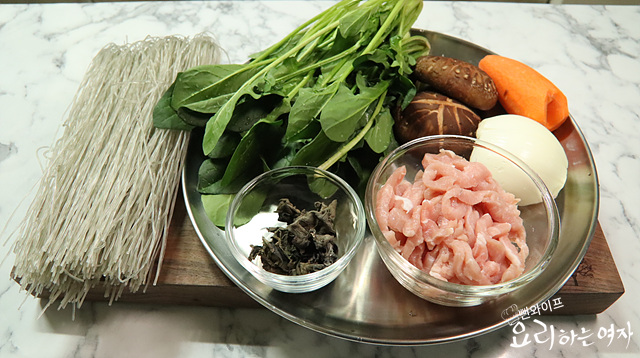
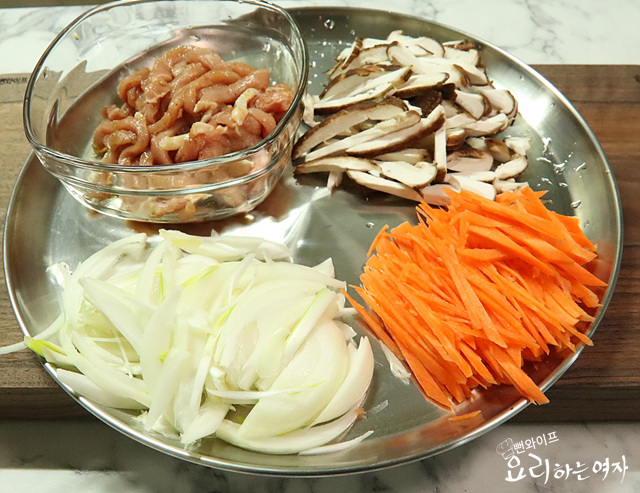
I did not soak the dry noodles in water since I plan to boil them dry.
You can also use king oyster mushrooms or oyster mushrooms.
Dried wood ear mushrooms take time to rehydrate, so soak them first in lukewarm water for 30 minutes to 1 hour.
They expand dramatically, so make sure to soak them in a large bowl with plenty of water.
Season the pork beforehand.
Julienne the vegetables into moderate thicknesses, not too thin.
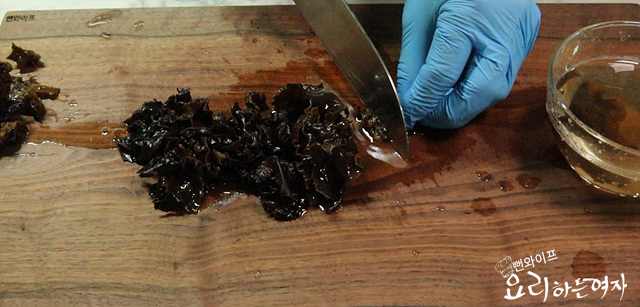
Once the wood ear mushrooms have expanded to more than 5 times their size and feel soft to the touch,
rub and wash them thoroughly until the water runs clear, as they release a lot of debris.
Cut away the tough base with a knife, then slice them into strips about 1.5 cm wide.
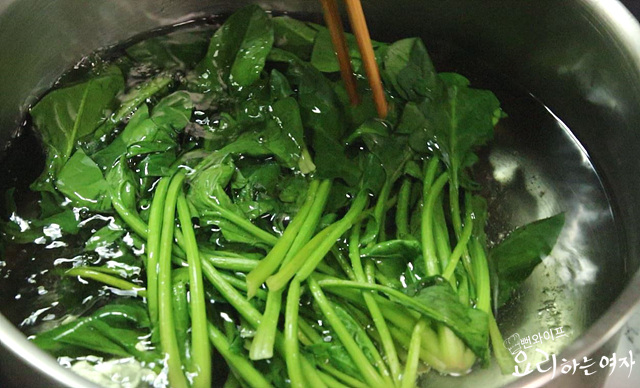
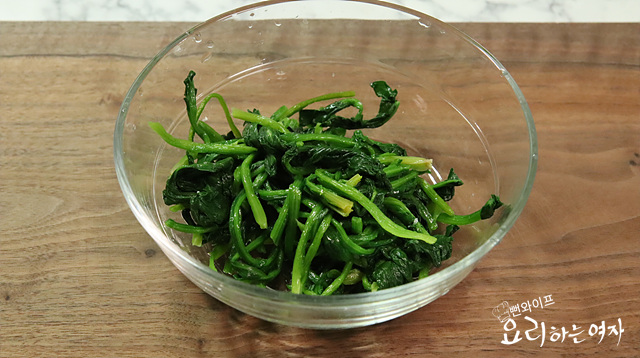
Blanch the spinach in boiling water with a pinch of salt for about 20 seconds,
rinse in cold water, squeeze out the moisture, cut into bite-sized lengths, and season with 1/2 tsp of salt.
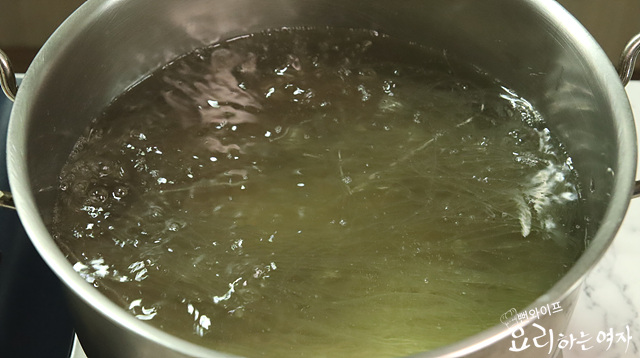
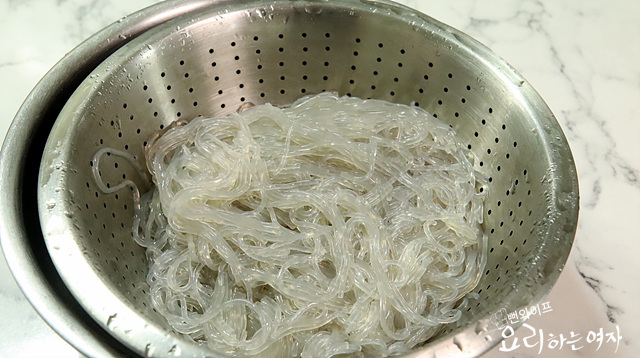
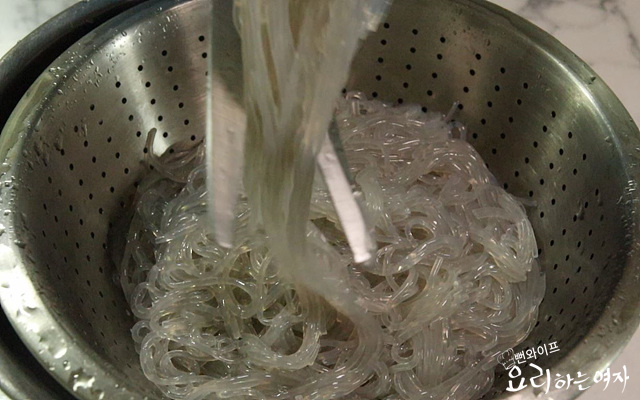
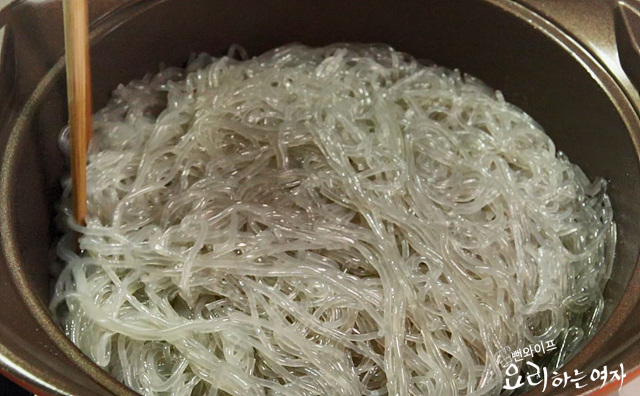
Add the dry sweet potato glass noodles to rolling boiling water and boil for 8 minutes.
Usually, dry glass noodles take about 10 minutes to cook,
but if you cook them completely and stir-fry them later, they turn soggy and lose their springiness.
Immediately after boiling, rinse several times in cold water, drain in a colander, cut into manageable lengths with kitchen shears, and let drain.
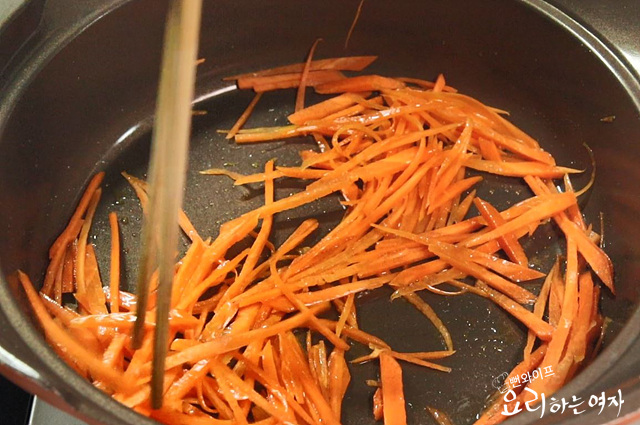
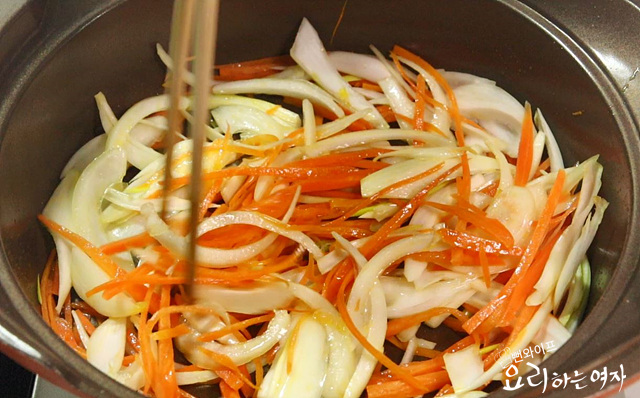
Heat a pan with a little cooking oil, add the carrots first, and stir-fry briefly.
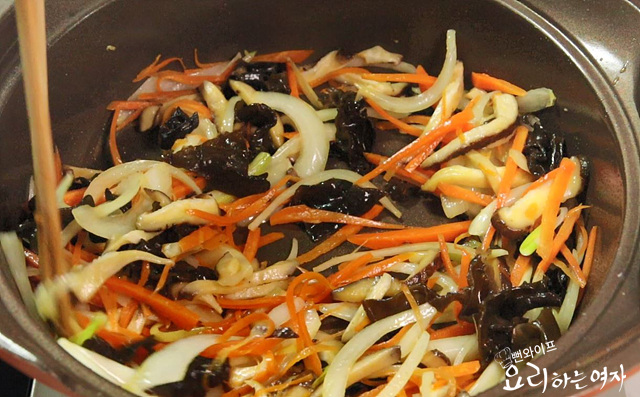
Add the onion and stir-fry briefly again, then add the shiitake mushrooms,
season with a pinch of salt, add the wood ear mushrooms, stir-fry, and spread onto a wide plate to cool slightly.
(Stir-frying them in stages in one pan rather than separately uses less oil and works out great.)
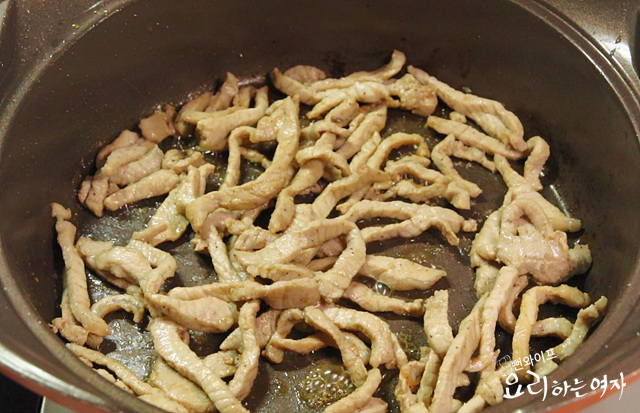
In the same pan used for the vegetables, add cooking oil and stir-fry the pork,
cooking it until dry with no residual moisture, then transfer it to another plate.
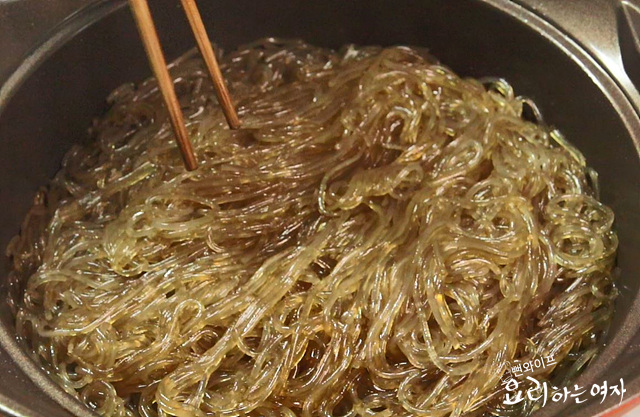
Finally, add plenty of cooking oil to the heated pan, add the glass noodles,
and stir-fry until glossy all over.
Add the noodle seasoning (4 tbsp regular soy sauce, 1 tbsp oyster sauce, 1 tbsp sugar) and stir-fry until evenly colored.
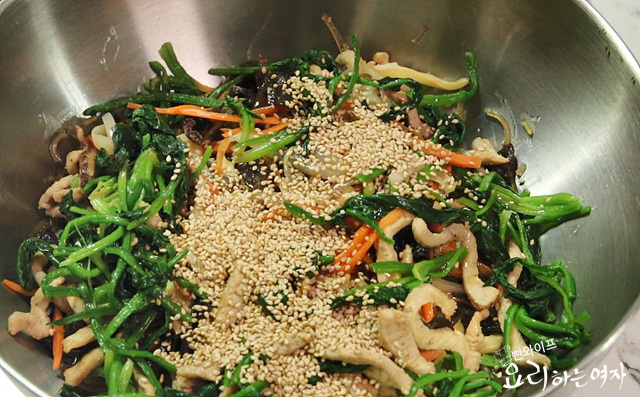
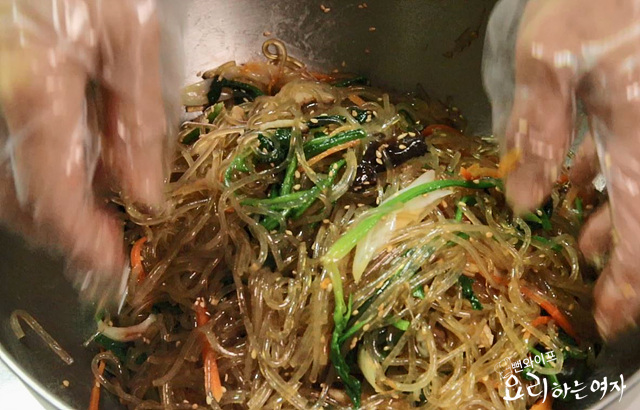
In a large bowl, combine the stir-fried noodles, vegetables, pork,
and the japchae seasoning (1/2 to 1 tbsp soy sauce, 3 tbsp toasted sesame oil, 2 tbsp toasted sesame seeds, and a pinch of ground black pepper).
Toss thoroughly to mix, but rather than adding all the soy sauce at once, taste as you go and adjust in increments.
 Ppunwife's tips
- Stir-frying the vegetables in stages in one pan instead of separately uses less oil and works out great.
- Rather than adding all the soy sauce at once, taste as you mix and adjust in increments.
- The 1 to 2 minutes when boiling the glass noodles makes or breaks the flavor of japchae.
- Adding 1 tbsp of oyster sauce brings out much better flavor. Adding more might make it greasy, so this amount feels just right.
FAQ
What is the secret to keeping the glass noodles springy and preventing them from getting soggy?
Boil the dry glass noodles for about 8 minutes without cooking them completely, rinse them immediately several times in cold water, and stir-fry them in a pan with oil and seasoning to keep their springy texture.
Can I use other mushrooms instead of shiitake mushrooms?
Yes, you can use king oyster mushrooms or oyster mushrooms instead of shiitake mushrooms.
How do I prep and rehydrate dried wood ear mushrooms?
Soak them in lukewarm water for 30 minutes to 1 hour, rub and rinse them until no more debris comes out, trim off the hard base, and slice them.
Does adding more oyster sauce deepen the flavor?
Adding too much oyster sauce can make the dish greasy, so 1 tbsp is just the right amount.