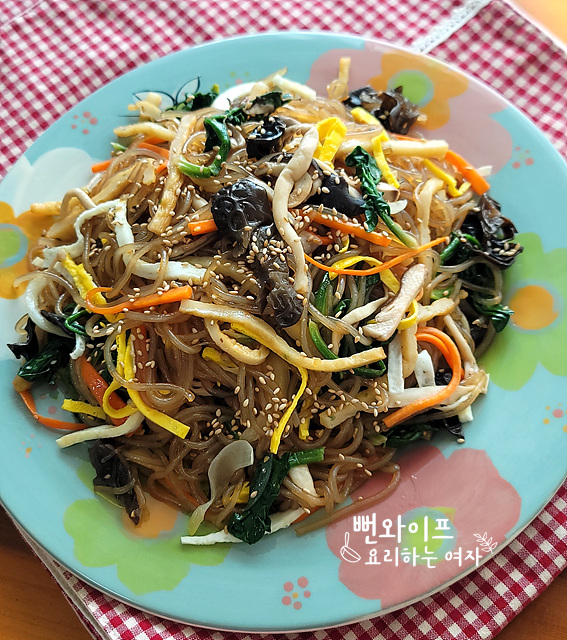
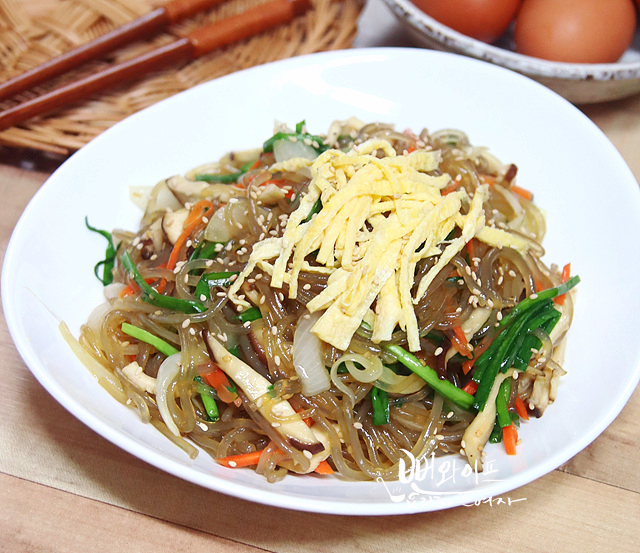
Chewy and Crisp Japchae (Stir-Fried Glass Noodles)
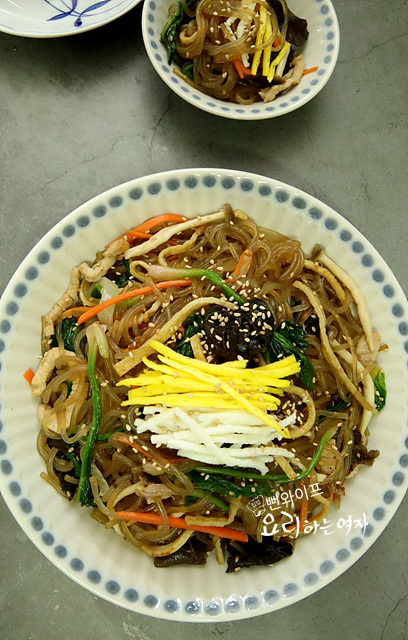
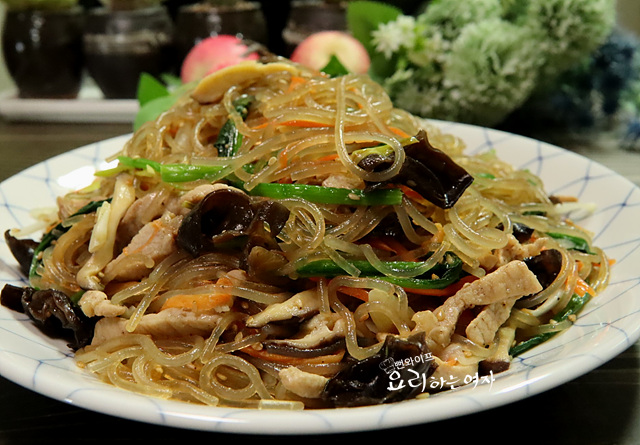
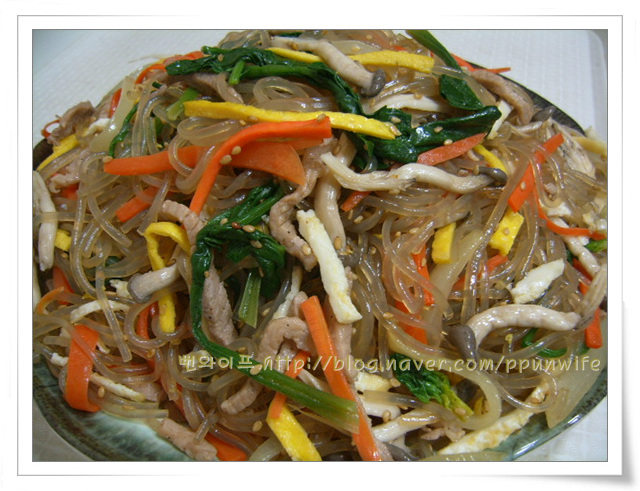
A celebratory japchae made by stir-frying sweet potato glass noodles, meat, and various vegetables separately, then tossing them together harmoniously.
Translated from Korean by AI and not yet checked by a native speaker. Amounts and numbers are taken directly from the original recipe. Read the Korean original →
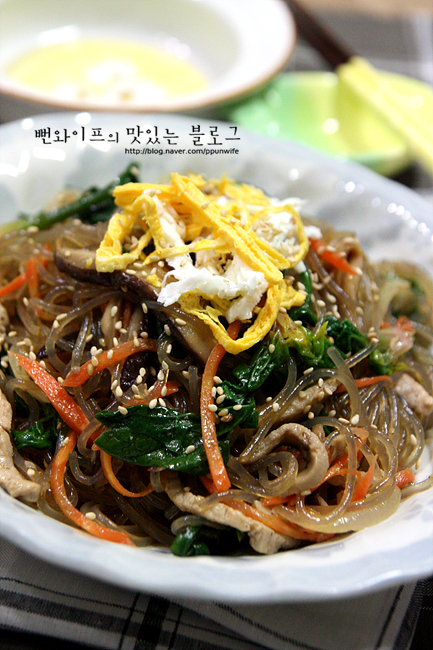
This japchae recipe serves 7 to 8 people, making it perfect for holidays or serving guests abundantly. Seasoning and stir-frying each ingredient individually ensures the flavors blend together without feeling separate, and stir-frying the boiled glass noodles in oil first keeps them springy and prevents them from getting soggy over time.
- Servings
- 7–8 servings
- Difficulty
- Hard
- Spiciness
- Not spicy
Ingredients
Ingredients
- Sweet potato glass noodles (dangmyeon)250 g
- Pork200 g
- Spinach1 bunch, 200 g
- Shiitake mushrooms5
- Onion1
- Carrot1
Meat marinade
- Soy sauce1/2 tbsp
- Mirin (cooking rice wine)1 tbsp
- Ground black peppera little
Noodle Seasoning
- Regular soy sauce (jin-ganjang)4 tbsp
- Sugar1 tbsp (brown)
Final Seasoning
- Regular soy sauce (jin-ganjang)1 tbsp
- Toasted sesame oil2 tbsp
- Toasted sesame seeds3 tbsp
- If you do not like pork, beef or seafood make great substitutes.
- If using dried shiitake mushrooms, soak them in lukewarm water until soft before using. Save the trimmed stems to make broth.
- If you do not have meat, you can substitute fish cake or ham. When spinach is expensive, you can substitute Korean zucchini or garlic chives.
Steps
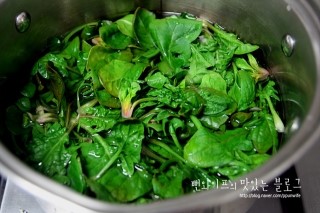
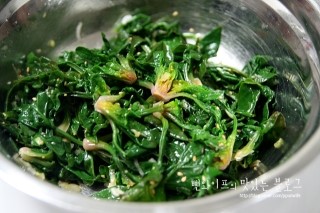
1. Lately, spinach seems to be at its peak sweetness.
When tossed, it is so delicious it tastes as if sugar was sprinkled on it.
So today, I prepared more spinach than in my previous recipe.
Wash the trimmed spinach thoroughly, then blanch it briefly in rolling boiling water with a little salt for under 1 minute.
Blanching too long ruins the chew and makes it limp and visually unappealing.
Rinse immediately in cold water, and gently squeeze out the moisture with both hands.
2. I seasoned it lightly with a little soy sauce, about 1/2 tbsp.
Although extra seasoning goes in at the final step of japchae, lightly pre-seasoning each ingredient keeps the flavors from feeling disconnected and brings everything together into a much more delicious japchae.
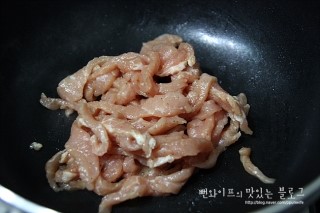
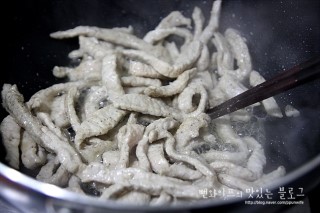
3. Cut the pork into thin strips 3 to 4 cm long, then pre-season with 1/2 tbsp regular soy sauce, 1 tbsp mirin, and a little ground black pepper...
4. Stir-fry in a heated pan. Juices will release as it cooks, so stir-fry until the meat's juices reabsorb and completely evaporate, leaving the meat tender and crumbly.
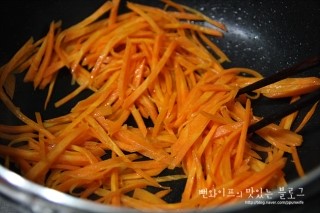
5. Julienne the carrot, add a little salt (approx. 1/3 tsp), and stir-fry in a heated oiled pan until softened.
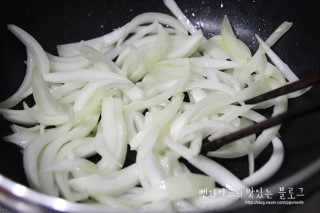
6. Julienne the onion as well, add a little salt, and stir-fry in an oiled pan until translucent.
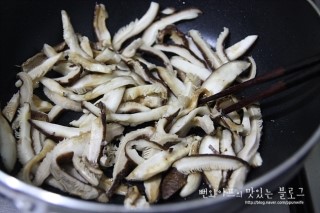
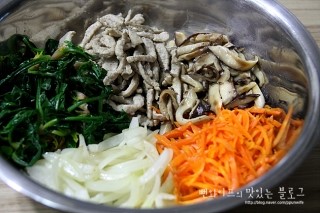
7. Cut the stems off the shiitake mushrooms, toss gently with about 1/2 tbsp regular soy sauce to season, and stir-fry in a heated oiled pan just until slightly softened.
If using dried shiitake mushrooms, soak them in lukewarm water until soft before using.
Save the trimmed stems to make broth.
8. Here are all the ingredients stir-fried separately.
If you do not like pork, beef or seafood make great substitutes.
10
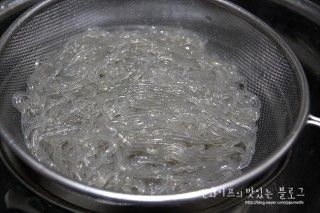
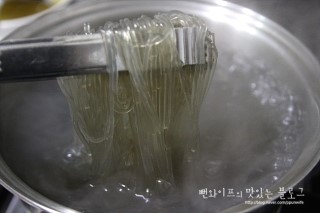
9. Boil the sweet potato glass noodles in boiling water. Boil for about 10 minutes.
The cooking time is printed on the noodle package instructions, so you can refer to that as well.
I boil them for about 1 minute less than the indicated time to give the japchae a bouncier, chewier texture.
10. Rinse in cold water, drain, and cut into bite-size lengths in advance.
11
12
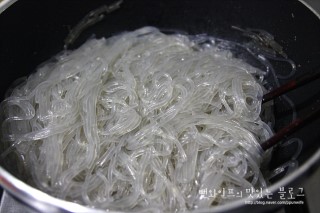
11. Add a generous amount of cooking oil to a pan and stir-fry the boiled glass noodles.
Stir-frying the noodles in oil before seasoning keeps them chewy without getting soggy later on.
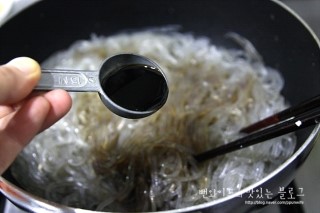
12. Once the noodles are stir-fried and evenly coated in oil, add 4 tbsp regular soy sauce and 1 tbsp sugar, stirring well to combine.
Japchae looks more appetizing with a deeper color, so I used brown sugar.
13
14
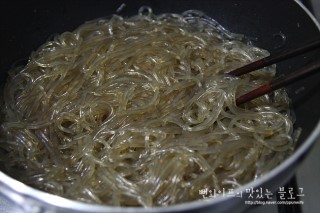
13. Once the noodles are stir-fried and evenly colored with soy sauce, remove from the heat.
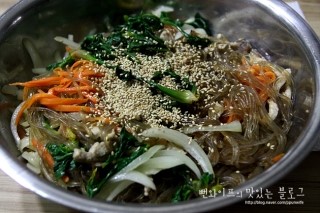
14. Add the stir-fried ingredients together, along with 1 tbsp soy sauce, 2 tbsp toasted sesame oil, and 3 tbsp toasted sesame seeds, then mix well.
Taste and add more soy sauce if it tastes light.
I think this is the happiest moment. It is the final step, so all that is left is to toss, taste, and eat.
 Ppunwife's tips
- Although extra seasoning goes in at the final step of japchae, lightly pre-seasoning each ingredient keeps the flavors from feeling disconnected and brings everything together into a much more delicious japchae.
- Stir-frying the noodles in oil before seasoning keeps them chewy without getting soggy later on.
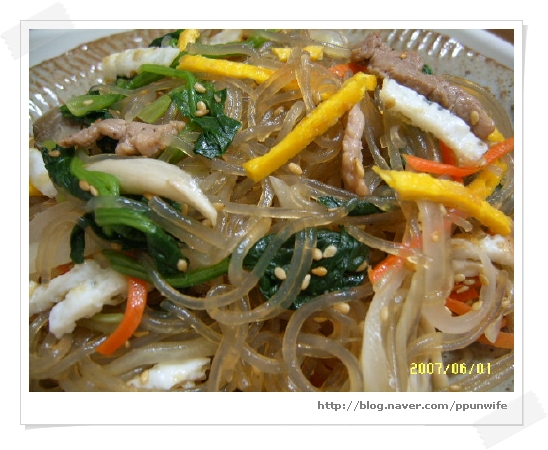
- If you want to take extra care, separate the egg whites and yolks, fry them into thin sheets, julienne them, and add them at the very end after the japchae is finished. Mix very gently since egg strips tear easily.
FAQ
How do I prevent the glass noodles from getting soggy?
After boiling and rinsing the glass noodles, stir-fry them in a pan with a generous amount of oil before seasoning. This keeps them chewy and prevents them from becoming soggy over time.
Can I use another ingredient instead of pork?
You can use beef or seafood instead of pork, and fish cake or ham also work nicely.
What can I substitute when spinach is expensive?
You can use Korean zucchini or garlic chives in place of spinach.
Is there a tip for giving japchae an appetizing dark color?
When seasoning the glass noodles, stir-frying them with brown sugar instead of regular white sugar gives them an appetizing, deeper color.