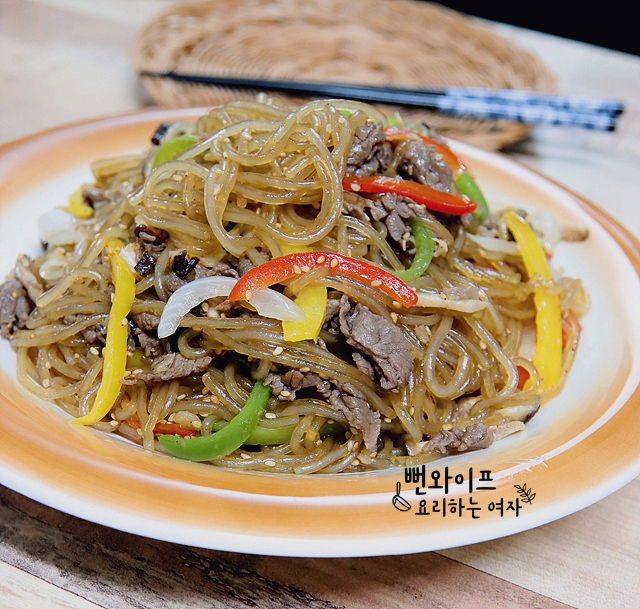
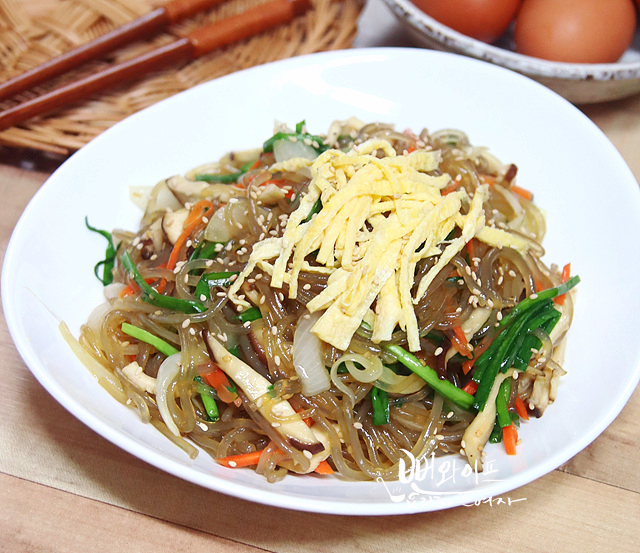
Japchae (Stir-Fried Glass Noodles) with Tender Pork
A festive dish of stir-fried vegetables and pork tossed with seasoned sweet potato glass noodles.
Translated from Korean by AI and not yet checked by a native speaker. Amounts and numbers are taken directly from the original recipe. Read the Korean original →
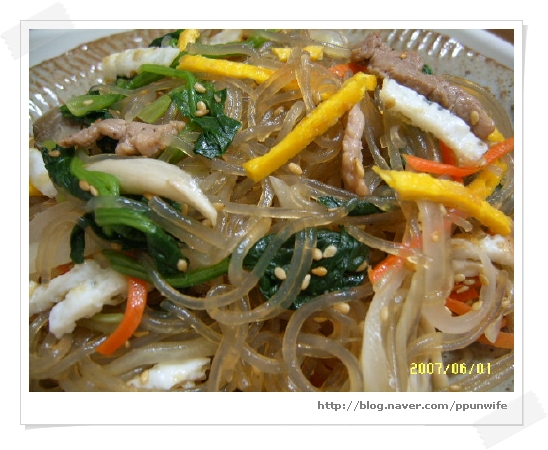
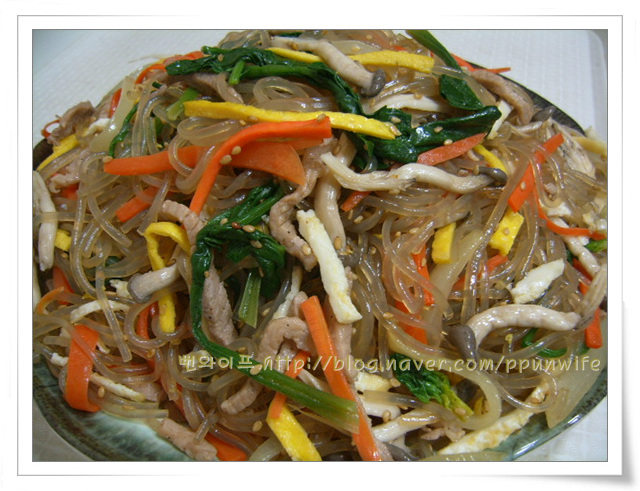
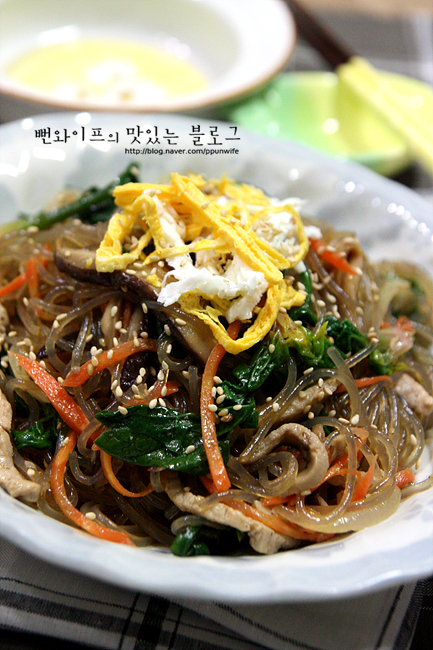
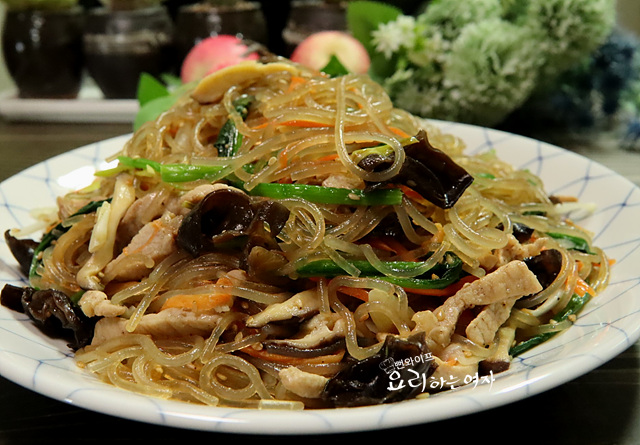
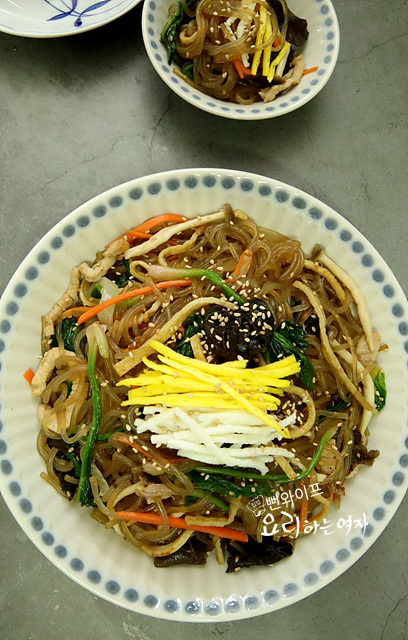
This festive japchae is made by stir-frying each ingredient separately with a pinch of salt so every flavor stays well-balanced. Sautéing the boiled glass noodles briefly in oil is the key trick to keep them from sticking together. Tossed in a harmonious sweet and savory soy sauce seasoning, it is perfect for birthdays or entertaining guests.
- Difficulty
- Medium
- Spiciness
- Not spicy
Ingredients
Ingredients
- Sweet potato glass noodles (dangmyeon)
- Carrot
- Oyster mushrooms
- Onion
- Spinach
- Egg white
- Egg yolk
- Pork
Seasoning
- Soy sauce
- Sugar
- Toasted sesame oil
- Toasted sesame seeds
- Salt
- Even if you leave out a few ingredients, it will still taste great as long as you season the glass noodles well.
Steps
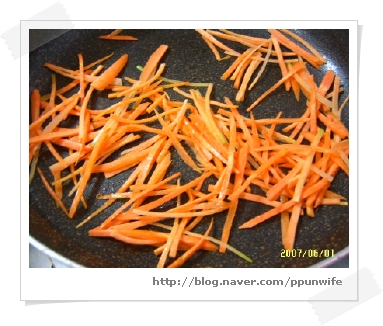
Julienne all the ingredients thinly and stir-fry them, seasoning with a little salt as you go.
That way, once the japchae is finished, the seasoning will not taste disjointed when you eat it. Do not make it too salty;
just sprinkle lightly with salt and stir-fry.
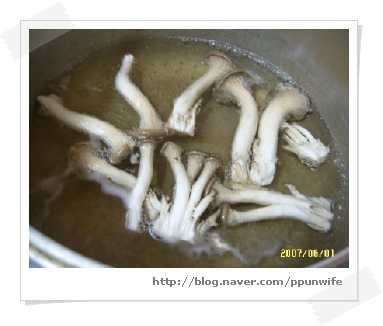
These are thin oyster mushrooms; drop them into boiling water, quickly take them out, and rinse in cold water,
then squeeze out the moisture thoroughly. Lightly season with salt as well and toss gently.
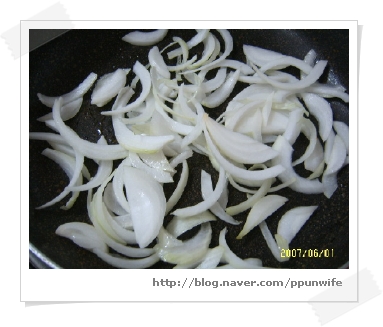
Julienne the onion as well and stir-fry with a pinch of salt.
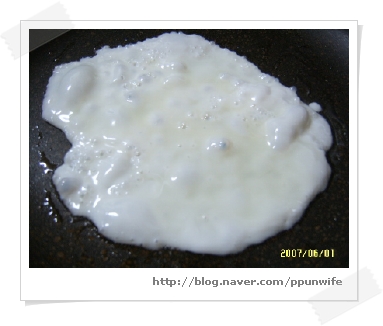
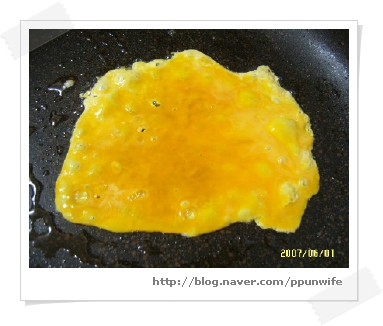
Separate the whites and yolks of 2 eggs to make egg garnish (jidan).
Add a little salt, stir, and fry each in a skillet. Slice the egg garnish into thin strips.
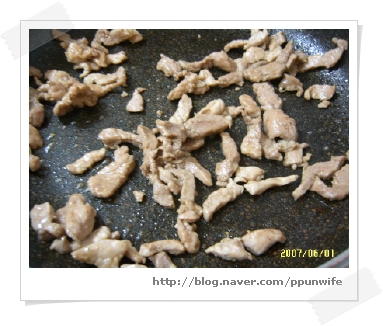
For the pork, I used lean front leg meat cut into strips and marinated it with ground black pepper, mirin, and soy sauce.
Stir-fry it in a skillet as well.
I already seasoned some spinach yesterday to eat,
so I am skipping the photo.
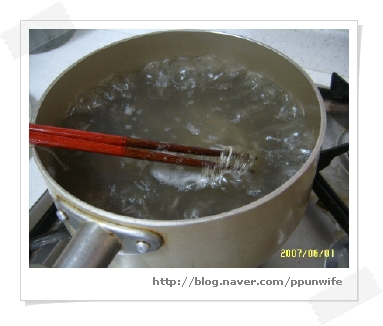
Add the sweet potato glass noodles to boiling water, and once the stiffness is gone and they become soft and tender, rinse in cold water
and drain well. Since they are long, cutting them a few times with kitchen shears
makes them easier to eat.
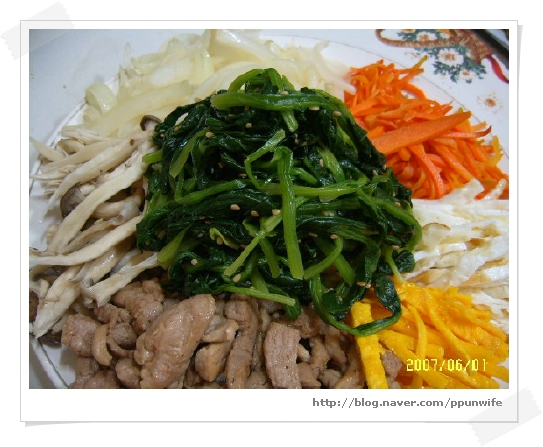
Here are all the ingredients stir-fried and seasoned. Even if you leave out a few ingredients, it tastes great as long as the glass noodles are seasoned well.
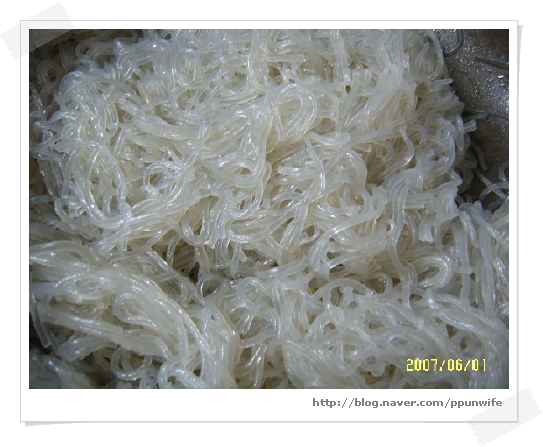
Add the thoroughly drained glass noodles to a skillet greased with oil and stir-fry them. Sautéing them like this keeps them
from sticking together later.
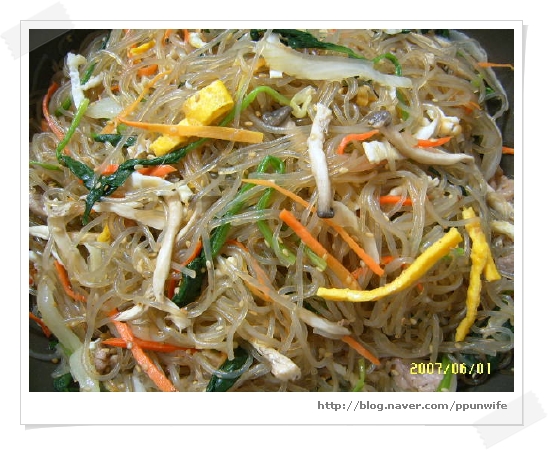
Add soy sauce and sugar to the lightly stir-fried glass noodles, toss, and taste as you go to add more soy sauce as needed.
If you add too much at once, it can turn out salty, so add a little at a time and taste.
Add the vegetables and toss gently.
Since egg garnish breaks easily, toss the noodles well with the other vegetables first, then add the egg garnish at the very end and toss gently.
Finish by sprinkling with toasted sesame oil and toasted sesame seeds.
 Ppunwife's tips
- Seasoning each ingredient with a little salt while stir-frying keeps the flavors from tasting disjointed in the finished dish.
- Stir-frying the well-drained glass noodles with cooking oil in a skillet keeps them from sticking together later.
- Because egg garnish breaks easily, mix it in gently at the very end after the other vegetables have been well combined.
FAQ
How do I keep the sweet potato glass noodles from sticking together?
After boiling and draining the glass noodles thoroughly, stir-frying them briefly in a skillet with cooking oil keeps them from sticking together later.
When should I add and mix in the egg garnish?
Egg garnish breaks easily, so first toss the glass noodles and other vegetables thoroughly, then add the egg garnish at the very end and gently mix.
Why should I season the vegetables with salt beforehand when stir-frying?
Lightly salting each ingredient while stir-frying ensures the seasonings blend together evenly without tasting separate once the japchae is finished.