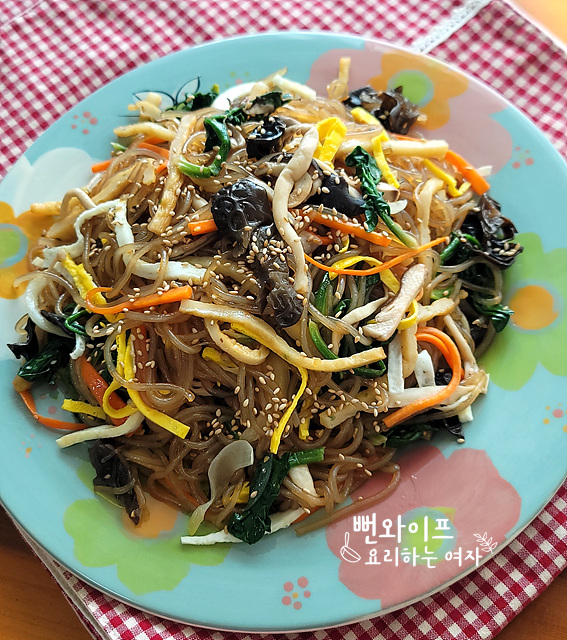
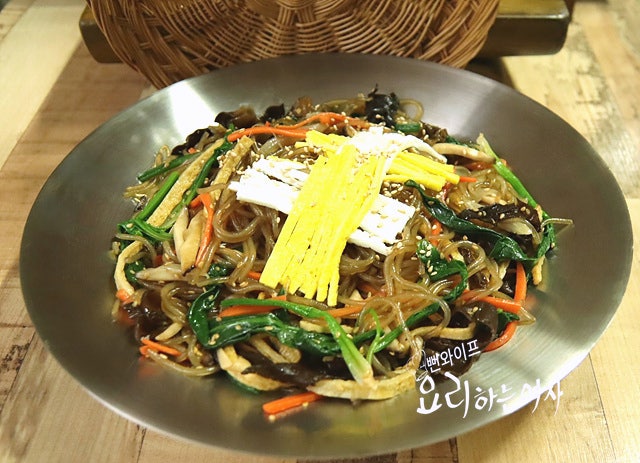
Chewy Japchae (Stir-Fried Glass Noodles) with Pork
A special holiday dish of japchae where the glass noodles are slightly underboiled and then stir-fried with seasonings so they stay chewy without turning soggy.
Translated from Korean by AI and not yet checked by a native speaker. Amounts and numbers are taken directly from the original recipe. Read the Korean original →
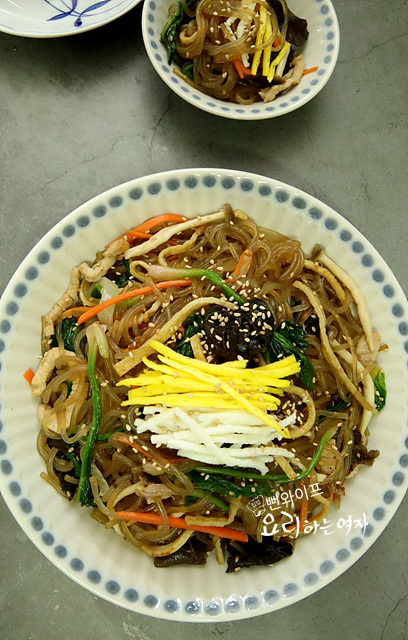
Boil the glass noodles for about 2 minutes less than usual, rinse them in cold water, and stir-fry them with oil and seasonings so they stay delightfully bouncy and never turn soggy over time. Deepened in flavor with oyster sauce and soy sauce, and tossed with colorful vegetables and meat, this makes a bountiful dish perfect for holidays or dinner guests.
- Servings
- 10 servings
- Difficulty
- Medium
- Spiciness
- Not spicy
Ingredients
Ingredients
- Sweet potato glass noodles (dangmyeon)500 g
- Pork200 g
- Square fish cake (eomuk)2 sheets
- Spinach200 g
- Baby oyster mushrooms150 g
- Dried wood ear mushrooms20 g
- Onion1 (small)
- Carrot1 (small)
Glass noodle seasoning
- Regular soy sauce (jin-ganjang) (or brewed soy sauce (yangjo-ganjang))5 tbsp
- Oyster sauce2 tbsp
- Sugar2 tbsp
Japchae seasoning
- Regular soy sauce (jin-ganjang) (or brewed soy sauce (yangjo-ganjang))2 tbsp
- Toasted sesame oil5 tbsp
- Toasted sesame seeds5 tbsp
- Ground black peppera little
- Lean beef also works great in place of pork.
- If using only shiitake mushrooms, prepare about 5.
- Dried wood ear mushrooms take about 1 hour to rehydrate in cold water, but take only 20 minutes in warm water.
- Dried wood ear mushrooms expand to nearly 5 times their dry volume, so it is best to pour in at least 5 times as much water.
Steps
Prepare the ingredients
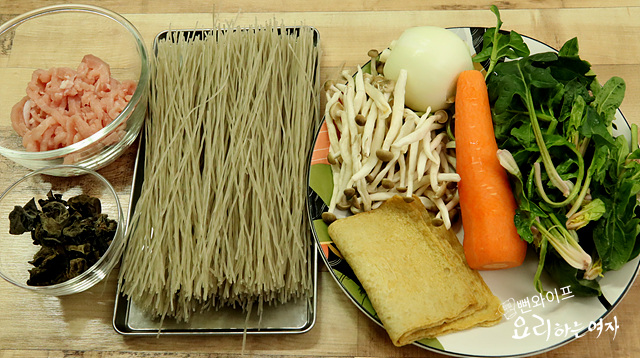
Here is one 500 g bag of sweet potato glass noodles, the star of japchae.
The more variety of ingredients you add to japchae, the better it tastes as each texture and flavor blends together.
Julienne the pork, which is typically used, and blot off the residual blood. Lean beef also works great in place of pork.
I prepared dried wood ear mushrooms and baby oyster mushrooms for their wonderful textures. If using only shiitake mushrooms, you can prepare about 5.
I also prepared fish cake because adding a bit of it seems to boost the savory umami even more than using meat alone.
Spinach, carrots, and onions are regular supporting players in japchae, so make sure to prepare them.
Winter spinach and carrots are sweet and delicious, making them just perfect for making japchae.
Prep and season the ingredients
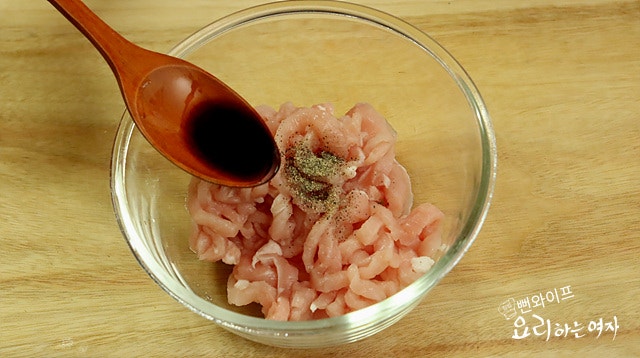
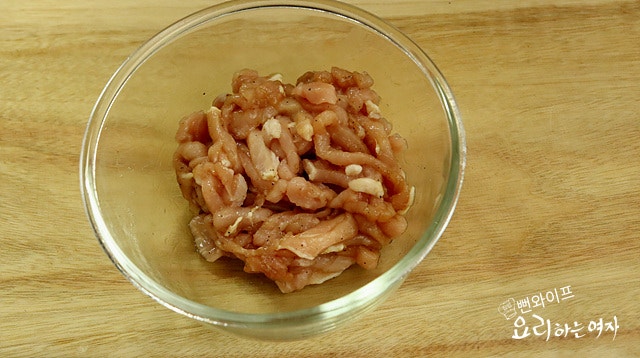
Season the pork by gently tossing it with regular soy sauce, mirin, and ground black pepper.
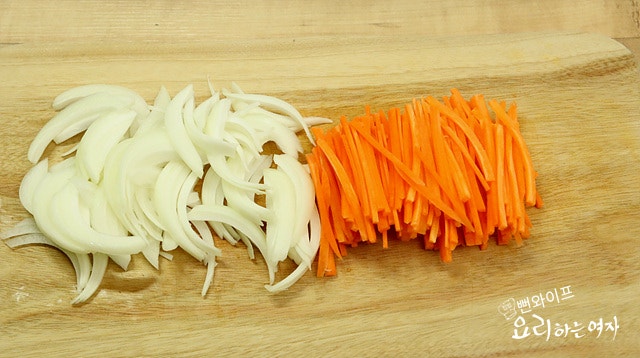
Julienne the onion and carrot; slice the onion not too thin, and julienne the carrot a bit finer than the onion.
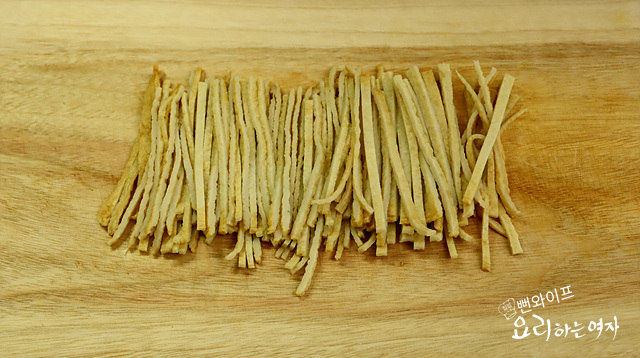
Also cut the square fish cake into thin strips.
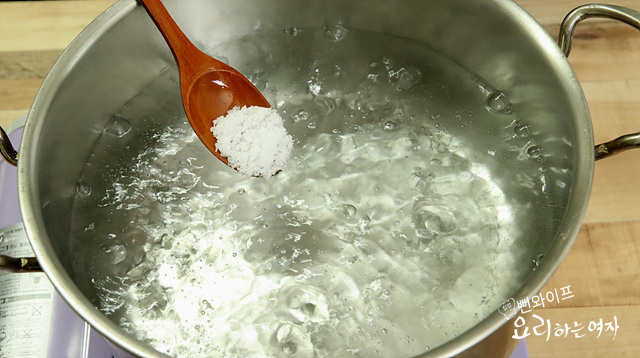
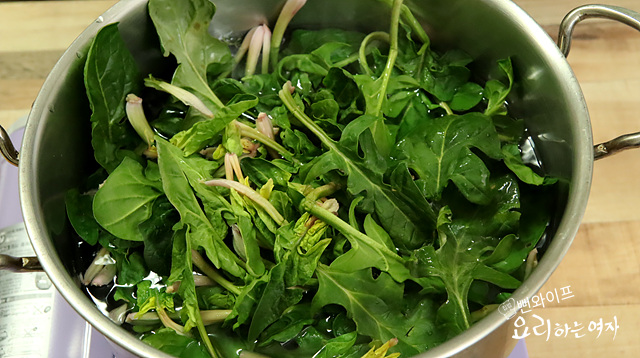
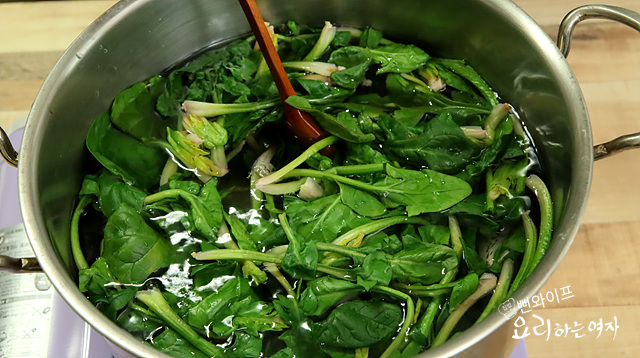
Add 1 tbsp coarse sea salt to vigorously boiling water and briefly blanch the spinach.
If you take it out just as the water starts to boil again after adding the spinach, the texture will be just right.
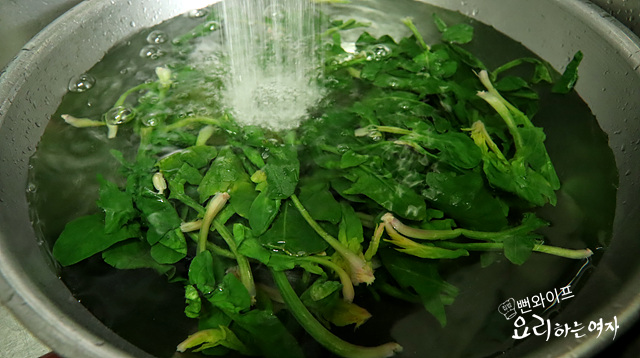
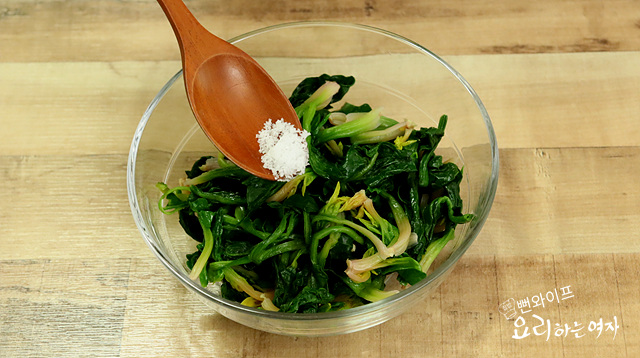
Rinse several times in cold water, squeeze out the moisture thoroughly, and toss with 1/3 tsp salt to season.
You should not season it heavily like making a spinach side dish, but only lightly so it blends harmoniously into the japchae.
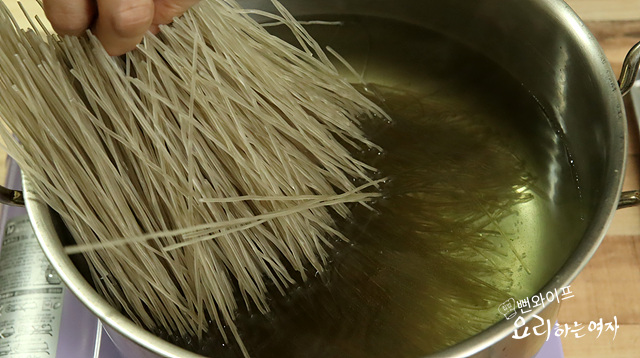
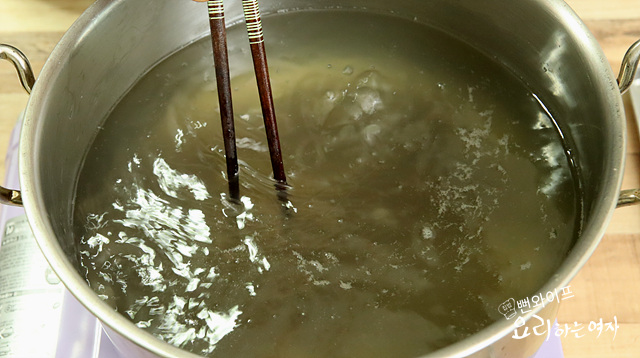
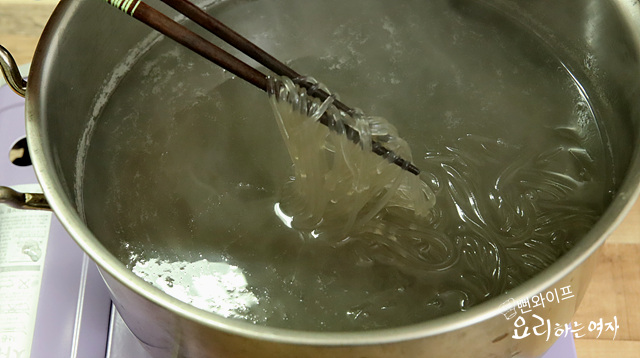
I never throw out the water used to blanch the spinach and boil the glass noodles in it.
Add more water, bring it to a rolling boil, and add the glass noodles to cook.
The boiling time for glass noodles is usually around 10 minutes, but you need to undercook them by about 2 minutes so they keep their bouncy texture when stir-fried.
Rinse the boiled glass noodles several times in cold water until the heat is completely gone.
I boil the dry noodles directly without soaking them.
I stick to this method because it makes tracking the time so convenient.
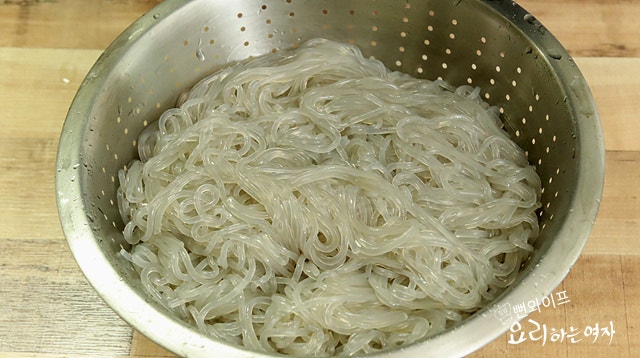
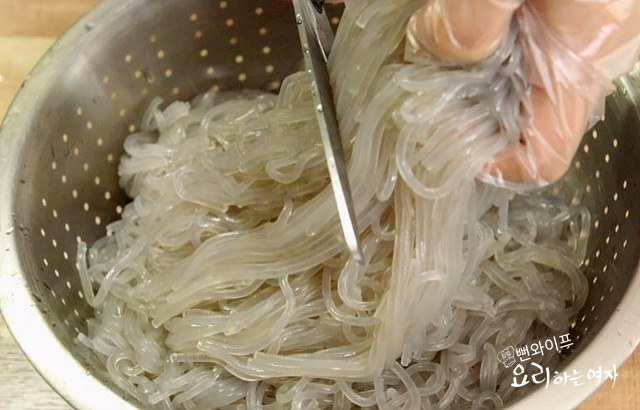
Drain them in a colander to remove moisture, then cut them into bite-sized lengths.
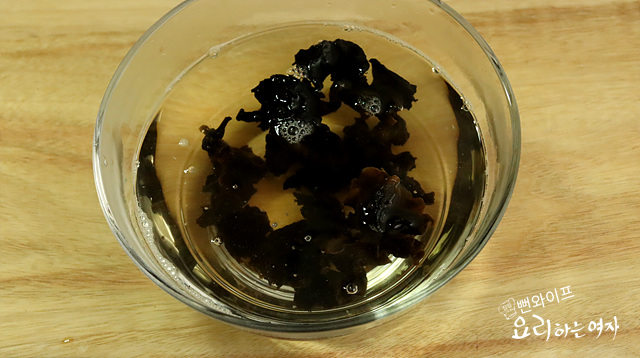
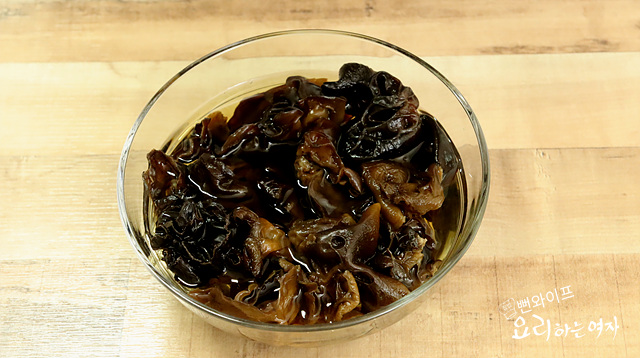
Soak the dried wood ear mushrooms in warm water. It takes about 1 hour in cold water, so 20 minutes in warm water is plenty to rehydrate them.
They turn soft and expand to nearly 5 times their dry volume, so it is best to pour in at least 5 times as much water.
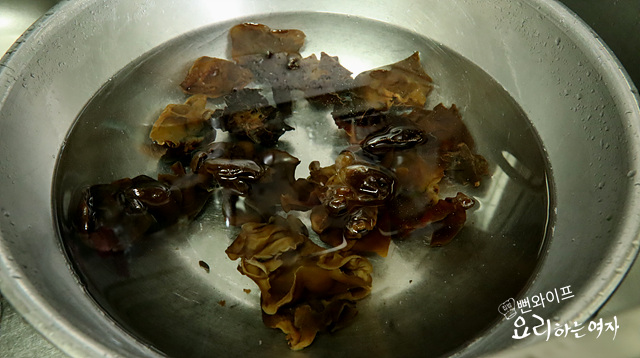
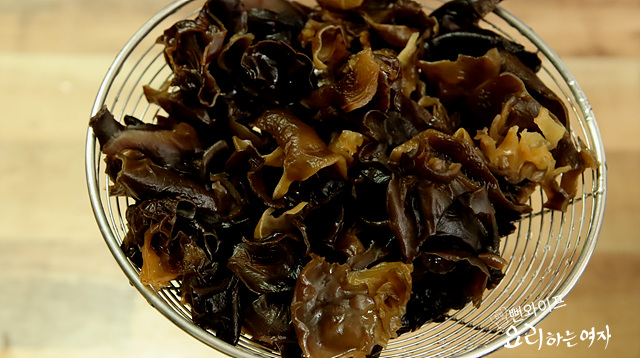
Rehydrated wood ear mushrooms often have impurities stuck to them and can carry a distinct smell from long drying and storage.
Rub them vigorously while rinsing several times under running water, then drain in a colander.
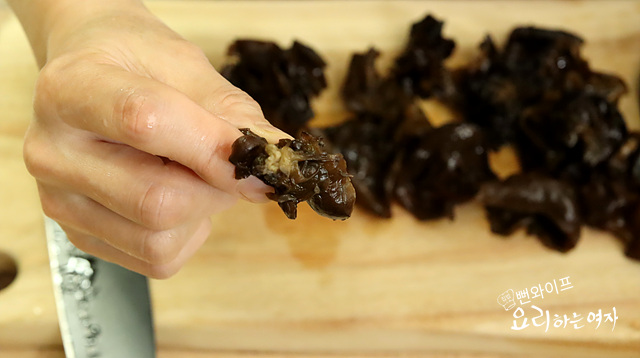
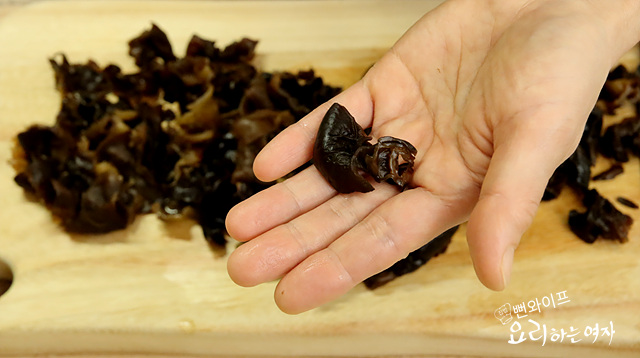
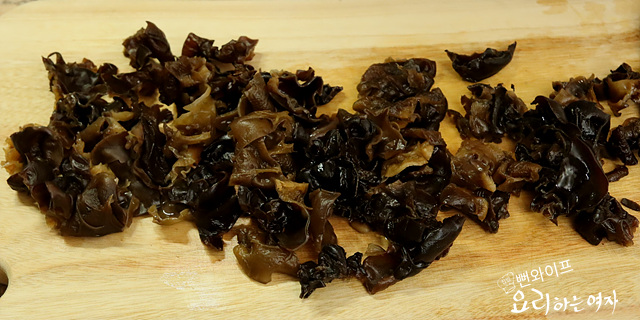
Trim away any tough stems with impurities attached and cut them into bite-sized pieces.
If you cut them too small, the japchae will look messy, so pieces around 2 cm are ideal.
Stir-fry the ingredients
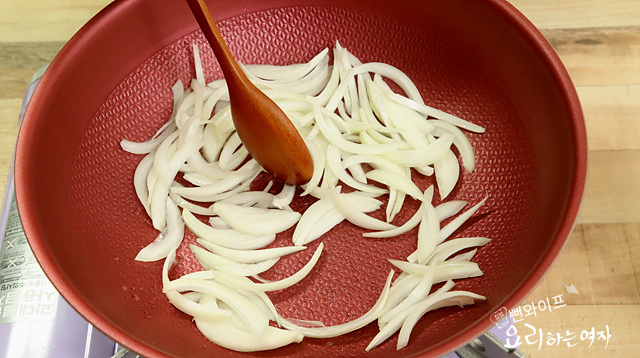
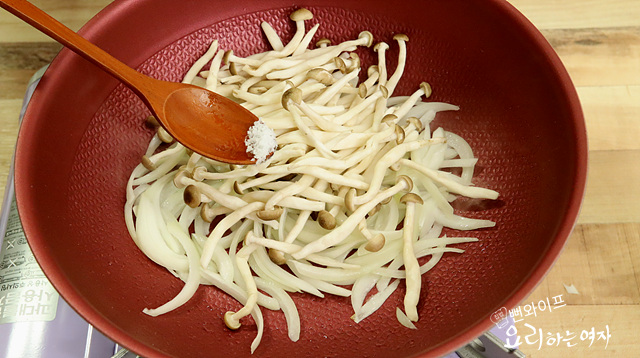
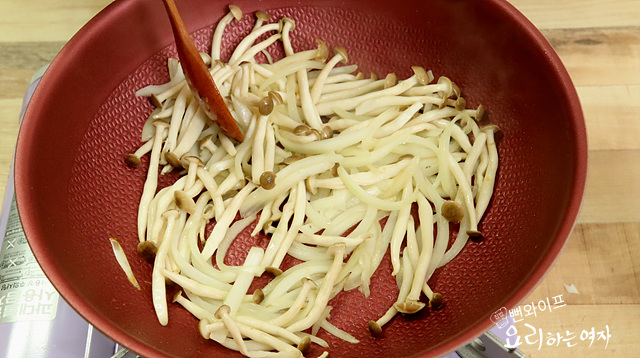
Heat oil in a preheated pan, add the onion, and stir-fry briefly. Then add the baby oyster mushrooms and about two pinches of salt, stir-fry so they do not wilt too much, and spread them out on a plate.
Stir-frying ingredients of similar color or flavor with staggered timing like this absorbs less oil and lets you stir-fry the ingredients quickly.
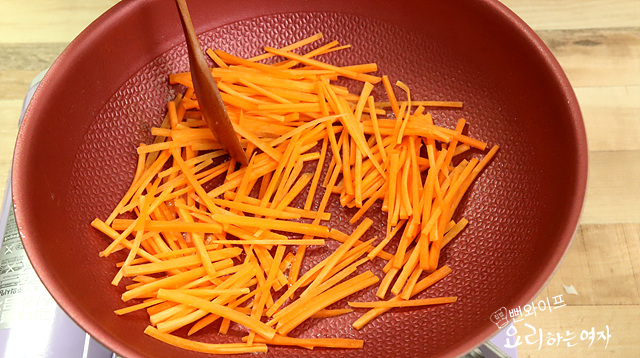
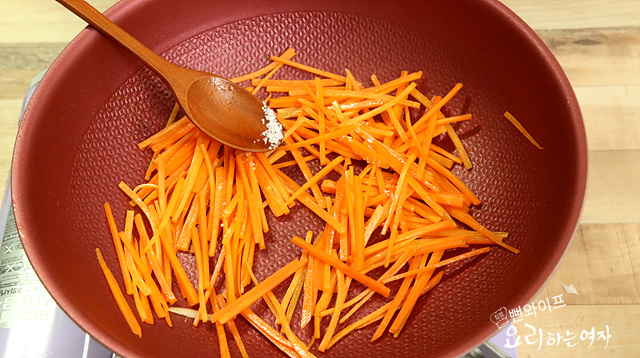
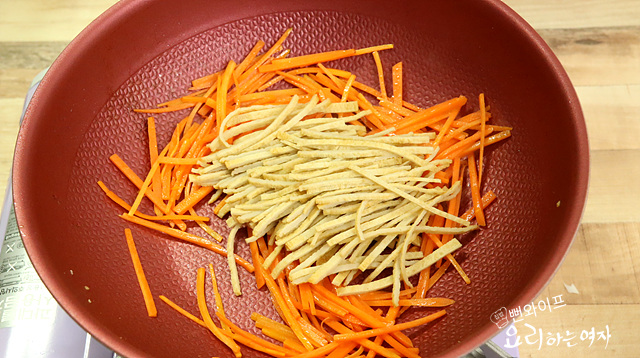
Heat some oil, add the julienned carrot and a pinch of salt, and stir-fry until slightly wilted. Then add the sliced fish cake, stir-fry briefly, and spread them out on a plate.
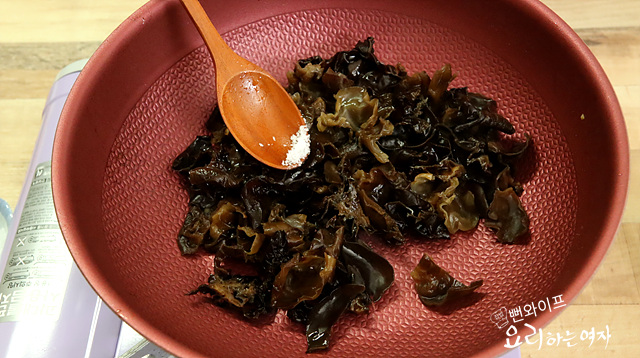
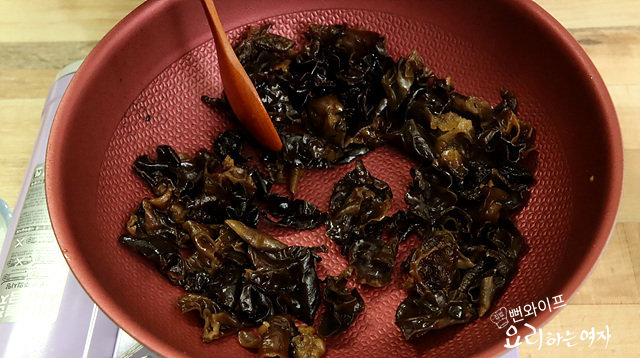
Add oil and a pinch of salt to the wood ear mushrooms and stir-fry them briefly.
Wood ear mushrooms burn quickly over high heat, so you must stir-fry them quickly over medium heat.
As soon as their texture turns bouncy while stir-frying, turn off the heat immediately and spread them out to cool.
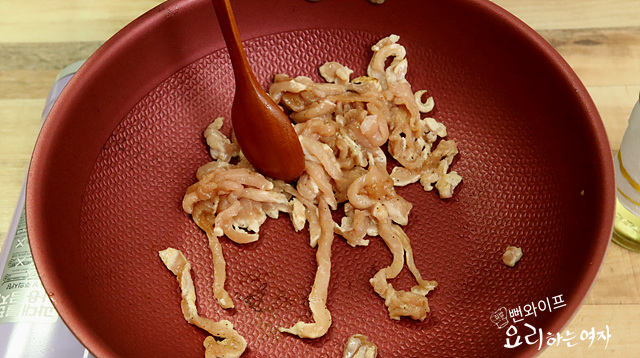
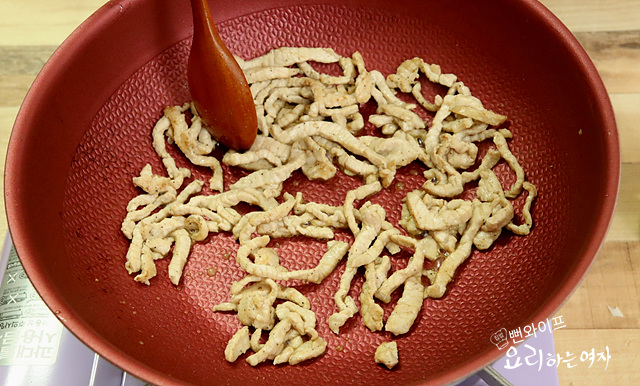
Add the pork to a heated pan and stir-fry briskly until cooked through and white. A lot of juices will release as it cooks, but stir-frying it until completely dry makes it savory and removes any off-flavors.
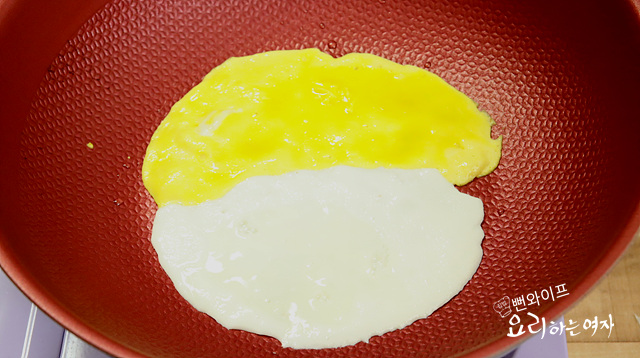
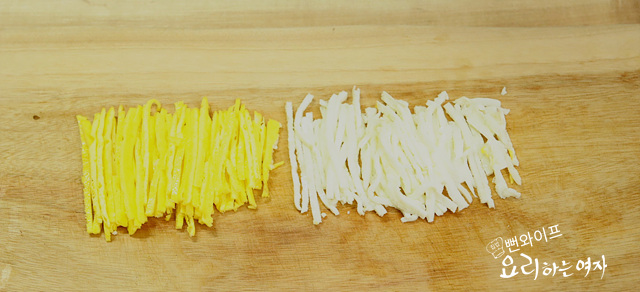
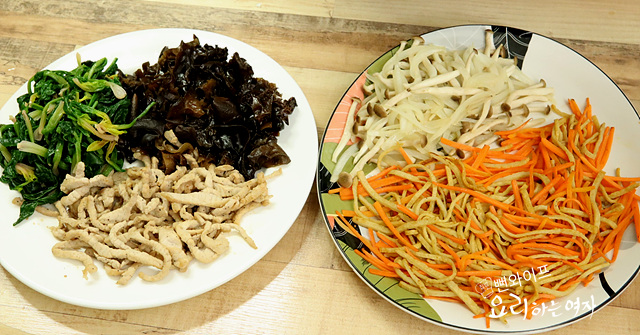
Separate the egg whites and yolks to fry egg garnish (jidan), and let it cool completely before slicing so it cuts cleanly without crumbling.
Spreading all the ingredients out on wide plates to let the residual heat dissipate allows you to make japchae with vibrant colors and great texture.
Season the glass noodles
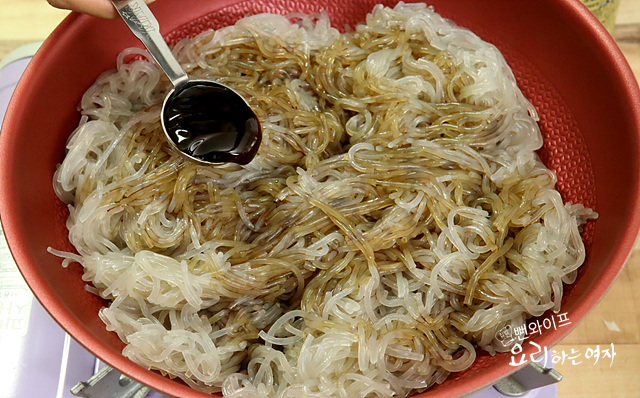
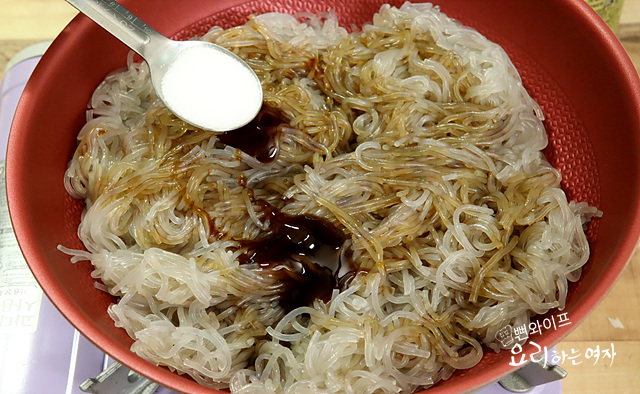
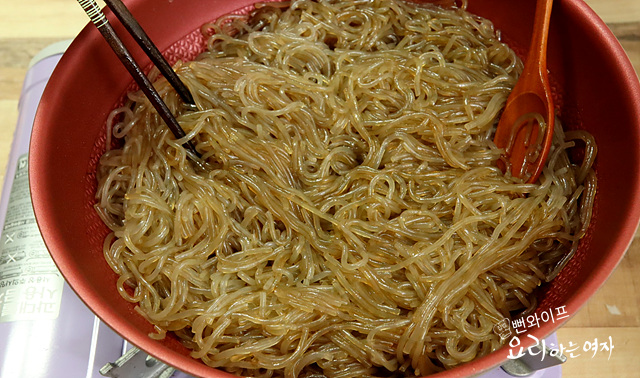
Now, season the glass noodles.
Generously drizzle cooking oil in a preheated pan, add regular soy sauce, oyster sauce, and sugar, and stir-fry, mixing well so the glass noodles do not burn.
Stir-fry until the glass noodles absorb the color well and turn glossy; the 2 minutes of undercooking finishes during this stir-frying step for a perfect texture.
Transfer the stir-fried noodles to another bowl until they cool down. If left in the hot pan, the residual heat will make the noodles turn soggy.
Seasoning the noodles while stir-frying them in oil like this is the secret to japchae that does not get soggy even after sitting for a while.
If you want a darker color for the japchae, you can add a small amount of dark soy sauce while stir-frying, though I find regular soy sauce alone to be plenty.
Season the japchae
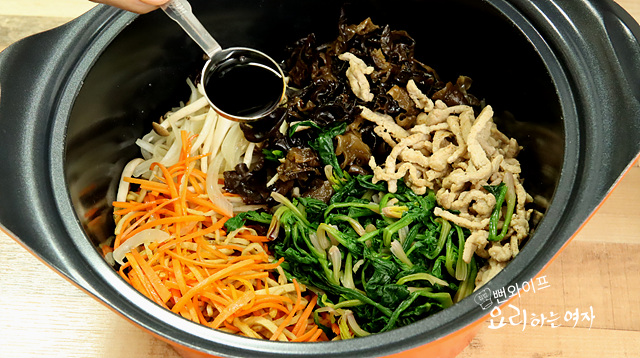
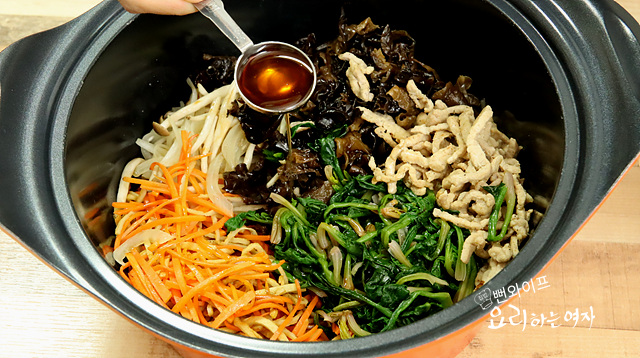
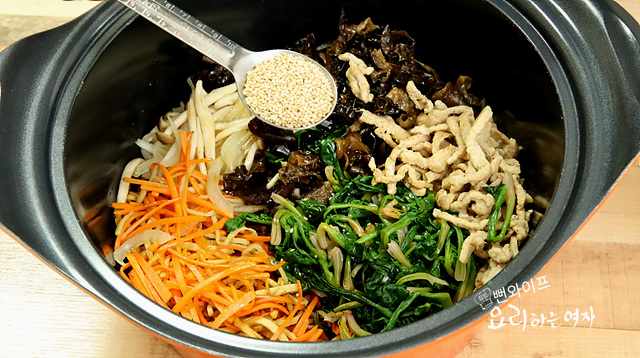
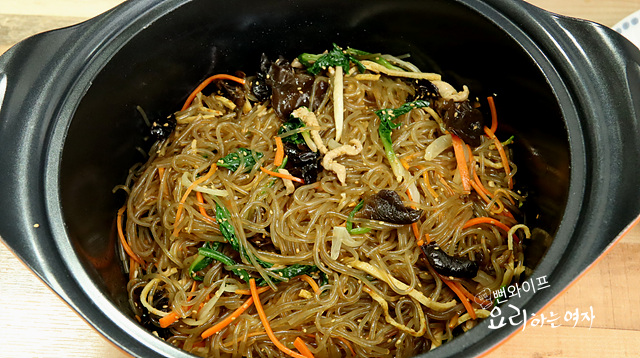
Place the seasoned glass noodles and all the ingredients into a large bowl or pot, add regular soy sauce, toasted sesame oil, toasted sesame seeds, and a little ground black pepper, then mix thoroughly.
Do not pour in all the soy sauce at once; taste as you go and adjust to your liking.
Having made japchae many times, I find that balancing soy sauce and oyster sauce in the seasoning creates a much deeper, richer flavor when finished.
I highly recommend adding oyster sauce when you make japchae.
You need generous amounts of toasted sesame oil and toasted sesame seeds for it to be nutty and delicious.
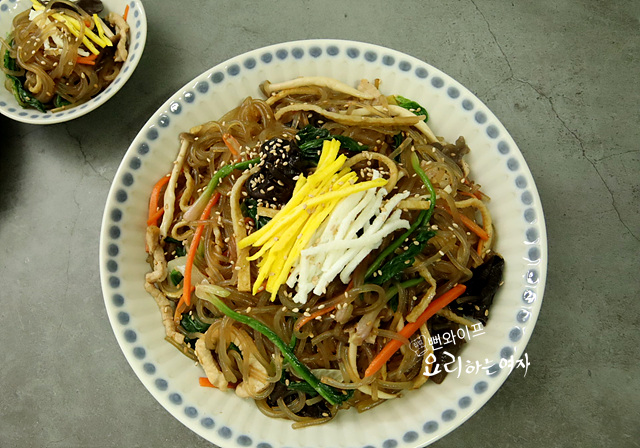
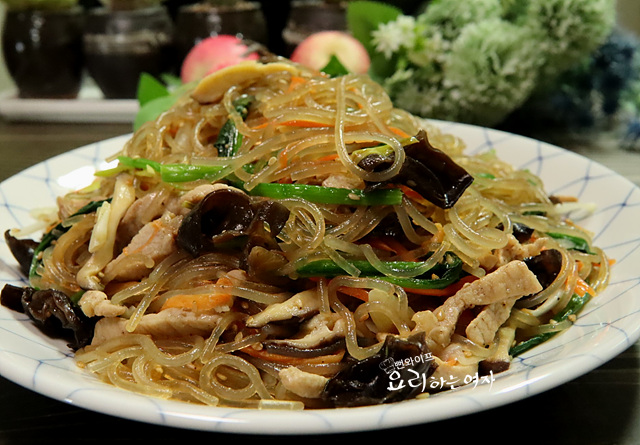
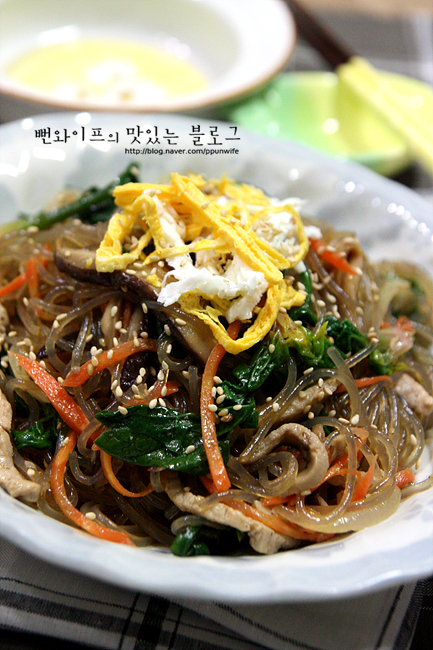
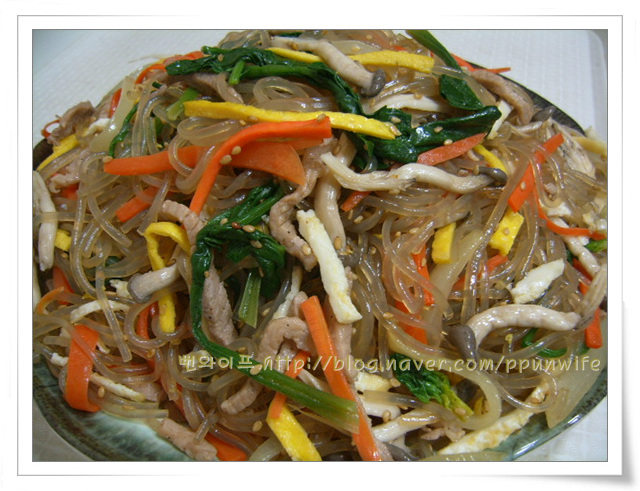
Arrange all the ingredients evenly on a plate and neatly place the egg garnish on top at the end—this is the moment when an hour of effort truly shines.
It is most delicious right now while still warm, but it is also great at room temperature, and just as tasty reheated after being in the fridge.
I think reheating japchae by stir-frying it in a pan is the tastiest way.
 Ppunwife's tips
- The boiling time for glass noodles is usually around 10 minutes, but you need to undercook them by about 2 minutes so they keep their bouncy texture when stir-fried.
- Do not season the spinach heavily like making a spinach side dish, but only lightly so it blends harmoniously into the japchae.
- Wood ear mushrooms burn quickly over high heat, so you must stir-fry them quickly over medium heat.
- Stir-fry the pork until completely dry so it turns nutty and free of off-flavors.
- Let the egg garnish cool completely before slicing so it cuts cleanly without crumbling.
- Spreading all the ingredients out on wide plates to let the heat dissipate preserves their colors and keeps the texture crisp.
- Transfer the stir-fried noodles to another bowl until they cool down; leaving them in a hot pan will cause the residual heat to make them soggy.
- Do not pour in all the soy sauce at once; taste as you go and adjust to your liking.
FAQ
What is the secret to keeping japchae from turning soggy over time?
Undercook the glass noodles by about 2 minutes less than usual, rinse thoroughly in cold water, and stir-fry them in a pan with oil and seasonings so they do not easily turn soggy.
Can I use other ingredients instead of pork?
Lean cuts of beef also pair wonderfully in place of pork.
How should I rehydrate dried wood ear mushrooms?
They take about 1 hour in cold water, but pouring in at least 5 times as much warm water rehydrates them thoroughly in just 20 minutes.
What is the best way to reheat leftover japchae from the fridge?
Stir-frying it briefly in a pan is the best way to enjoy it, as it revives its original flavor and texture.