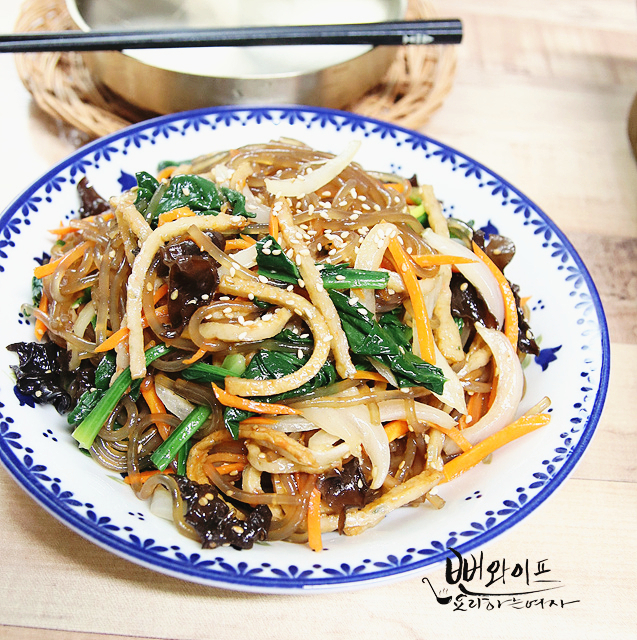
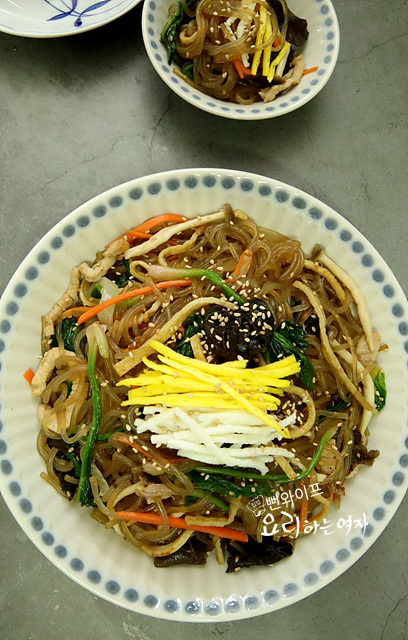
Savory Mushroom Japchae (Stir Fried Glass Noodles with Mushrooms)
A 10-serving festive japchae made with a colorful mix of mushrooms and fish cake instead of meat for a chewy texture and deep umami flavor.
Translated from Korean by AI and not yet checked by a native speaker. Amounts and numbers are taken directly from the original recipe. Read the Korean original →
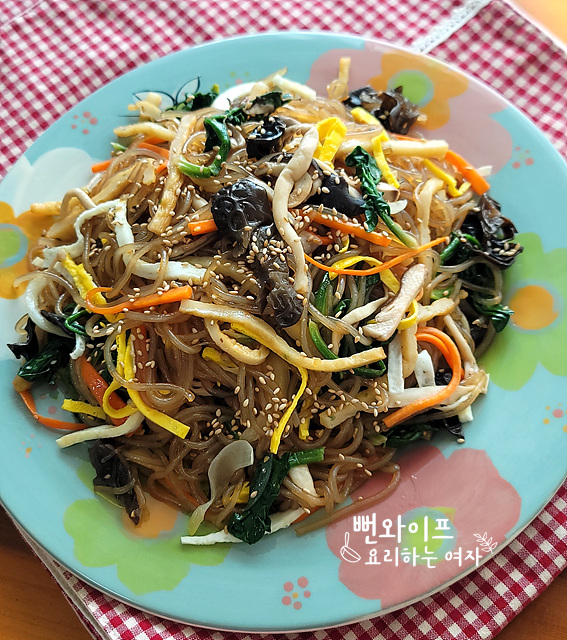
This japchae uses an abundance of assorted mushrooms and fish cake instead of meat, offering rich umami without any meaty smell even after it cools. The boiled sweet potato glass noodles are stir-fried first in an oyster sauce and soy sauce seasoning, keeping them springy and preventing them from getting soggy. It is wonderful for entertaining guests or setting a lavish holiday table.
- Servings
- 10 servings
- Difficulty
- Medium
- Spiciness
- Not spicy
Ingredients
Ingredients
- Sweet potato glass noodles (dangmyeon)500 g
- Square fish cake (eomuk)3 sheets
- Shiitake mushrooms4
- Baby oyster mushrooms1 pack, 100 g (or similar)
- Dried wood ear mushrooms20 g
- Spinach200 g
- Carrot1
- Onion2 (small)
Glass noodle seasoning
- Cooking oil5 tbsp
- Regular soy sauce (jin-ganjang) (or brewed soy sauce (yangjo-ganjang))5 tbsp
- Oyster sauce2 tbsp
- Sugar2 tbsp
Japchae seasoning
- Regular soy sauce (jin-ganjang) (or brewed soy sauce (yangjo-ganjang))2 tbsp
- Toasted sesame oil5 tbsp
- Toasted sesame seeds5 tbsp
- Ground black peppera little
- If you add meat, reduce the fish cake or mushrooms by half or more.
Steps
Prepare the ingredients
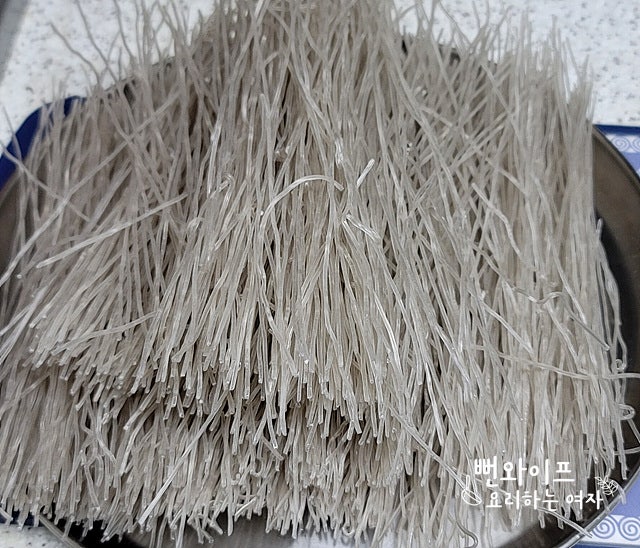
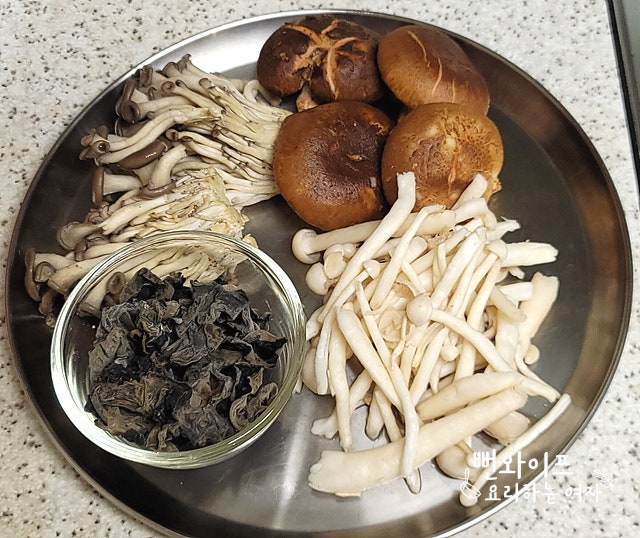
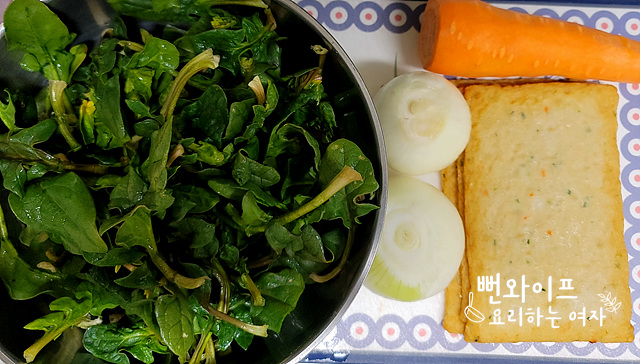
There are 9 ingredients going into the japchae.
I prepared 500g sweet potato glass noodles, spinach, onion, carrot, square fish cake, and 4 kinds of mushrooms: dried wood ear, shiitake, baby oyster, and thick enoki mushrooms.
I prepared plenty of mushrooms instead of meat, but if you add meat, you can reduce the fish cake or mushrooms by half or more.
Prepare and slice dried wood ear mushrooms
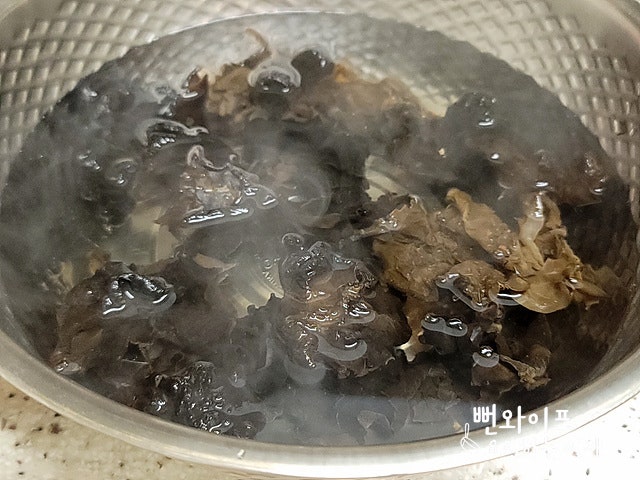
Soak the dried wood ear mushrooms thoroughly in water.
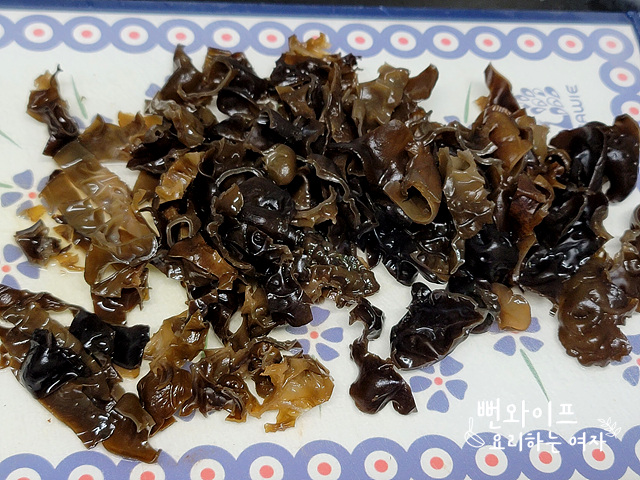
Once they expand to two to three times their volume and soften, rub them gently while washing several times to remove any debris clinging to them.
Cut off the tough base and slice them into bite-sized pieces.
Slice the ingredients
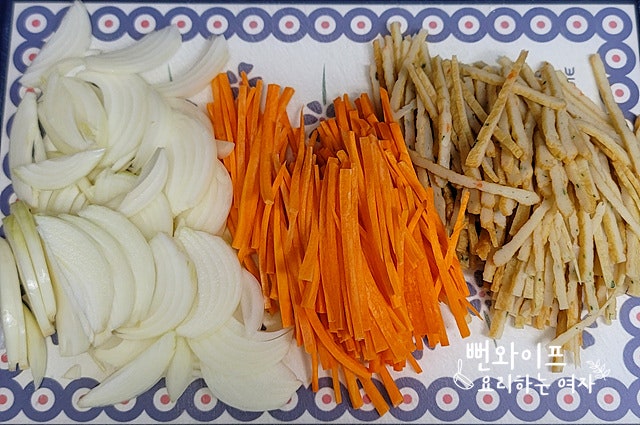
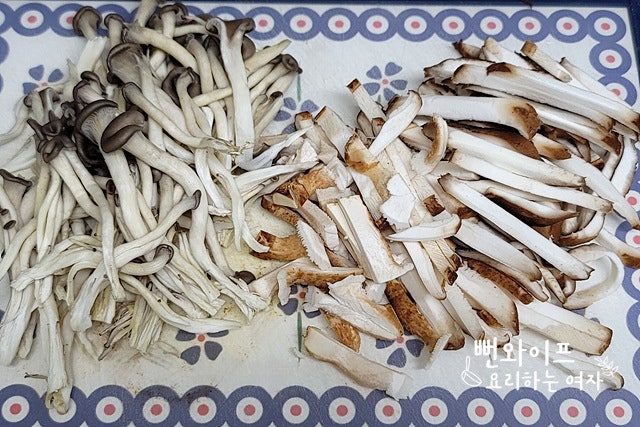
Julienne all the ingredients into similar lengths and thicknesses.
Shiitake mushrooms are thick, so slice them across once or twice before julienning, and tear the oyster mushrooms into individual strands.
Blanch the spinach
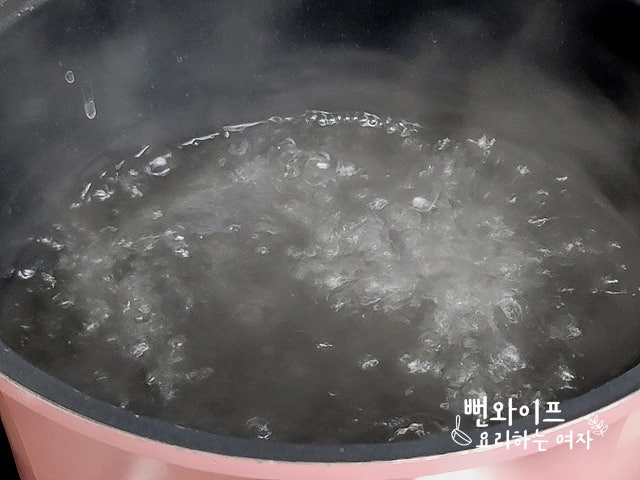
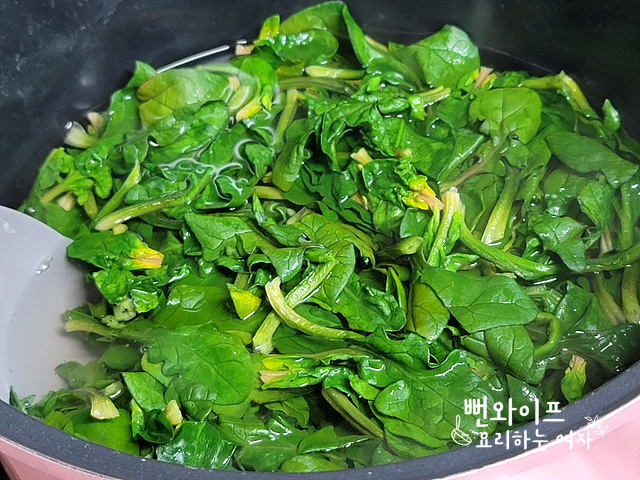
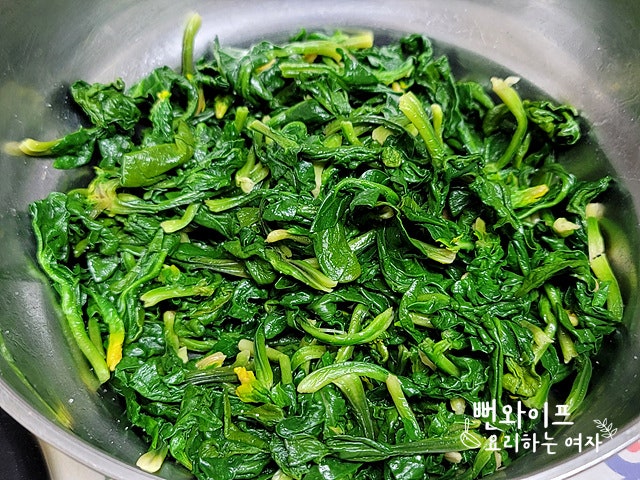
Add 1 tbsp coarse sea salt and the spinach to rolling boiling water, stir once or twice, and blanch for about 30 seconds.
To keep it from turning mushy, immediately rinse it in cold water, squeeze out the moisture, and season with 1/2 tsp salt.
Stir-fry the ingredients
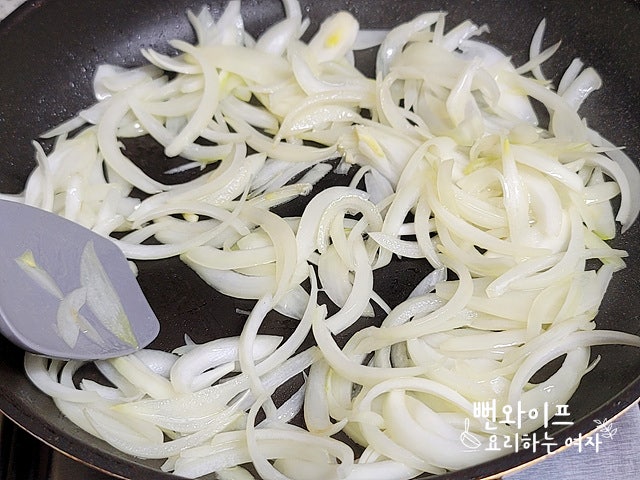
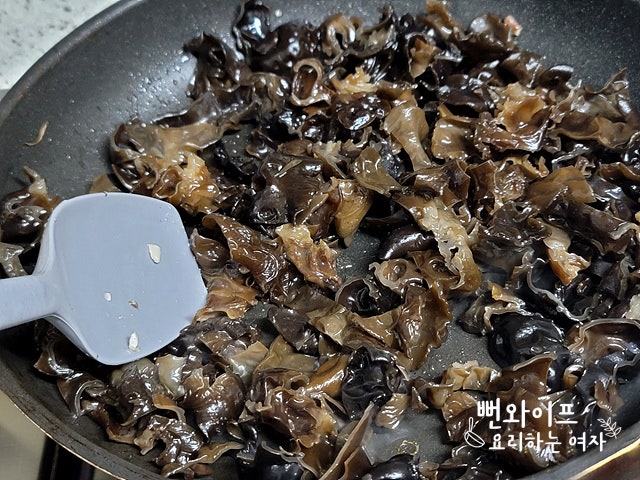
Drizzle a little cooking oil in a heated pan, add the onion with a pinch of salt to lightly season it, and briefly stir-fry.
Spread it out on a wide plate to let the steam cool.
Stir-fry the wood ear mushrooms briefly in the same way.
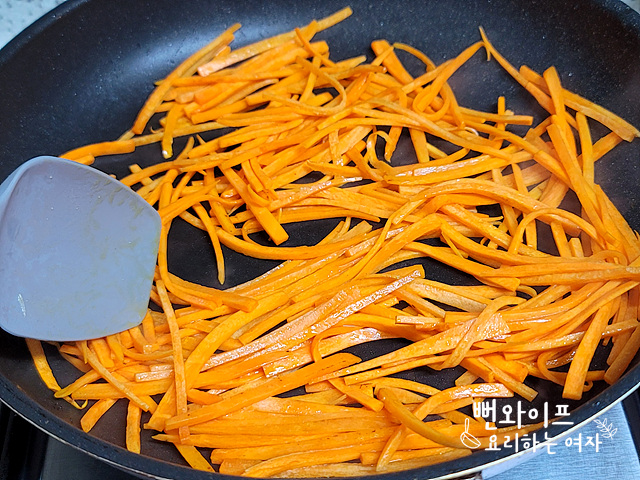
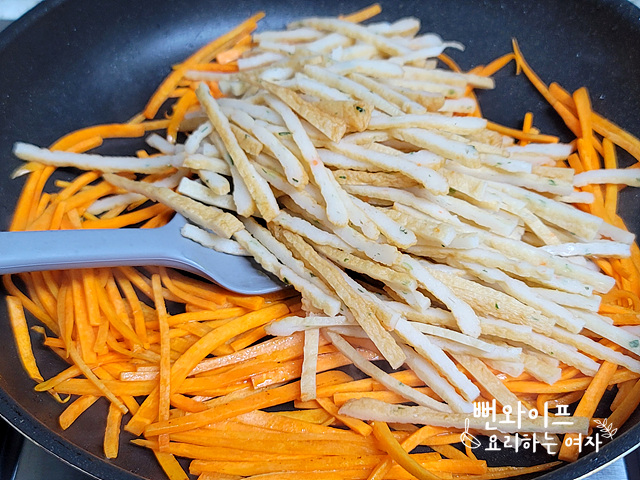
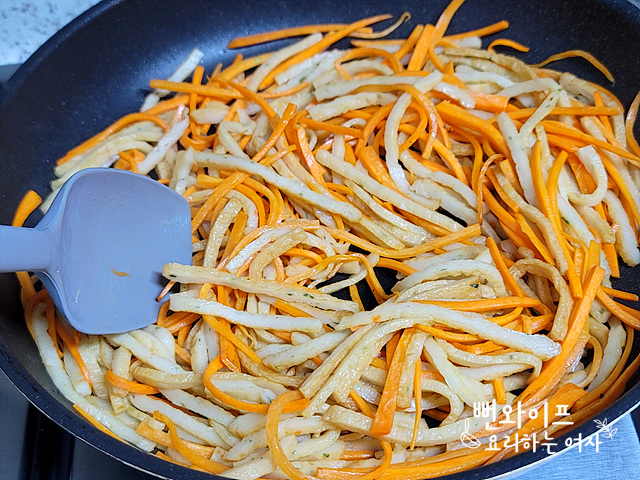
Drizzle cooking oil in the pan, add the carrot and a little salt, stir-fry briefly, then add the fish cake and stir-fry them together.
Stir-frying ingredients that do not affect the color or flavor of each other together with a slight time gap saves time and makes it easier.
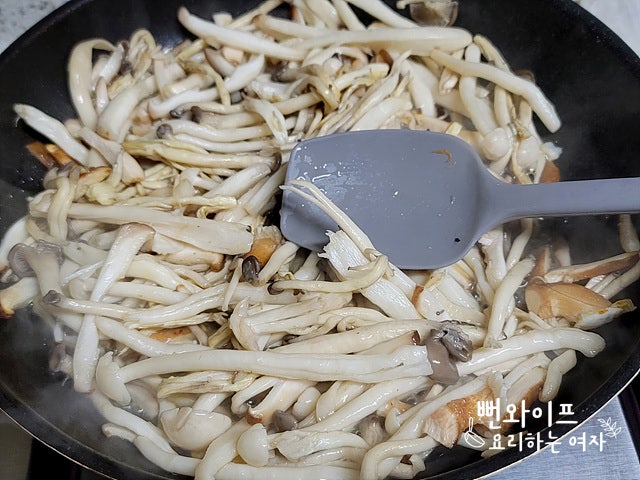
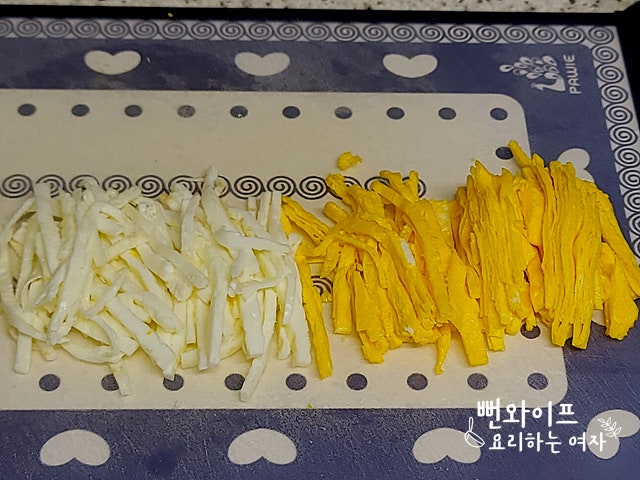
Add the baby oyster, shiitake, and thick enoki mushrooms all at once, along with a little salt, and stir-fry briefly until wilted.
Drain the moisture released while stir-frying by pressing them gently in a sieve.
To add richer color to the japchae, I fried egg garnish (jidan) with about 4 eggs and finely julienned it, but you can omit this.
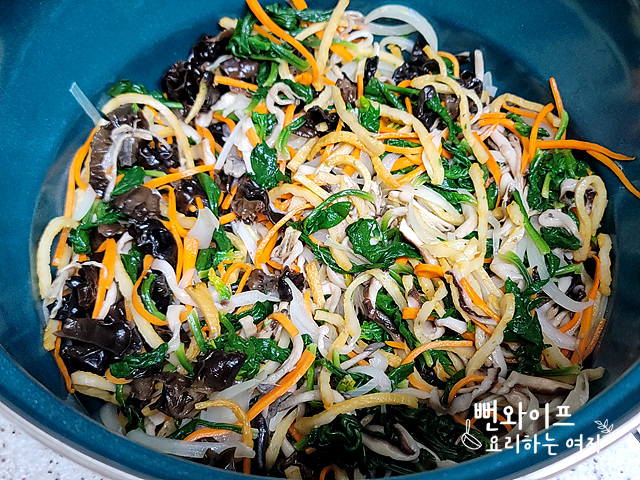
Mix all the stir-fried ingredients together once they have cooled slightly.
Boil the glass noodles
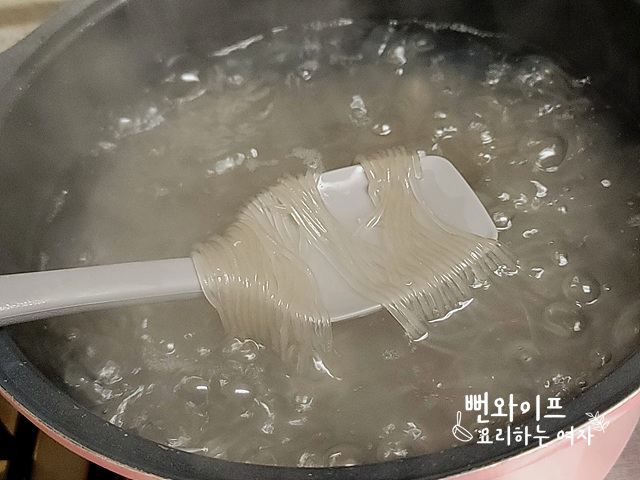
Add the glass noodles to rolling boiling water and boil for 1 to 2 minutes less than the package instructions.
Be careful not to overcook them since they will be stir-fried in seasoning, then immediately rinse in cold water and drain well.
Stir-fry the glass noodles in seasoning
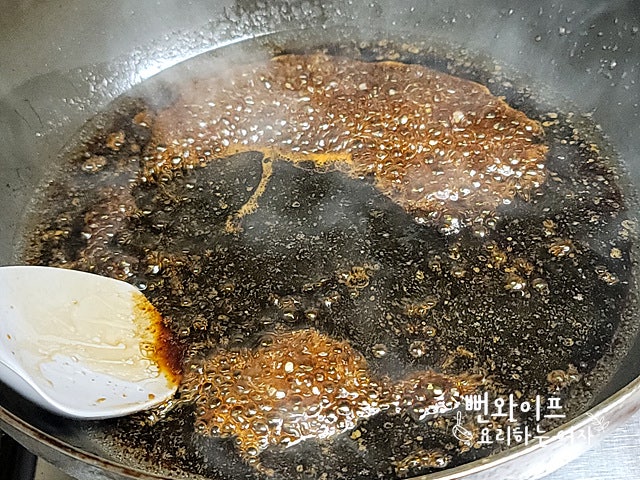
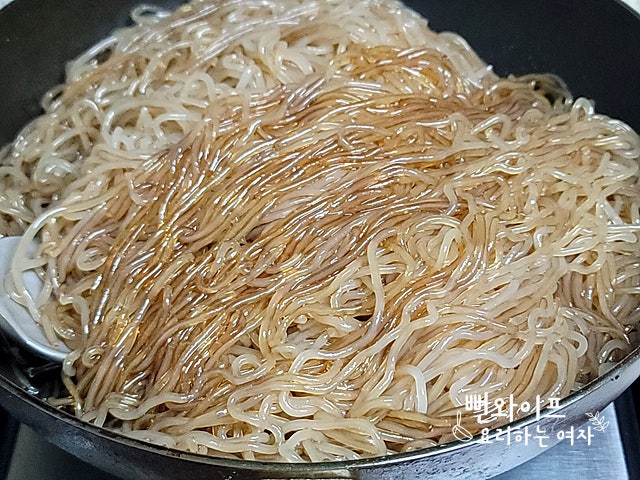
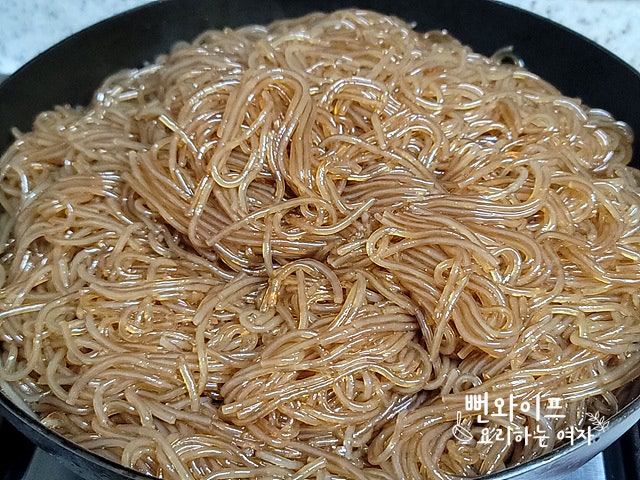
In a wide pan, add 5 tbsp cooking oil, 5 tbsp brewed soy sauce, 2 tbsp oyster sauce, and 2 tbsp sugar, and bring to a simmer until the sugar dissolves.
Add the boiled glass noodles and stir vigorously so the sauce absorbs evenly.
Once the stiff noodles turn translucent and become springy, remove from the heat.
Season the japchae
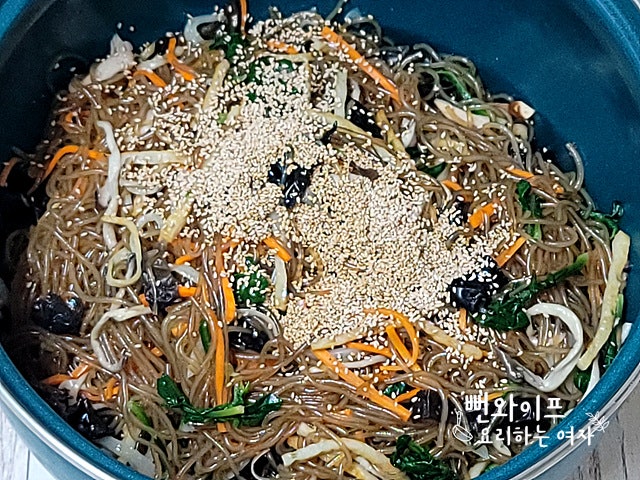
Combine the glass noodles and stir-fried ingredients, mix well, and taste.
Season the entire dish by adding soy sauce little by little as needed.
I adjusted the flavor with about 2 tbsp brewed soy sauce, then finished with 5 tbsp toasted sesame oil, 5 tbsp toasted sesame seeds, and a pinch of ground black pepper.
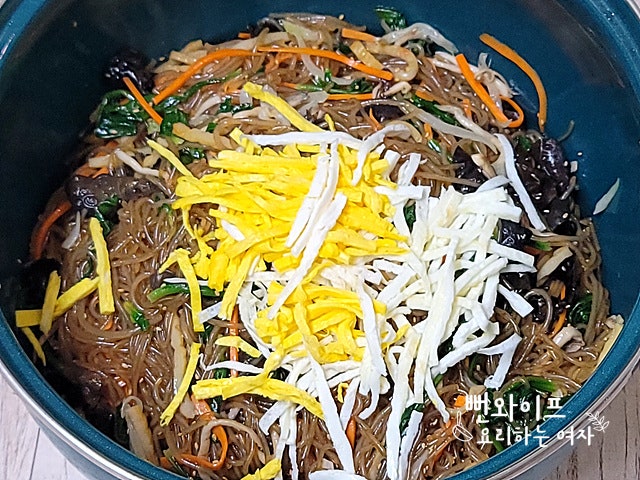
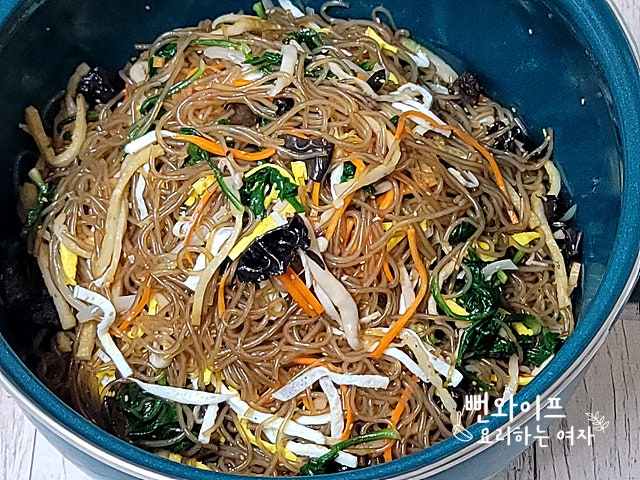
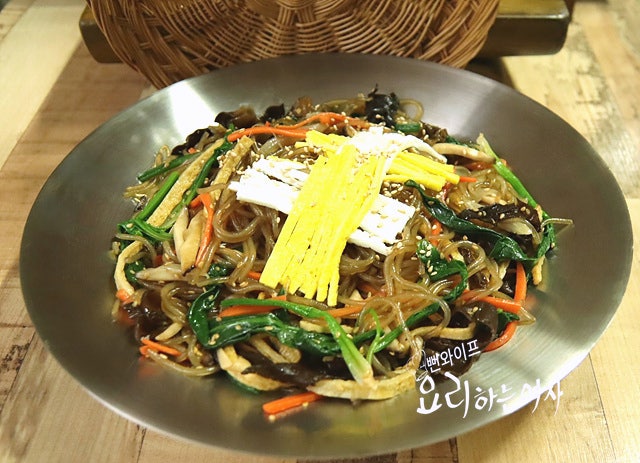
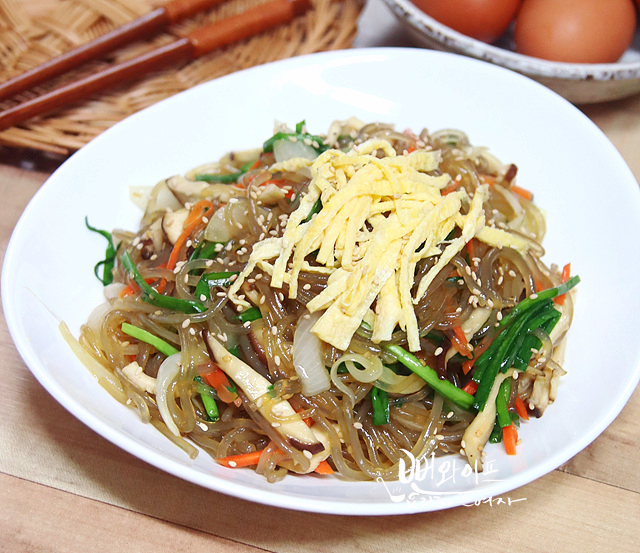
I made egg garnish, added it at the end, and tossed gently so it would not tear.
Finish
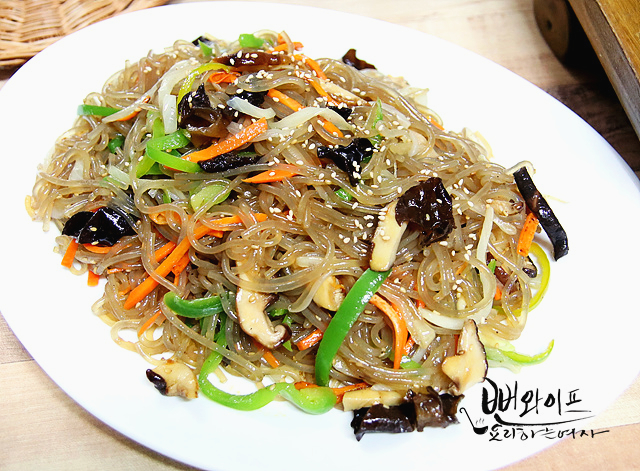
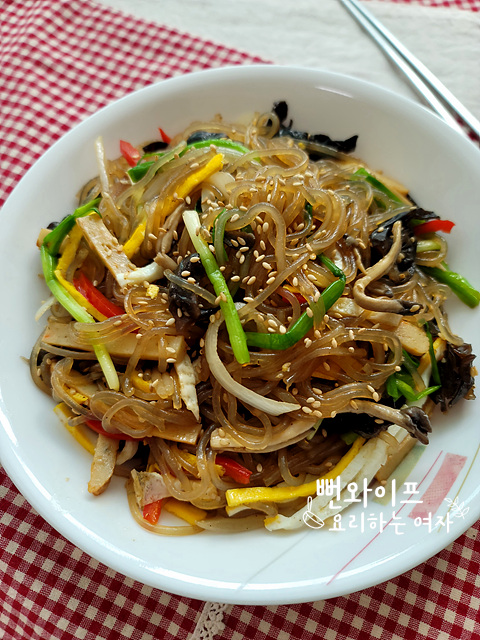
The japchae is finished.
It looks so hearty, colorful, and appetizing.
 Ppunwife's tips
- Stir-frying ingredients that do not affect the color or flavor of each other together with a slight time gap saves time and makes it easier.
- Drain the moisture released while stir-frying the mushrooms by placing them in a sieve and pressing gently.
- Be careful not to boil the noodles too long since they will be stir-fried in seasoning; boil them in rolling boiling water for 1 to 2 minutes less than the package instructions, then immediately rinse in cold water and drain well.
FAQ
What should I do if I want to use meat instead of mushrooms?
If adding meat to cook, adjust by reducing the amount of prepared fish cake or mushrooms by half or more.
Is there a way to boil the glass noodles so they stay springy and do not get soggy?
When boiling the glass noodles in boiling water, cook them for about 1 to 2 minutes less than the package directions, immediately rinse them in cold water to drain, and then stir-fry them in the seasoning.
How do I handle the moisture released after stir-frying the mushrooms?
After lightly stir-frying the mushrooms, place them in a sieve and press gently with your hands or a utensil to drain the moisture so the japchae does not turn soggy.