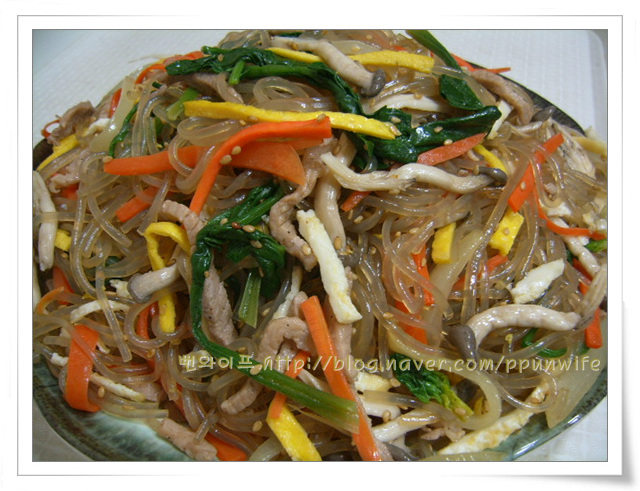
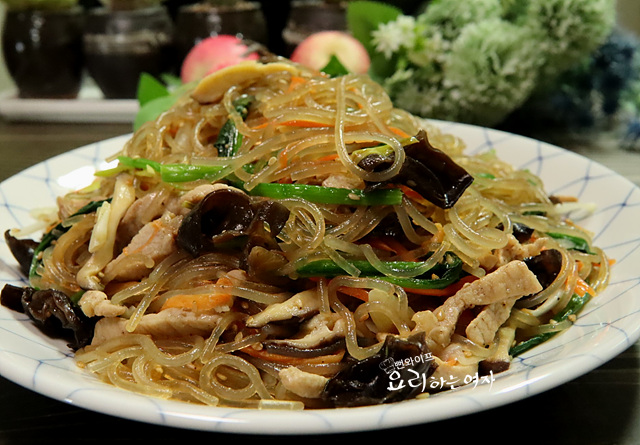
Chewy and Springy Beef Japchae (Stir-Fried Glass Noodles)
A 10-serving japchae made by tossing chewy glass noodles with stir-fried beef and crisp vegetables.
Translated from Korean by AI and not yet checked by a native speaker. Amounts and numbers are taken directly from the original recipe. Read the Korean original →
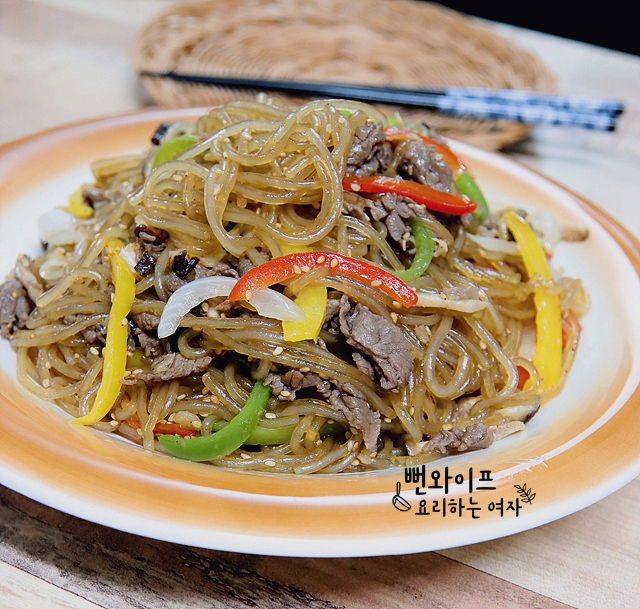
This japchae brings out vibrant flavor and color with generous amounts of beef and colorful bell peppers. By boiling the noodles 1 to 2 minutes less than the package instructions and stir-frying them in sauce, they stay springy and will not get soggy even when reheated. The secret to keeping the vegetables crisp is spreading them out to cool after stir-frying.
- Servings
- 10 servings
- Difficulty
- Medium
- Spiciness
- Not spicy
Ingredients
Ingredients
- Sweet potato glass noodles (dangmyeon)500 g
- Beef for bulgogi300 g
- Regular soy sauce (jin-ganjang)2 tbsp
- Mirin (cooking rice wine)2 tbsp
- Minced garlic1/2 tbsp
- Ground black peppera little
- Red and yellow bell peppers1 each
- Bell pepper2
- Onion1 (large)
- Shiitake mushrooms3
Noodle Seasoning
- Regular soy sauce (jin-ganjang) (or brewed soy sauce (yangjo-ganjang))5 tbsp
- Oyster sauce2 tbsp
- Sugar2 tbsp
Japchae Sauce
- Regular soy sauce (jin-ganjang) (or brewed soy sauce (yangjo-ganjang))2 tbsp
- Toasted sesame oil5 tbsp
- Toasted sesame seeds5 tbsp
- Ground black peppera little
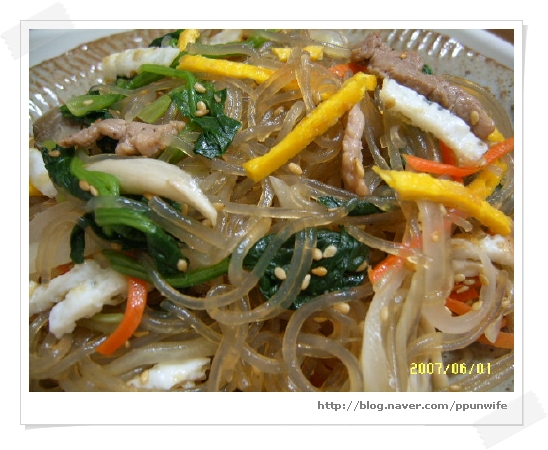
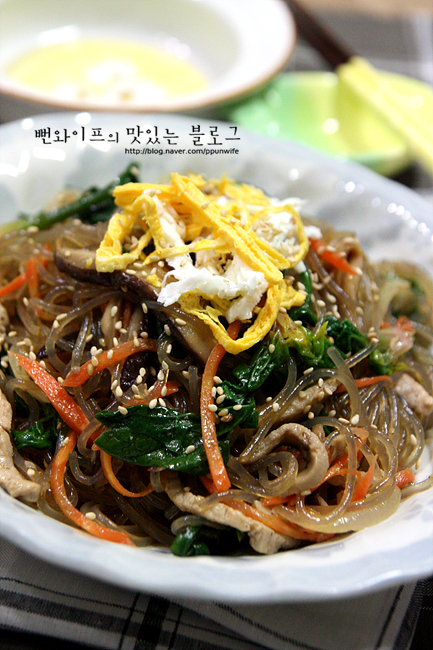
- Depending on what you have in the fridge or your personal taste, you can use fish cake, carrots, wood ear mushrooms, oyster mushrooms, water dropwort, spinach, and more for the japchae ingredients.
Steps
Prepare the ingredients
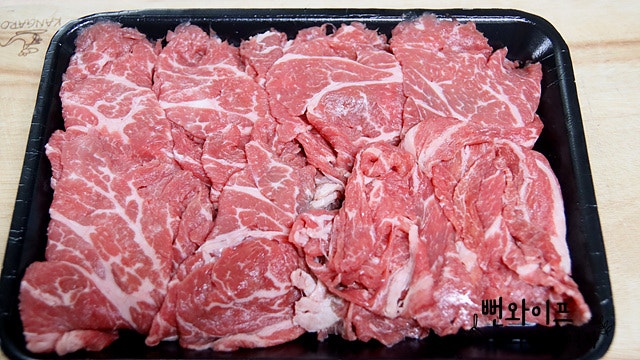
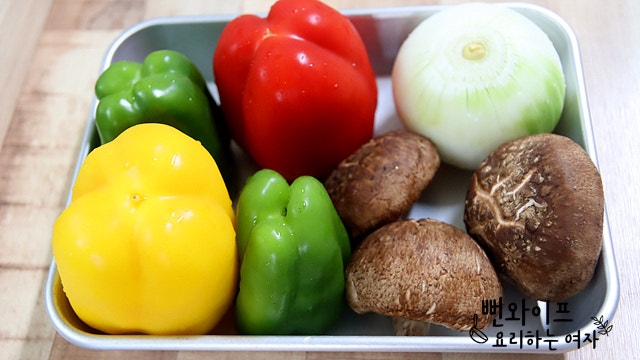
Here is 300 g of beef for bulgogi.
For the vegetables, I simply prepared bell peppers, onion, and shiitake mushrooms.
One each of red and yellow bell pepper for color.
Depending on what you have in the fridge or your personal taste, you can use fish cake, carrots, wood ear mushrooms, oyster mushrooms, water dropwort, spinach, and more for the japchae ingredients.
Slice the ingredients
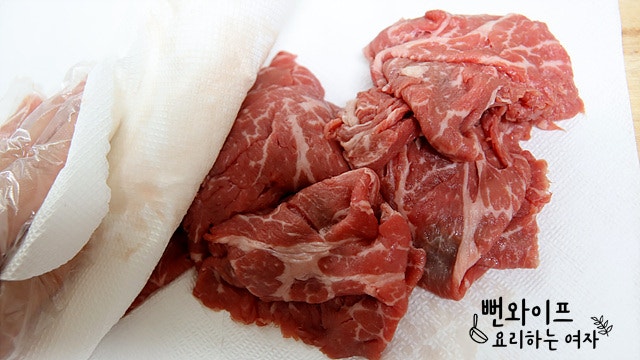
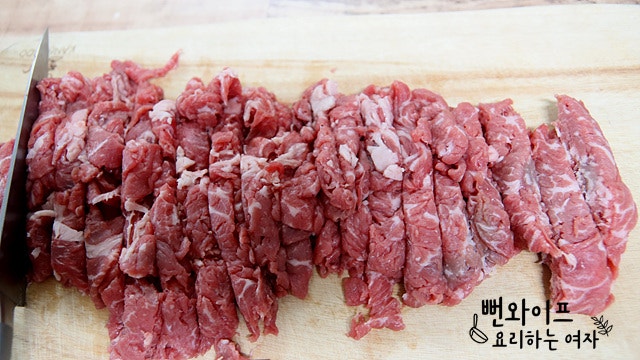
Press the beef with paper towels to remove the blood, then cut it into bite-sized pieces.
Cutting them not too small, about the same length as the noodles, makes them easy to pick up and eat.
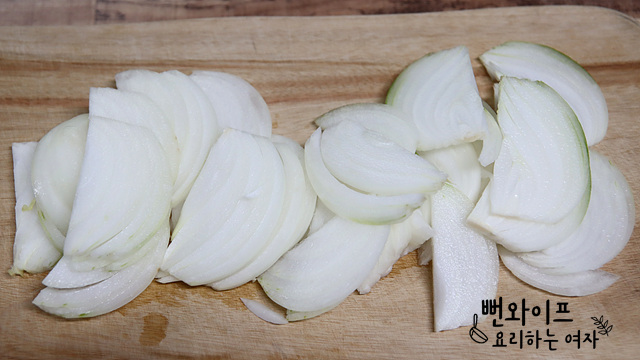
Thinly slice the onion, not too thin.
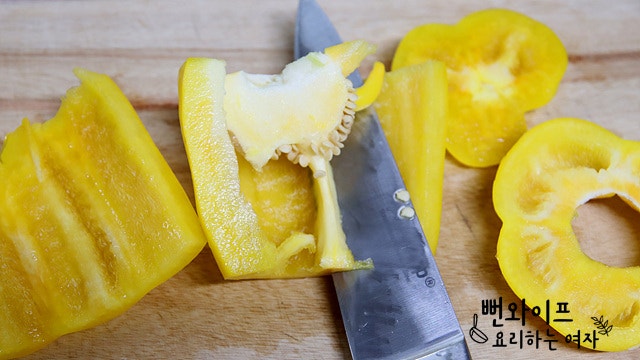
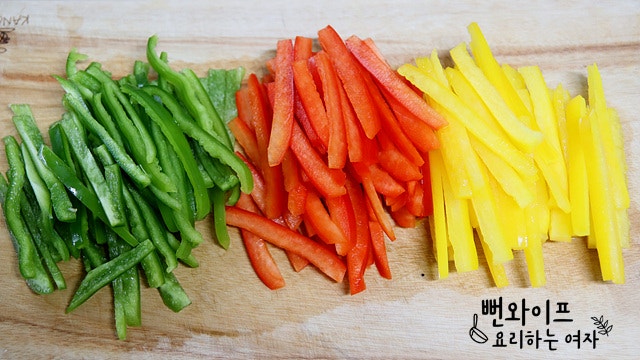
Halve the bell peppers, trim the ends, scoop out the insides, and slice them into strips.
Use the trimmed ends for stir-fries or salads.
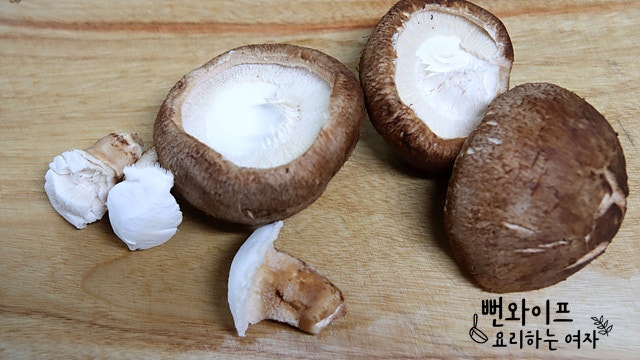
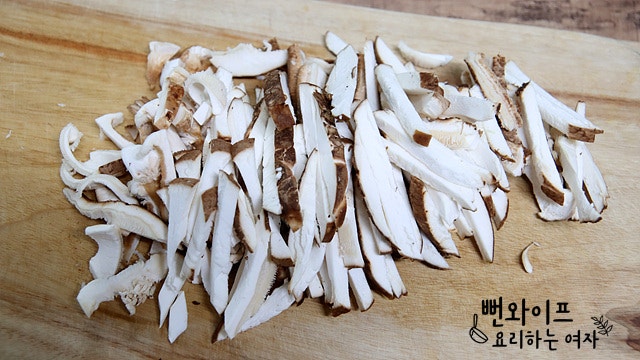
Remove the stems from the shiitake mushrooms. Since they are thick, slice them horizontally about twice and then cut into thin strips.
Stir-fry the ingredients
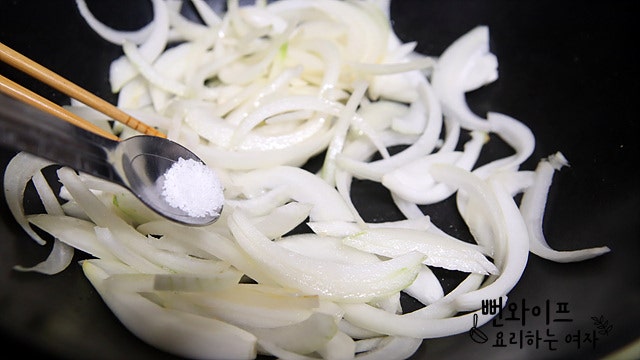
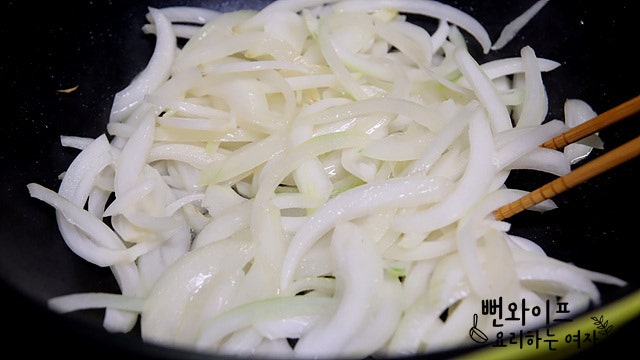
Heat oil in a pan, add the onion, and stir-fry.
Stir-fry while keeping a bit of crisp texture so it doesn't get too mushy.
Adding two or three pinches of salt each time you stir-fry an ingredient to lightly season it makes each ingredient taste much better in the finished dish.
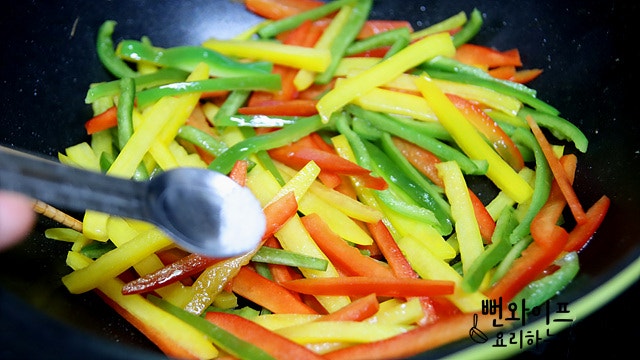
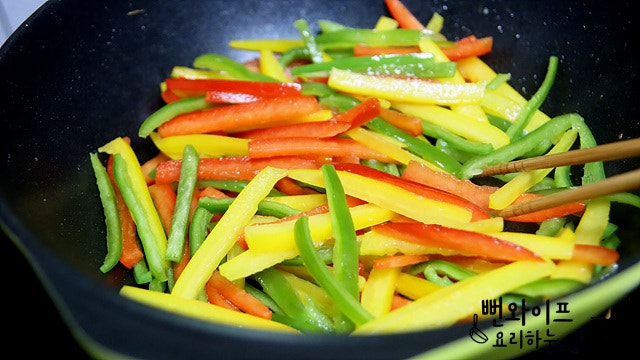
Stir-fry the bell peppers as well, adding a little salt.
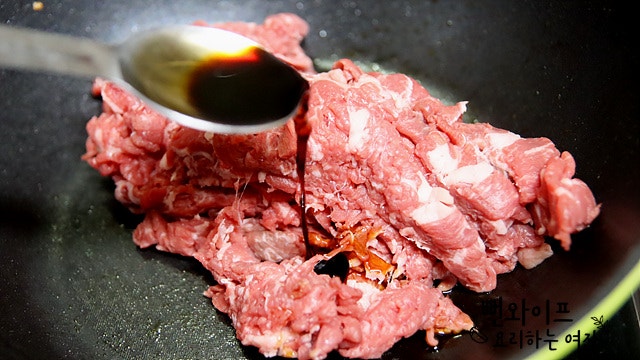
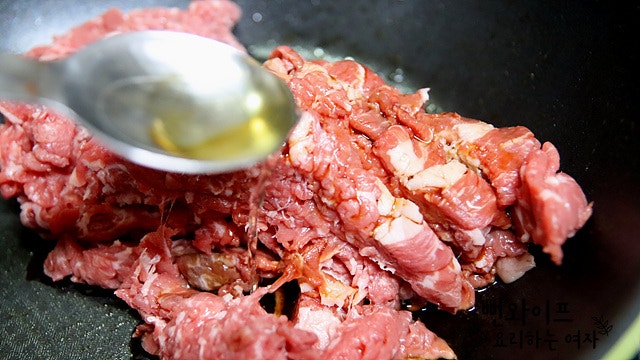
Add the beef to the pan, then add 2 tbsp regular soy sauce (jin-ganjang), 2 tbsp mirin (cooking rice wine)...
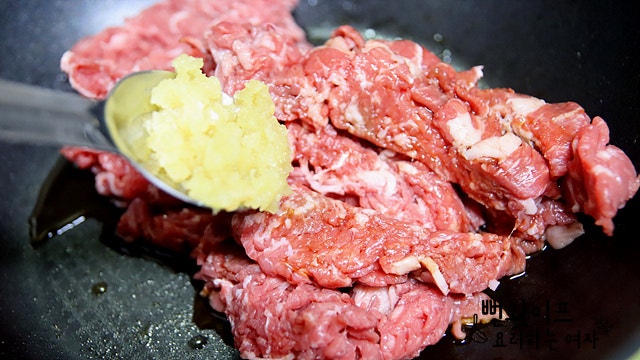
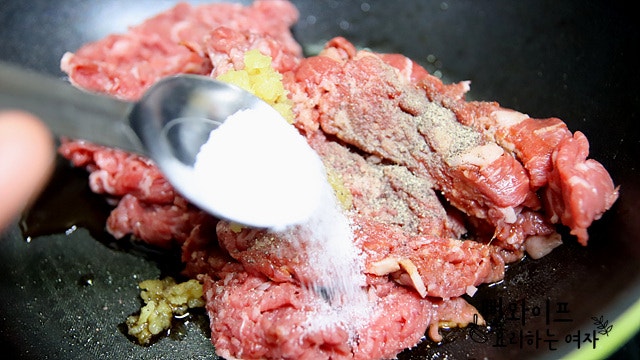
Add 1/2 tbsp minced garlic, 1/2 tbsp sugar, and a little ground black pepper, then mix to season.
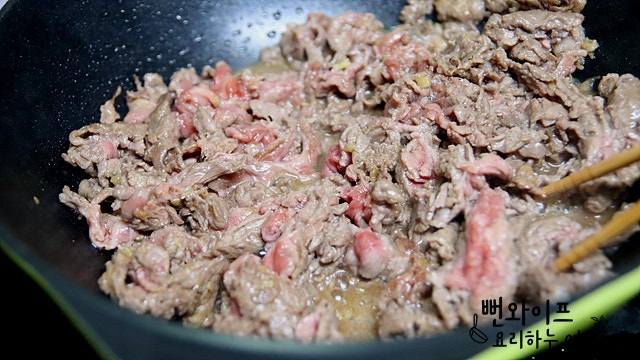
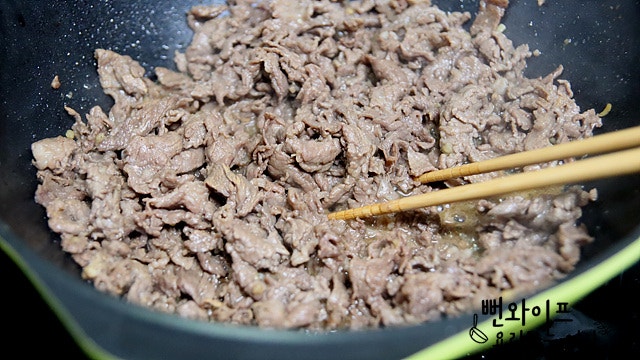
Since the meat is thin, there is no need to marinate it; just stir-fry it right away.
Stir-fry until the juices released while cooking have boiled down...
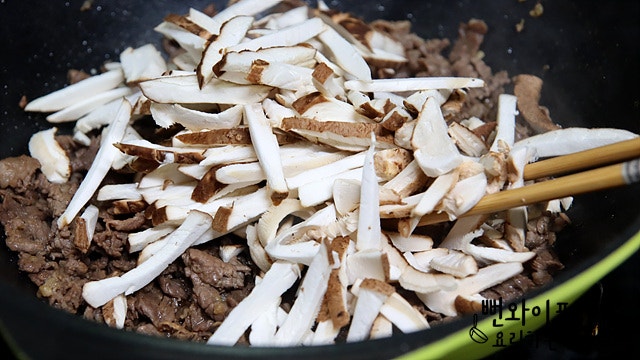
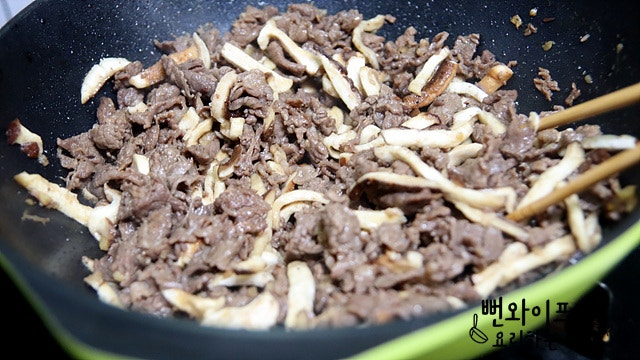
Add the shiitake mushrooms, stir-fry briefly, and remove from the heat.
Shiitake mushrooms wilt quickly just from the residual heat.
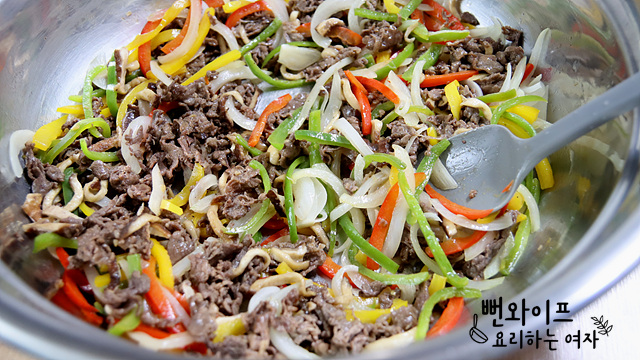
Each time you finish stir-frying an ingredient, pour it into the mixing bowl or a large plate to cool the heat slightly, so they stay crisp rather than becoming mushy.
Once cooled, I gave them a rough mix.
Boil the noodles
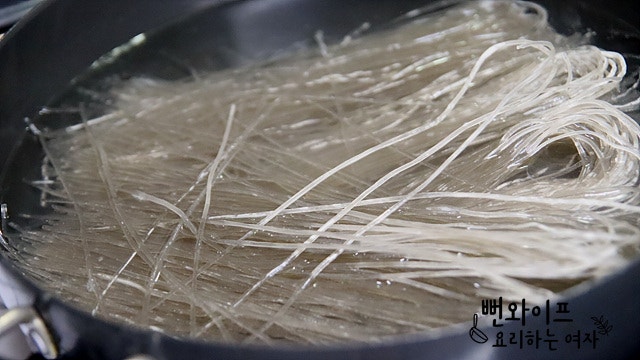
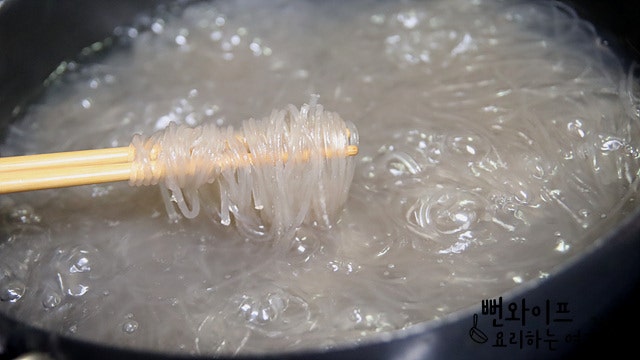
Add the sweet potato glass noodles (dangmyeon) to vigorously boiling water and cook.
Boil 1 to 2 minutes less than the time indicated on the noodle package.
Since they need to be stir-fried once more in the sauce, cooking them until slightly underdone gives you the perfect chewy yet tender japchae texture in the end.
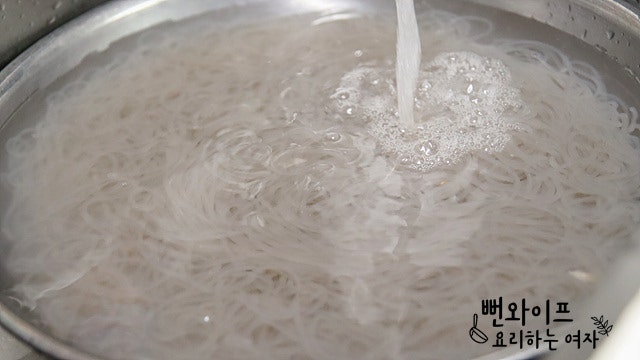
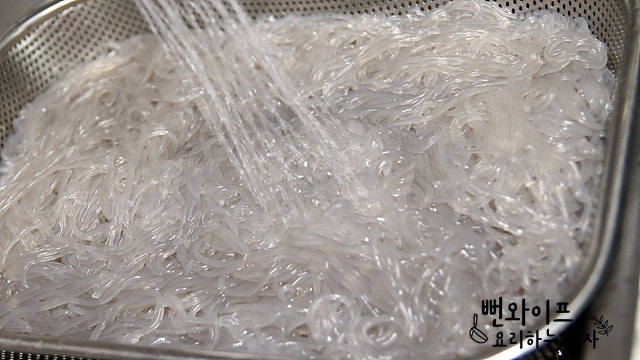
Rinse in cold water until all heat is completely gone, and drain thoroughly.
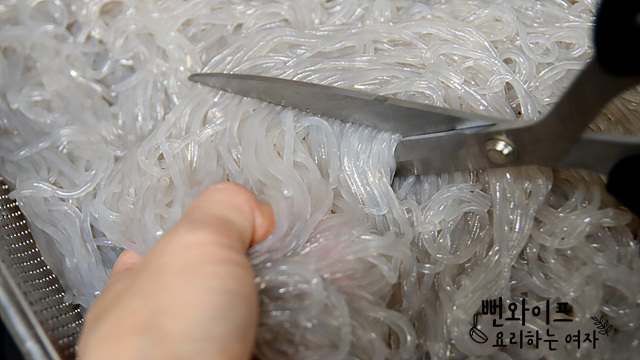
Cut the noodles if they are too long, as they will be awkward to eat.
Stir-fry the noodles
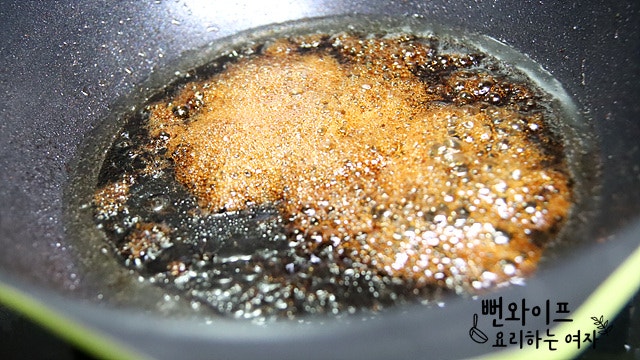
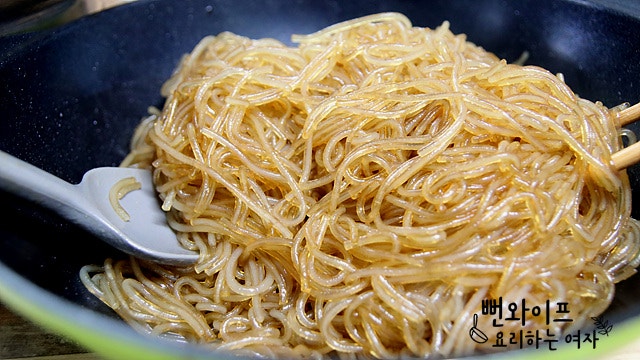
Add the noodle seasoning to the pan: 5 tbsp regular soy sauce (jin-ganjang), 2 tbsp oyster sauce, and 2 tbsp sugar. At this time, also add 5 tbsp cooking oil so the noodles mix smoothly when stir-frying.
Once the noodles are evenly colored, transparent, and springy, remove from the heat.
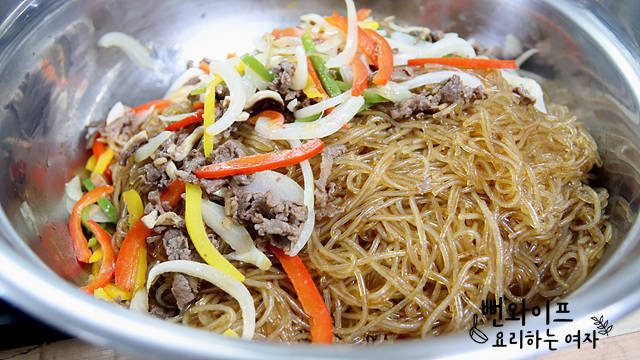
Let the noodles cool slightly, then add them to the stir-fried ingredients and mix evenly.
Season the japchae
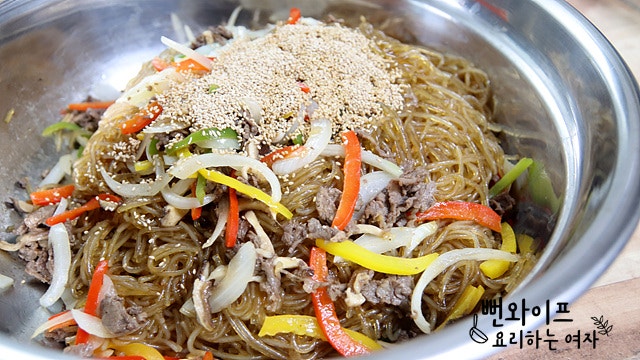
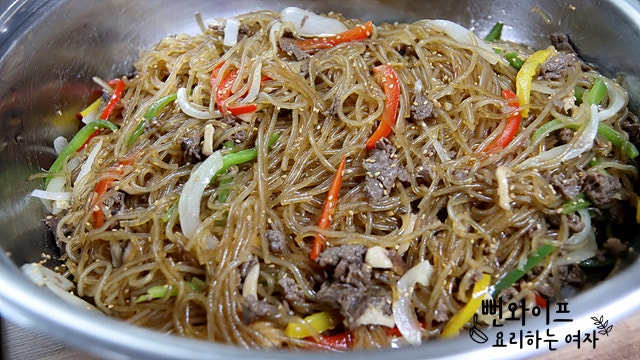
Adjust the overall seasoning of the japchae with about 2 tbsp regular soy sauce (jin-ganjang), and finish with 5 tbsp toasted sesame oil, 5 tbsp toasted sesame seeds, and a little ground black pepper.
For japchae with meat, adding black pepper at the very end prevents greasiness and makes it much tastier.
Complete the dish
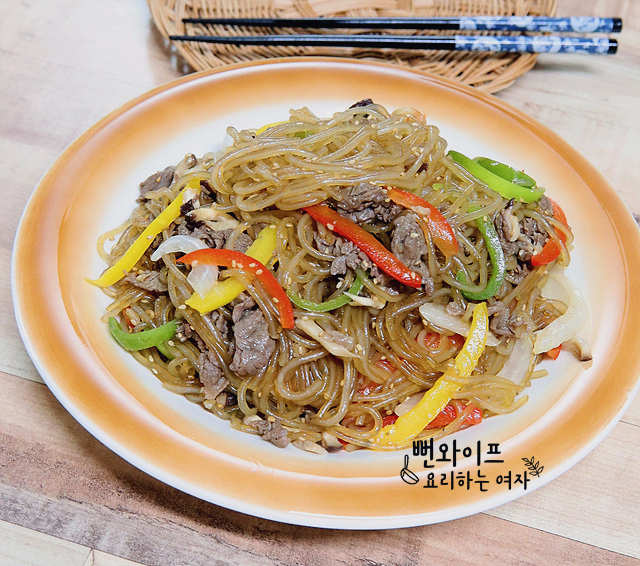
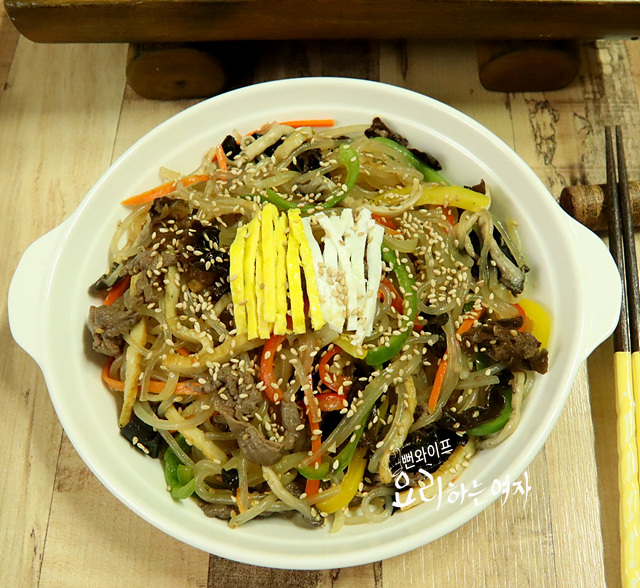
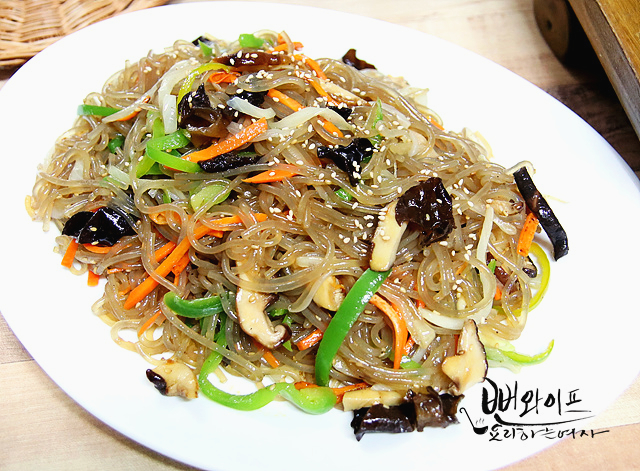
The japchae is done.
Prepping and slicing the ingredients takes some effort, but the seasoning is simple and it is not particularly difficult.
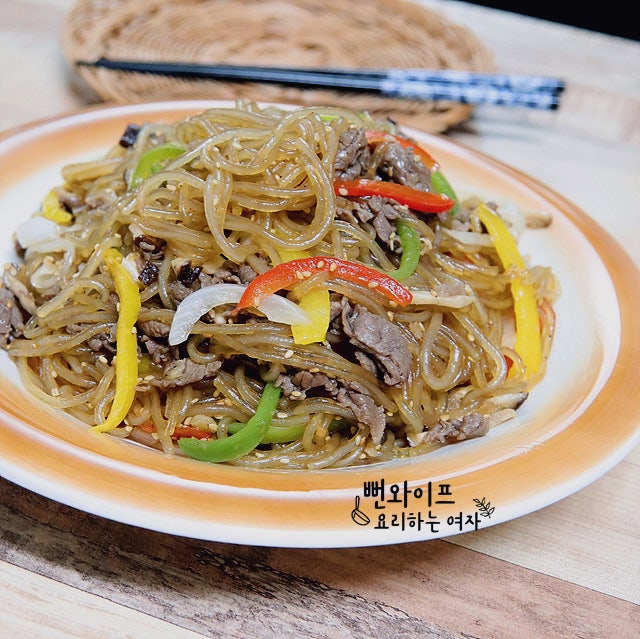
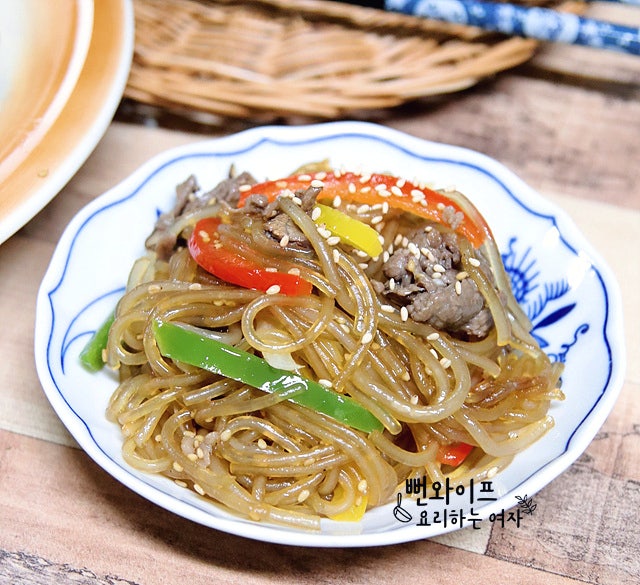
I had some beef for bulgogi, so I made beef japchae.
Adding plenty of crisp, aromatic bell peppers gives it a great flavor that pairs wonderfully with the meat.
The noodles are truly chewy, and the seasoning is spot on, making it really delicious.
 Ppunwife's tips
- Adding two or three pinches of salt each time you stir-fry an ingredient to lightly season it makes each ingredient taste much better in the finished dish.
- Each time you finish stir-frying an ingredient, pour it into the mixing bowl or a large plate to cool the heat slightly, so they stay crisp rather than becoming mushy.
- Boil the noodles 1 to 2 minutes less than the time indicated on the noodle package. Since they need to be stir-fried once more in the sauce, cooking them until slightly underdone gives you the perfect chewy yet tender japchae texture in the end.
- Add the noodle seasoning to the pan along with 5 tbsp cooking oil so the noodles mix smoothly when stir-frying.
- For japchae with meat, adding black pepper at the very end prevents greasiness and makes it much tastier.
FAQ
Is there a secret to boiling the noodles so they stay chewy and don't get soggy?
Boil the noodles 1 to 2 minutes less than the package instructions, rinse in cold water, and stir-fry once more in soy sauce and oyster sauce with a drizzle of cooking oil to help them retain their chewy texture.
How do you keep the vegetables crisp when stir-frying?
Season the vegetables with a pinch of salt while stir-frying, then spread them out on a large plate or mixing bowl to let the heat dissipate so they do not become limp.
Can I use ingredients other than beef?
Depending on your preference or what you have in the fridge, you can use fish cake, carrots, wood ear mushrooms, oyster mushrooms, water dropwort, spinach, and more.