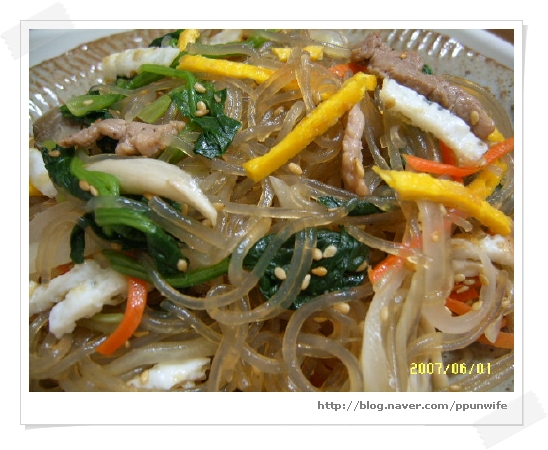
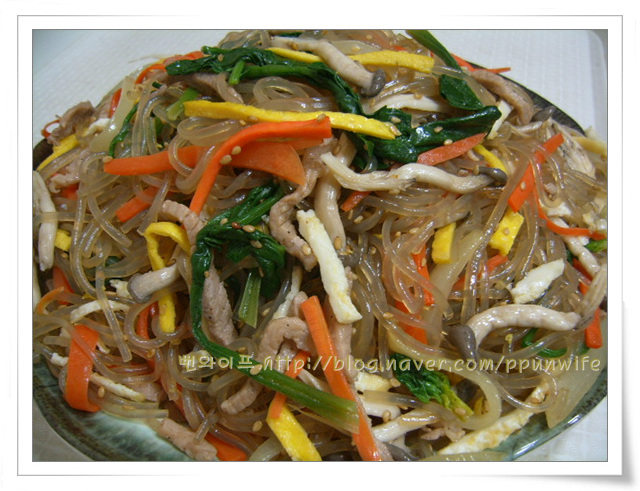
Chewy Beef Japchae (Stir-Fried Glass Noodles with Beef)
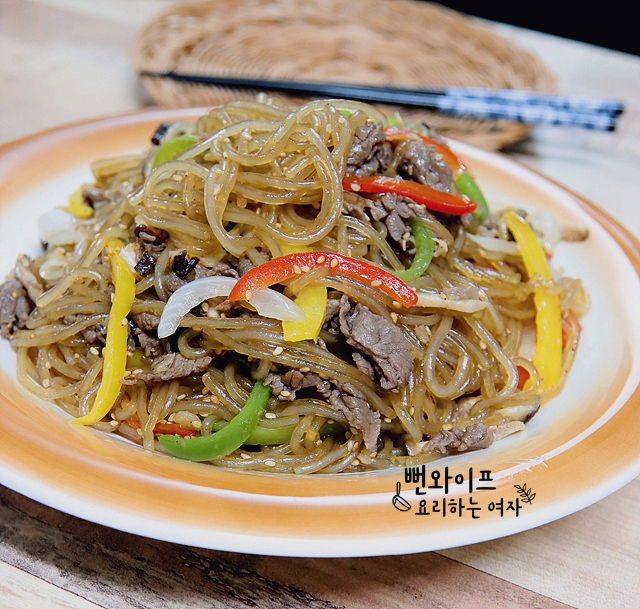
A one-plate dish of chewy beef japchae stir-fried with beef bulgogi and bell peppers instead of spinach, keeping the noodles bouncy and never soggy.
Translated from Korean by AI and not yet checked by a native speaker. Amounts and numbers are taken directly from the original recipe. Read the Korean original →
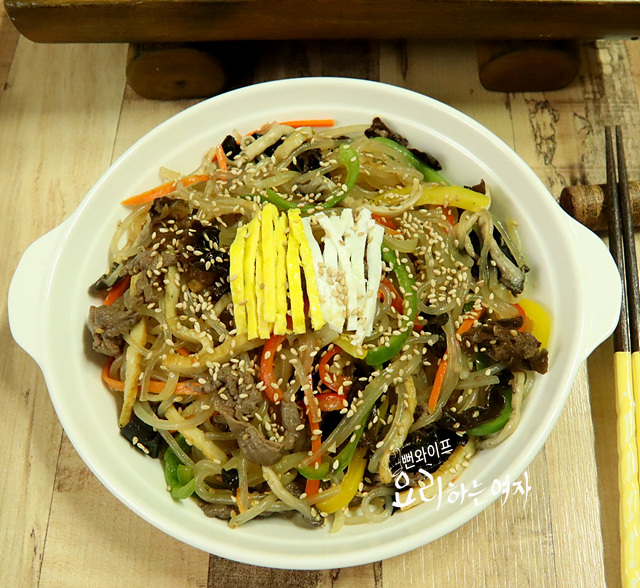
A generous 10-serving beef japchae that never fails to grace festive holidays or company feasts. By boiling the noodles 2 minutes less than recommended, rinsing them in cold water, and stir-frying them with seasoning, they stay chewy without getting soggy over time. The colorful stir-fried vegetables are spread on plates to cool, preserving their crisp texture and vibrant colors.
- Servings
- 10 servings
- Difficulty
- Medium
- Spiciness
- Not spicy
Ingredients
Ingredients
- Beef300 g
- Sweet potato glass noodles (dangmyeon)500 g
- Square fish cake (eomuk)2 sheets
- Baby oyster mushrooms1 pack
- Onion1 (small)
- Carrot1 (small)
- Dried wood ear mushrooms25 g
- Red and yellow bell pepper1 each
- Bell pepper2
Beef Marinade
- Regular soy sauce (jin-ganjang)2 tbsp
- Mirin (cooking rice wine)1 tbsp
- Minced garlic1 tbsp
- Sugar1/2 tbsp
- Ground black peppera little
Noodle Seasoning
- Regular soy sauce (jin-ganjang) (or brewed soy sauce (yangjo-ganjang))5 tbsp
- Oyster sauce2 tbsp
- Sugar2 tbsp
Japchae Seasoning
- Regular soy sauce (jin-ganjang) (or brewed soy sauce (yangjo-ganjang))2 tbsp
- Toasted sesame oil5 tbsp
- Toasted sesame seeds5 tbsp
- Ground black peppera little
- It takes 1 hour in cold water and 30 minutes in warm water, so warm the water and soak them until they swell to about 5 times their size and become soft.
- When looking for spinach to make japchae, it was hard to find and pricier than meat, so I substituted bell peppers of a similar color. Instead, to give the japchae an upscale touch, I made it with beef instead of pork.
Steps
Prepare the ingredients
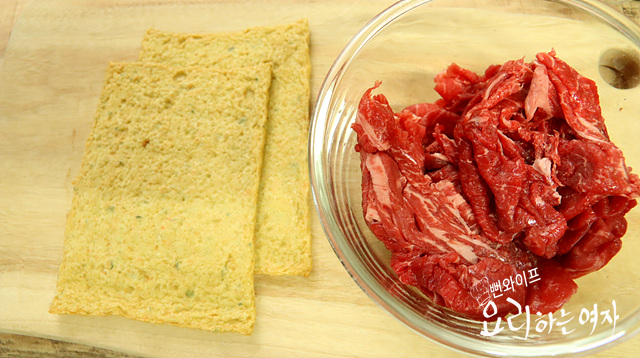
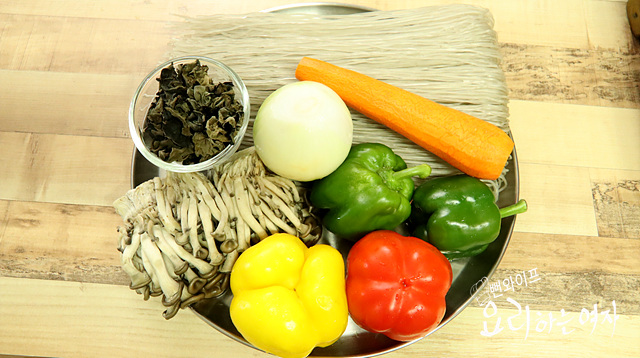
Today, I chose beef instead of pork for the japchae ingredients.
Prepare it using bulgogi-cut beef, and adding a little fish cake to japchae gives it a nice chew and rich umami, so I prepare that together.
It is 1 bag (500 g) of sweet potato glass noodles (dangmyeon). For vegetables, instead of sky-high-priced spinach, use bell peppers, sweet bell peppers, carrots, baby oyster mushrooms, onion, and dried wood ear mushrooms.
Season the beef
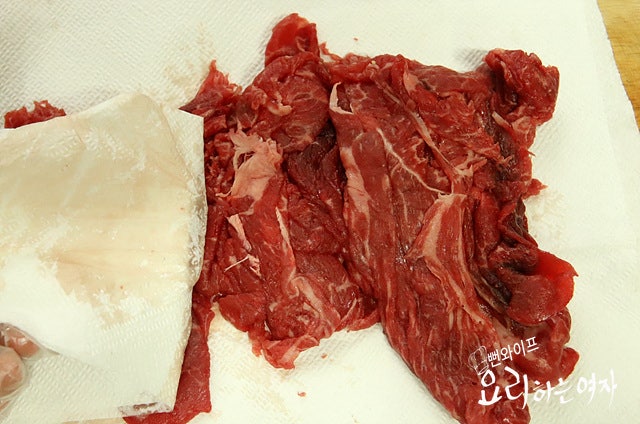
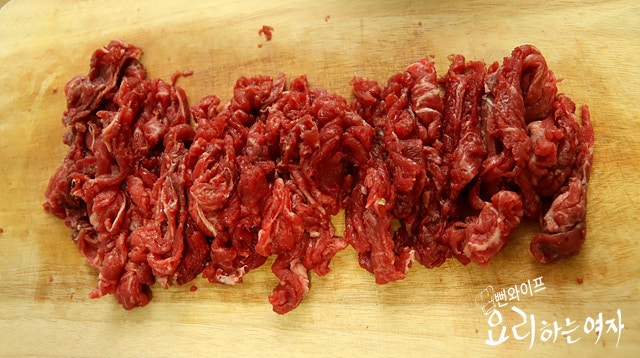
Blot the blood off the bulgogi-cut beef and slice it into bite-sized lengths.
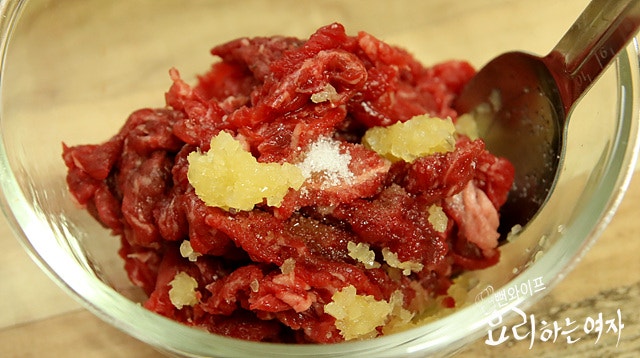
Now season it with bulgogi marinade.
Add 2 tbsp regular soy sauce (jin-ganjang), 1 tbsp mirin (cooking rice wine), 1 tbsp minced garlic, 1/2 tbsp sugar, and a little ground black pepper, then mix well to marinate.
Prepare the dried wood ear mushrooms
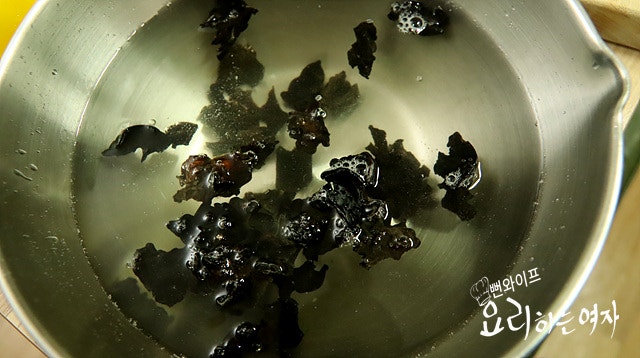
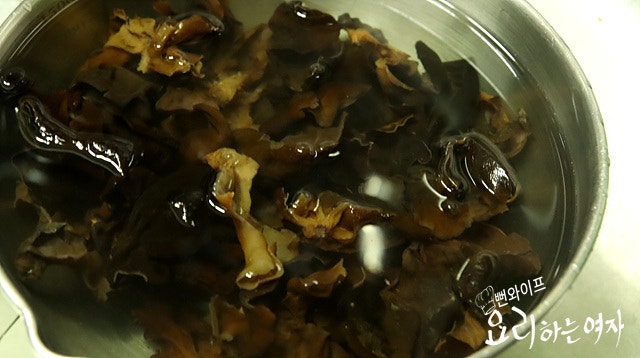
First, the dried wood ear mushrooms need soaking and cleaning.
As the wood ear mushrooms soak they swell up, so submerge them in at least 5 times their volume of water.
It takes 1 hour in cold water and 30 minutes in warm water, so warm the water and soak them until they swell to about 5 times their size and become soft.
Rub them vigorously and rinse several times so that dust and attached debris fall away.
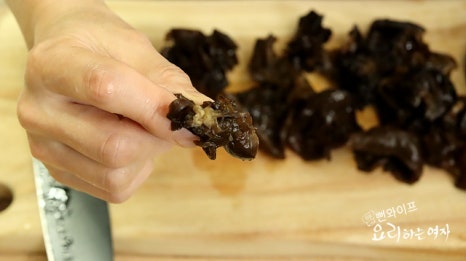
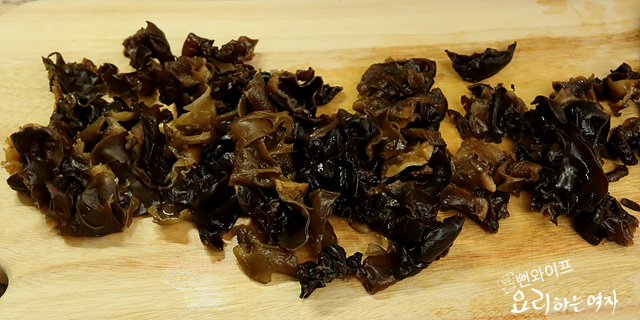
Trim off the tough base near the center of the wood ear mushrooms and slice them into manageable lengths.
If sliced too thinly they look messy, so cut them to about 2 cm.
Slice the vegetables
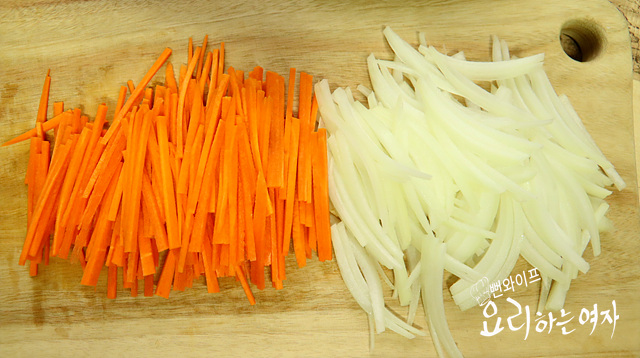
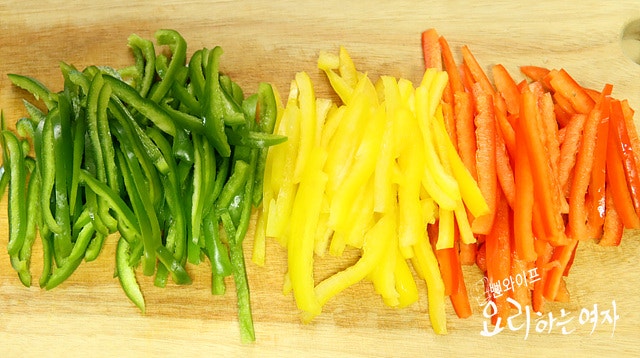
If you julienne the vegetables for japchae too finely, the residual heat makes them unappealingly mushy.
Julienne them to a moderate thickness in similar lengths.
For the bell peppers, cut off the stems, remove the central cores, and julienne.
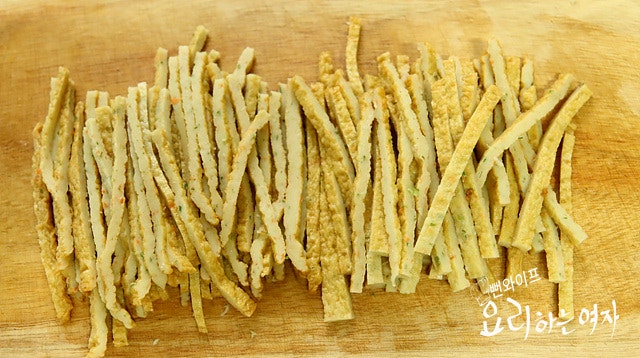
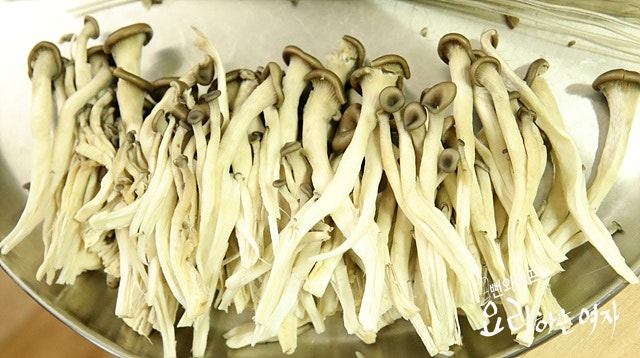
Cut the square fish cake (eomuk) in half and julienne it, and separate the clustered baby oyster mushrooms into individual strands.
Stir-fry the ingredients
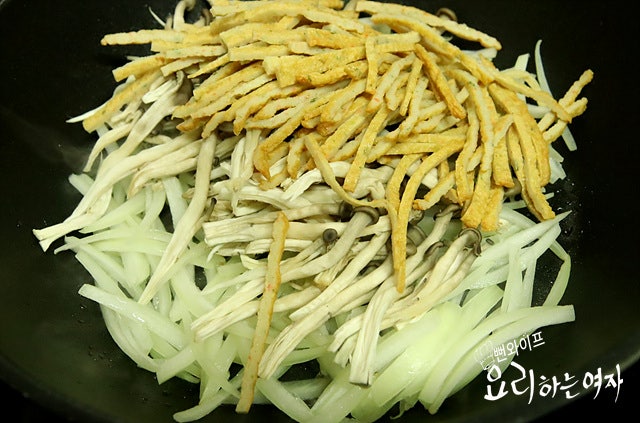
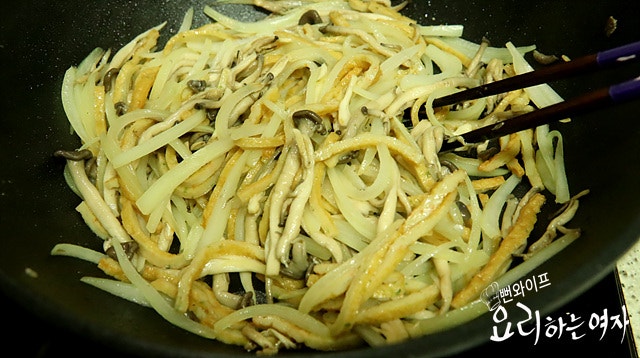
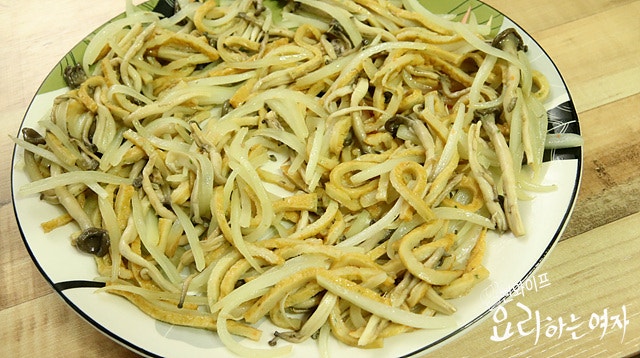
When stir-frying vegetables, stir-frying cleaner ingredients first or cooking ones with similar textures and colors together lets you work quickly.
Heat cooking oil in a preheated pan and stir-fry the onion, mushrooms, and fish cake until slightly wilted.
They will wilt further from residual heat, so do not overcook them.
Spreading them out on a wide plate to cool preserves their texture, keeps the colors vibrant, and makes the finished japchae look wonderful.
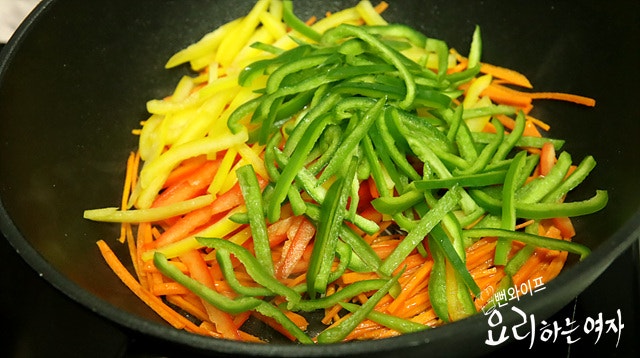
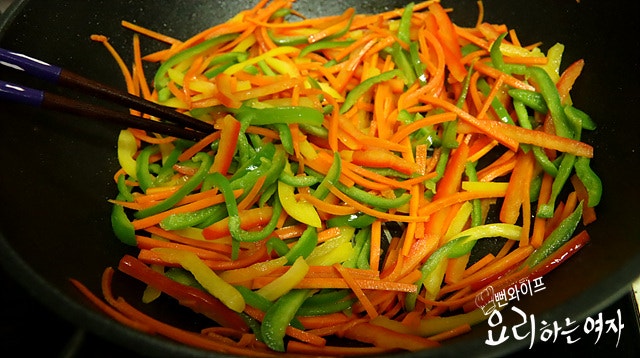
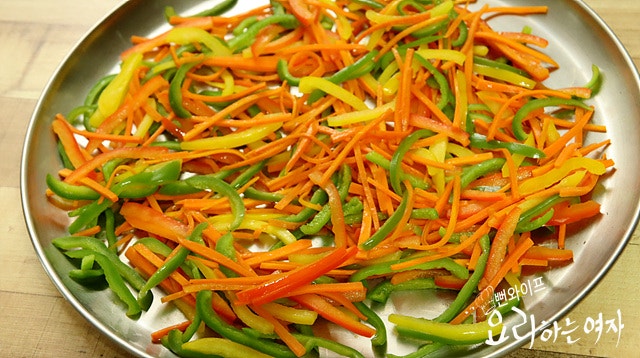
Heat oil in the pan, add the carrots, green bell peppers, and sweet bell peppers along with a pinch of salt, stir-fry lightly, and spread them out on a plate.
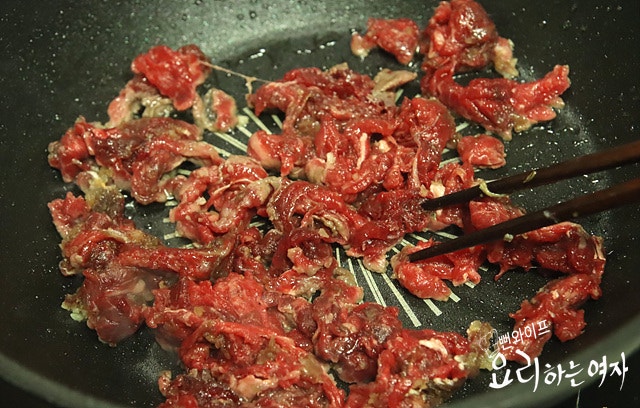
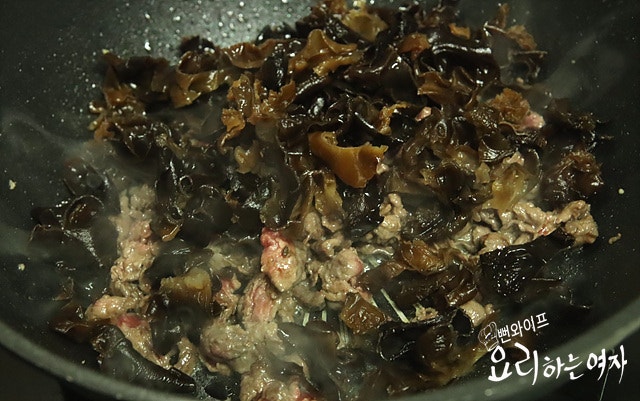
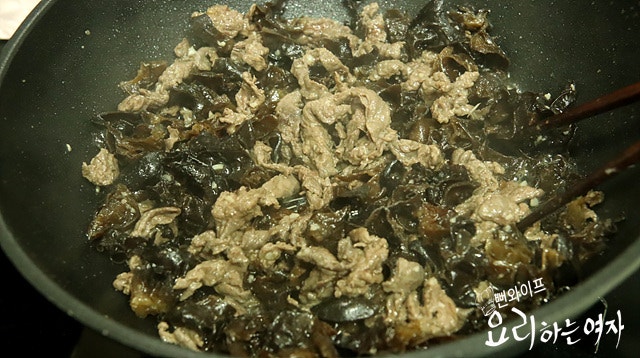
Lastly, add the beef first and stir-fry, and when it is almost cooked through, add the wood ear mushrooms and stir-fry briefly.
Wood ear mushrooms should not be cooked long so you can enjoy their plump, bouncy texture.
Boil the noodles
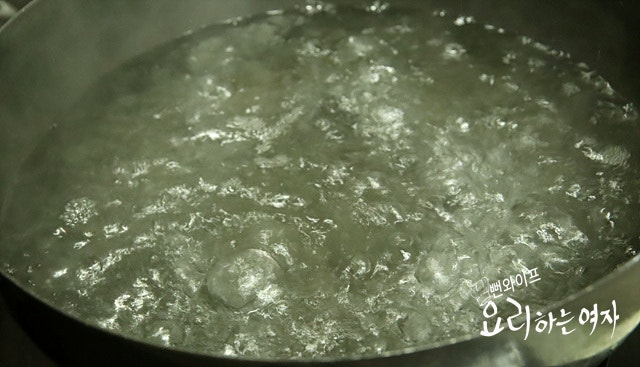
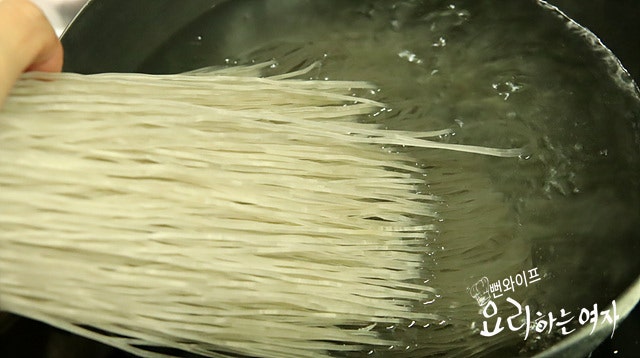
When making a large batch of japchae, boiling the sweet potato glass noodles (dangmyeon) properly is key to making foolproof japchae.
For small amounts, you soak and quickly boil them, but starting from 1 bag of 500 g of glass noodles, boil the dry noodles directly without soaking.
Depending on the thickness, the boiling time varies from 7 to 10 minutes, so just plan to boil them for 2 minutes less than the time indicated on the bag.
Mine indicated 10 minutes, so I set it for 8 minutes...
Add the glass noodles to rolling boiling water.
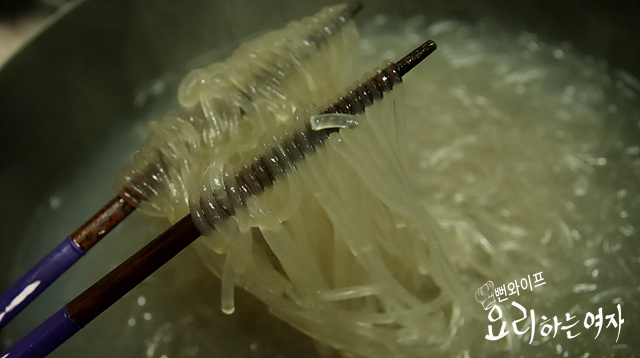
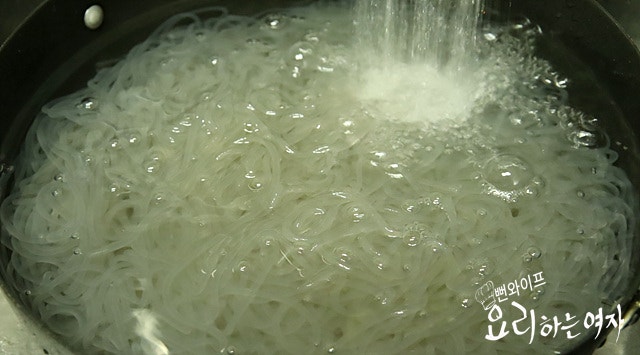
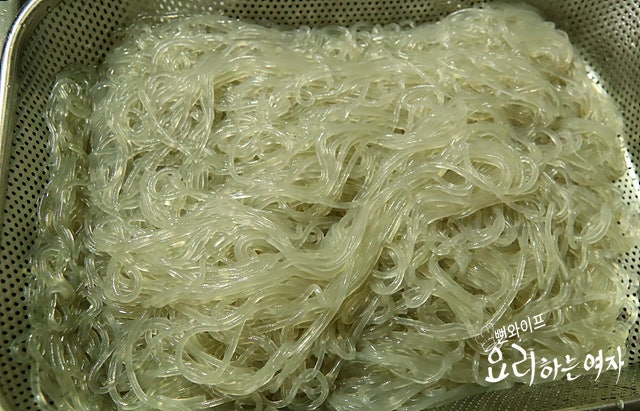
After 8 minutes, they have swollen and boiled chewy, and the slight lack of tenderness gets resolved while stir-frying.
To prevent further swelling, immediately rinse them several times in cold water to cool them down.
Drain the water completely, then cut into bite-sized lengths.
Tossing 3 to 4 tbsp of cooking oil into the noodles prevents them from sticking, making handling easy.
When boiling noodles, putting dry noodles in and just watching the clock means no need to check doneness midway, making it convenient and consistently reliable.
Season the noodles
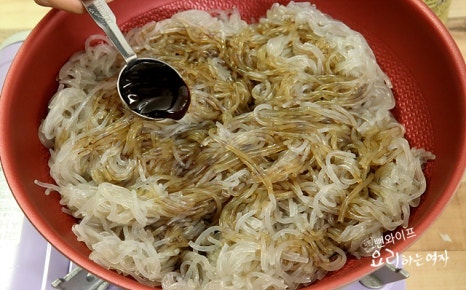
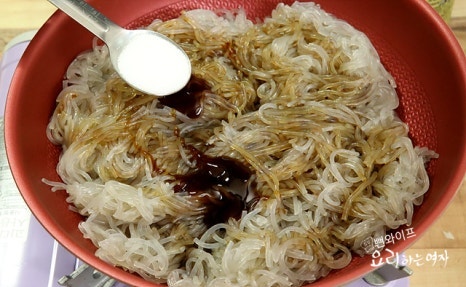
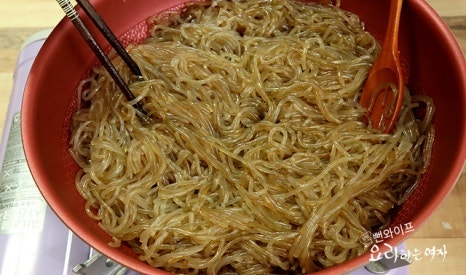
Gently warm a pan over low heat so the noodles do not stick, then toss in the boiled noodles.
Add 5 tbsp regular soy sauce (jin-ganjang), 2 tbsp oyster sauce, and 2 tbsp sugar, and stir-fry so it does not burn.
As the slightly undercooked, stiff noodles turn tender, glossy, and evenly coated with the soy sauce color, remove from the heat and spread them in a large mixing bowl to cool.
Once slightly cooled and tasted, the noodles boiled 2 minutes less will have a perfectly chewy texture.
Season the japchae
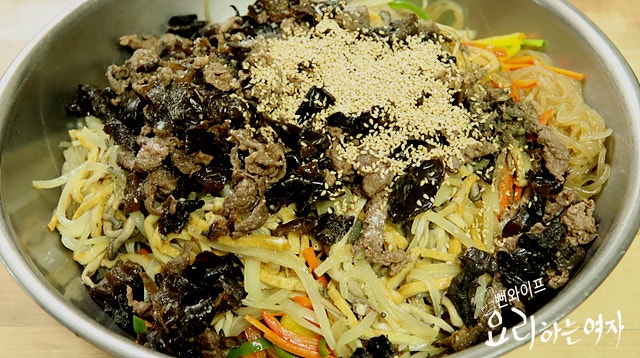
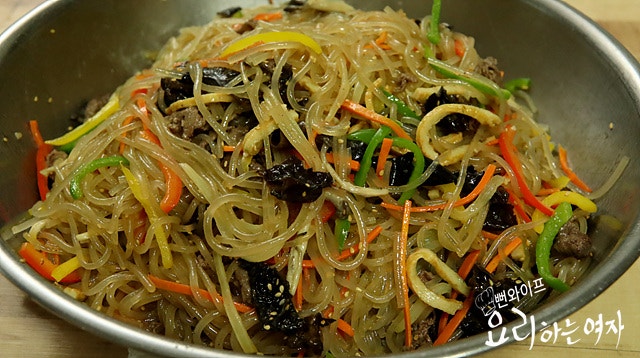
Combine the noodles and all the stir-fried ingredients together, then add 2 tbsp regular soy sauce (jin-ganjang), 5 tbsp toasted sesame oil, 5 tbsp toasted sesame seeds, and ground black pepper, tossing thoroughly.
Do not pour in all the soy sauce at once; taste as you go and adjust to your liking.
Finish
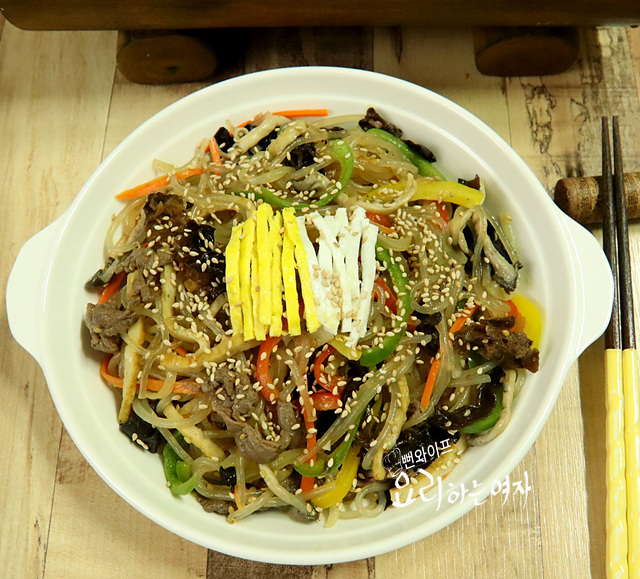
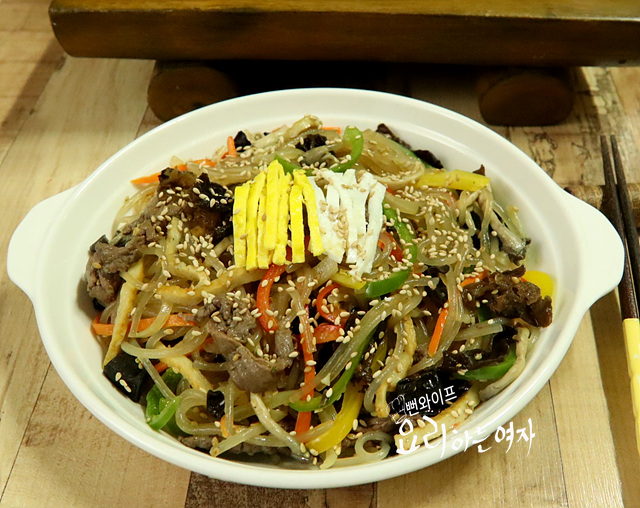
With so many vegetables added, this is a brilliantly colorful japchae.
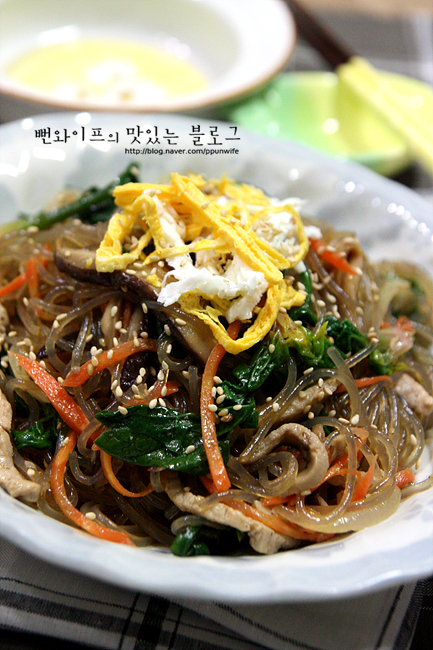
Garnish with egg garnish strips on top and it even looks luxurious.
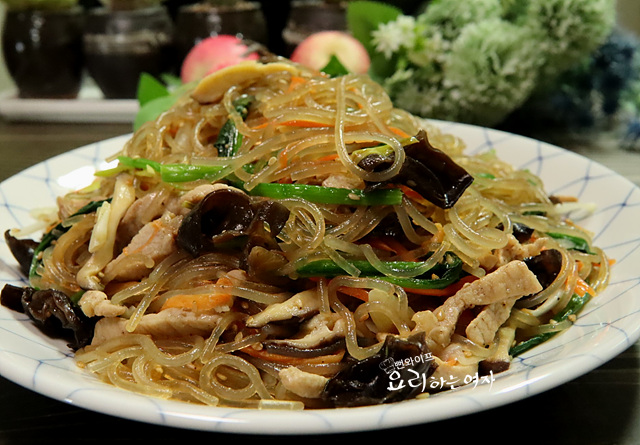
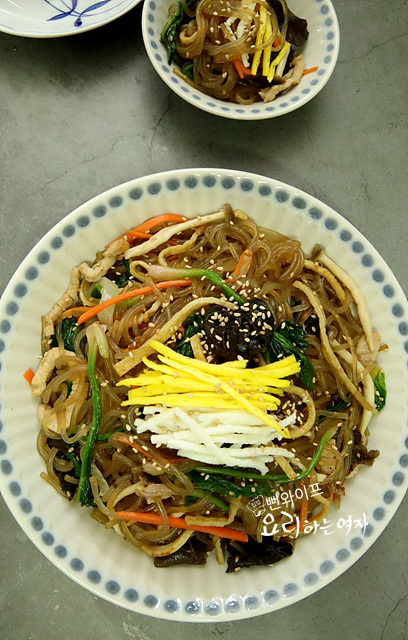
In winter when spinach is sweet and delicious, I make japchae with pork, and when spinach is unavailable, I make it with sweet-seasoned beef bulgogi. You could call it my own signature way of making japchae.
 Ppunwife's tips
- Spreading them out on a wide plate to cool preserves their texture, keeps the colors vibrant, and makes the finished japchae look wonderful.
- Depending on noodle thickness, the boiling time varies between 7 and 10 minutes, so aim to boil them 2 minutes less than the package directions.
- Tossing 3 to 4 tbsp of cooking oil into the noodles prevents them from sticking, making handling easy.
- Do not pour in all the soy sauce at once; taste as you go and adjust to your liking.
FAQ
What is the secret to boiling a large quantity of glass noodles without soaking them first?
Boil the noodles about 2 minutes less than the package cooking time, then quickly rinse them in cold water to wash away the heat for a chewy finish. The slightly firm core softens perfectly as you stir-fry the noodles later with the soy sauce seasoning.
How do you keep boiled glass noodles from sticking together?
After rinsing them in cold water and draining well, toss the noodles thoroughly with 3 to 4 tbsp of cooking oil so they do not clump together and remain easy to work with.
Why do you spread the stir-fried vegetables on a plate to cool?
Leaving them piled in the pan or a bowl causes the residual heat to overcook them, turning them limp. Spreading them out on a wide plate to cool keeps their crisp texture and vivid colors intact.
How do you soak and prepare dried wood ear mushrooms?
Dried wood ear mushrooms expand significantly, so soak them in at least 5 times their volume of water. Rehydrate for 1 hour in cold water or about 30 minutes in warm water, rub them firmly to wash away debris, and trim off the tough bases before slicing.