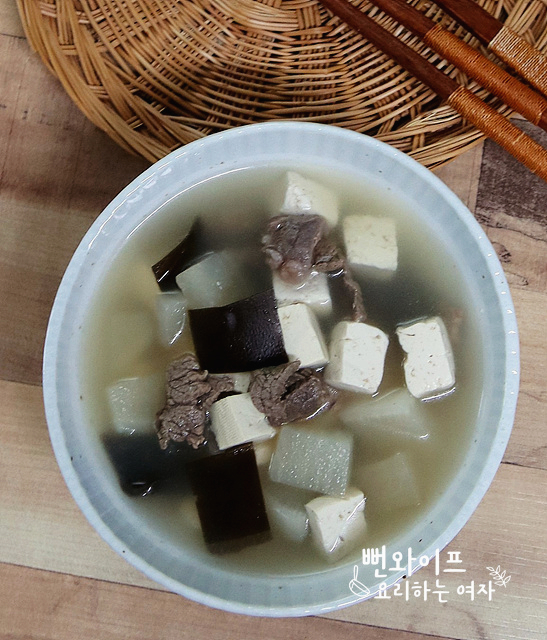
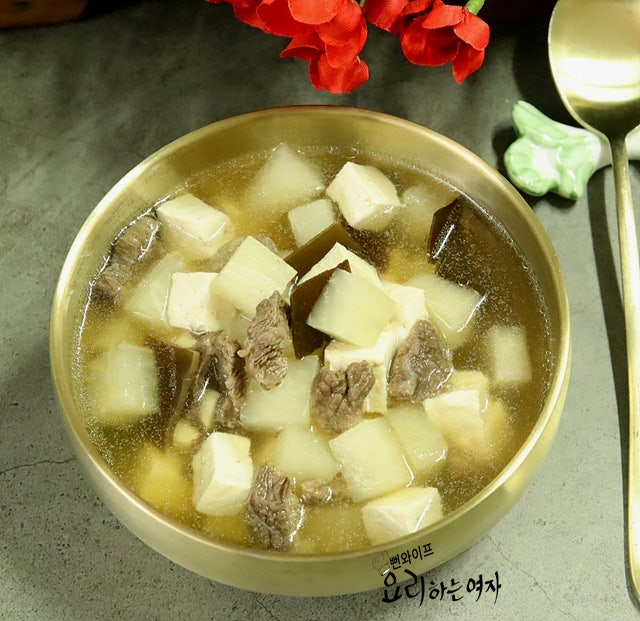
Toran Guk (Taro Soup), Light and Clean for Holidays
A clear holiday soup made with beef and taro that has been parboiled in rice-washing water to remove its acrid taste.
Translated from Korean by AI and not yet checked by a native speaker. Amounts and numbers are taken directly from the original recipe. Read the Korean original →
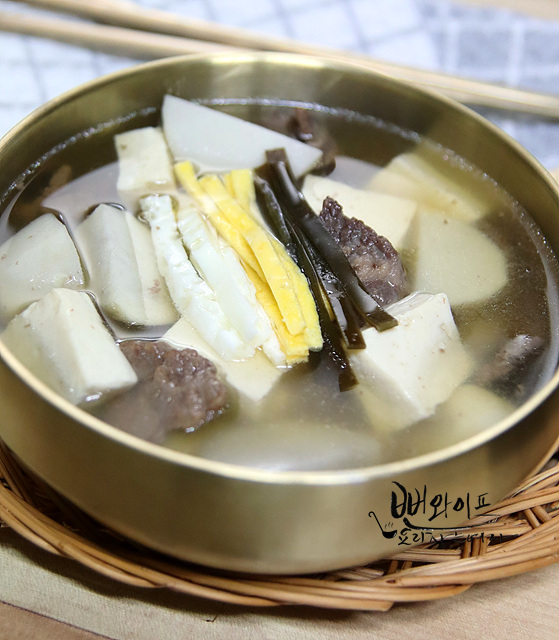
This soup dish is made with autumn in-season taro, parboiled in rice-washing water and vinegar to cleanly remove its irritating compounds before cooking. Tofu is added to a clear broth simmered from beef and dried kelp for a gentle, subtle savoriness without being overpowering. Because it contains no pungent aromatic vegetables, it is perfectly clean and mild for an ancestral memorial table or holiday meal.
- Servings
- about 5–6 servings
- Difficulty
- Medium
- Spiciness
- Not spicy
Ingredients
Ingredients
- Taro400 g (after cleaning)
- Beef300 g (soup cuts)
- Tofu300 g
- Salt1 tbsp
- Vinegar2 tbsp
- Dried kelp (dasima)2 pieces (10 cm square)
- Water10 cups
- Water from washing rice
- Salt
- Vinegarfor boiling taro
Meat marinade
- Soup soy sauce (guk-ganjang)1 tbsp
- Mirin (cooking rice wine)1 tbsp
Seasoning
- Soup soy sauce (guk-ganjang)1 tbsp
- Tuna extract sauce (chamchi-aek)1 tbsp
- Salt1/2 tbsp
- You can add Korean radish as well, but you can also skip the radish and increase the amount of taro instead.
- The slippery substance in taro contains allergens that make the skin itch, so you must wear gloves when preparing it.
Steps
Prepare the ingredients
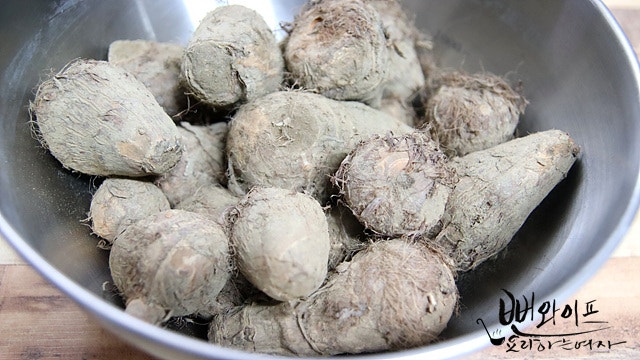
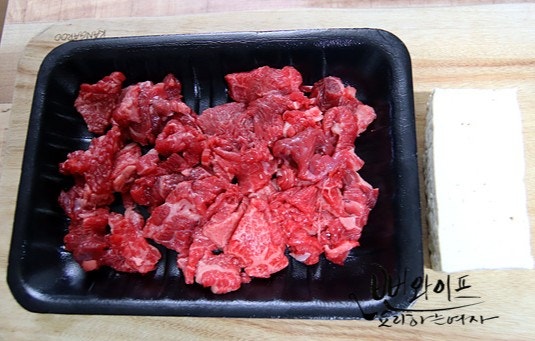
Here is what unpeeled taro looks like. They come in all shapes and sizes, large and small, round and oblong.
Just like tangguk, beef and tofu go into toran guk.
Korean radish is good in it too, but I will skip the radish and cook it with plenty of taro instead.
Prepare the taro
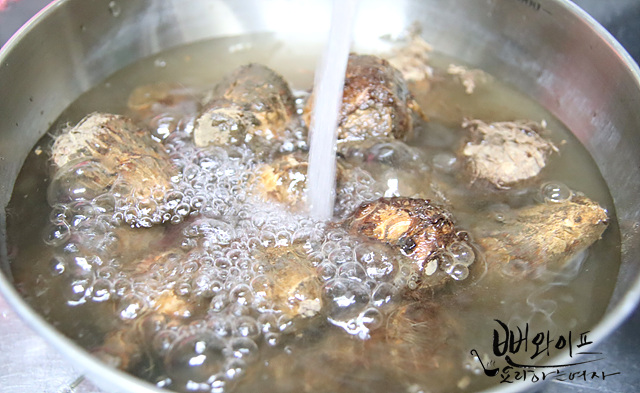
There is a lot of dirt on the taro, so roughly wash off the dirt before prepping.
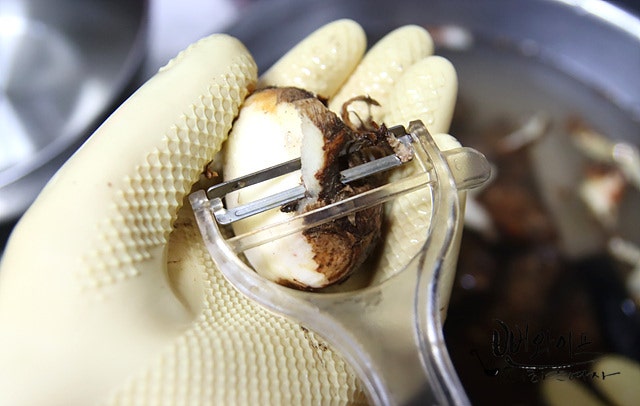
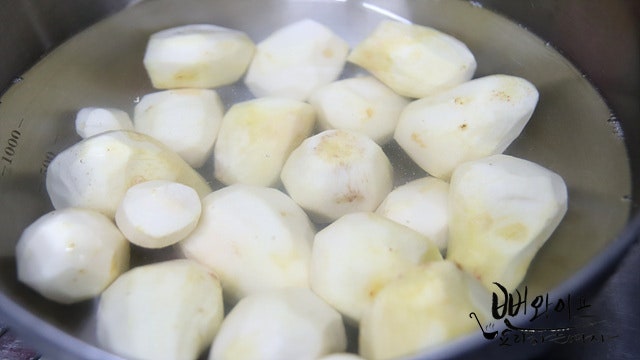
The slippery substance in taro contains allergens that make the skin itch, so you must wear gloves when preparing it.
It stays slippery even as you peel it with a peeler.
How to boil taro
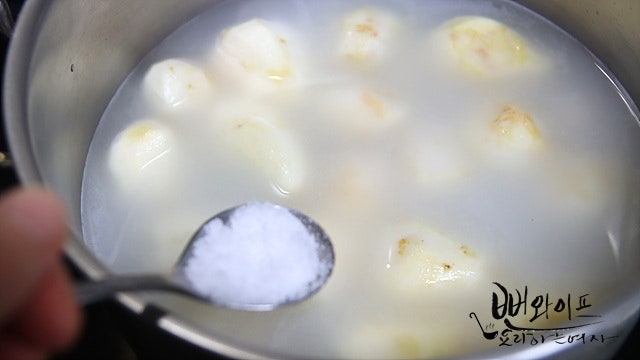
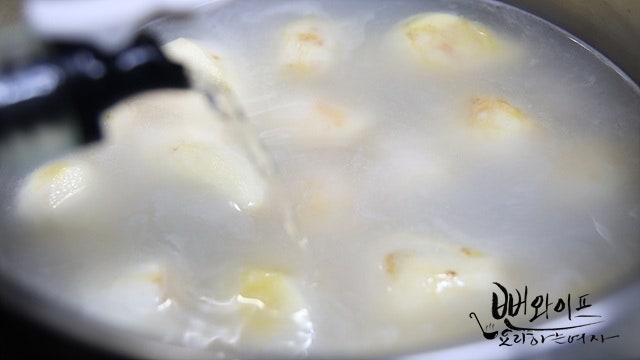
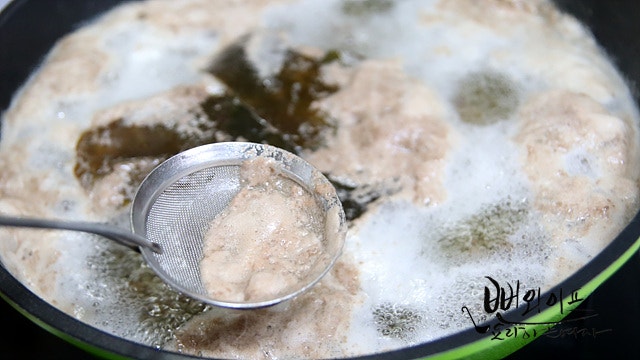
Set aside plenty of water from washing rice, add 1 tbsp of salt and about a tablespoon of vinegar, and boil the taro.
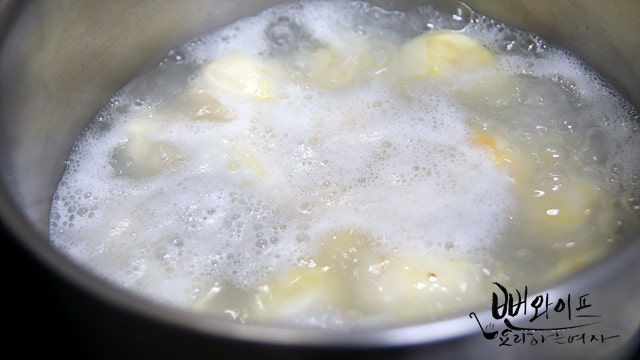
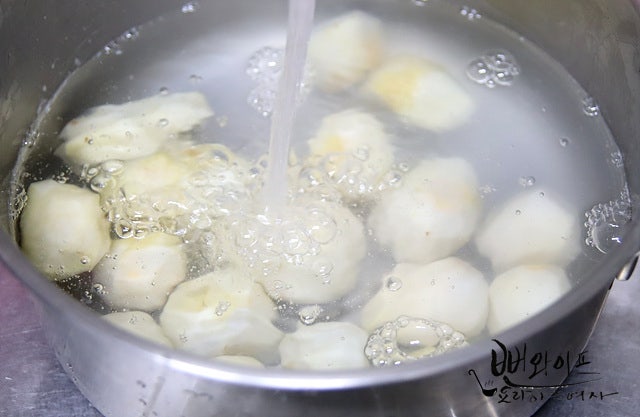
Even if it feels like a hassle, you must go through this step because boiling removes the slippery irritating compounds so you can eat it safely.
Foam will form, the water will turn cloudy, and a sticky substance will come out.
Boil for about 5 minutes until the taro cooks through and turns tender, then rinse once in water.
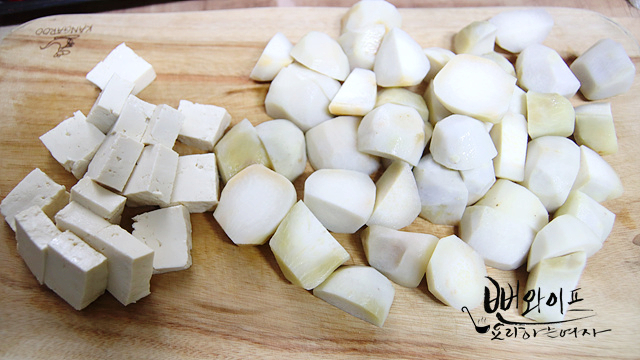
Cut the taro and tofu into thick, uniform pieces of your desired size.
Simmer
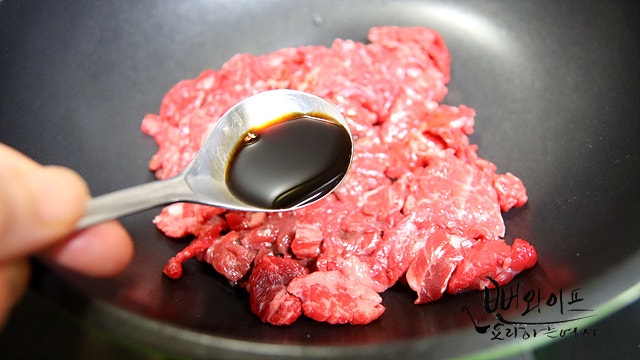
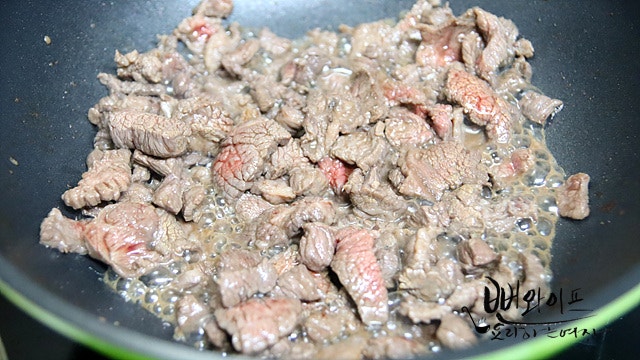
Pat the beef dry of blood, add 1 tbsp of soup soy sauce (guk-ganjang) and 1 tbsp of mirin (cooking rice wine), and stir-fry briskly.
Add water little by little instead of oil, and once the surface is cooked all over, pour in 10 cups of water.
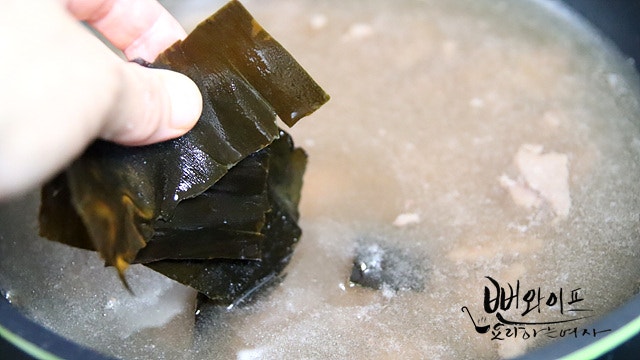
Rinse the dried kelp (dasima) under running water and add it to boil together.
Skim off all the foam that rises to the top.
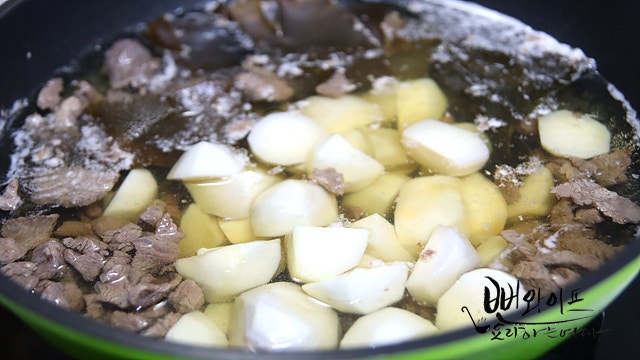
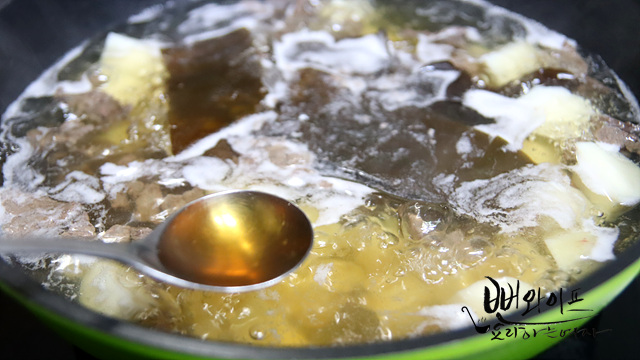
Add all of the taro, and season the broth with 1 tbsp of soup soy sauce (guk-ganjang) and 1 tbsp of tuna extract sauce (chamchi-aek).
Simmer gently for about 10 minutes so the kelp infuses well and all the ingredients cook through thoroughly.
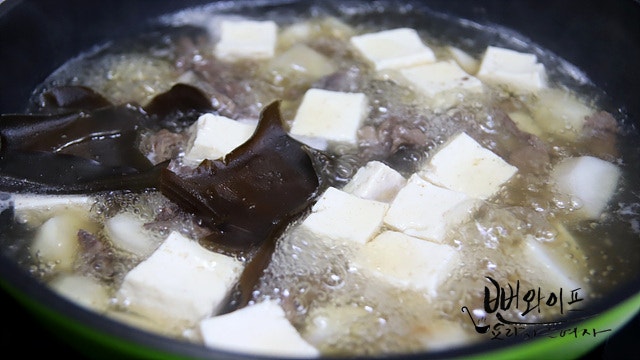
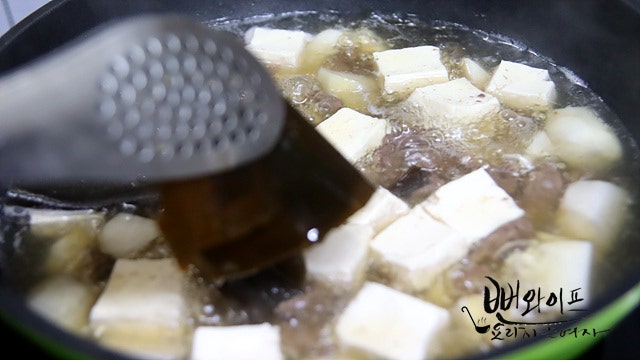
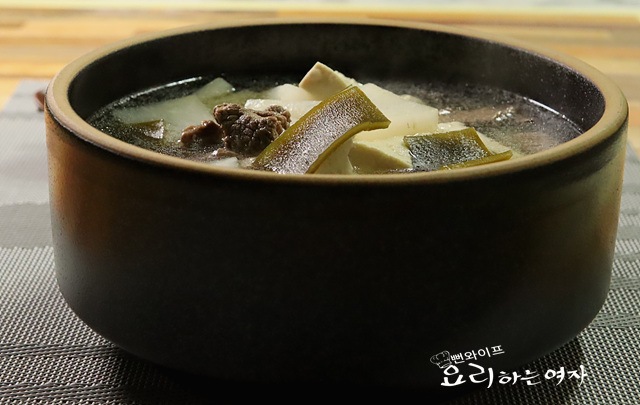
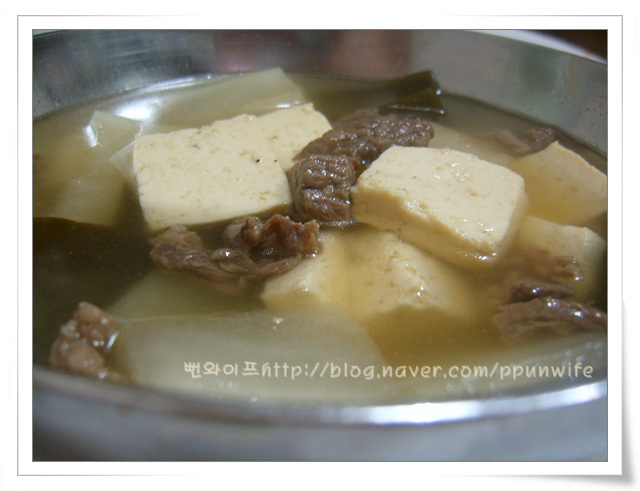
Add the tofu, remove the kelp, and simmer until the tofu is soft and cooked through.
Finish by seasoning with about 1/2 tbsp of salt at the end.
Finish
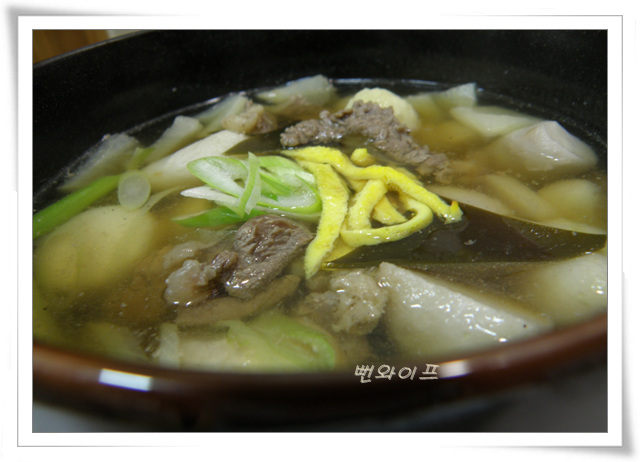
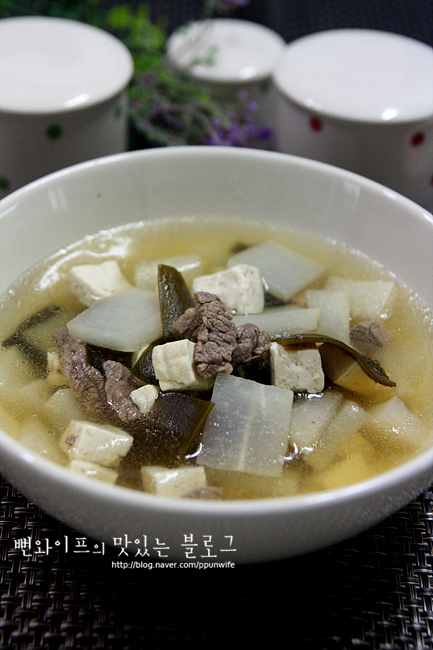
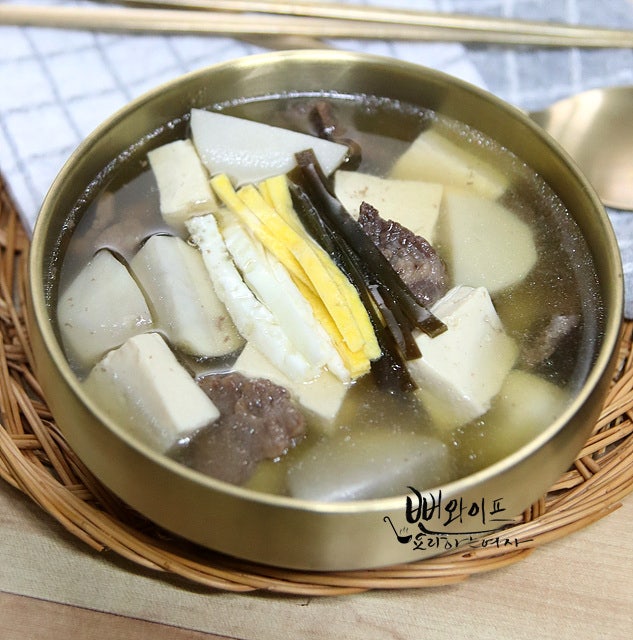
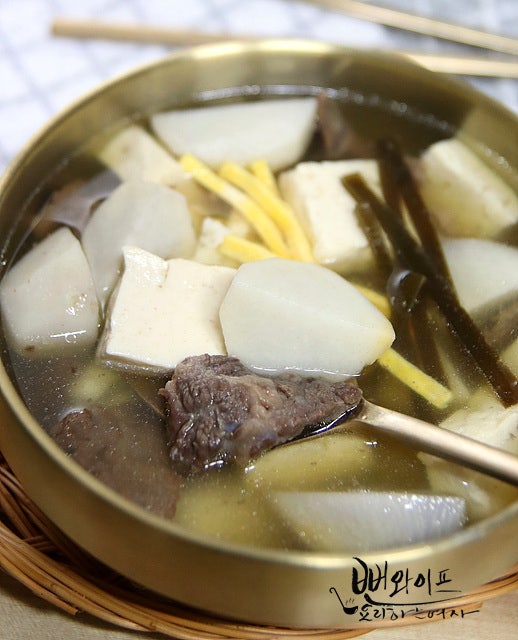
Ladle a good balance of broth and solids into a bowl, neatly top with egg garnish and thinly sliced kelp, and your toran guk for the memorial table is done.
Depending on the region, some also add perilla seed powder to toran guk to enjoy it thick and rich.
 Ppunwife's tips
- Tangguk or toran guk meant for a holiday ancestral table must not contain any pungent aromatics at all, yet simmering it clean and mild like this turns out exquisite.
- Boiling it with dried kelp brings out a gentle, deep savoriness alongside the broth from the meat.
FAQ
Is there anything to watch out for when preparing raw taro?
The slippery substance in taro can make your skin itch, so you must always wear gloves when peeling it.
How do you remove the acrid, slippery compounds from taro?
Add 1 tbsp of salt and about 1 tbsp of vinegar to water from washing rice, boil the taro for about 5 minutes, and then rinse it in cold water.
Can I add Korean radish to the soup?
Just like tangguk, you can slice and add Korean radish, or you can skip the radish and use more taro instead according to your preference.
Can I add perilla seed powder to the soup?
Depending on the region or your personal taste, you can add perilla seed powder at the finishing stage to enjoy it thick and nutty.