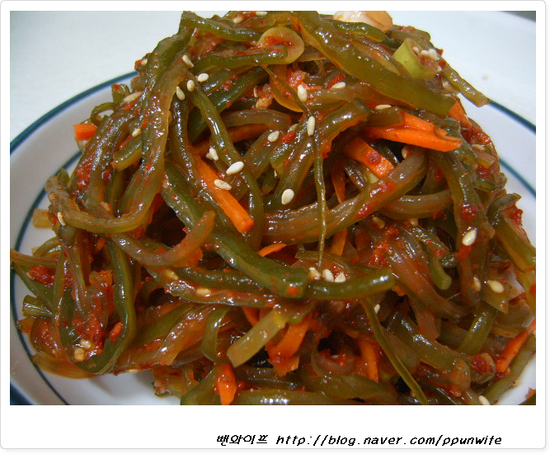
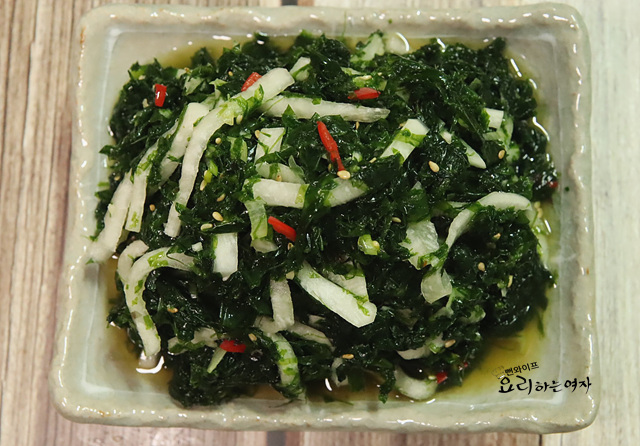
Spicy Sweet Gkosiraegi Muchim (Seasoned Seaweed Salad)
A seaweed side dish made by briefly blanching desalted gracilaria seaweed and tossing it in a sweet and spicy seasoning.
Translated from Korean by AI and not yet checked by a native speaker. Amounts and numbers are taken directly from the original recipe. Read the Korean original →
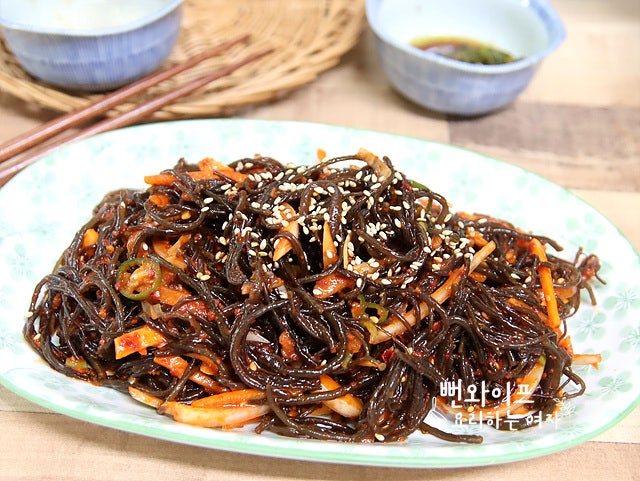
This side dish features delightfully crunchy gracilaria seaweed tossed in a sweet, tangy gochujang dressing. Briefly blanched in boiling water for 30 seconds to 1 minute and tossed with fresh vegetables, it is great for reviving your appetite. It makes a wonderful winter side dish for rice and also pairs naturally well with grilled meats.
- Servings
- about 3–4 servings
- Difficulty
- Medium
- Spiciness
- Mildly spicy
Ingredients
Ingredients
- Ggosiraegi (gracilaria seaweed)200 g
- Carrot1/4
- Onion1/4 (medium)
- Large green onion (daepa)a little
Seasoning
- Gochugaru (Korean chili flakes)1 1/2 tbsp
- Minced garlic1 tbsp
- Gochujang (Korean red chili paste)1 tbsp
- Regular soy sauce (jin-ganjang) (or brewed soy sauce (yangjo-ganjang))1 tbsp
- Vinegar2 tbsp
- Corn syrup (mulyeot) (or green plum syrup (maesil-cheong))1 tbsp
- Sugar1/2 tbsp
- Toasted sesame oil1 tbsp
- Toasted sesame seeds1 tbsp
- Because it has been salted for preservation, rub it with your hands under running water to wash away any debris, then soak it in water to remove the excess salt.
- Use 1/2 of a small onion, or 1/4 of a medium onion.
Steps
Prepare the ingredients
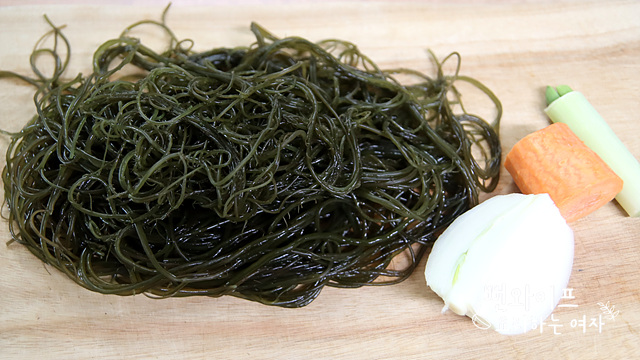
This is about two large handfuls of ggosiraegi (gracilaria seaweed), already cleaned.
Use 1/2 of a small onion, or 1/4 of a regular-sized onion.
Prepare about the same amount of carrot as the onion, and mince enough large green onion (daepa) to make about 3 tbsp.
Clean the gracilaria seaweed
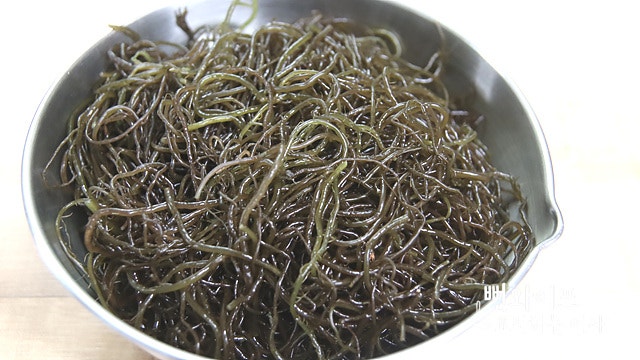
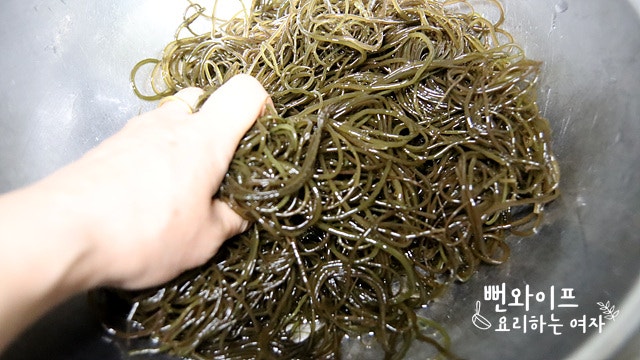
It may not be covered in salt like salted seaweed stems if the salt was shaken off before sale, but ggosiraegi is also preserved in salt, so it is extremely salty.
Also, small impurities can occasionally stick to it, so rub it with your hands while washing, then soak it in water to draw out the excess salt.
Blanch
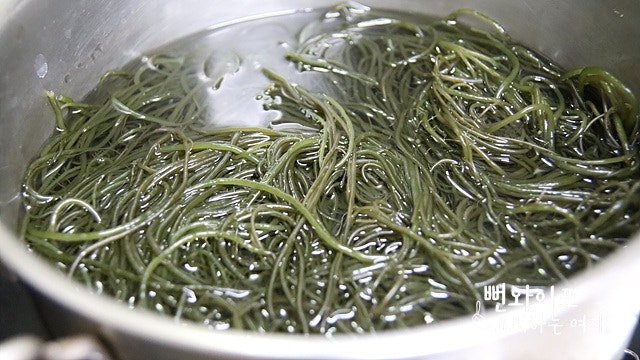
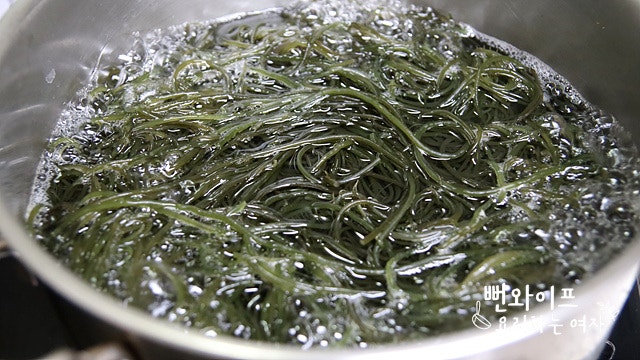
When the water in the pot comes to a rolling boil, add the ggosiraegi and blanch it, stirring gently, until it comes back to a boil (within 30 seconds to 1 minute).
Think of it more like sterilizing it rather than cooking it through.
The color change isn't quite as dramatic as blanching fresh brown seaweed, but it turns just slightly green.
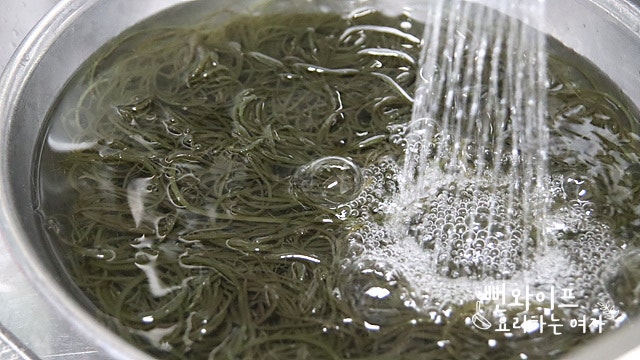
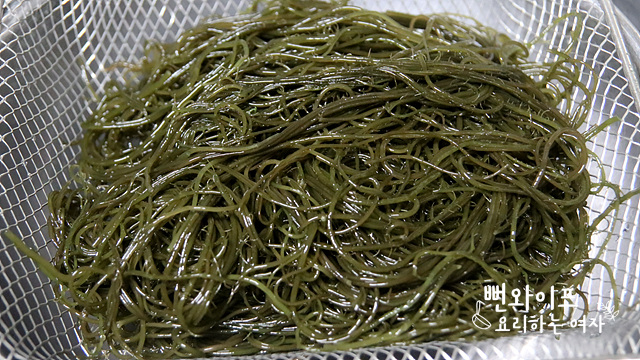
Rinse in cold water to cool it down, then drain thoroughly.
Slice the ingredients
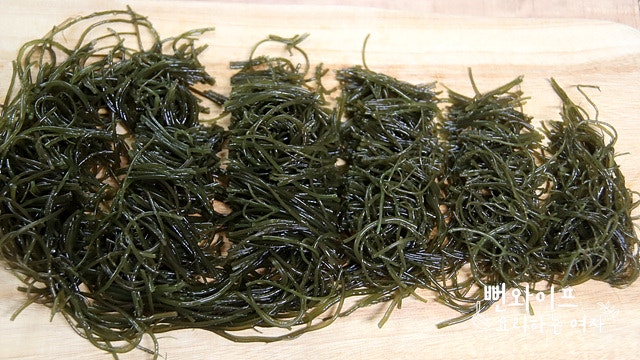
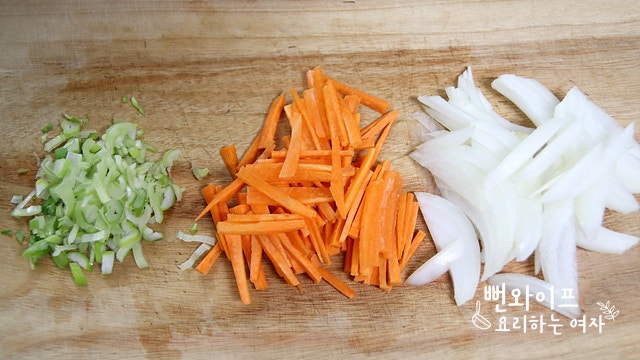
Cut the ggosiraegi into bite-sized lengths, and julienne the carrot and onion thinly. Finely slice the green onion.
Make the dressing
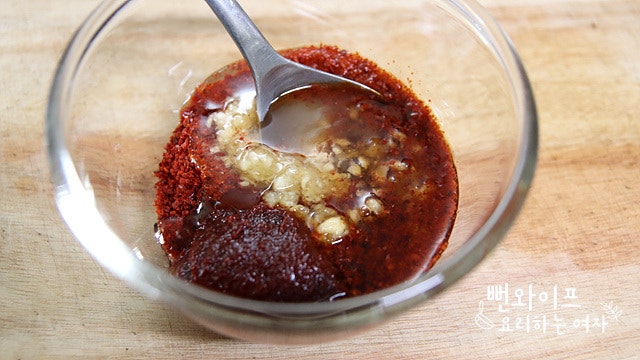
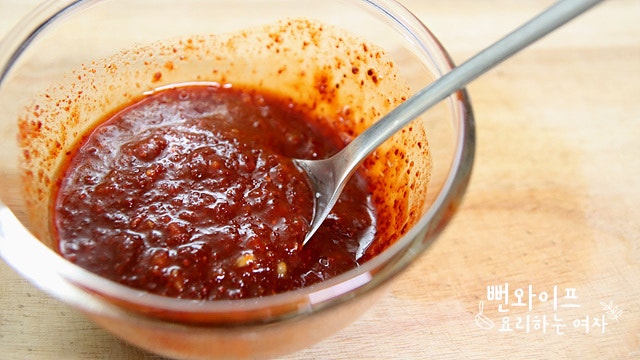
Add 1 1/2 tbsp gochugaru (Korean chili flakes), 1 tbsp minced garlic, 1 tbsp gochujang (Korean red chili paste), 1 tbsp regular soy sauce (jin-ganjang), 2 tbsp vinegar, 1 tbsp corn syrup (mulyeot), and 1/2 tbsp sugar...
Mix them in advance so the flavors blend well together.
Toss together
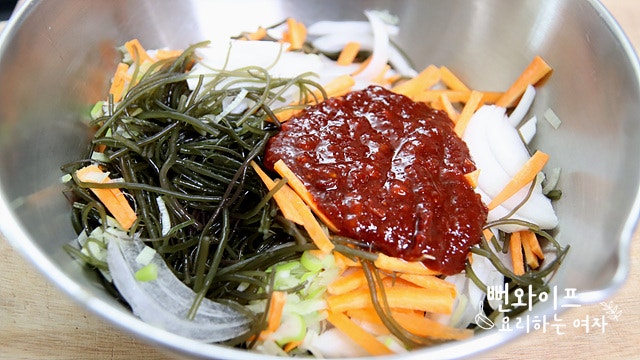
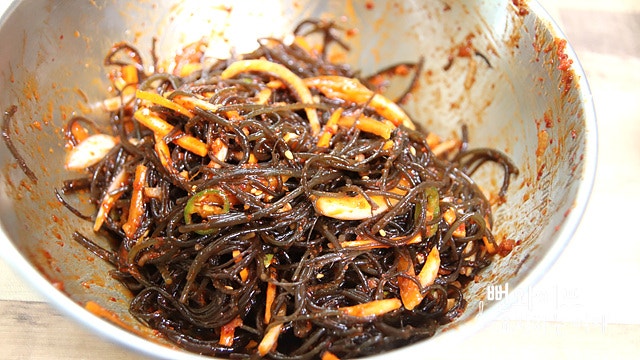
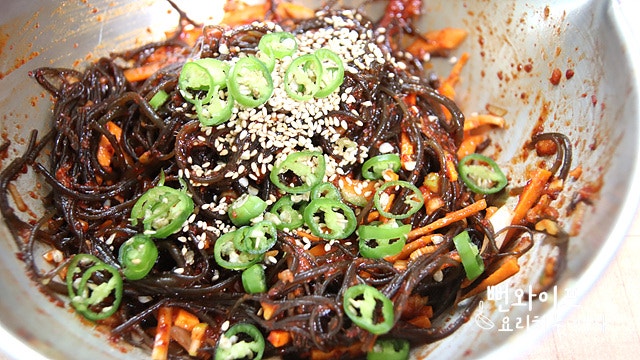
Put the cut ingredients and seasoning into a bowl, toss evenly, taste, and add more seasoning to suit your preference.
Finish at the end with toasted sesame seeds and toasted sesame oil.
I added 1 thinly sliced Cheongyang chili pepper (hot green chili) for a spicy kick to finish.
Complete
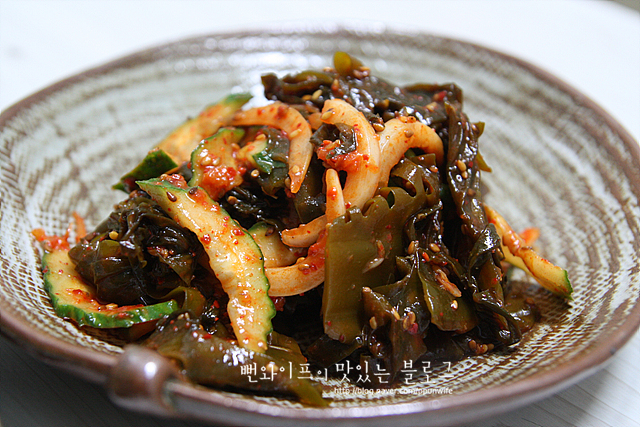
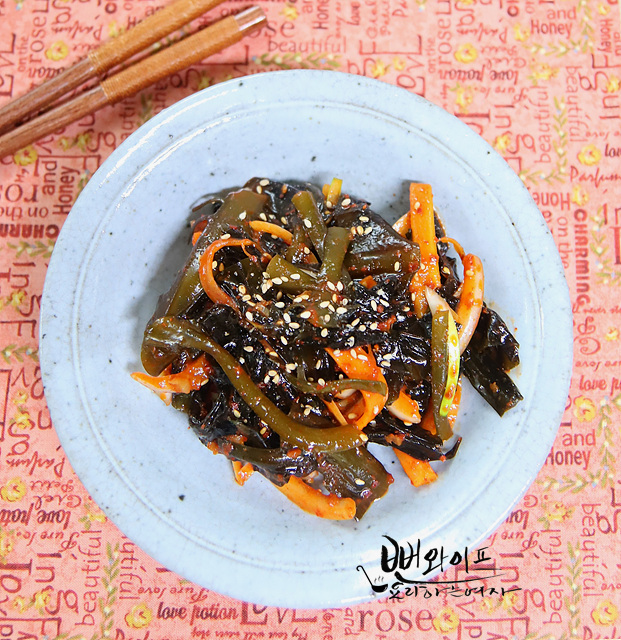
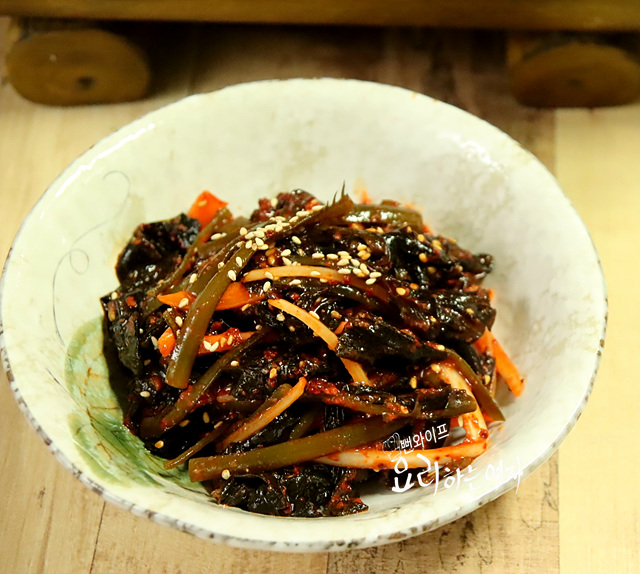
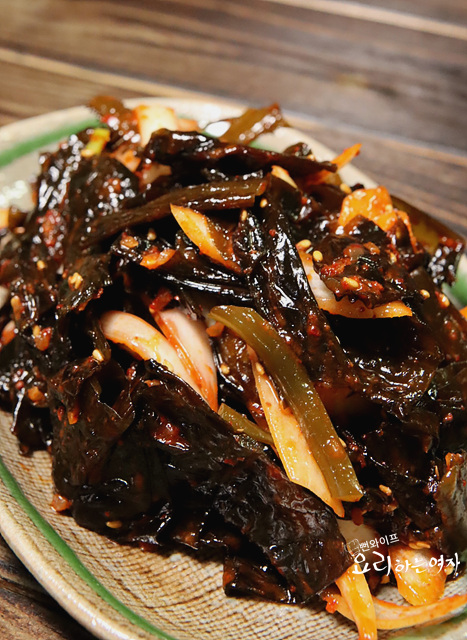
Crunchy and refreshing ggosiraegi muchim is complete.
If tossing it feels like too much hassle, you can simply dip it straight into cho-gochujang.
 Ppunwife's tips
- If tossing it feels like too much hassle, you can simply dip it straight into cho-gochujang.
- It makes a delicious side dish for rice, and it also pairs very well with grilled meat.
FAQ
How do you prep salted ggosiraegi?
Rub it clean by hand to wash away any foreign particles, then soak it in fresh water long enough to fully draw out the salt.
How long should ggosiraegi be blanched?
Add it to boiling water and blanch while stirring lightly just until it comes back to a boil, around 30 seconds to 1 minute.
Is there a substitute for corn syrup?
You can replace the corn syrup with an equal amount of green plum syrup (maesil-cheong).
Is there a simpler way to eat it without tossing in seasoning?
Once cleaned and blanched, you can simply enjoy the ggosiraegi by dipping it straight into cho-gochujang without making a tossed dressing.