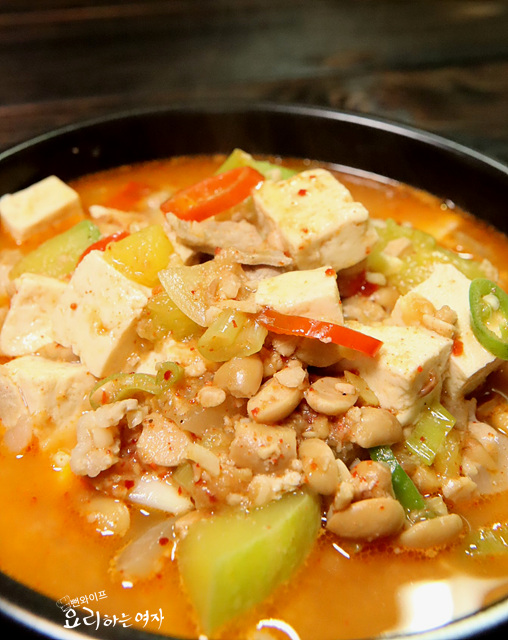
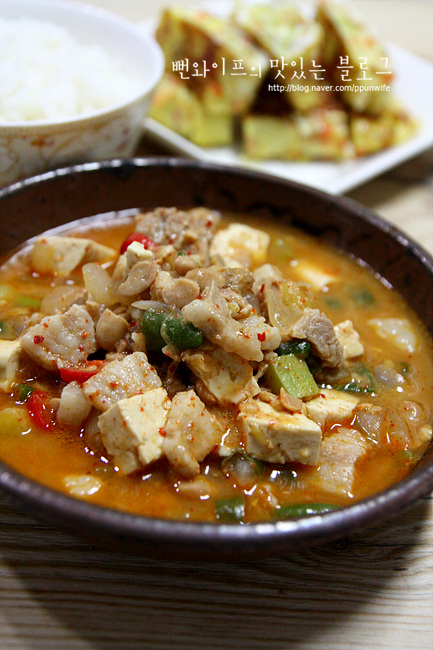
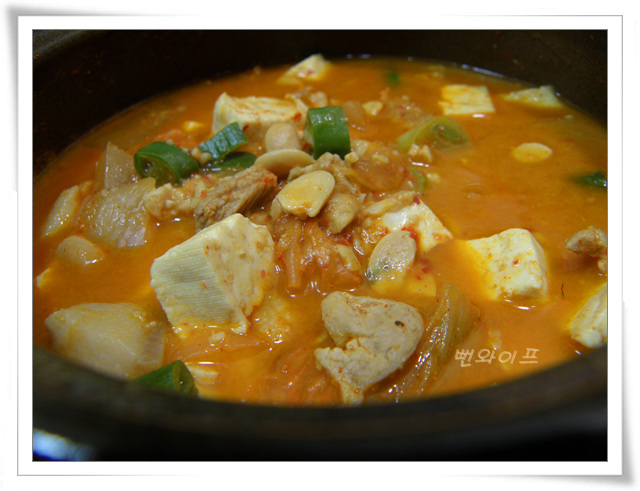
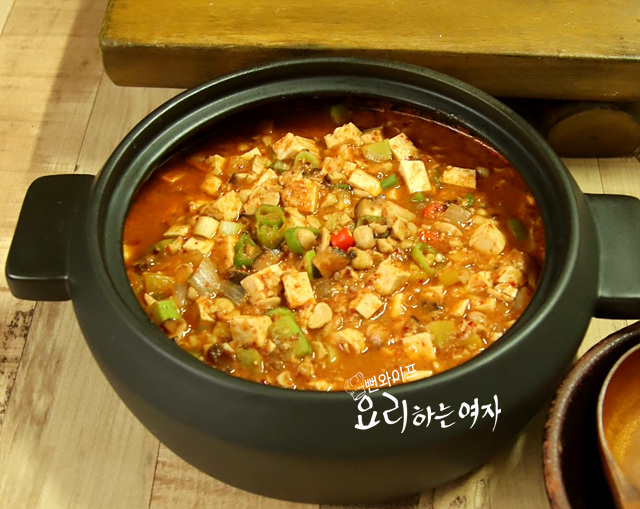
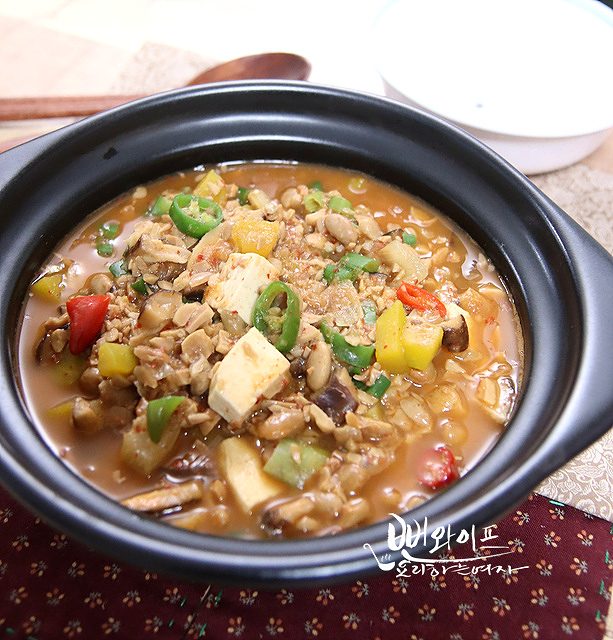
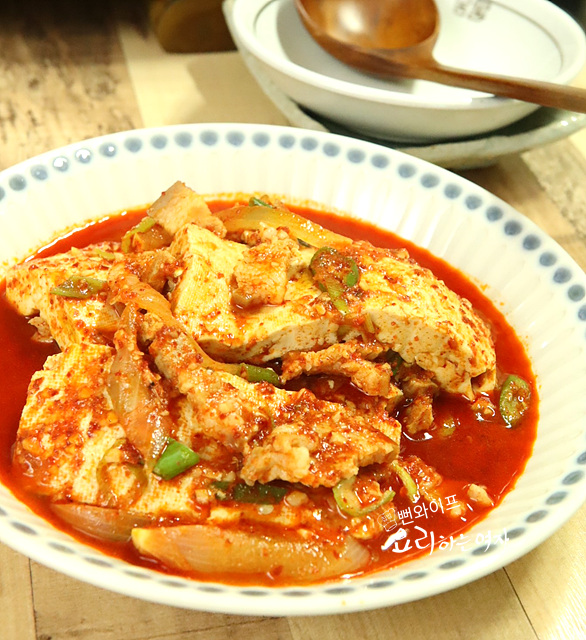
Rich and Savory Cheonggukjang Jjigae (Fermented Soybean Paste Stew)
A savory stew made by simmering pork and tofu in an anchovy broth based on water from washing rice.
Translated from Korean by AI and not yet checked by a native speaker. Amounts and numbers are taken directly from the original recipe. Read the Korean original →
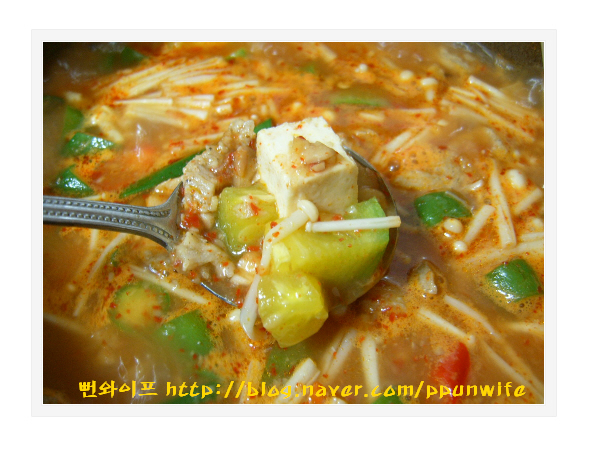
Pork is stir-fried and simmered in a deep broth made from steeping dried kelp and dried anchovies in water from washing rice. Filled with plenty of cheonggukjang, tofu, and various vegetables, it brings out a rich and deeply savory flavor. It pairs wonderfully with steamed pumpkin leaves or a bowl of rice.
- Servings
- 3–4 servings
- Difficulty
- Medium
- Spiciness
- Mildly spicy
Ingredients
Ingredients
- Cheonggukjang (fermented soybean paste)3-4 tbsp
- Pork100 g
- Squash1/4
- Enoki mushrooms1
- Tofu1/4 block
- Green chili pepper and red chili pepper1 each
- Large green onion (daepa)0.5 stalks
Broth
- Water from washing rice5 cups
- Dried kelp (dasima)2 pieces
- Dried anchovies1 handful
Seasoning
- Gochugaru (Korean chili flakes)0.5 tbsp
- Minced garlic0.5 tbsp
- Salta little (or omit)
- Steep the dried kelp in the water from washing rice for about 1 hour.
- Prepare pork that has a bit of fat.
Steps
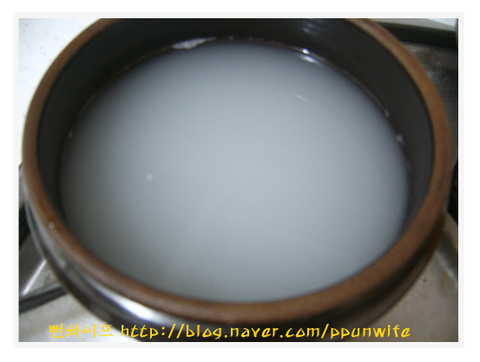
Today's cheonggukjang will be made with water from washing rice.
Save about 5 cups of water from the third rinse of the rice.
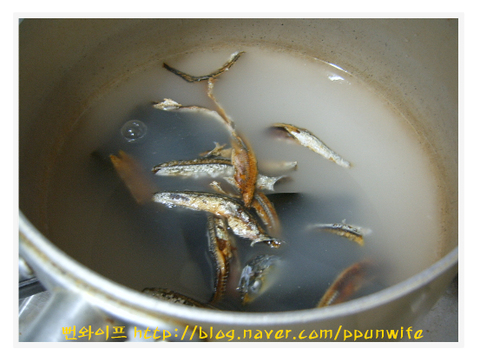
Steep the dried kelp in the water from washing rice for about 1 hour, then add the dried anchovies and bring to a boil.
Once it starts boiling, remove the kelp and simmer over low heat for about 10 minutes.
The liquid will reduce to about 4 cups.
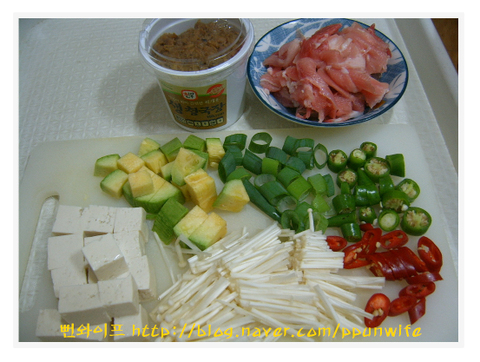
Prepare pork that has a bit of fat and season it.
Massage it with salt, ground black pepper, and mirin.
Finely chop the vegetables as well.
I used store-bought cheonggukjang from the mart.
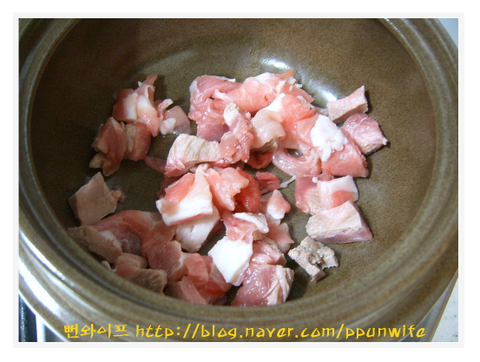
Add the pork to an earthenware pot and stir-fry it.
Once the pork is fully cooked...
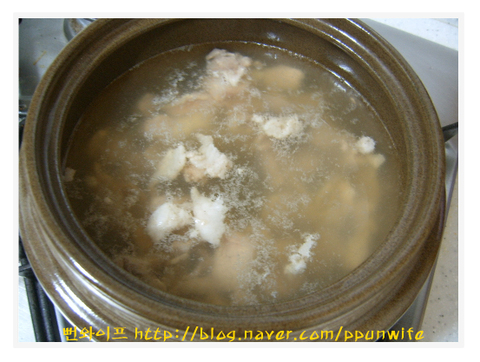
Pour in 4 cups of the prepared broth and bring it to a boil.
When the broth boils...
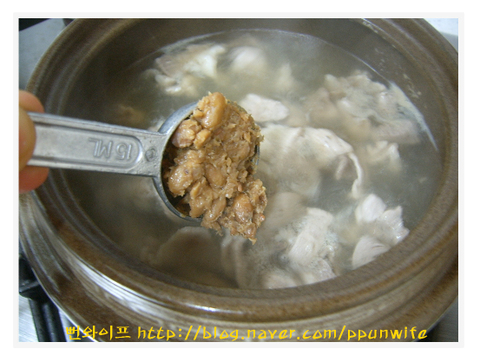
Add 3-4 tbsp of cheonggukjang.
I like scooping up chunks of cheonggukjang, so I added 4 tbsp.
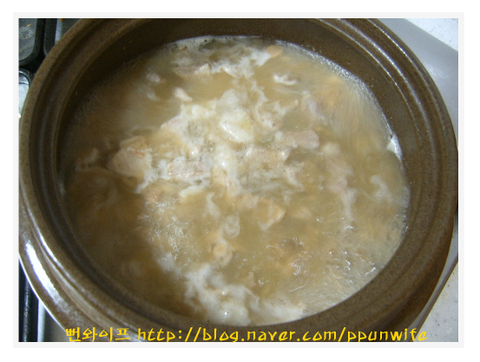
After adding the cheonggukjang and it starts boiling, skim off the foam that rises...
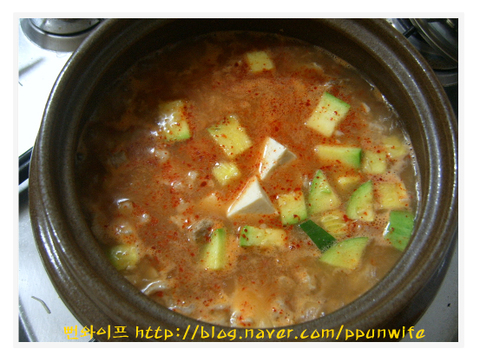
Add the tofu and squash, then season. Add the gochugaru and minced garlic.
With 4 tbsp of cheonggukjang, it seems you won't need to season with salt.
If it tastes bland, you can add salt.
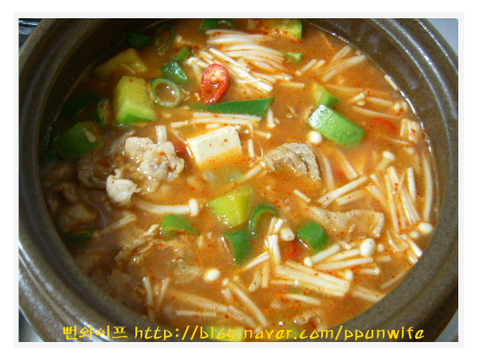
Finally, add the chili peppers and enoki mushrooms, then bring to a quick boil.
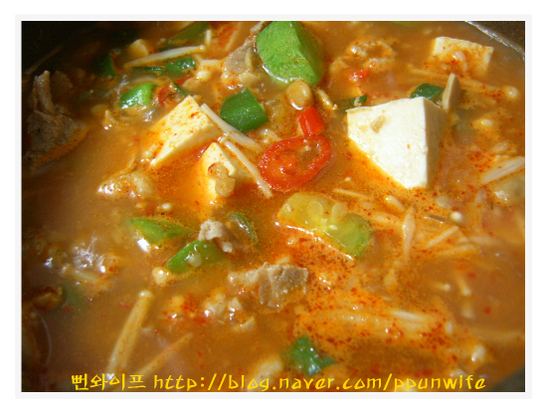
The rich and savory cheonggukjang is finished!
 Ppunwife's tips
- With 4 tbsp of cheonggukjang, it seems you won't need to season with salt. If it tastes bland, you can add salt.
FAQ
How should I prepare the water from washing rice for the broth?
When washing rice, save about 5 cups of the water from the third rinse and use it.
How should I season the pork before adding it to the stew?
Prepare a cut with a moderate amount of fat, then gently massage it with salt, ground black pepper, and mirin to season.
Do I have to season it with salt?
If you add a generous 4 tbsp of cheonggukjang, the base seasoning may be sufficient, so taste it first and only add salt if it tastes bland.