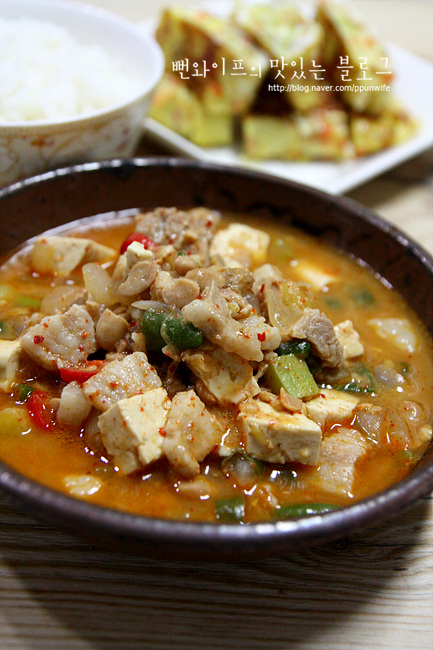
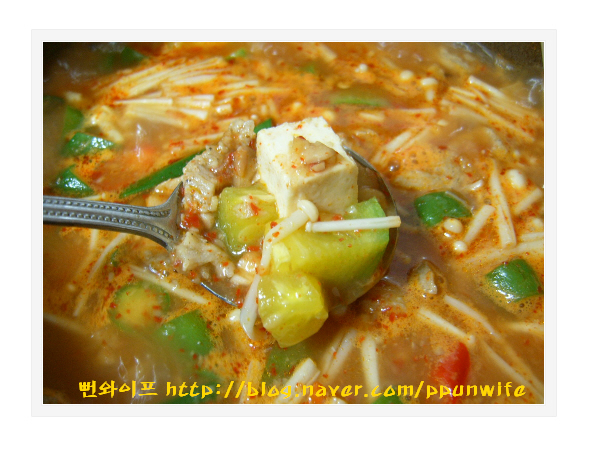
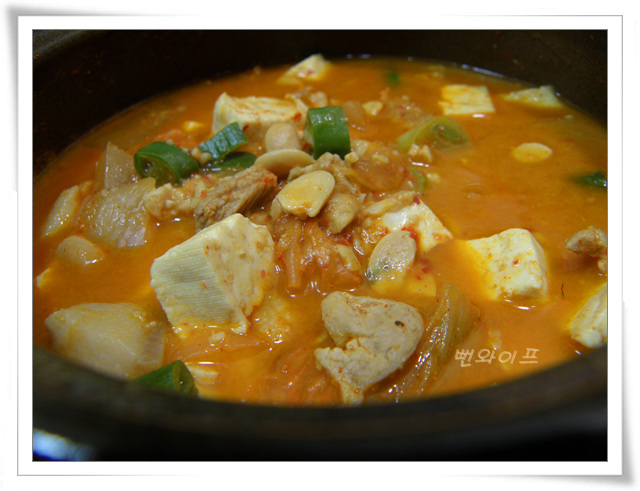
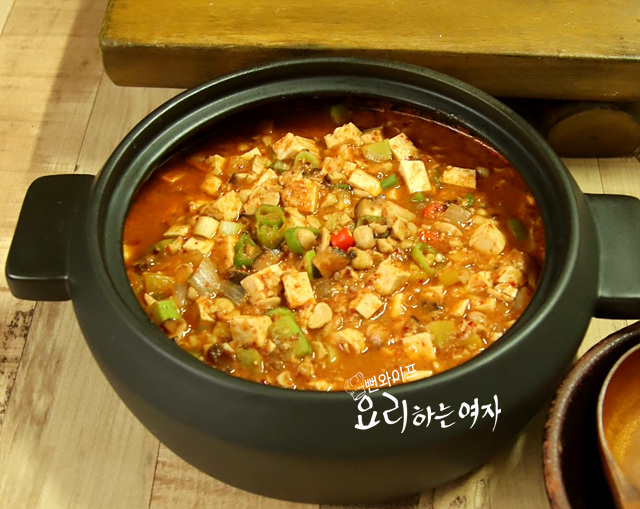
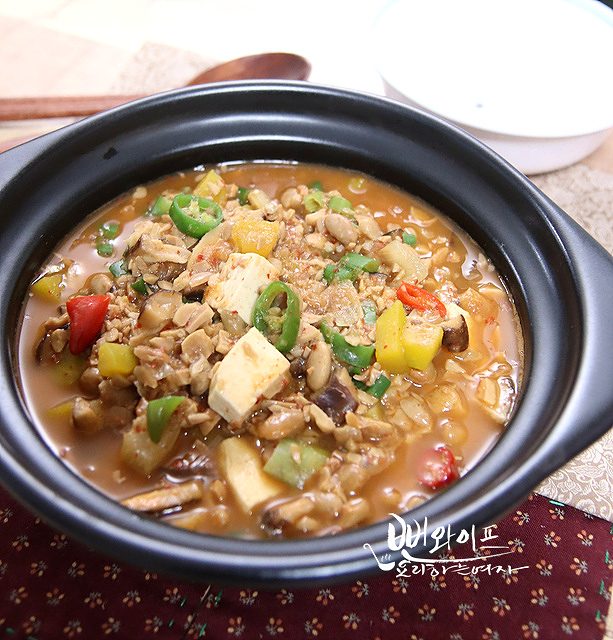
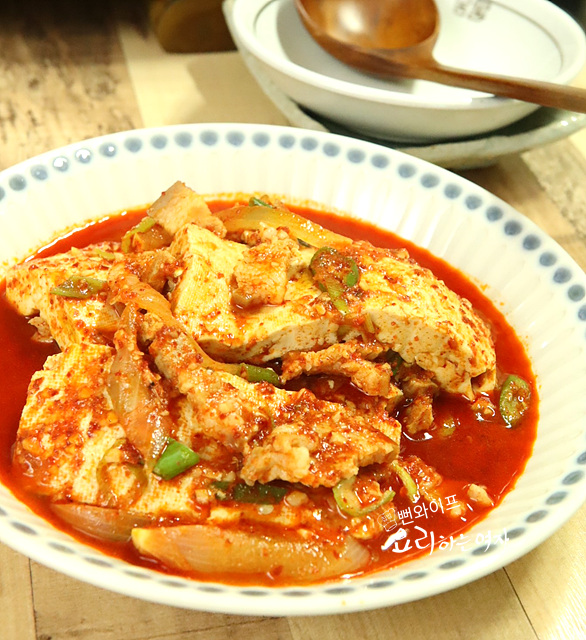
Rich Savory Cheonggukjang Jjigae (Fermented Soybean Paste Stew)
A deeply savory fermented soybean paste stew simmered with pork, tofu, and rich rice water broth.
Translated from Korean by AI and not yet checked by a native speaker. Amounts and numbers are taken directly from the original recipe. Read the Korean original →
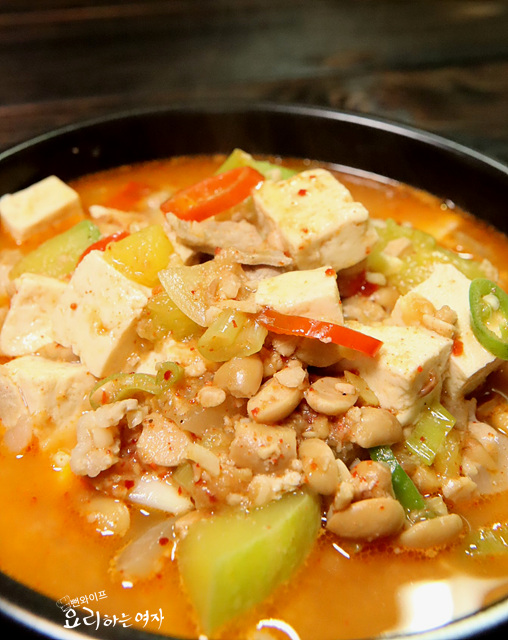
Simmered rich and thick with pork and various vegetables in a broth made from rice water, dried anchovies, and kelp. It is less salty than doenjang, making it perfect for scooping up hearty spoonfuls with plenty of ingredients or mixing over warm rice. Makes 4 generous servings to enjoy.
- Servings
- 4 servings
- Difficulty
- Medium
- Spiciness
- Mildly spicy
Ingredients
Ingredients
- Cheonggukjang (fermented soybean paste)200 g
- Pork150 g
- Tofu1/2 block, 200 g
- Onion1/3
- Squash1/3
- Cheongyang chili pepper (hot green chili)1
- Red chili pepper1
- Large green onion (daepa)1/4 stalk
- Water from washing rice5 cups
- Dried soup anchovies15
- Dried kelp (dasima)2 pieces (5 cm square)
Seasoning
- Gochugaru (Korean chili flakes)1 tbsp
- Minced garlic1 tbsp
- Salt1 tsp
- Ground black peppera little
- For the pork, you can use pork shoulder or picnic shoulder instead of thinly sliced pork belly.
Steps
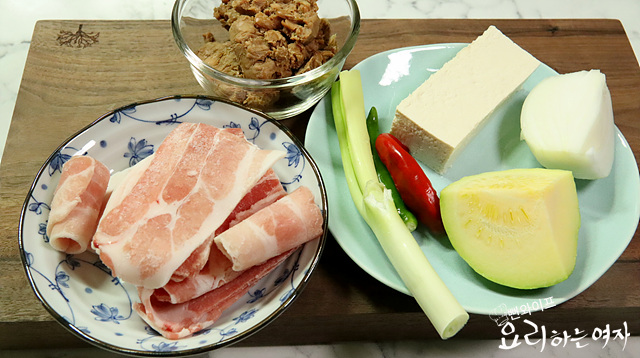
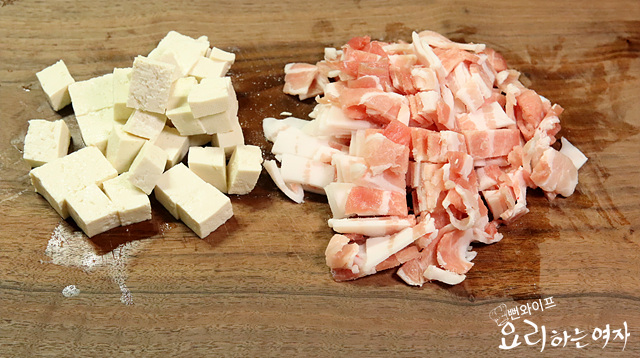
I think pork pairs wonderfully with cheonggukjang.
I prepared thinly sliced pork belly. You can also use pork shoulder or picnic shoulder.
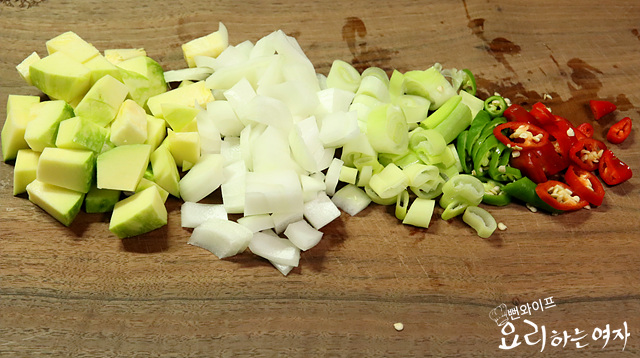
Dice the vegetables, tofu, and pork.
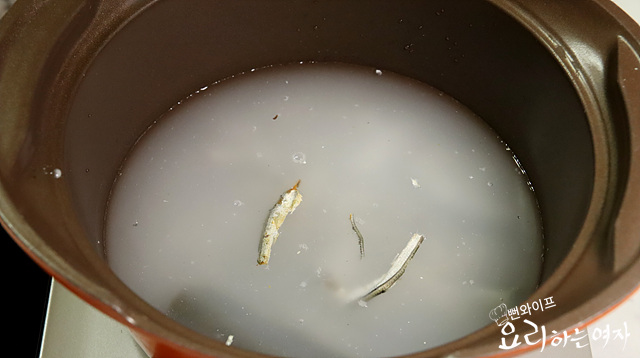
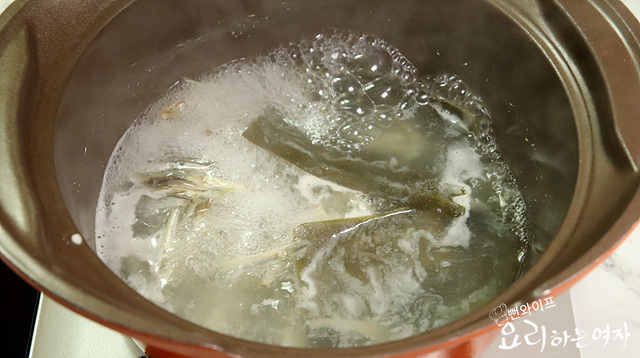
Add the dried soup anchovies and dried kelp (dasima) to the water from washing rice and simmer until it reduces to about 4 cups.
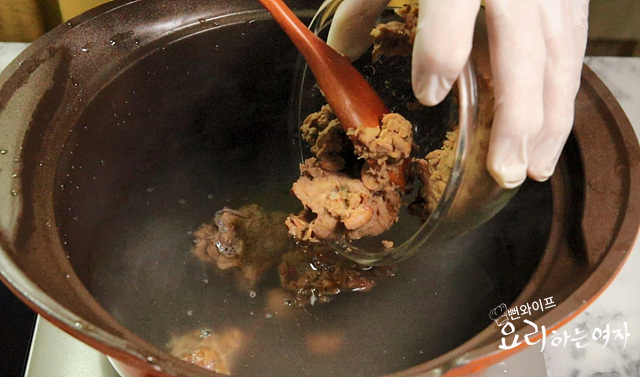
Remove the dried soup anchovies and kelp, then add the cheonggukjang (fermented soybean paste). Once it comes to a rolling boil...
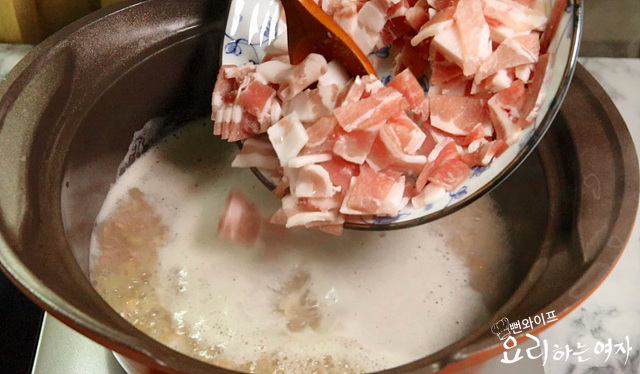
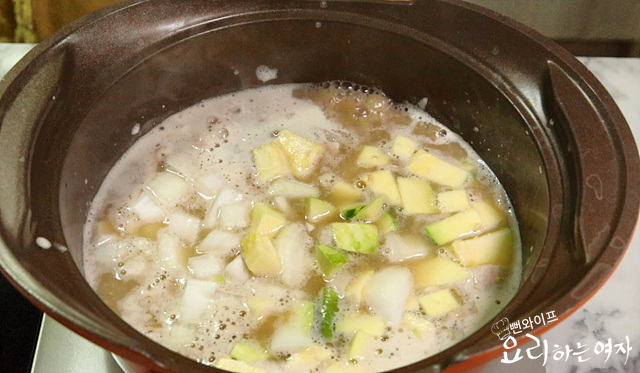
Add the pork, onion, and squash, and boil until cooked through.
Taste the broth and season with salt to your liking.
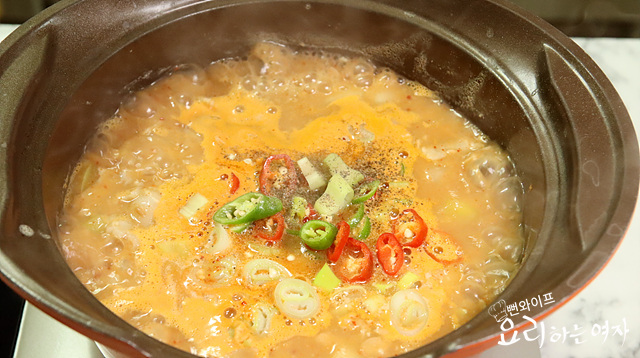
Add the tofu, gochugaru (Korean chili flakes), minced garlic, large green onion (daepa), chili peppers, and ground black pepper,
then give it a quick boil, and it is done.
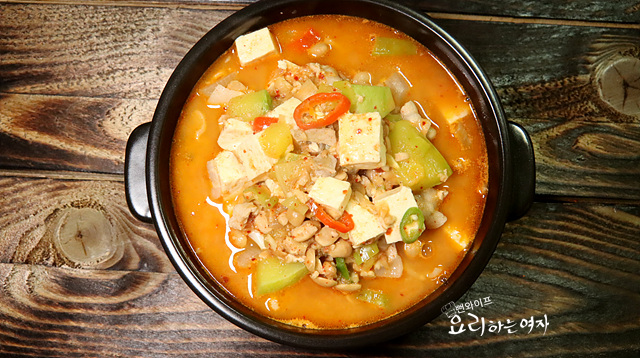
 Ppunwife's tips
- It is loaded with solid ingredients and less salty than doenjang, so you can scoop it up generously by the spoonful.
FAQ
Which cut of pork is best to use?
Besides thinly sliced pork belly, you can use pork shoulder or picnic shoulder according to your preference.
How do you prepare the broth?
Simmer dried soup anchovies and dried kelp in 5 cups of water from washing rice until reduced to about 4 cups, discard the solids, and then stir in the cheonggukjang.
When should I adjust the seasoning?
After adding the pork, squash, and onion to the cheonggukjang broth and simmering until cooked through, taste the broth and adjust with salt.