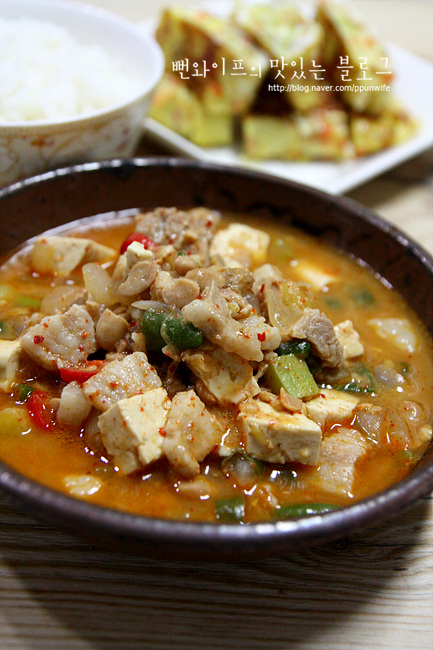
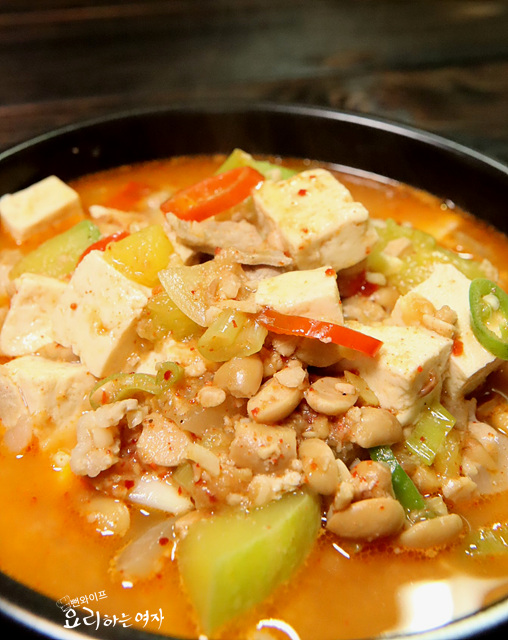
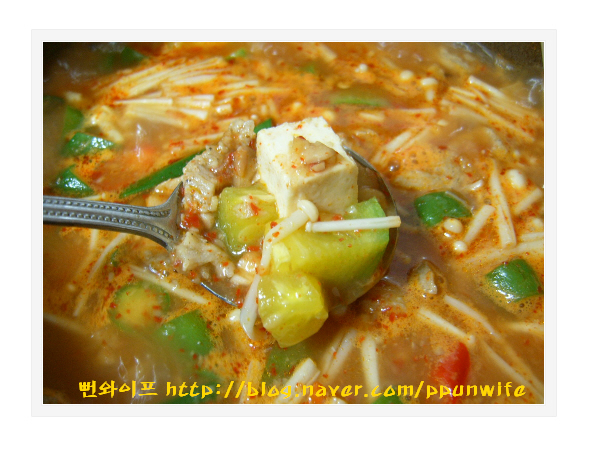
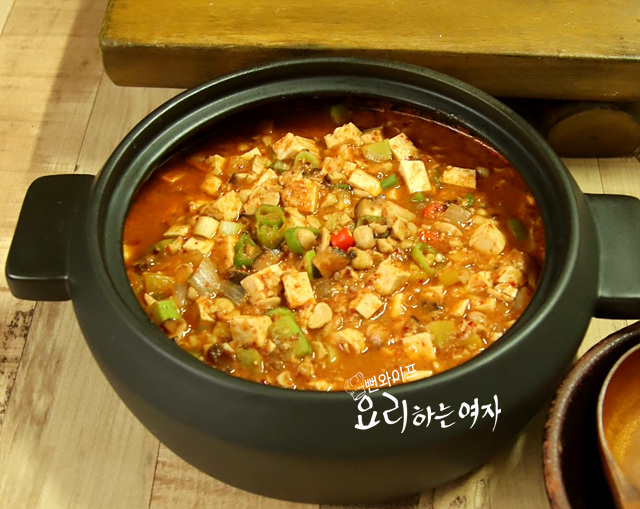
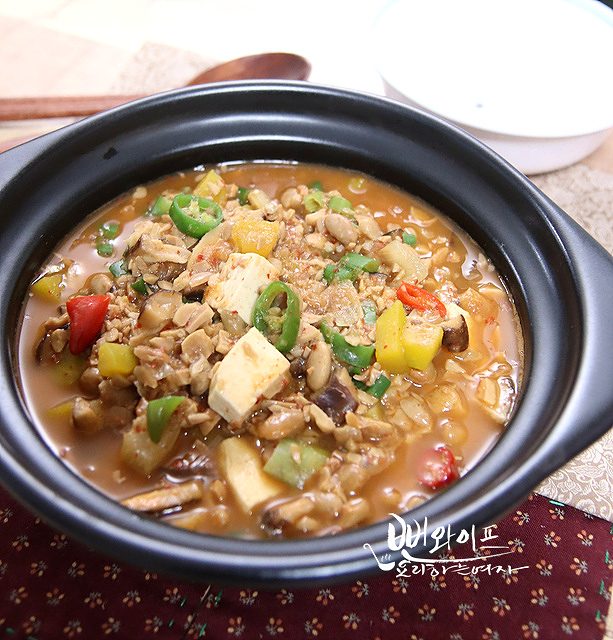
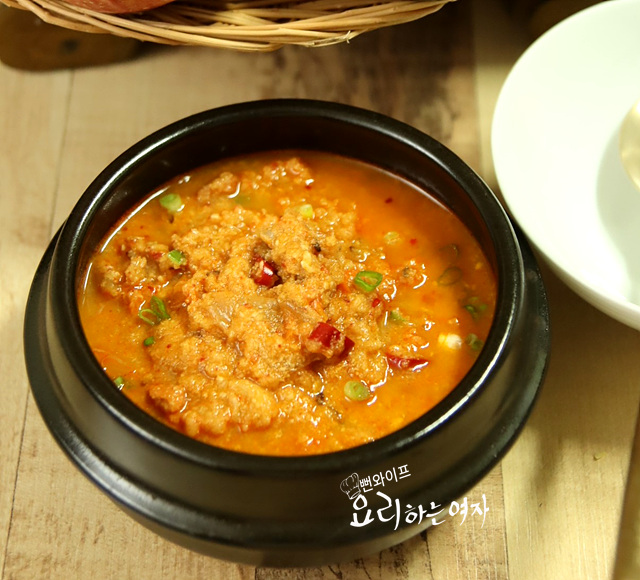
Rich and Savory Cheonggukjang Jjigae (Fermented Soybean Paste Stew)
An earthenware-pot fermented soybean paste stew made extra savory by stir-frying pork and kimchi.
Translated from Korean by AI and not yet checked by a native speaker. Amounts and numbers are taken directly from the original recipe. Read the Korean original →
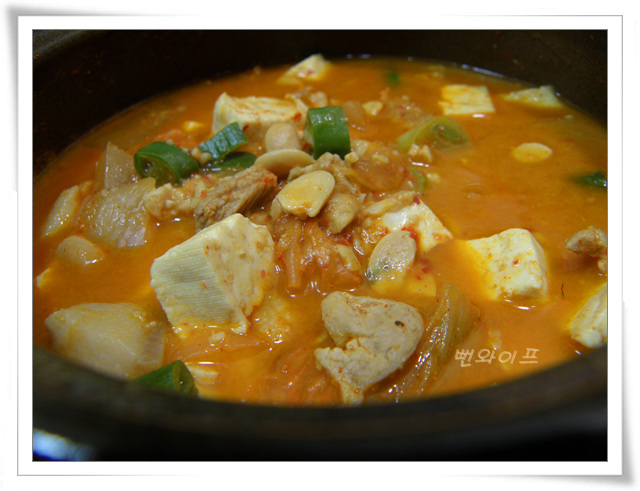
This stew is made by stir-frying pork and well-fermented kimchi, then simmering them with anchovy broth and fermented soybean paste. Using rice water as the broth base adds an even deeper flavor, making it perfect to spoon over warm rice on chilly days.
- Servings
- 2–3 servings
- Difficulty
- Medium
- Spiciness
- Mildly spicy
Ingredients
Ingredients
- Cheonggukjang (fermented soybean paste)100 g
- Pork100 g
- Kimchi3-4 leaves, 100 g
- Tofu1/4 block, 100 g
- Cheongyang chili pepper (hot green chili)2
- Large green onion (daepa)1/4 stalk
- Anchovy broth2.5 cups
Seasoning
- Gochugaru (Korean chili flakes)1/2 tbsp
- Minced garlic1 tsp
- Salta little
- Feel free to prepare zucchini and onion as well.
- For the pork, use front shoulder, rear leg, or pork neck, cut into bite-sized pieces.
Steps
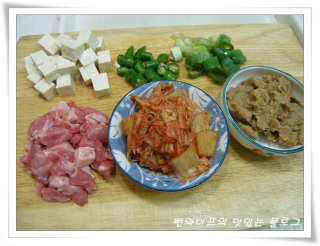
1. I bought store-bought cheonggukjang (fermented soybean paste). I prepared about 3 tbsp of it.
Cheonggukjang tastes best with pork in it. Cut front shoulder, rear leg, or pork neck into bite-sized pieces.
Just cut well-fermented kimchi into bite-sized pieces too. Slice the tofu, chili peppers, and large green onion (daepa) as shown in the photo.
Feel free to prepare zucchini and onion as well.
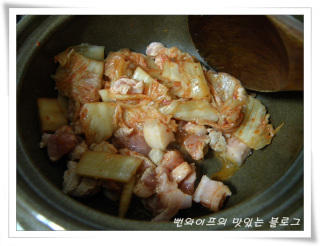
2. Add the meat and kimchi to an earthenware pot and stir-fry thoroughly.
Once the pork turns white...
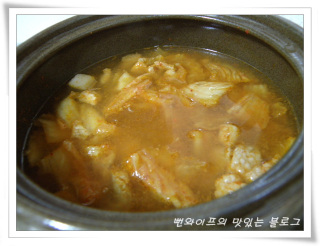
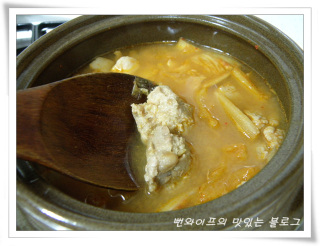
3. Pour in the anchovy broth.
Using water simmered with dried kelp (dasima) and dried anchovies in rice water makes it even more savory and delicious.
4. Add the cheonggukjang (fermented soybean paste), dissolve it, and bring it to a bubbling boil.
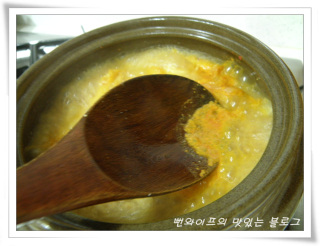
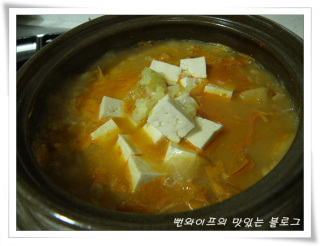
5. Skim off the foam...
6. Add the tofu and minced garlic, simmer for a bit...
If you have zucchini or onion, you can add them together at this point.
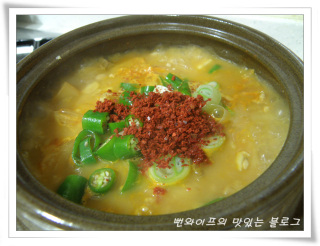
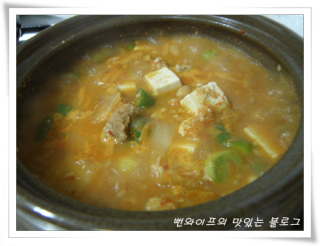
7. At the end, season with salt if it is bland, then add the chili peppers, large green onion, and gochugaru (Korean chili flakes)...
8. Give it a quick boil, and it is done.
 Ppunwife's tips
- Using water simmered with dried kelp (dasima) and dried anchovies in rice water makes it even more savory and delicious.
FAQ
Is there a broth tip for a more savory flavor?
If you use broth brewed with dried anchovies and dried kelp (dasima) in rice water, you can enjoy a much more savory flavor.
Which cut of pork is best to use?
Pork front shoulder, rear leg, or pork neck cut into bite-sized pieces all work well according to your preference.
Are there other vegetables that are good to add besides the basic ingredients?
You can prepare Korean zucchini or onion to your liking and add them when you add the tofu.