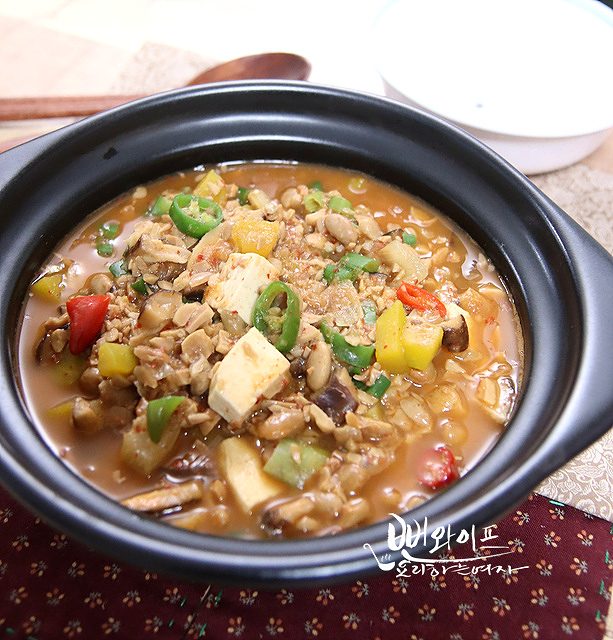
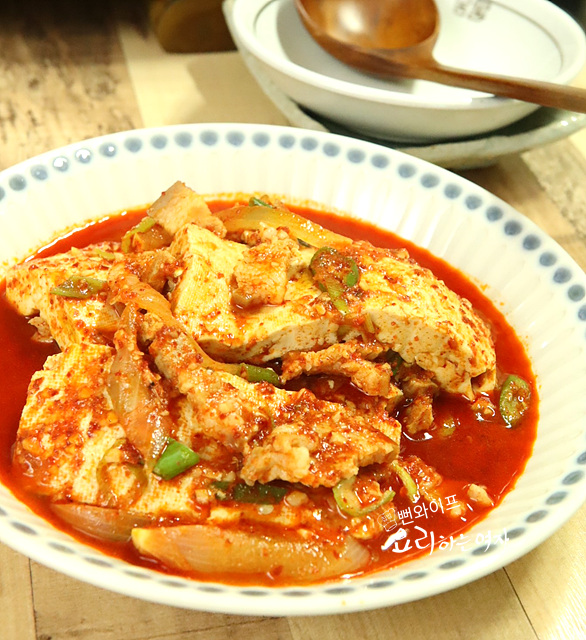
Rich and Savory Cheonggukjang Jjigae (Fermented Soybean Paste Stew)
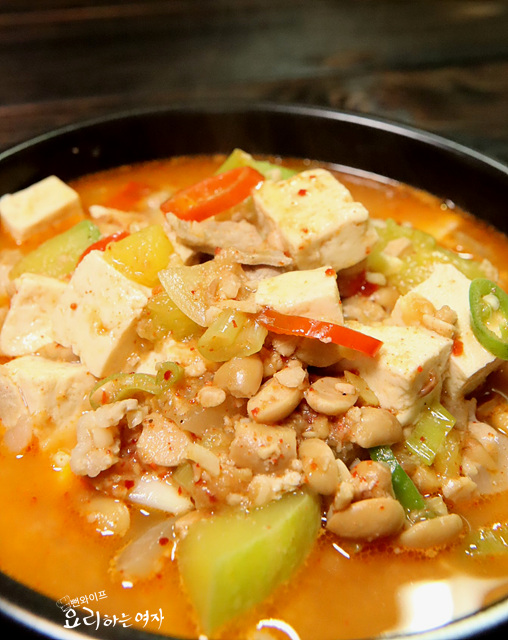
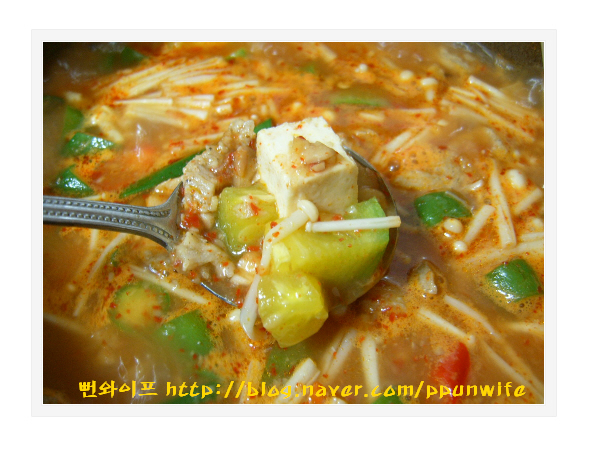
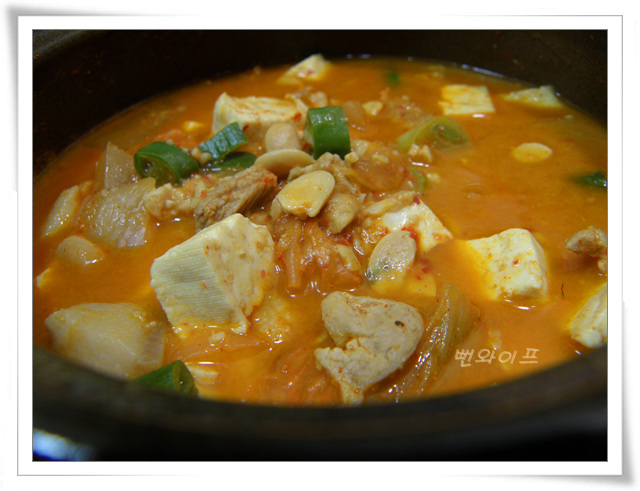
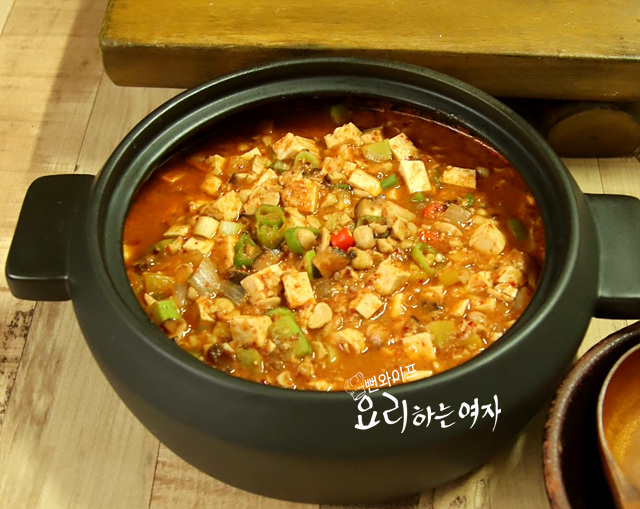
A savory cheonggukjang jjigae made by simmering pork and tofu in an anchovy broth brewed with rice water.
Translated from Korean by AI and not yet checked by a native speaker. Amounts and numbers are taken directly from the original recipe. Read the Korean original →
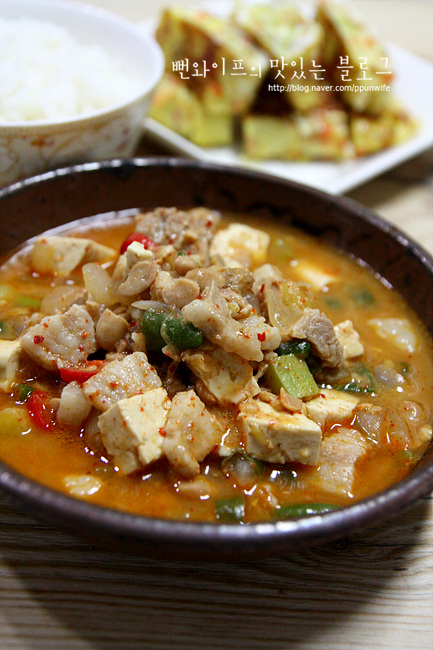
A rich and deep 2-serving stew made by simmering cheonggukjang and pork in an anchovy broth brewed with rice water. Made without kimchi to bring out the natural flavors of the vegetables, with a subtle spicy kick for a hearty meal.
- Servings
- 2 servings
- Difficulty
- Medium
- Spiciness
- Mildly spicy
Ingredients
Ingredients
- Cheonggukjang (fermented soybean paste)100 g
- Pork100 g
- Korean zucchini (aehobak)1/4
- Onion1/4
- Tofu1/4 block, 100 g
- Large green onion (daepa)1/2 stalk
- Cheongyang chili pepper (hot green chili)1
- Red chili pepper1
- Anchovy broth or rice water2 cups
Seasoning
- Gochugaru (Korean chili flakes)1/2 tbsp
- Minced garlic1 tsp
- Salt1/3–1/2 tsp (a little)
- Ground black peppera little
Broth
- Water from washing rice (or water)3 cups
- Dried kelp (dasima)1 piece (5 cm square)
- Dried soup anchovies6
- For the pork, you can use pork belly, pork shoulder, front leg, or hind leg; cuts with a bit of fat make the broth richer and tastier.
- In addition to vegetables, you can also prepare mushrooms to add.
- 100 g of cheonggukjang is about 3 tbsp heaping with a soup spoon.
- You can also steep the dried kelp in the rice water for about 30 minutes, then boil it with just the dried anchovies.
Steps
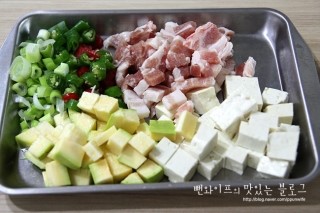
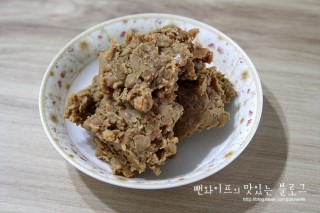
1. I prepared a little pork belly for the pork. Meat with a bit of fat makes the broth richer and tastier.
Pork shoulder, picnic shoulder, or ham work well too.
Cut 1/4 block of tofu and the vegetables—onion, tofu, red chili pepper, Cheongyang chili pepper, and large green onion—into cubes or thin slices. (Mushrooms are good too.)
The onion isn't in the photo, but I remembered it suddenly and added it during cooking.
2. 100 g of cheonggukjang turned out to be about 3 tbsp heaping with a soup spoon.
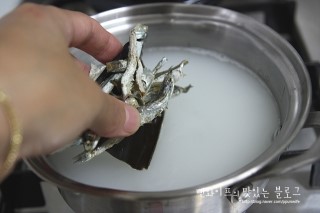
3. Add the dried kelp and dried anchovies to 3 cups of water from washing rice and boil until the broth is reduced to about 2 cups.
10 minutes after the water comes to a boil, take out the dried kelp and continue boiling.
You can also steep the dried kelp in the rice water for about 30 minutes and boil with just the dried anchovies.
When making doenjang jjigae or doenjang soup, making anchovy broth with rice water gives it a much more savory and deep flavor.
Broth: 3 cups water from washing rice (= water), 1 sheet dried kelp (5 cm square), 6 dried soup anchovies
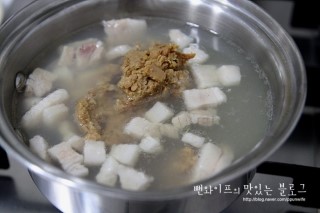
4. Add the pork and cheonggukjang to the prepared broth and boil vigorously.
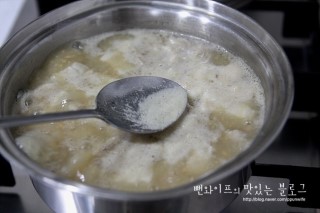
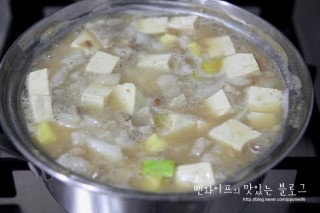
5. Skim off any foam that rises to the top...
6. Add the onion, zucchini, and tofu, and boil gently for a little while until the vegetables are cooked.
Taste it, and if it is too bland, season with salt.
My cheonggukjang was already lightly seasoned with salt, so I did not add any extra salt.
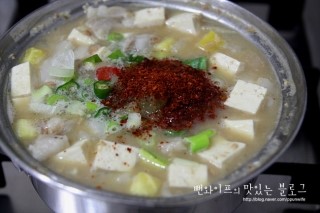
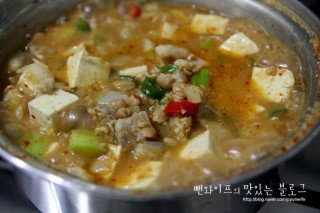
7. Add the large green onion, Cheongyang chili pepper, red chili pepper, minced garlic, gochugaru, and ground black pepper...
8. Boil for just a short while longer, and the cheonggukjang is done.
 Ppunwife's tips
- Meat with a bit of fat makes the broth richer and tastier.
- When making doenjang jjigae or doenjang soup, brewing anchovy broth in water from washing rice makes the flavor much more savory and deep.
- Cheonggukjang may already be lightly salted, so taste it first and only add salt if it is too bland.
FAQ
What cut of pork is best to use?
Pork belly is recommended because its fat enriches the broth, but pork shoulder, front leg, or hind leg also work well depending on your preference.
Is adding salt strictly necessary?
Commercial cheonggukjang can vary in saltiness and may already be salty enough, so taste the broth first and only add salt if it needs it.
When should I remove the dried kelp while simmering the broth?
Take out the dried kelp about 10 minutes after the rice water comes to a boil, then keep simmering the rest.