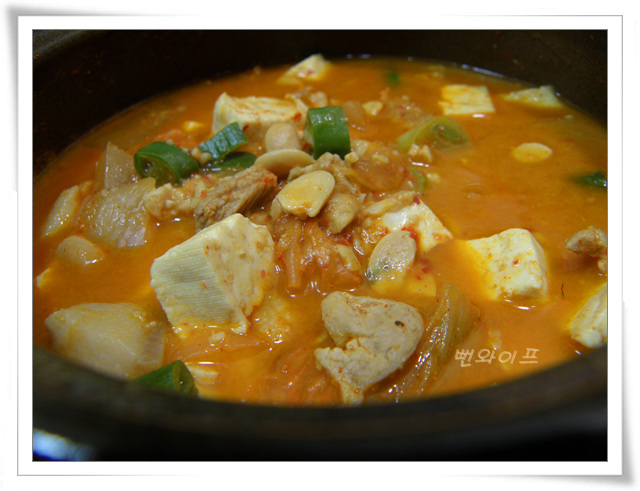
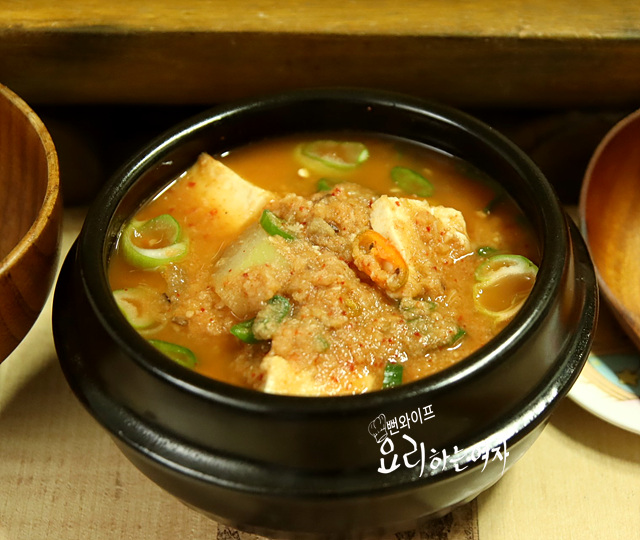
Rich Cheonggukjang (Fermented Soybean Stew) with Shiitake
A rich winter stew made without meat, using shiitake mushrooms and vegetables to bring out deep savory umami.
Translated from Korean by AI and not yet checked by a native speaker. Amounts and numbers are taken directly from the original recipe. Read the Korean original →
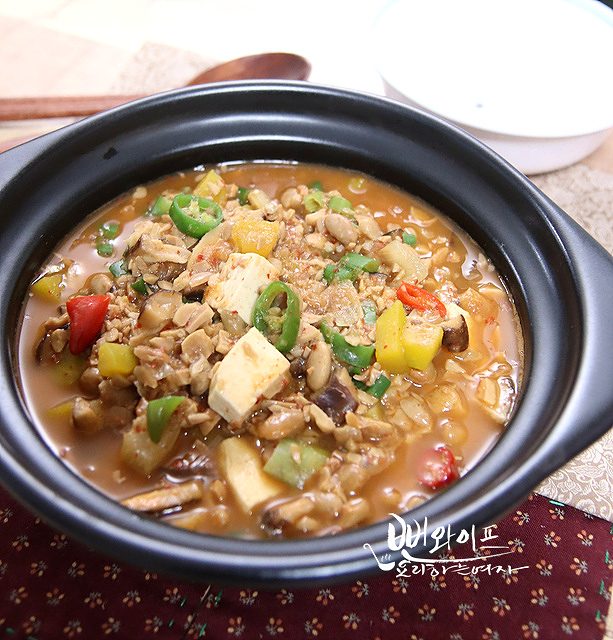
This stew combines water from washing rice and mushroom soaking water to create a deep, savory broth. Using shiitake mushrooms instead of meat adds chewy texture and rich umami, and the secret is not overboiling so each ingredient retains its natural flavor. Simmered until thick in the cold winter, it is wonderful to spoon over rice and mix.
- Servings
- 5–6 servings
- Cook time
- 10 minprep not included
- Difficulty
- Medium
- Spiciness
- Mildly spicy
Ingredients
Ingredients
- Cheonggukjang (fermented soybean paste)300 g
- Dried shiitake mushrooms (or 2–3 fresh shiitake mushrooms)20 g
- Onion1/2
- Tofu150 g
- Squash100 g
- Large green onion (daepa)1/2 stalk
- Cheongyang chili pepper (hot green chili)2
- Red chili pepper1–2 (optional)
- Water from washing rice7 cups (including mushroom soaking water)
- Dried anchovies for broth20 (approx.)
- Dried kelp (dasima), 5 cm square2 pieces
Seasoning
- Gochugaru (Korean chili flakes)1 1/2 tbsp
- Minced garlic1 tbsp
- Salt1 1/2 tsp (1/2 tbsp)
- Ground black peppera little
- If using fresh shiitake mushrooms, use 3 small ones or 2 large ones.
- Soak the dried shiitake mushrooms in water until soft, and do not discard the soaking water; use it when making the broth.
Steps
Prepare the ingredients
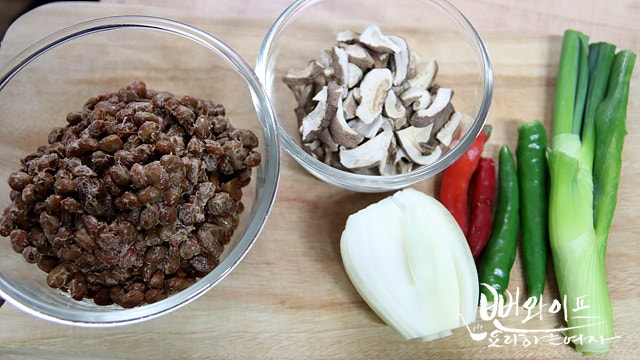
I have 2 packs of cheonggukjang (fermented soybean paste), totaling 300g.
Here is 20g of dried shiitake mushrooms. If you use fresh shiitake, use 3 small ones or 2 large ones.
Along with onion, large green onion, and chili peppers, I also prepared a little squash and tofu that were left out of the photo.
Chop the ingredients
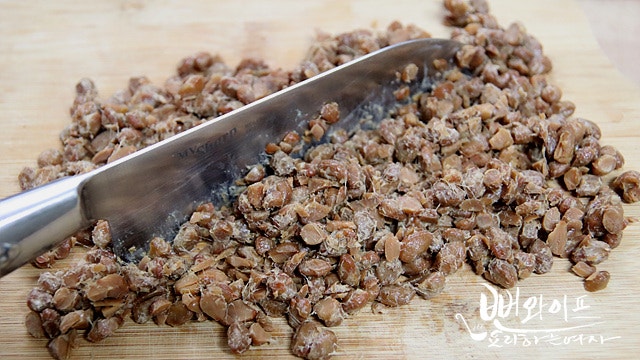
Mash the cheonggukjang or roughly chop it to make the broth nice and thick.
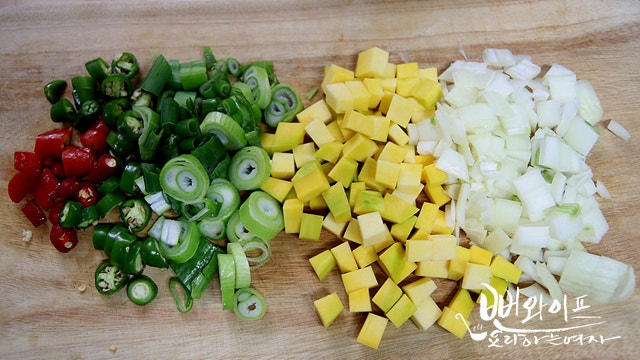
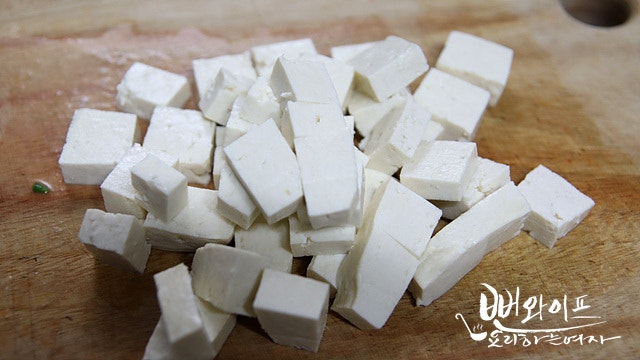
Dice the onion, squash, and tofu into small cubes, and thinly slice the large green onion and chili peppers.
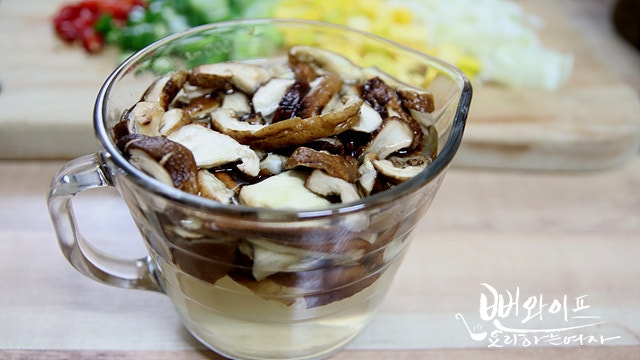
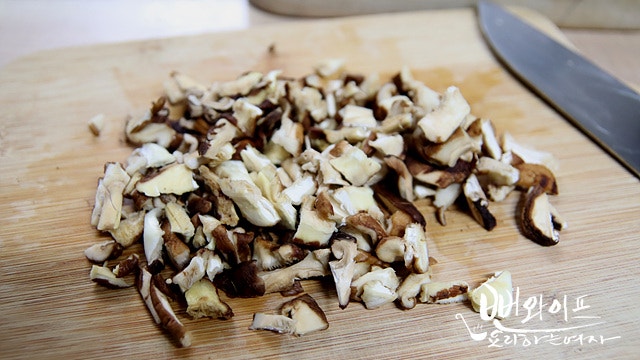
Soak the dried shiitake mushrooms in water until tender, then chop them into small pieces similar in size to the other ingredients.
Do not throw away the mushroom soaking water; save it to use when simmering the broth.
Simmer the stew
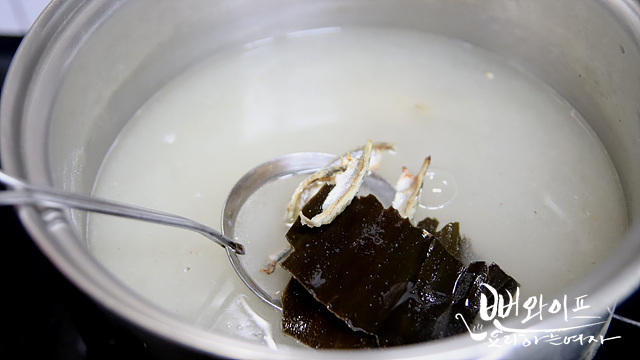
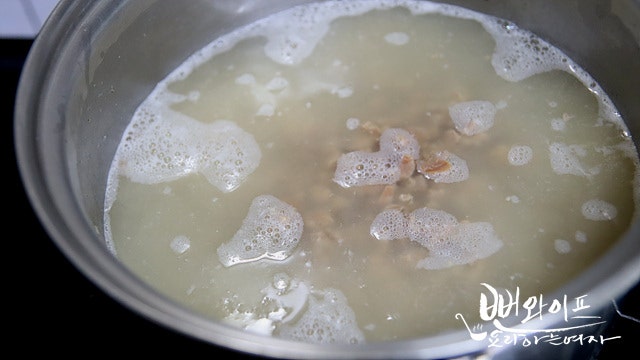
Combine the water from washing rice and the mushroom soaking water to make about 7 cups, add the dried anchovies and dried kelp, and simmer for at least 10 minutes to extract the broth.
Using water from washing rice when making doenjang jjigae or cheonggukjang doubles the savory flavor of the broth.
To about 5 to 6 cups of this prepared broth, add the cheonggukjang and...
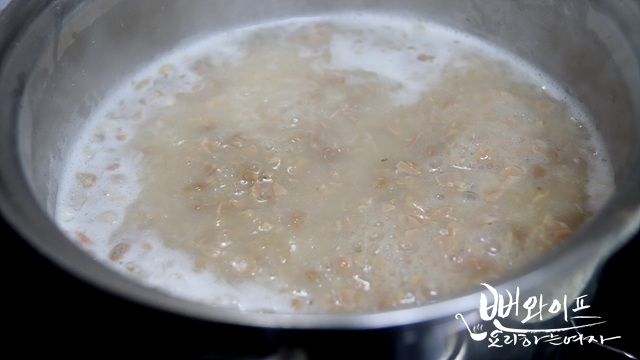
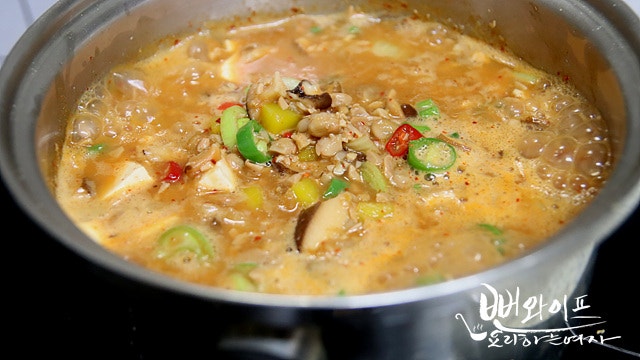
Once it starts to bubble...
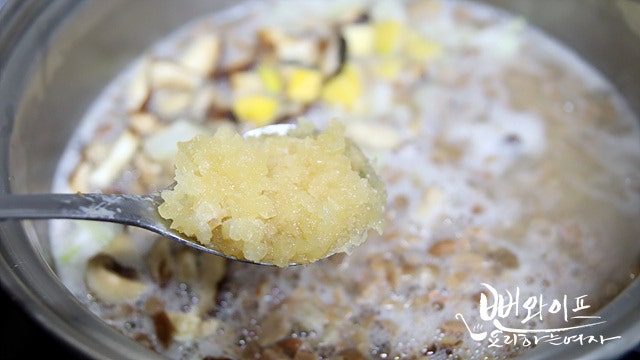
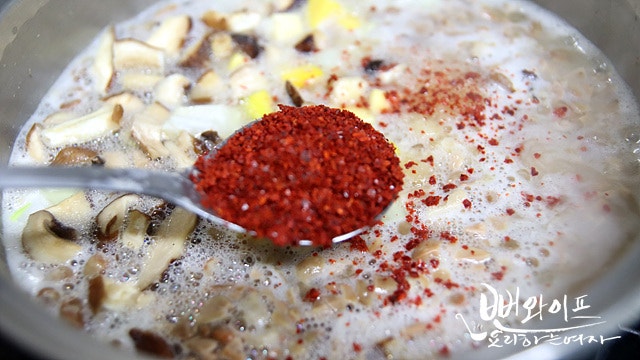
Add the mushrooms, squash, onion, 1 tbsp minced garlic, and 1 1/2 tbsp gochugaru...
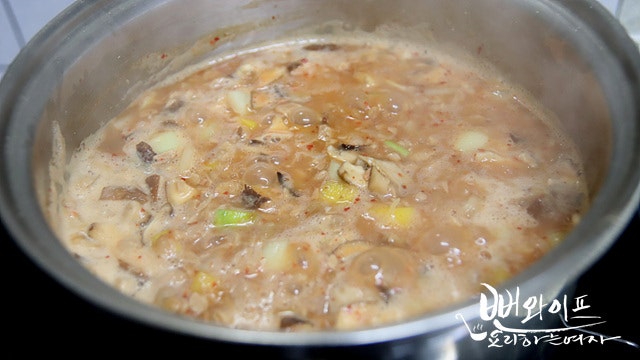
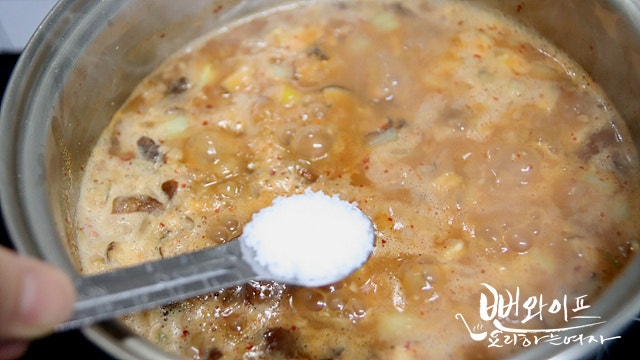
Boil until all the ingredients are tender, then season with 1 tsp salt.
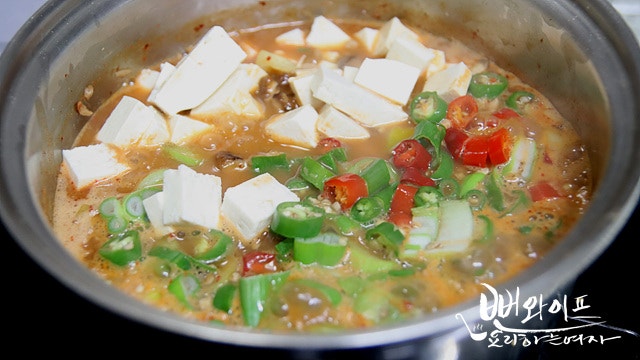
Add the remaining ingredients—tofu, chili peppers, and large green onion—let it boil briefly, and at the end I added another 1/2 tsp salt to adjust the seasoning. (Since I added salt twice with a teaspoon, it amounts to about 1/2 tbsp.)
The broth can taste bland as ingredients are added, so check and adjust the seasoning as you go.
Finish with a little ground black pepper at the end.
For cheonggukjang, you do not need to boil it for a long time; just simmer until the ingredients are fully cooked.
Finish
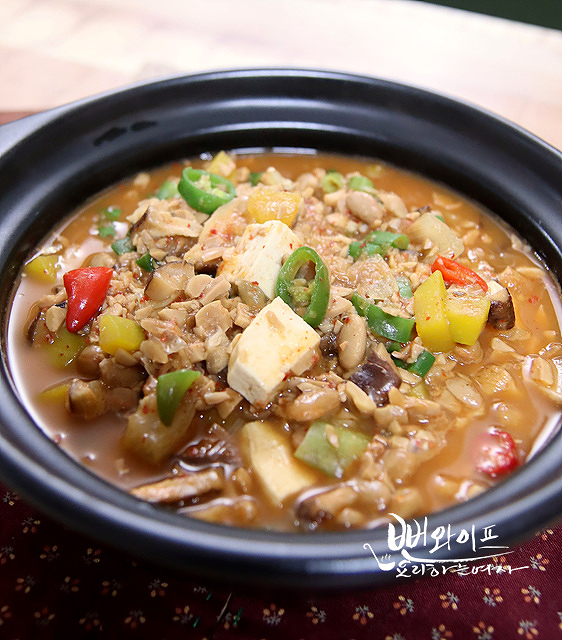
I love this dish so much, but I never made it during the warm months, so I am having it again after almost half a year.
Quite a few ingredients go into it, but the seasoning is truly simple.
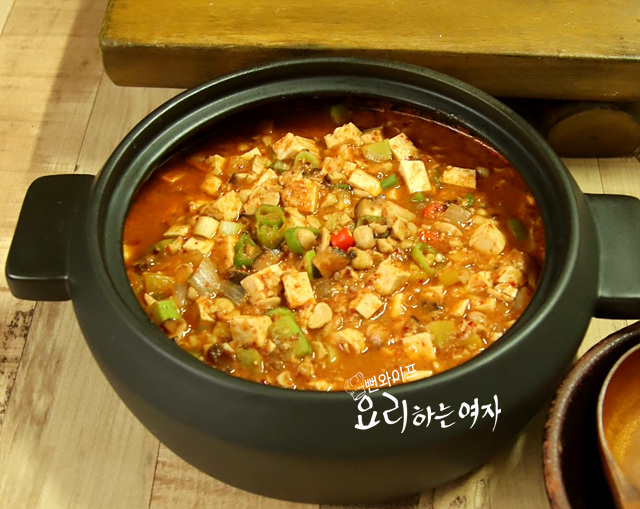
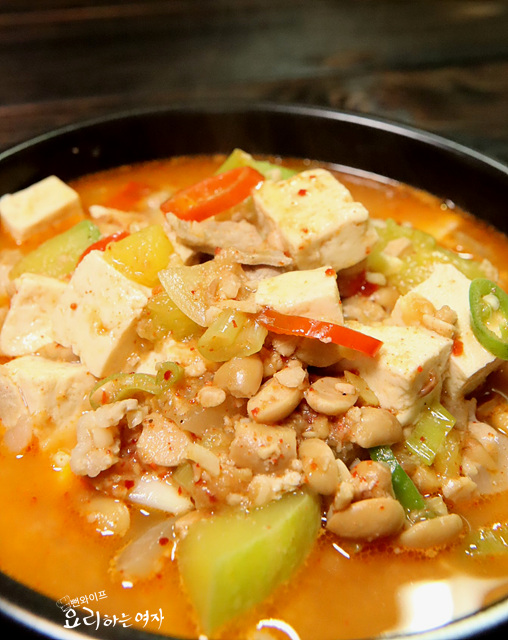
The deep, rich savory flavor is delicious.
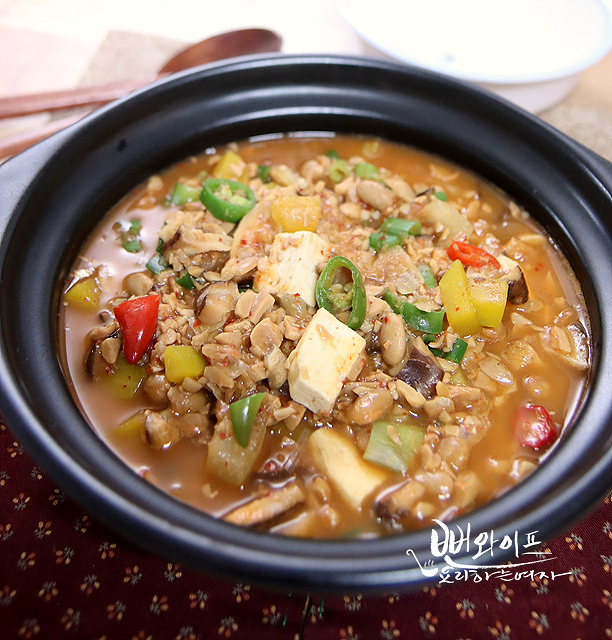
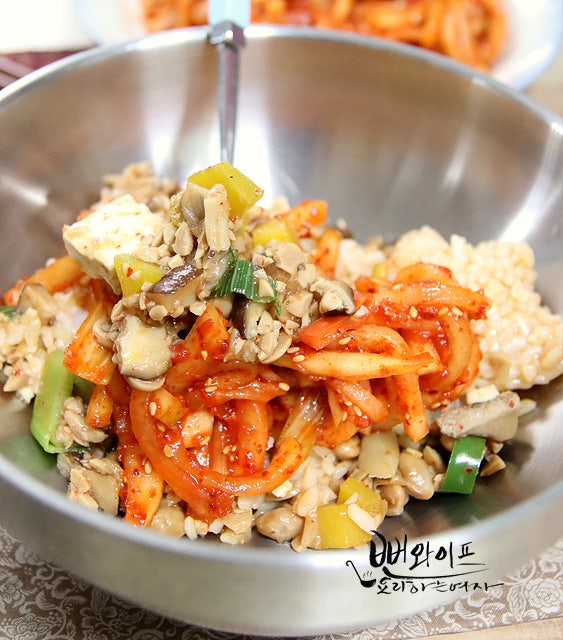
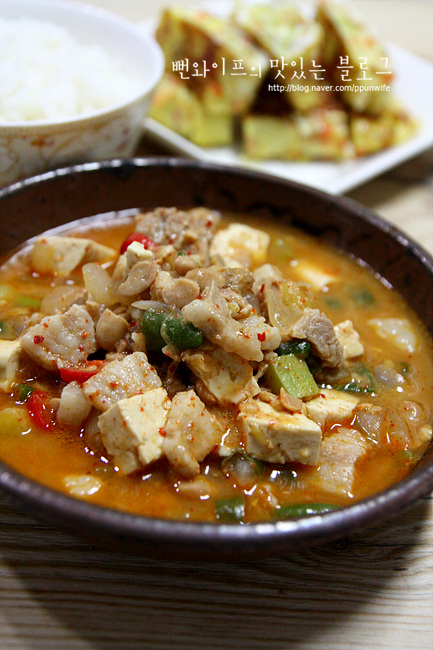
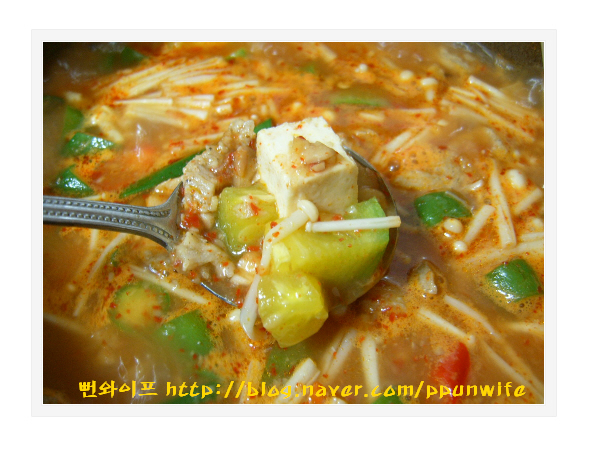
I love cheonggukjang simmered down thick with just enough broth so you can scoop up plenty of toppings.
If you cook it gently without making it too salty and mix it with seasoned radish shreds, cheonggukjang's best partner, you know how good it tastes.
Cheonggukjang on its own is not greasy and feels like a light diet food, yet it is a flavor that tempts you to overeat.
Still, it is easy on digestion and good for you, so I plan to cook it often and set it on the table during the cold, windy winter.
 Ppunwife's tips
- Mash the cheonggukjang or roughly chop it to make the broth nice and thick.
- Using water from washing rice when making doenjang jjigae or cheonggukjang doubles the savory flavor of the broth.
- The broth can taste bland as ingredients are added, so check and adjust the seasoning as you go.
- For cheonggukjang, you do not need to boil it for a long time; just simmer until the ingredients are fully cooked.
FAQ
Can I use fresh shiitake mushrooms instead of dried?
Yes, you can substitute fresh shiitake mushrooms. Prepare about 3 small ones or 2 large ones depending on their size.
How do I use the leftover water from soaking the shiitake mushrooms?
Do not discard it. Combine it with the water from washing rice and simmer it together with the dried anchovies and dried kelp to make the broth.
How long should I boil it after adding the cheonggukjang?
Do not boil it for a long time; simmering it lightly just until the added ingredients are cooked through is plenty.
How do I make the cheonggukjang broth thick?
Mashing the block of cheonggukjang or roughly chopping it with a knife before dissolving it into the broth will make the soup nice and thick.