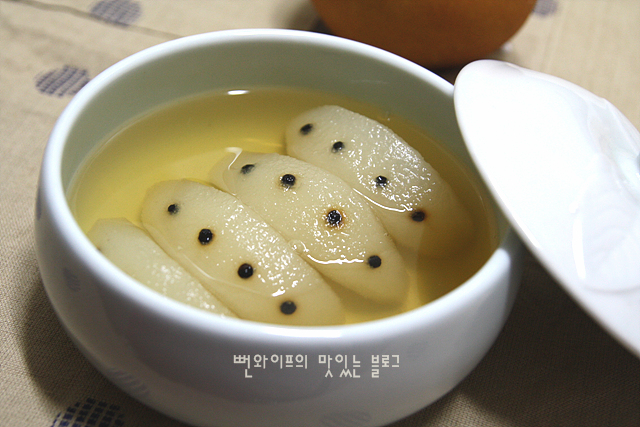
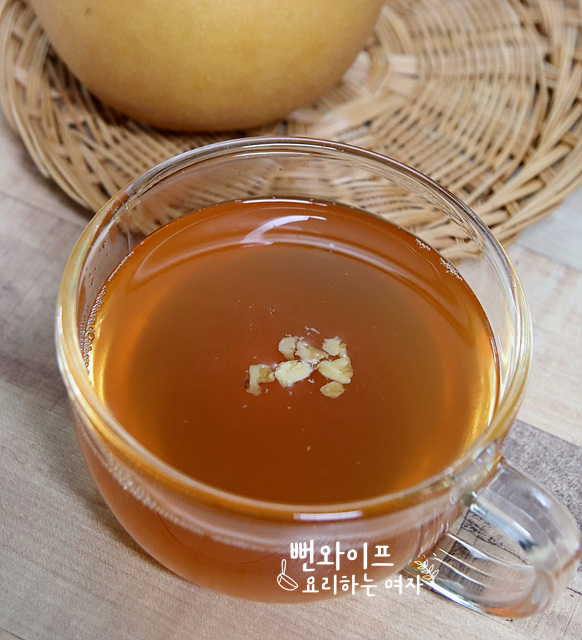
Saenggang Cheong (Ginger Syrup) with Pear Juice
A homemade winter ginger syrup made by extracting fresh ginger juice, adding pear juice and sugar, and gently simmering it down.
Translated from Korean by AI and not yet checked by a native speaker. Amounts and numbers are taken directly from the original recipe. Read the Korean original →
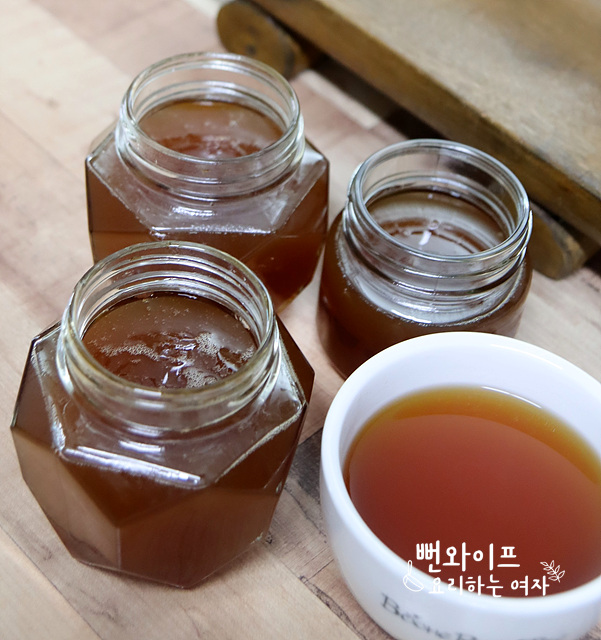
This homemade syrup is made by finely blending in-season fresh ginger, extracting the juice, adding pear juice and sugar, and simmering it down for about 1 hour. The spicy aroma of ginger blends smoothly with the subtle sweetness of pear and a final swirl of honey. It is perfect to enjoy dissolved in hot water as a warm tea on chilly days.
- Servings
- about 10 servings or more
- Cook time
- 60 minprep not included
- Difficulty
- Medium
- Spiciness
- Mildly spicy
Ingredients
- Ginger1.5 kg (after cleaning)
- Pear juice3 cups
- Sugar4 cups
- Honey1 cup
- If using fresh pear instead of pear juice, prepare 1 large pear.
- If you have neither pear juice nor pear, you may add water.
- Let the blended ginger juice sit for about 1 hour to allow the starch to settle.
Steps
Prepare the ingredients
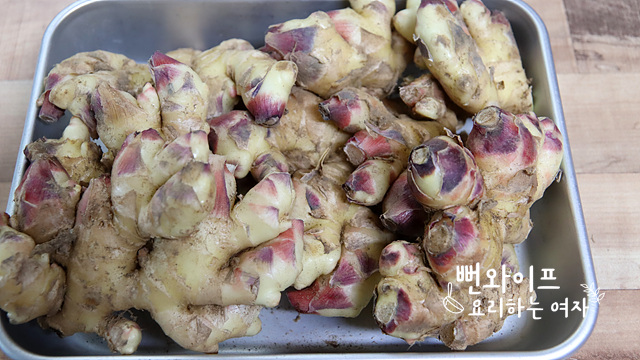
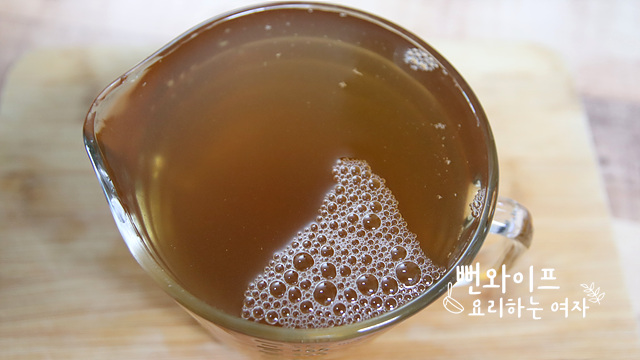
Here is fresh ginger.
It is also great to add pear.
I have pear juice on hand, so I will add 3 cups of it and blend them together.
If you use a pear instead of pear juice, prepare one large one.
Clean the ginger
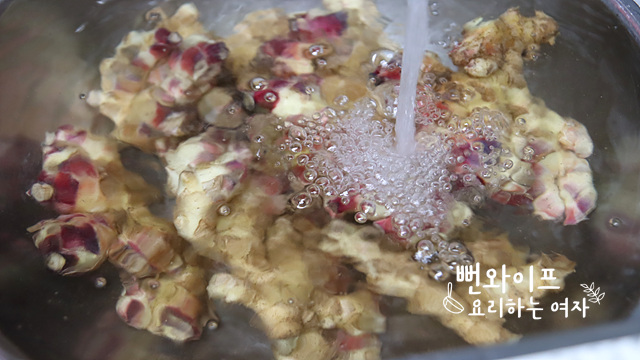
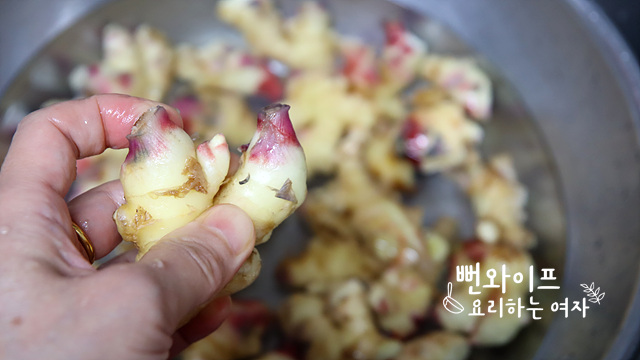
If it has a lot of dirt on it, wash it first before peeling.
Rinse it under water while breaking the ginger into pieces to wash away the dirt trapped in between.
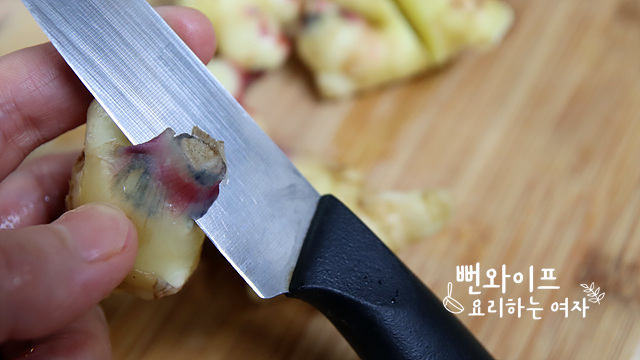
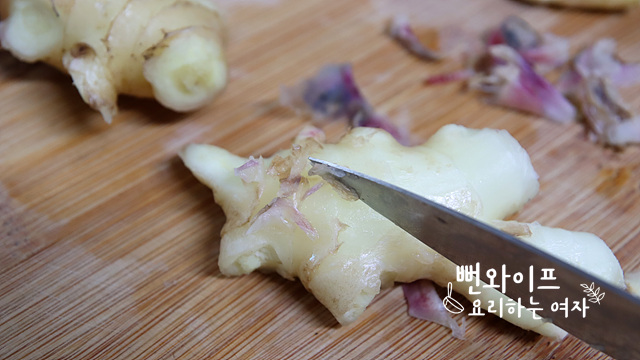
Trim off the small sprouts at the tips of the ginger and gently scrape with a knife to peel easily.
The skin is thin, making it easy to clean.
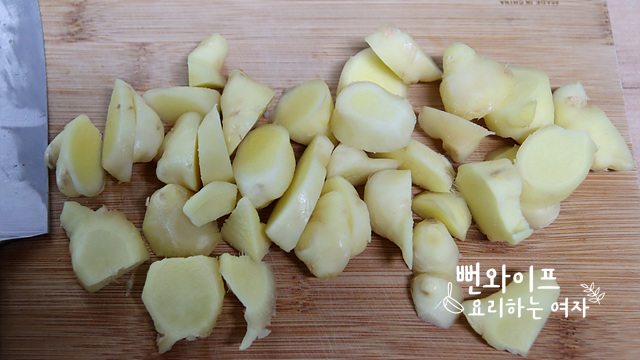
Roughly chop it so it blends easily in the blender.
If you prepared a pear, cut it into a similar size.
Blend the ginger
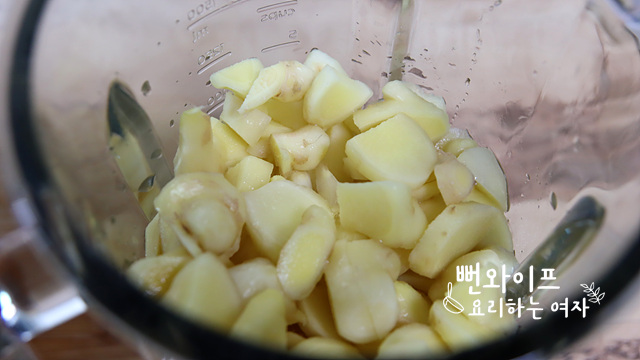
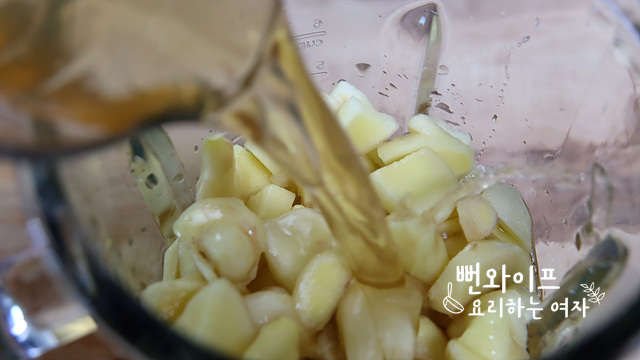
Put the ginger in the blender, add 3 cups of pear juice or the pear...
Blend finely.
If you have neither pear juice nor pear, you can add water.
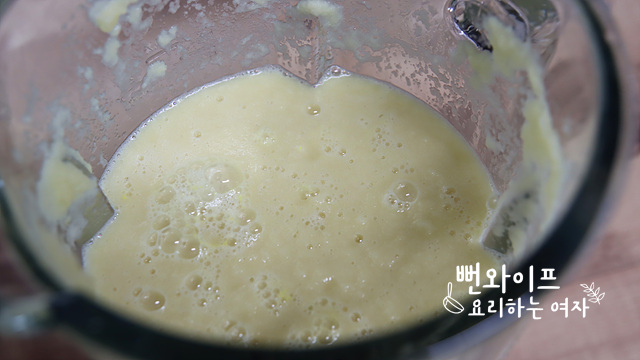
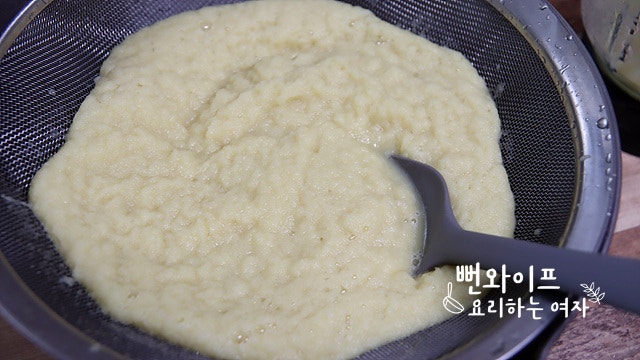
Pour the finely blended ginger into a strainer to let the juice drain out.
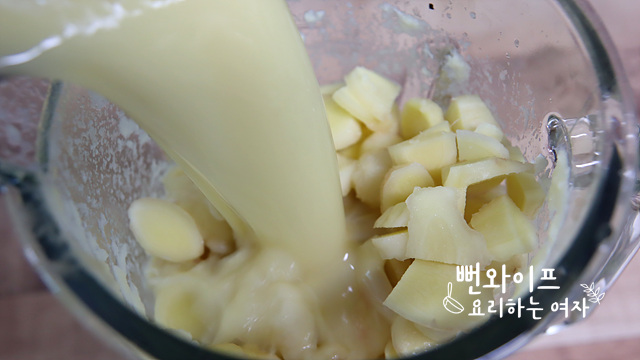
If using the blender in two or three batches, you can blend subsequent batches with the ginger juice extracted earlier instead of adding more water.
If too much water goes in, it takes more sugar and time to simmer down the ginger syrup.
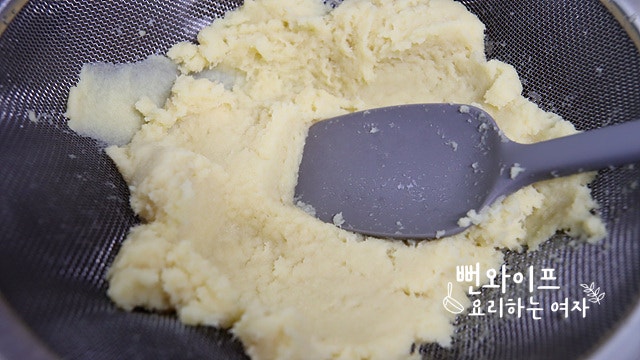
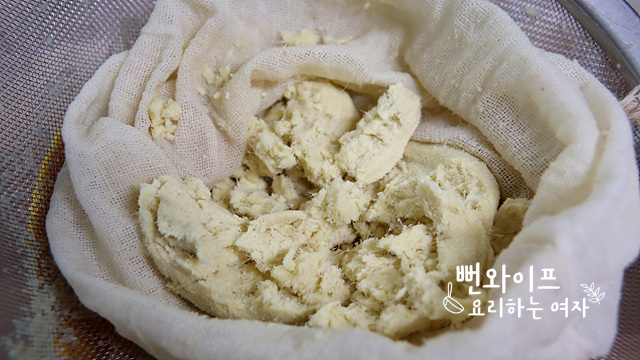
Set it in a strainer and press gently to extract the juice, then place the remaining pulp in a cotton cheesecloth and squeeze tightly.
Squeezing with your hands will extract much more juice.
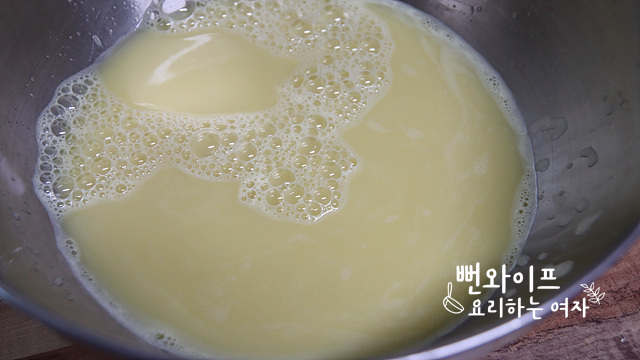
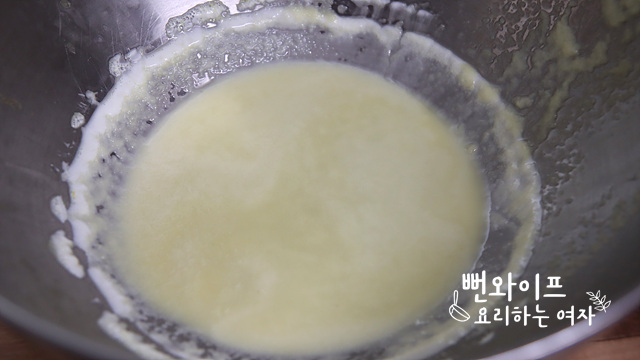
Let the juice sit for about 1 hour so the starch settles to the bottom.
The ginger juice collected this way is about 10 cups. Since 3 cups of pear juice went in, the pure ginger juice makes 7 cups.
Add sugar and boil
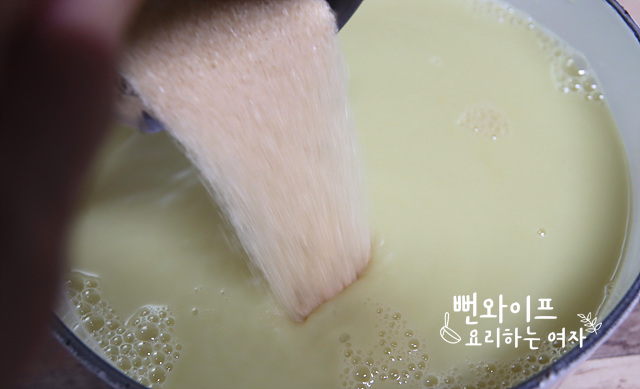
Pour the ginger juice into a pot and add 4 cups of sugar.
If the amount of sugar is too small, the sweetness will be too low and reduce the shelf life of the ginger syrup, so aim for a ratio of about ginger (1) to sugar (05.~0.6).
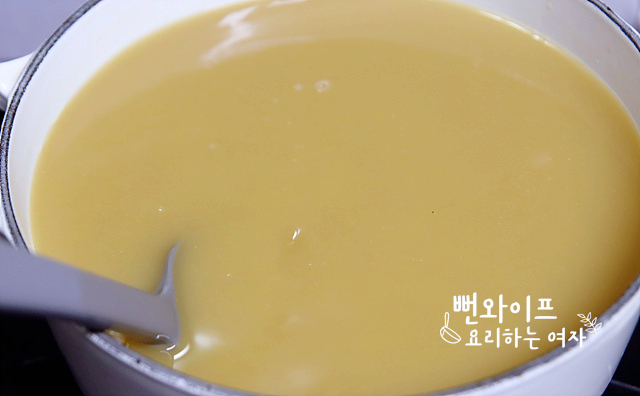
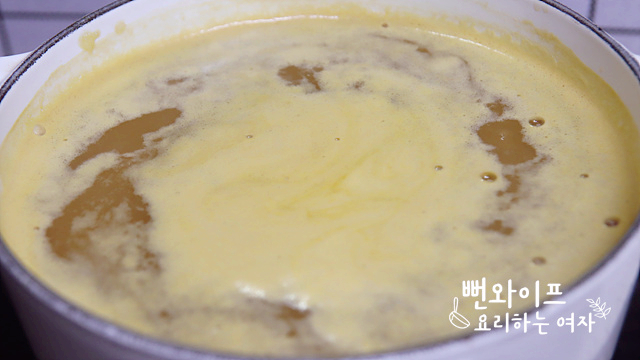
Turn the heat to high and stir to dissolve the sugar.
Once it starts boiling, reduce the heat to low so it does not boil over.
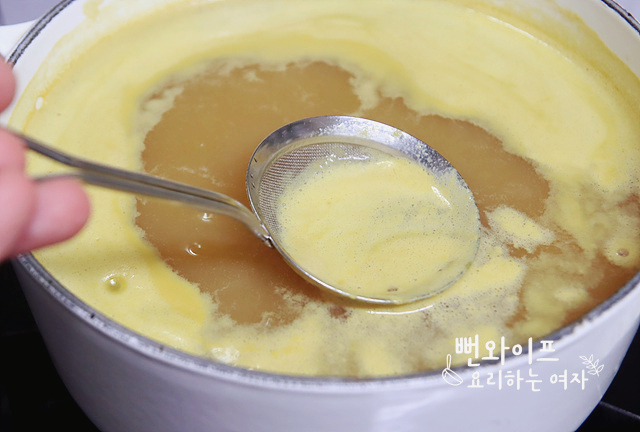
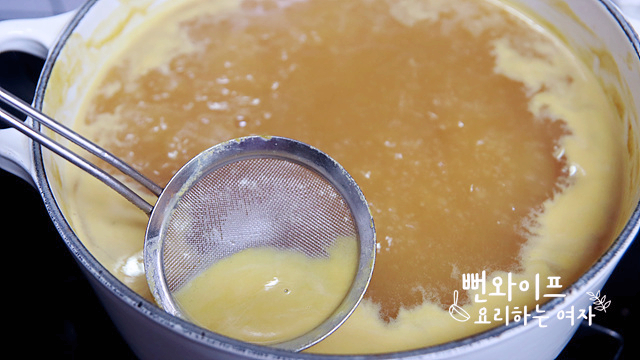
At first, a lot of foam will rise to the surface, so skim it off diligently.
Simmer down
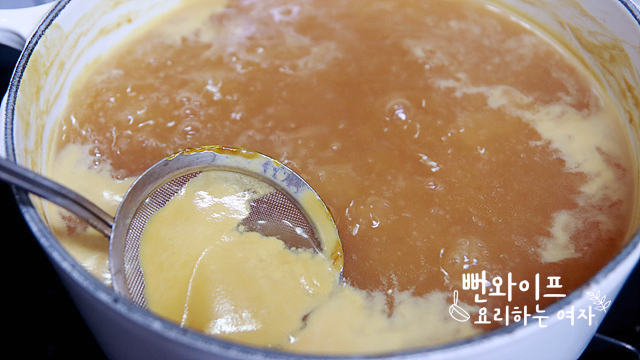
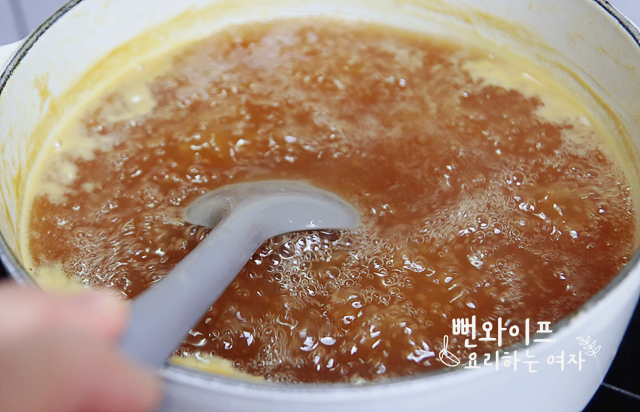
Stir occasionally while scraping the bottom so it does not scorch.
As time passes, the amount of ginger juice will decrease and the color will gradually begin to darken.
Also skim off the foam that forms around the edges as it thickens from time to time.
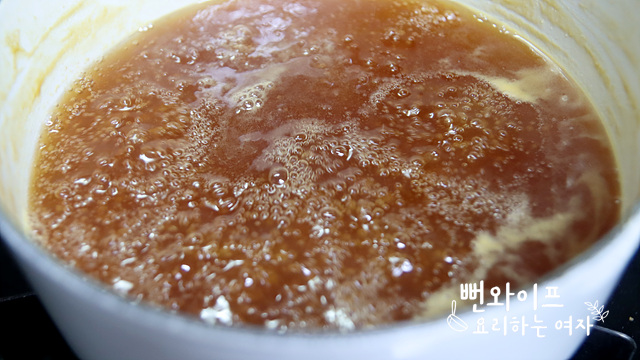
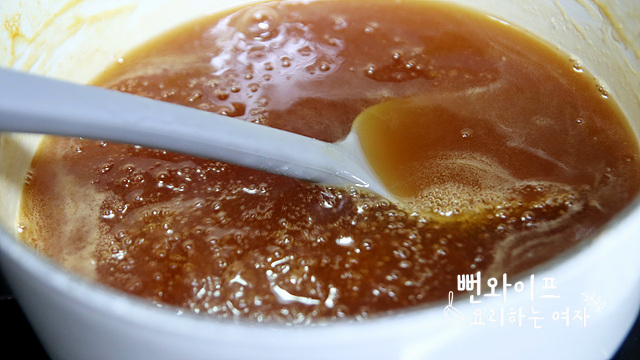
I simmered it down for about 1 hour.
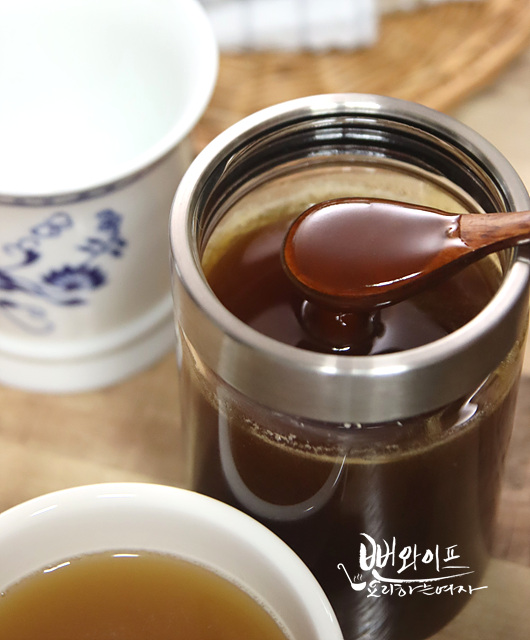
When the consistency thickens slightly and takes on a color similar to toasted sesame oil, it is almost done.
Simmer it until the consistency is halfway between toasted sesame oil and corn syrup, and it will reach the right thickness once cooled.
Turn off the heat, stir in 1 cup of honey, and let it cool.
Finish
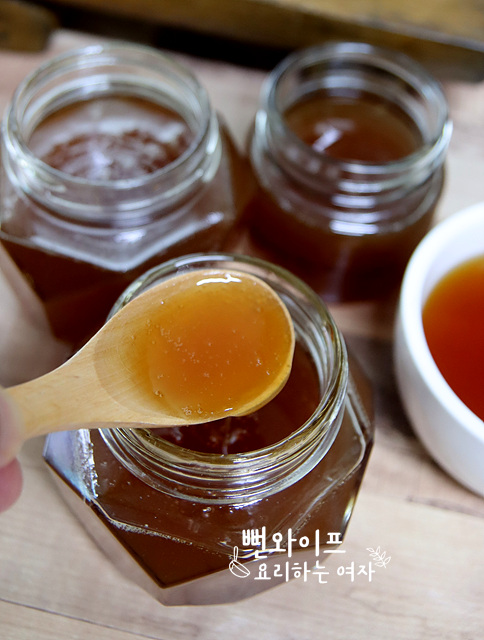
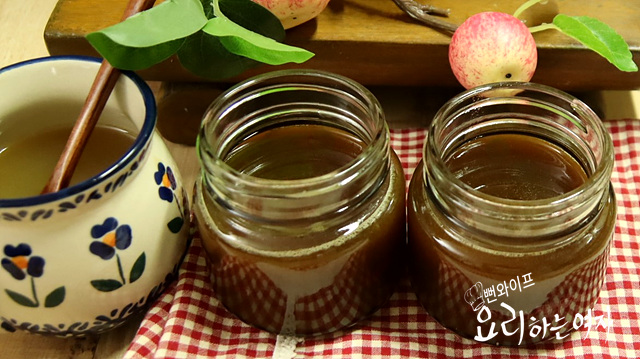
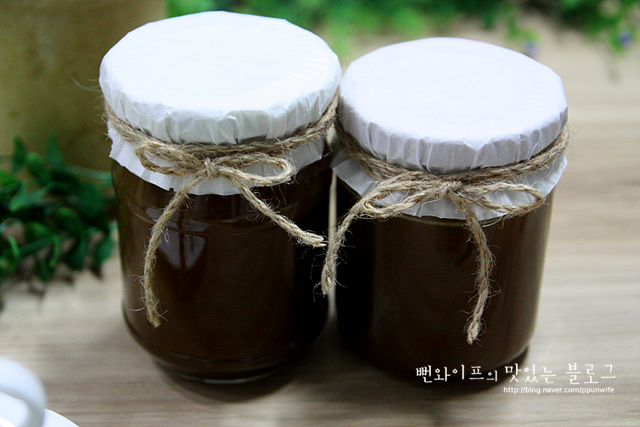
This is how the ginger syrup is completed.
Add a few spoonfuls of this spicy yet subtly sweet ginger syrup, pour in hot water, and drink it—your whole body will feel warm.
The distinctive flavor and aroma of ginger are truly wonderful.
It feels quite chilly in the mornings and evenings, so feel the warmth with ginger tea.
 Ppunwife's tips
- If using the blender in two or three batches, blending subsequent batches with the ginger juice extracted earlier lets you avoid adding more water.
- If the amount of sugar is too small, the sweetness will be too low and reduce the shelf life of the ginger syrup, so aim for a ratio of about ginger (1) to sugar (05.~0.6).
- Simmer it until the consistency is halfway between toasted sesame oil and corn syrup, and it will reach the right thickness once cooled.
FAQ
How can I substitute if I do not have pear juice?
Instead of pear juice, you can chop and add one large pear, or if you have neither, just add water and blend.
Do I need to keep adding water when blending in multiple batches?
If you pour back in the ginger juice you strained earlier and blend with it, you can blend easily without adding more water.
Why do you wait instead of boiling the ginger juice right away after extracting it?
This is to let the ginger juice sit undisturbed for about 1 hour so the starch settles to the bottom before boiling.
Can I reduce the amount of sugar?
If there is too little sugar, the sugar content drops and shelf life decreases, so it is best to maintain a ratio of about 1 part ginger to 0.5–0.6 parts sugar.
How do I control the heat while simmering and check when the thickness is right?
Once it boils up, reduce to low heat and simmer while skimming the foam; when it thickens to a consistency between toasted sesame oil and corn syrup and takes on the color of toasted sesame oil, turn off the heat and stir in the honey.