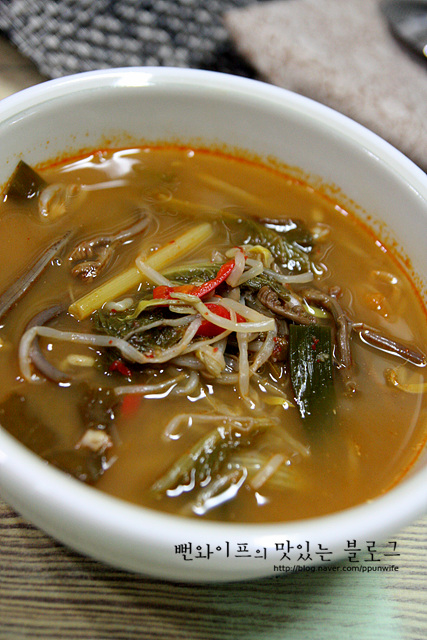
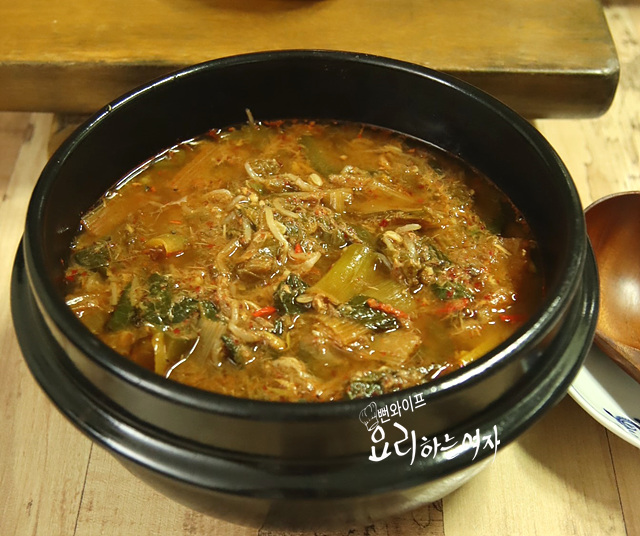
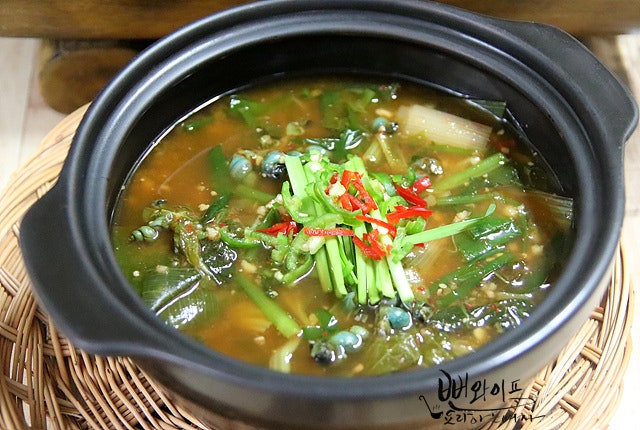
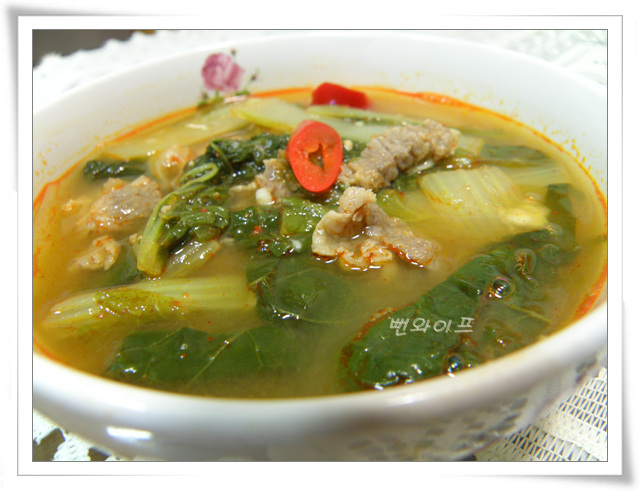
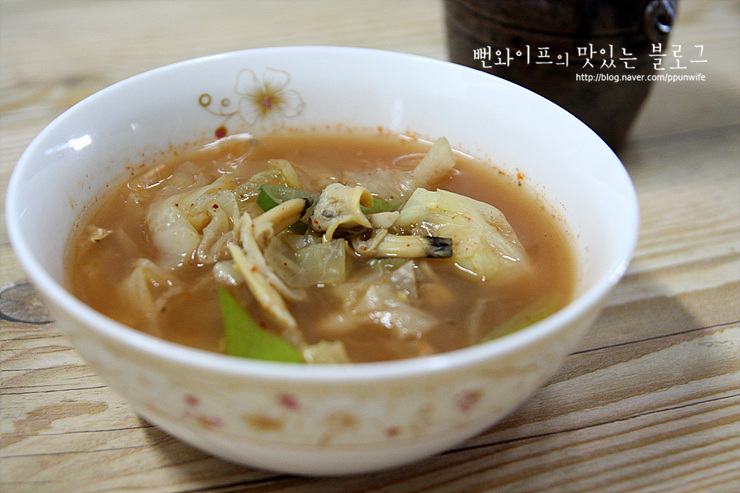
Rich, Savory Chueotang (Loach Soup) with Eolgari Cabbage
A nourishing restorative soup made by boiling pond loach until tender, straining it through a sieve, and simmering it with eolgari cabbage.
Translated from Korean by AI and not yet checked by a native speaker. Amounts and numbers are taken directly from the original recipe. Read the Korean original →
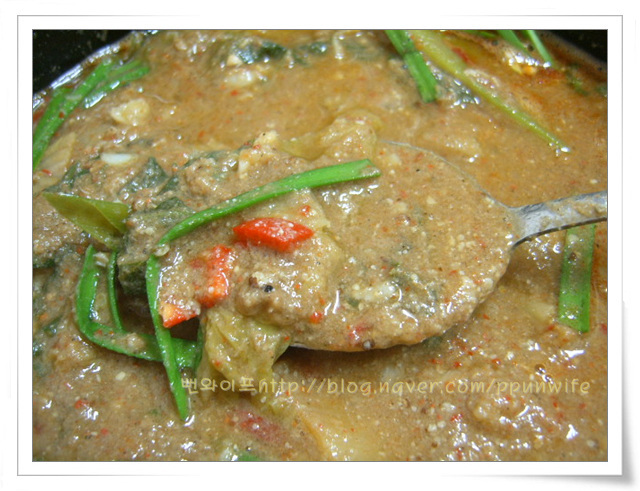
A deeply savory soup made by simmering pond loach for over 40 minutes, straining out the bones, and boiling it in a doenjang broth. Cooked gently with eolgari cabbage and pumpkin leaves, it can be finished with sancho powder and perilla seed powder to suit your taste.
- Servings
- 3–4 servings
- Cook time
- 40 minprep not included
- Difficulty
- Hard
- Spiciness
- Mildly spicy
Ingredients
Ingredients
- Pond loach (mikkuraji)about 50, 500 g
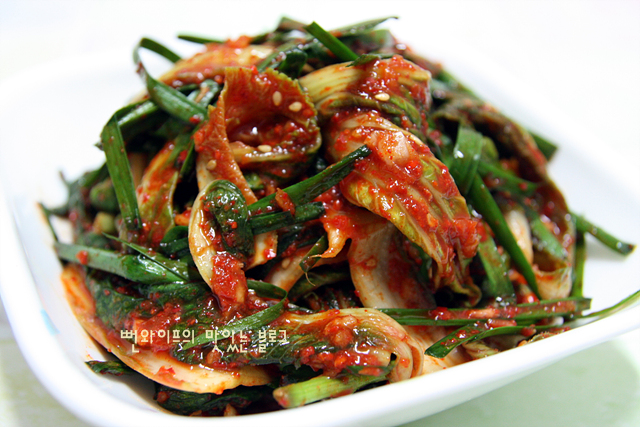
- Eolgari cabbage4 heads
- Pumpkin leaves5 leaves
- Large green onion (daepa)1
- Water10 cups
Loach prep
- Coarse sea salt1 handful
- Flour1/2 cup
- Pumpkin leaves10 leaves
Seasoning
- Doenjang (Korean soybean paste)2 tbsp
- Gochujang (Korean red chili paste)2 tsp
- Gochugaru (Korean chili flakes)2 tbsp
- Minced garlic2 tbsp
- Ginger powder0.5 tsp
- Ground black pepper0.5 tsp
- Sancho powder (Sichuan pepper powder)1 tsp
- Salta little
Garnish
- Perilla seed powder
- Garlic chives (buchu)
- Minced red chili pepper
- Minced Cheongyang chili pepper (hot green chili)
- For the cabbage, you can use 4-5 heads of eolgari cabbage or the outer leaves of a whole head of napa cabbage.
- Instead of pumpkin leaves, you can also add perilla leaves or Korean mint (banga leaves).
- To purge the loach, add coarse sea salt and pumpkin leaves, then cover with a lid and let stand for 30 minutes.
- After purging, add fresh pumpkin leaves and flour to the loach, rub vigorously until no sliminess remains, then rinse multiple times until the water runs clear.
Steps
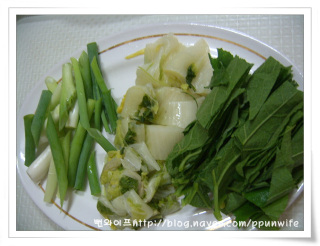
1. For the cabbage, you can use 4-5 heads of eolgari cabbage or outer leaves from a whole head of napa cabbage, as I did.
Blanch in boiling water, rinse in cold water, squeeze out the moisture, and roughly chop 5 pumpkin leaves. Cut 1 large green onion (daepa) into large diagonal slices.
(Instead of pumpkin leaves, you may also add perilla leaves or Korean mint.)
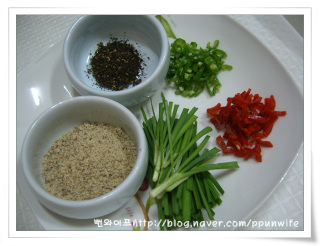
2. These are the garnishes to serve with chueotang: perilla seed powder, sancho powder, Cheongyang chili pepper, red chili pepper, and garlic chives.
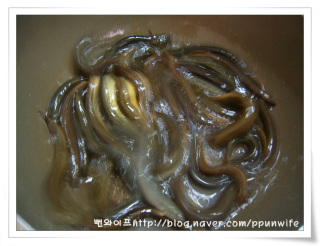
3. From the moment I bought the loach, my heart was racing because they looked so creepy, and I was terrified of cleaning them, but thinking of my husband who has been feeling low on energy lately, I squeezed my eyes shut and started prepping them.
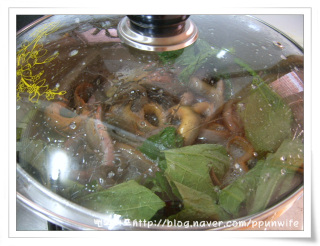
4. To make the loach purge their mud, add a handful of coarse sea salt and 5-6 pumpkin leaves, finely shredded, and close the lid.
The loach will thrash wildly the moment you add the salt, so you must close the lid very quickly.
After 30 minutes, all the loach will be knocked out.
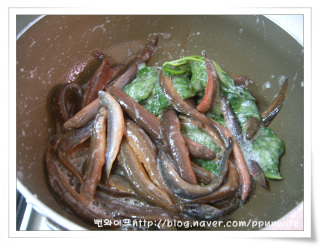
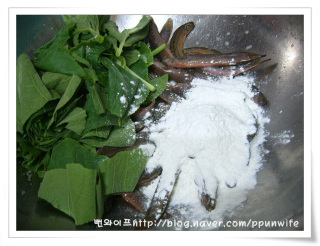
5. After 30 minutes, having purged all their grit, the loach have quietly gone to sleep.
6. Add fresh pumpkin leaves and sprinkle flour over the purged loach, then rub vigorously and knead until the loach no longer feel slimy.
Rinse several times until the bubbles are gone and the water runs clear.
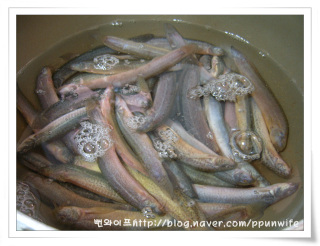
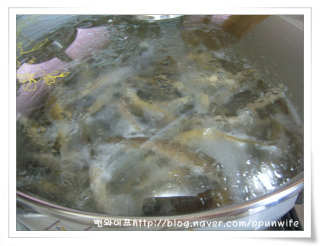
7. Put the loach in a pot, pour in 10 cups of water, and bring to a boil.
8. Once the water boils, cover with a lid and simmer over low heat for at least 40 minutes until the loach are thoroughly cooked.
When simmered this long, the broth will reduce to about 6-7 cups.
10
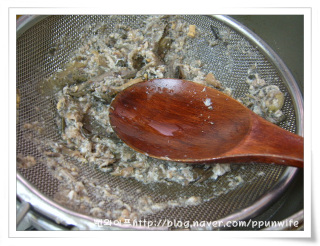
9. Transfer the cooked loach to a fine strainer and crush them with a spatula until they lose their shape.
Dip the strainer in and out of the broth to filter out the meat. Discard the bones and fins left behind in the strainer that do not crush.
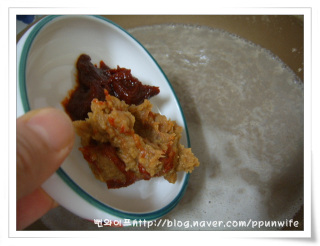
10. Stir 2 tbsp of doenjang (Korean soybean paste) and 2 tsp of gochujang (Korean red chili paste) into the loach broth until dissolved...
11
12
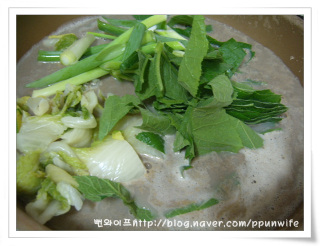
11. When the broth boils, add the cabbage, pumpkin leaves, and large green onion...
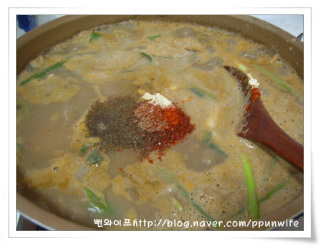
12. Add gochugaru (Korean chili flakes), minced garlic, ginger powder, and ground black pepper, then simmer until the vegetables are tender.
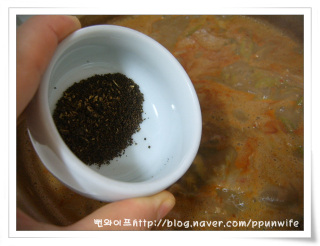
Add sancho powder at the end, and if it needs more salt, season with salt to taste.
(Sancho powder is added to chueotang to eliminate gamey odors, but you can leave it out if you do not like it.)
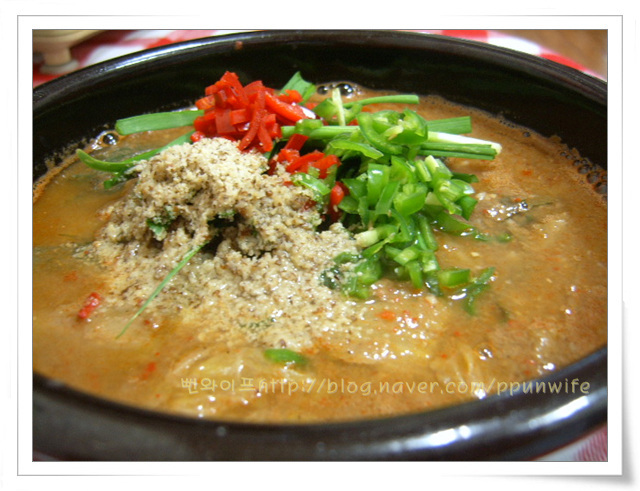
Serve according to your taste with perilla seed powder or finely sliced spicy Cheongyang chili pepper.
 Ppunwife's tips
- The loach will thrash around the moment you add the salt, so you must close the lid quickly.
- Sancho powder is added to chueotang to remove off-flavors, but you can leave it out if you do not like it.
FAQ
How do you purge the mud and remove the slime from the loach?
Add coarse sea salt and shredded pumpkin leaves, cover with a lid to let them purge, then scrub vigorously with fresh pumpkin leaves and flour until the foam and slime are gone before rinsing clean.
Can I use other vegetables instead of pumpkin leaves or eolgari cabbage?
You can blanch outer leaves of whole napa cabbage instead of eolgari cabbage, and use perilla leaves or Korean mint (banga leaves) instead of pumpkin leaves.
Is sancho powder essential?
Sancho powder is added to remove off-flavors, so if you dislike its distinct aroma, you can simply leave it out.