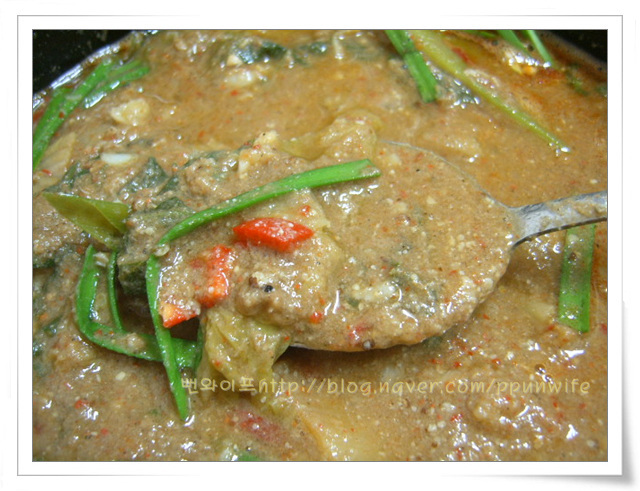
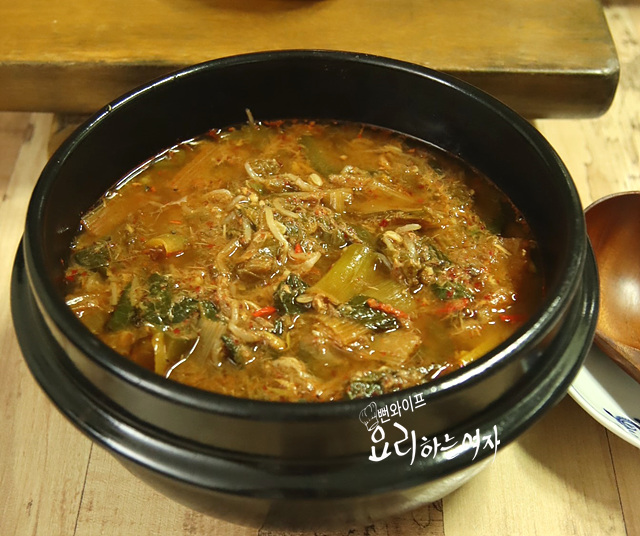
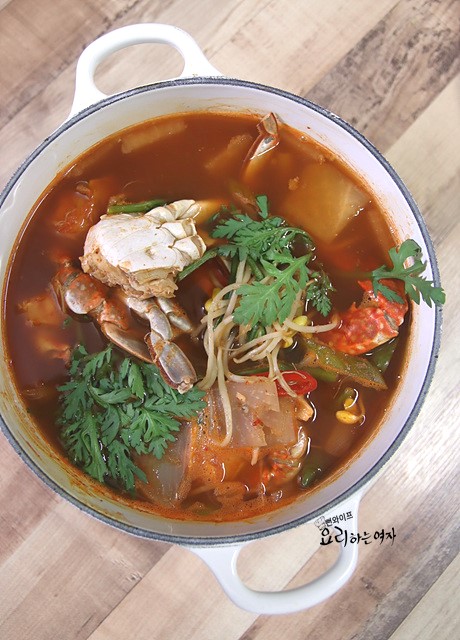
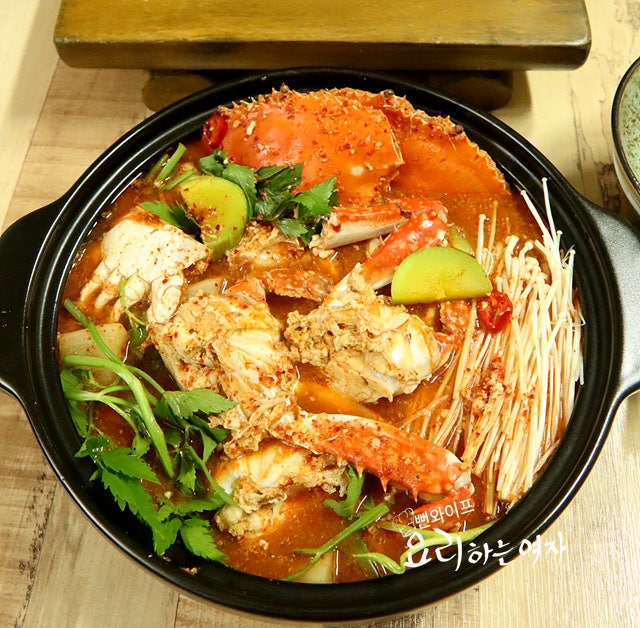
Rich and Savory Jangeo Tang (Eel Soup)
A nourishing restorative soup made by simmering boiled, mashed eel broth with blanched vegetables in a savory soybean paste seasoning.
Translated from Korean by AI and not yet checked by a native speaker. Amounts and numbers are taken directly from the original recipe. Read the Korean original →
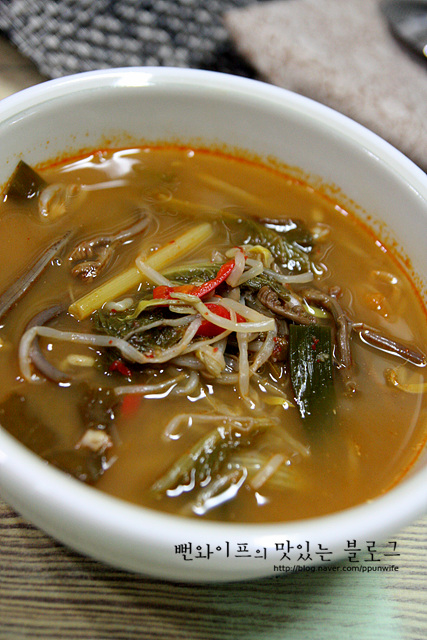
This restorative soup is made by simmering whole eels until tender and mashing them through a sieve into a rich, milky broth. Blanched winter-grown baby napa cabbage and mung bean sprouts seasoned with doenjang are added and simmered, while Korean mint or perilla leaves help remove any fishy taste for a clean finish.
- Servings
- 10 servings
- Cook time
- 60 minprep not included
- Difficulty
- Hard
- Spiciness
- Mildly spicy
Ingredients
Ingredients
- Daggertooth pike conger6–7, 1 kg (medium thickness)
- Water20 cups
Other ingredients
- Blanched winter-grown baby napa cabbage (eolgari-baechu)400 g
- Blanched mung bean sprouts400 g
- Boiled bracken fern (gosari)250 g
- Large green onion (daepa)2 stalks
- Red chili pepper2
- Korean mint (banga)1 handful, 20 g
Seasoning
- Doenjang (Korean soybean paste)4 tbsp
- Gochugaru (Korean chili flakes)5 tbsp
- Soup soy sauce (guk-ganjang)2 tbsp
- Minced garlic4 tbsp
- Salt1 tsp
- Ginger juice1 tbsp
- Ground black pepper1/2 tsp
Garnish
- Minced Cheongyang chili pepper (hot green chili)
- Perilla seed powder
- Sancho powder (Sichuan pepper powder)
- The cooking method is identical, so you can also use pond loach (chueo) instead of eel.
- You do not need to measure the blanched mung bean sprouts, blanched winter-grown baby napa cabbage, and boiled bracken fern exactly as listed; similar amounts will do, and you can also add boiled taro stems if you have them.
- You can use garlic chives or perilla leaves instead of Korean mint.
Steps
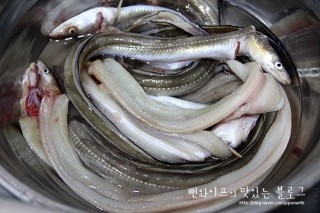
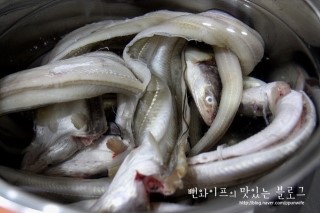
1. When buying 5 medium-sized daggertooth pike congers and 2 slightly smaller ones, I asked to have only the innards removed.
Since they will be simmered whole to make the broth, leave the heads and fins intact, rinse them in clean water, and drain.
2. Pour in about 20 cups of water, add the eels, and start over high heat. Once it boils, reduce the heat to medium-low and simmer thoroughly for at least 30 minutes.
Prepare the other ingredients while the eel cooks.
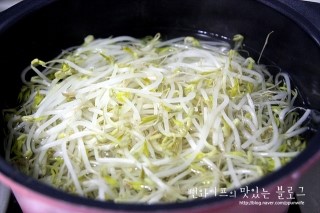
3. Add the mung bean sprouts to boiling water, blanch briefly, and drain in a sieve.
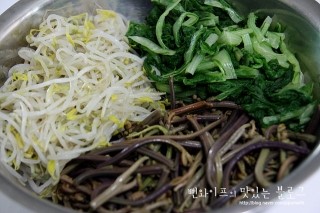
4. Here are the blanched mung bean sprouts, blanched winter-grown baby napa cabbage, and boiled bracken fern.
You do not need to prepare the exact amounts listed. Prepare similar amounts, and if you have boiled taro stems, you can add them as well.
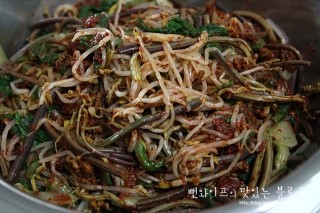
5. Add all seasoning ingredients and mix well so the flavors soak in.
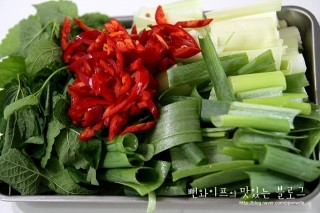
6. To remove any fishy smell, prepare aromatic herbs and vegetables: Korean mint leaves, large green onion, and red chili pepper, then cut them into bite-sized pieces.
Garlic chives or perilla leaves are also great.
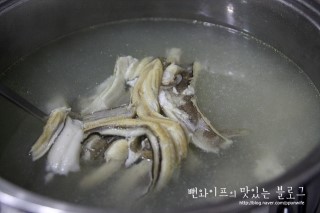
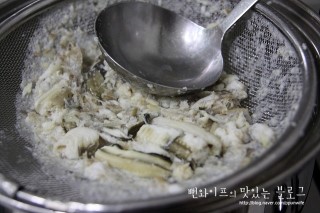
7. Once the eel flesh has simmered until tender and falling apart...
8. Scoop the solids into a sieve and mash them thoroughly with a ladle or spatula until no distinct shape remains.
If you dip the sieve into the broth while mashing, the meat passes smoothly into the soup, leaving behind only the tough bones and fins, which you can discard.
10
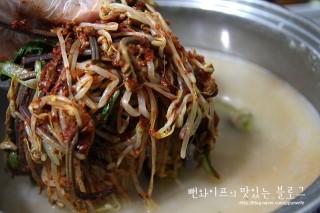
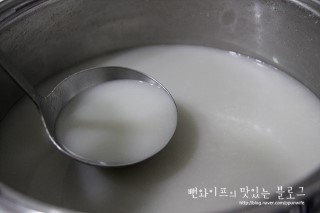
9. The broth turns milky and rich, just like bone broth.
It is pure nourishing essence containing all the nutrients of the eel.
10. Add the seasoned vegetables to the eel broth and simmer over medium heat for about 20 minutes until the vegetables become tender.
11
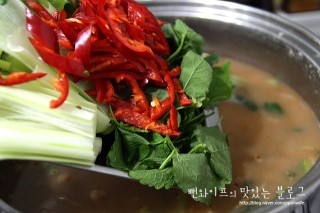
12
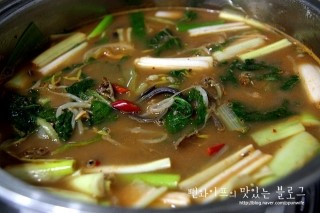
11. Add the remaining vegetables—perilla leaves, large green onion, and red chili pepper—and simmer for about 10 minutes...
12. Taste the soup and season with salt if it tastes bland.
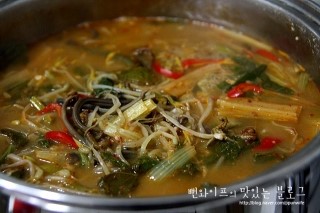
Simmer for just a little longer so the salt dissolves completely and seasons the soup evenly, and your jangeo tang is done.
Since this makes a large portion for a two-person household, I divided it into single-meal portions and stored them in the freezer.
 Ppunwife's tips
- When ladling jangeo tang into bowls, stir from the bottom so the settled eel meat and vegetables are distributed evenly.
- You can add spicy Cheongyang chili peppers or perilla seed powder to taste, and adding sancho powder makes it taste very similar to chueotang (pond loach soup).
FAQ
Can I make this with another fish instead of eel?
Yes, because the cooking method is the same, using pond loach works very well.
If I do not have Korean mint, what can I use to eliminate the fishy taste?
You can use aromatic herbs and vegetables such as garlic chives or perilla leaves instead of Korean mint.
How should I store leftover jangeo tang?
When making a large batch, it is convenient to divide it into single-meal portions and freeze them.
How do I strain out the eel bones?
Once the eel is cooked tender, submerge a sieve in the broth, mash the flesh through with a spatula, and then discard the remaining tough bones and fins.