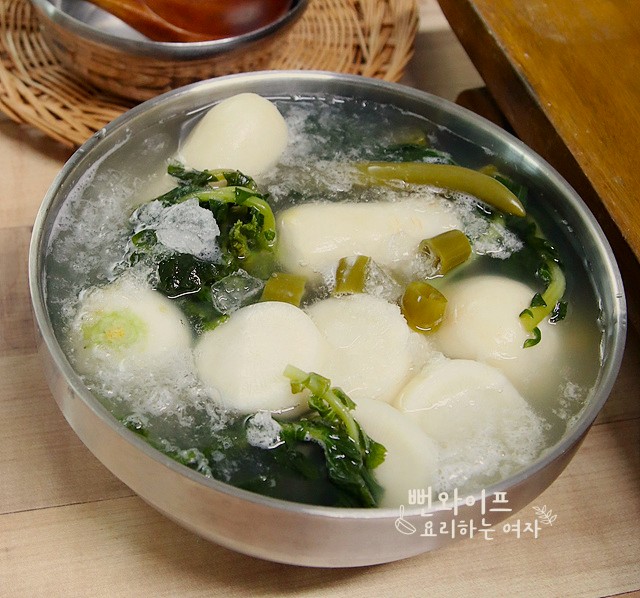
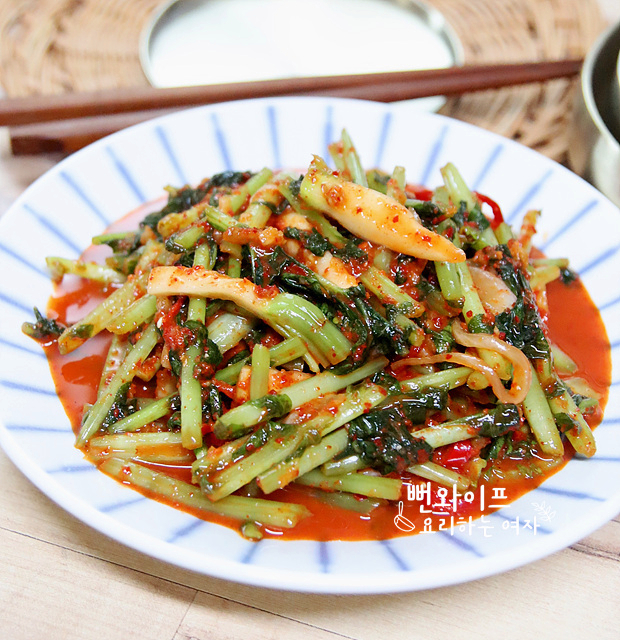
Crisp Chonggak Kimchi (Ponytail Radish Kimchi)
A crisp ponytail radish kimchi tossed with simple seasonings and blended cold cooked rice in place of glutinous rice paste.
Translated from Korean by AI and not yet checked by a native speaker. Amounts and numbers are taken directly from the original recipe. Read the Korean original →
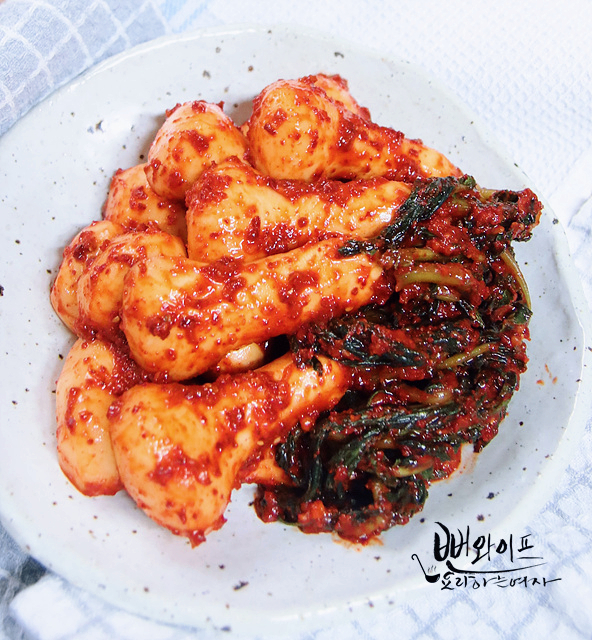
This kimchi is made by salting in-season autumn ponytail radishes and tossing them with a simple base seasoning. Instead of making glutinous rice paste, you can easily use a porridge made by blending cold cooked rice with water. It is delicious fresh and crisp, or lightly fermented as a staple side dish.
- Servings
- about 10–12 servings
- Cook time
- 180 minprep not included
- Difficulty
- Hard
- Spiciness
- Spicy
Ingredients
Ingredients
- Altari radish (ponytail radish)2 bunches (3 kg)
- Coarse sea salt1 cup
Seasoning
- Cold cooked rice1 bowl
- Water4 cups
- Gochugaru (Korean chili flakes)2 1/2 cups
- Sand lance fish sauce (or dried anchovies)2/3 cup
- Minced garlic6 tbsp
- Minced ginger1 tbsp
- Green plum syrup (maesil-cheong) (or 2 tbsp sugar)4 tbsp
- Toasted sesame seeds
- If the skins are thin and tender, you do not need to peel them; just scrub them with a kitchen scourer while washing. If they look rough or dirty, peel them and split them in half into bite-sized pieces.
- Prepare firm, medium-sized ponytail radishes, usually weighing over 1.5 kg per bunch.
Steps
Prepare the ingredients
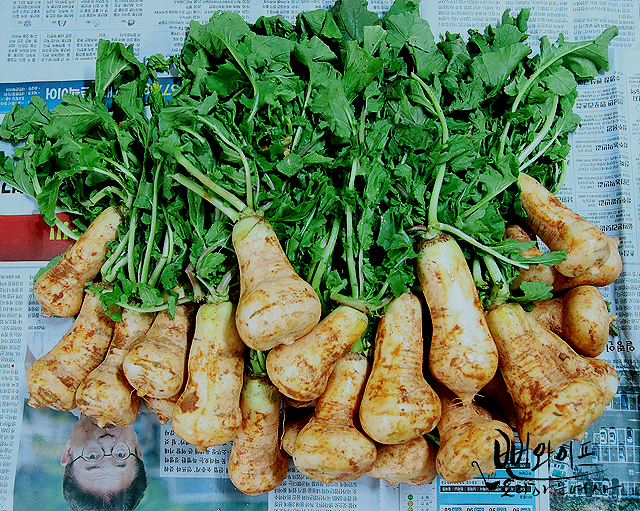
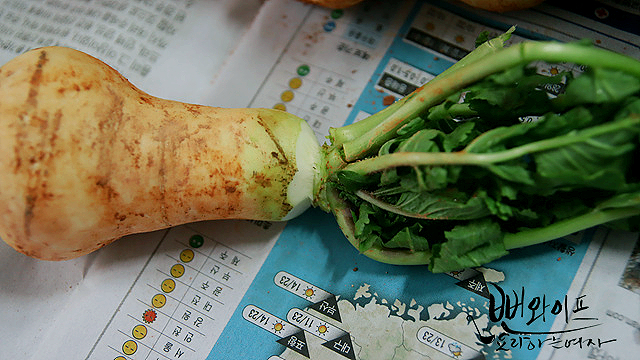
Here are 2 bunches of firm, medium-sized ponytail radishes.
One bunch usually weighs over 1.5 kg.
Trim the radishes
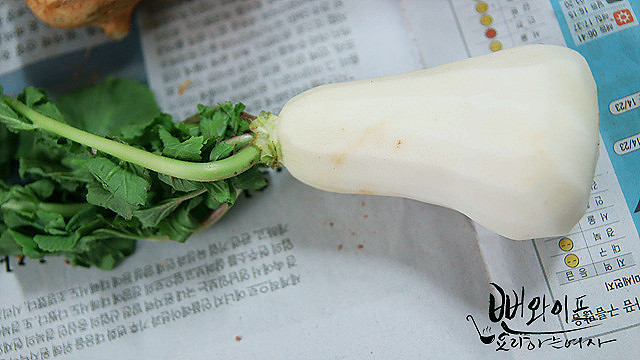
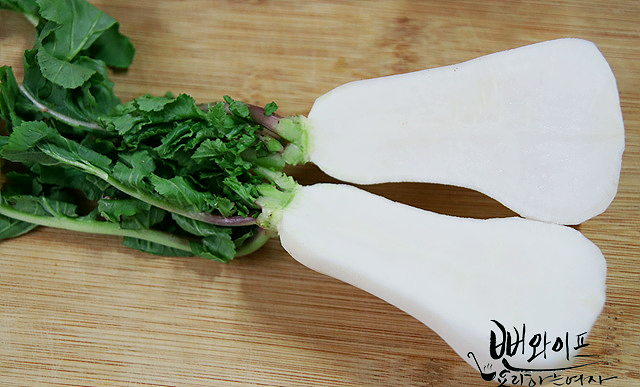
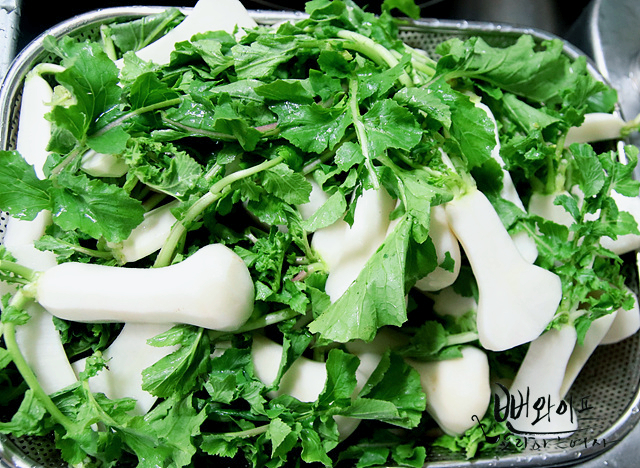
Remove any yellowed, wilted, or bug-eaten radish greens, and trim neatly with a knife around the spot where the radish meets the greens, as that area is the dirtiest.
If the skins are thin and tender, you do not need to peel them; just scrub them with a kitchen scourer while washing.
Mine looked dirty, so I peeled the skin and split them in half into bite-sized pieces.
Wash the radishes
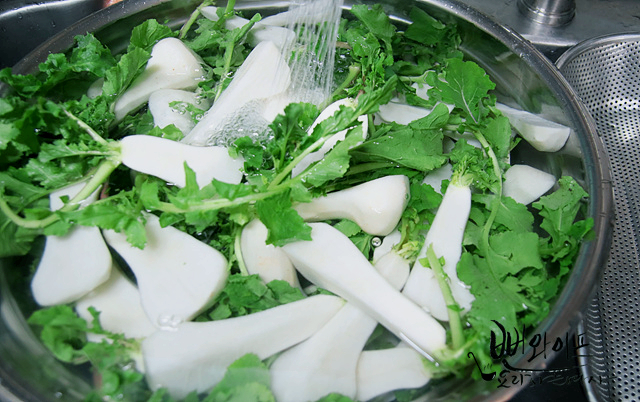
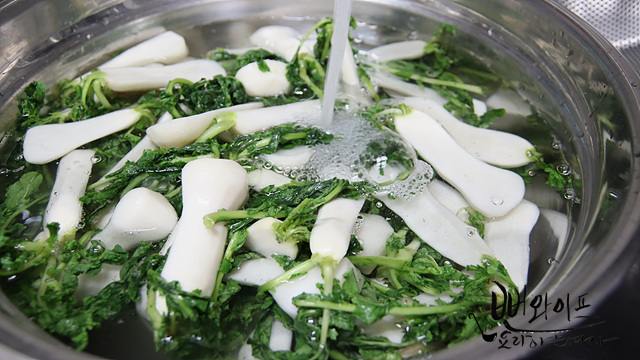
Soak them briefly in water to loosen any clinging soil or grit, then wash them several times until no sand remains at the bottom.
Salt the radishes
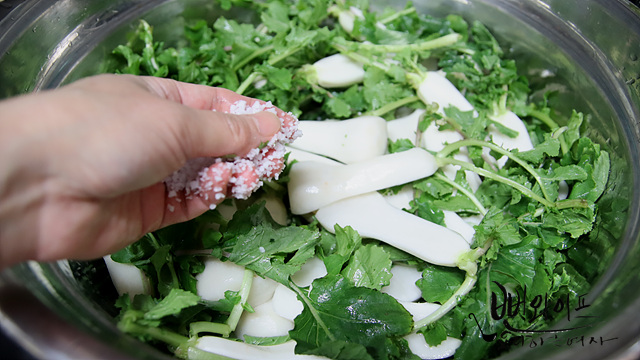
Salt the washed ponytail radishes right away while they are still wet.
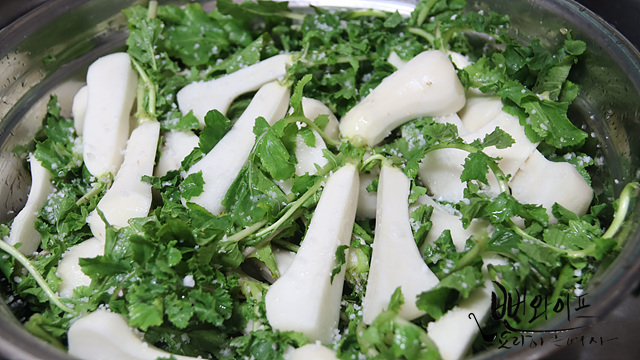
Lay down a layer of ponytail radishes, sprinkle about half a cup of water over them, and grab 2 to 3 tbsp of salt to scatter evenly on top.
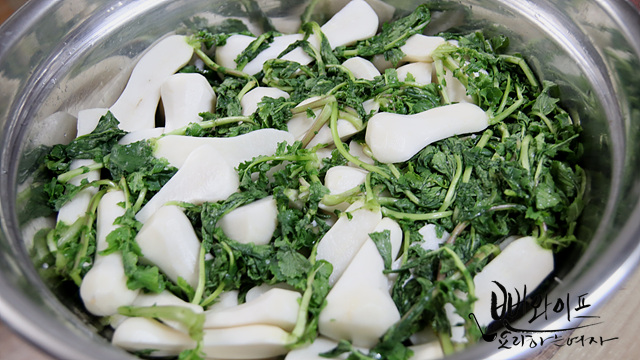
Layer them with salt like this and let them salt for about 2 to 3 hours.
Turn them over once halfway through so they salt evenly. You should adjust the salting time depending on the room temperature and the size of the radishes.
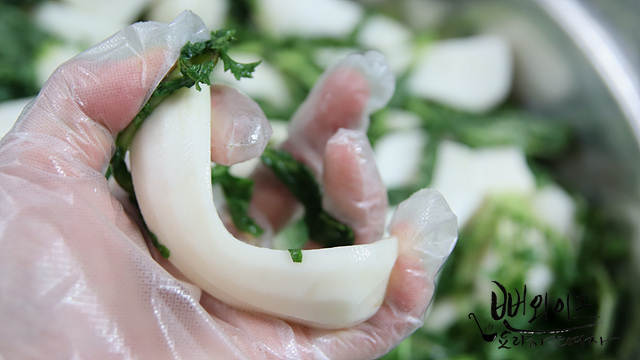
They are ready when the ponytail radishes bend naturally. Cut off a small piece from a corner, rinse it, and chew it.
It should taste mild and not too salty; that way, the seasoning will balance out just right once tossed.
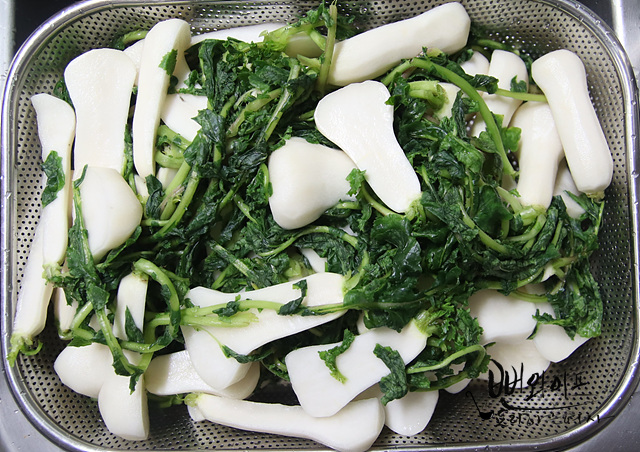
Rinse once more in water, then drain thoroughly in a colander.
Make the seasoning
Make the seasoning while the ponytail radishes are salting.
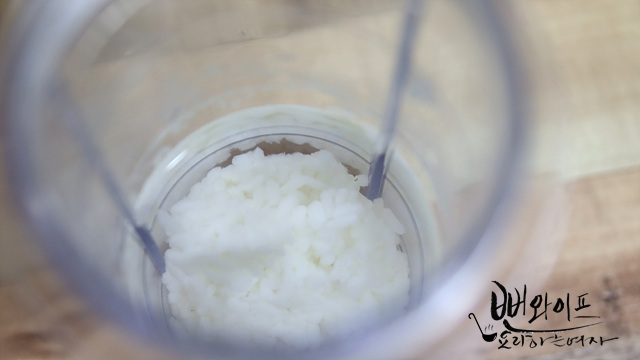
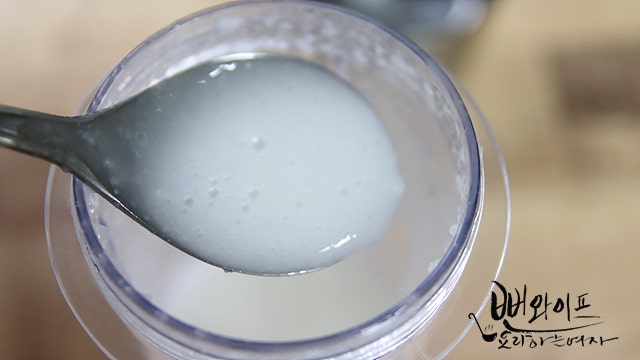
Instead of glutinous rice paste, blend 1 bowl of cold cooked rice with 4 cups of water until smooth, and it turns into a thick porridge just like glutinous rice paste.
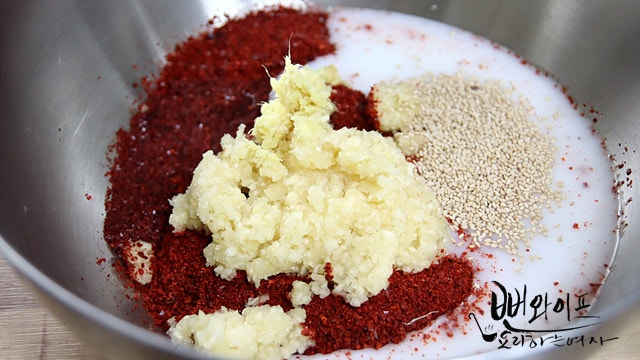
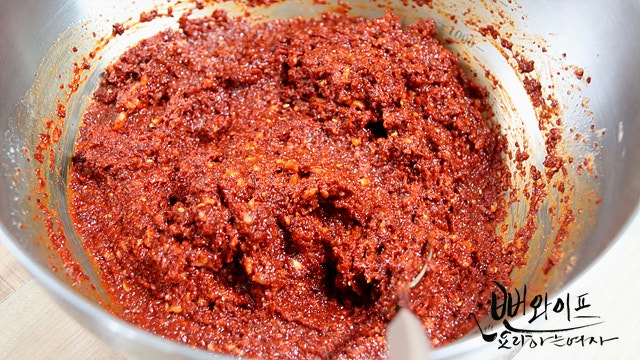
Add 2 1/2 cups gochugaru, 2/3 cup sand lance fish sauce, 6 tbsp minced garlic, 1 tbsp minced ginger, 4 tbsp green plum syrup or 2 tbsp sugar, the blended cold rice, and toasted sesame seeds, then mix everything together.
That is all there is to the seasoning.
It is truly simple and easy.
Toss with the seasoning
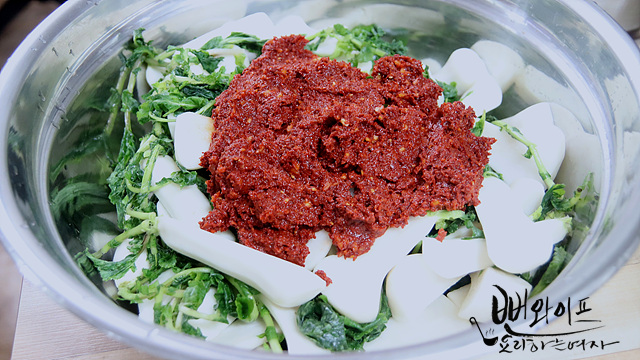
Add the seasoning to the drained ponytail radishes and toss evenly.
Taste it, and if it is too bland, adjust with fish sauce or salt. If you want more sweetness, feel free to add more green plum syrup or sugar to suit your taste.
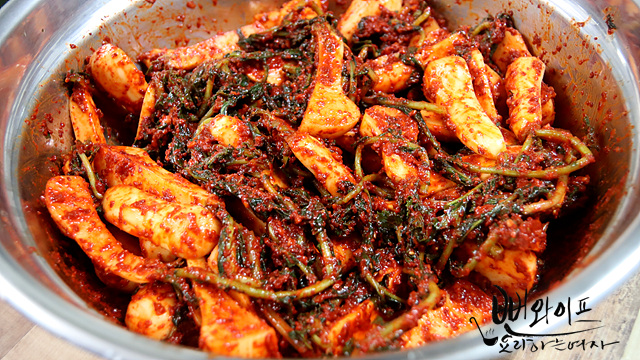
Finished
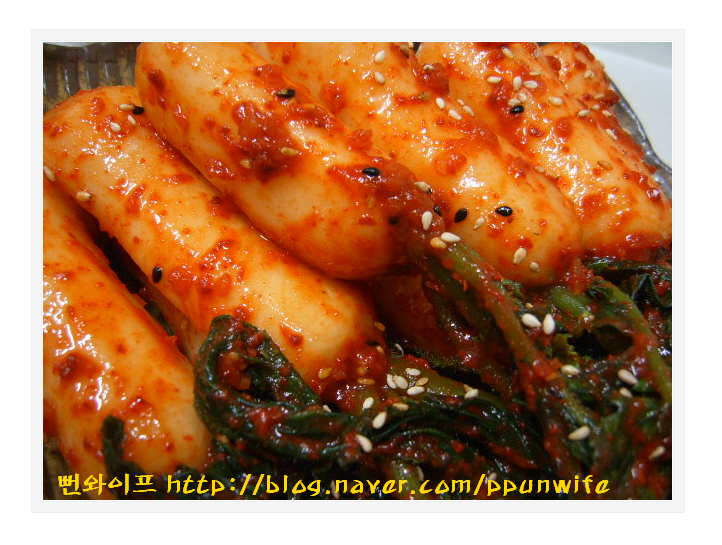
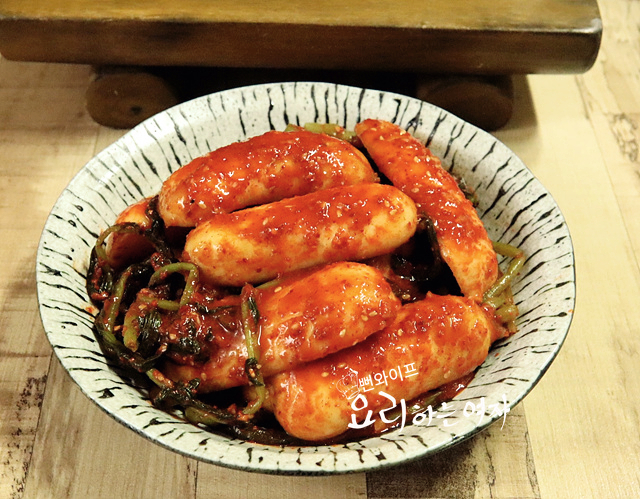
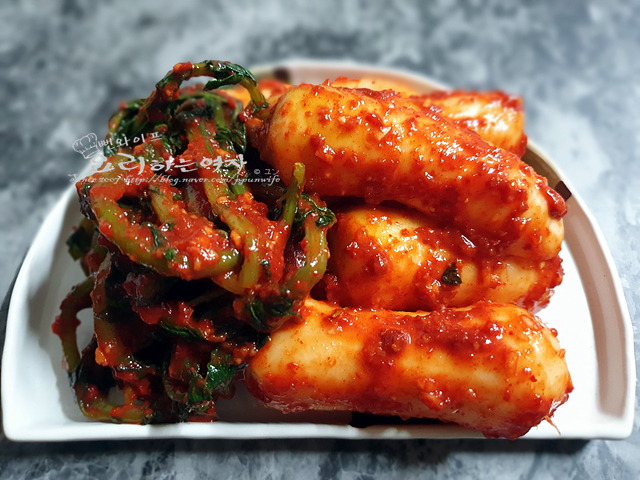
The seasoning is spot on, and with that crisp crunch and the subtle natural sweetness of the radish coming through, it has been so long since I tasted such genuine altari kimchi.
Ponytail radishes harvested in autumn are guaranteed to taste good even when made with minimal seasonings.
Eaten freshly made, it is wonderfully fresh, and once lightly fermented, it turns into a total rice thief that empties two bowls of rice in no time.
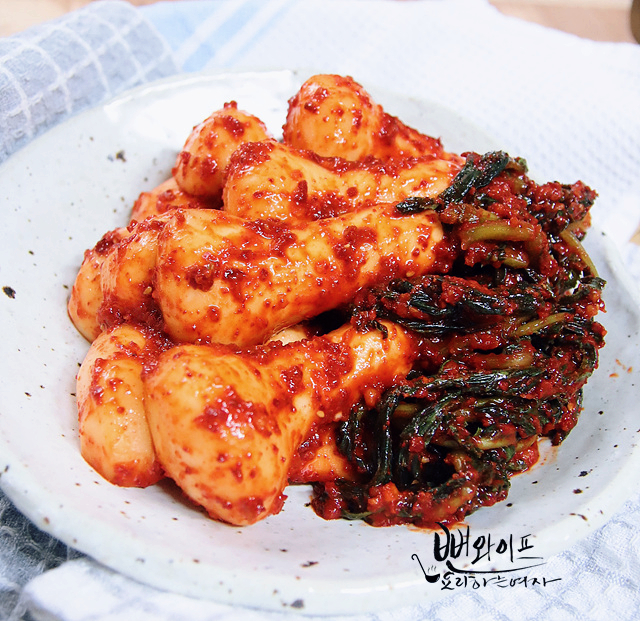
 Ppunwife's tips
- Adjust the salting time depending on the room temperature and the size of the radishes.
- The salted radish should taste mild and not too salty; that way, the seasoning will balance out just right once tossed.
- Taste it, and if it is too bland, adjust with fish sauce or salt. If you want more sweetness, feel free to add more green plum syrup or sugar to suit your taste.
FAQ
Is there a way to substitute glutinous rice paste without cooking it?
You can blend 1 bowl of cold cooked rice with 4 cups of water in a blender until smooth to use as a quick, thick substitute for glutinous rice paste.
Do I have to peel ponytail radishes?
If the skins are thin and tender, you do not need to peel them; scrubbing them with a kitchen scourer while washing is perfectly fine.
How do I check if the ponytail radishes are salted properly?
When the radish bends naturally, cut off a small piece from the tip, rinse it, and taste it; it is properly salted if it tastes mild rather than salty.
Can I use anchovy fish sauce instead of sand lance fish sauce?
Yes, you can use it the same way.