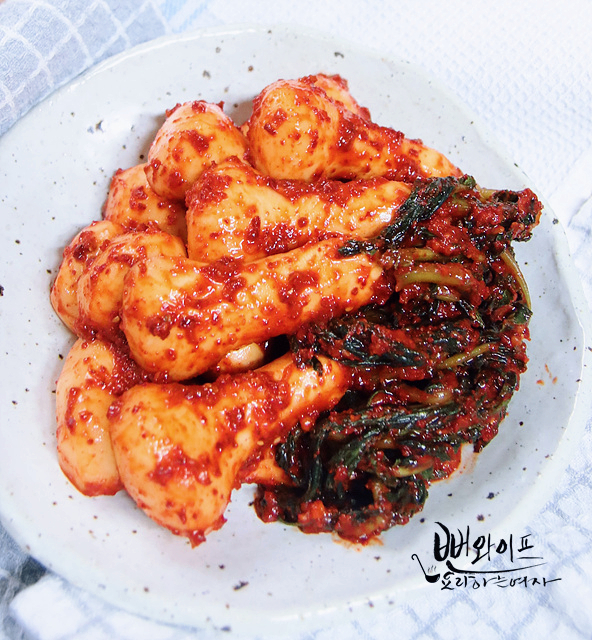
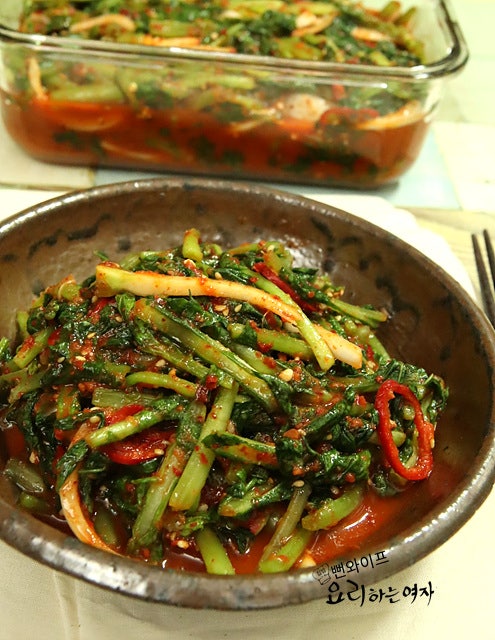
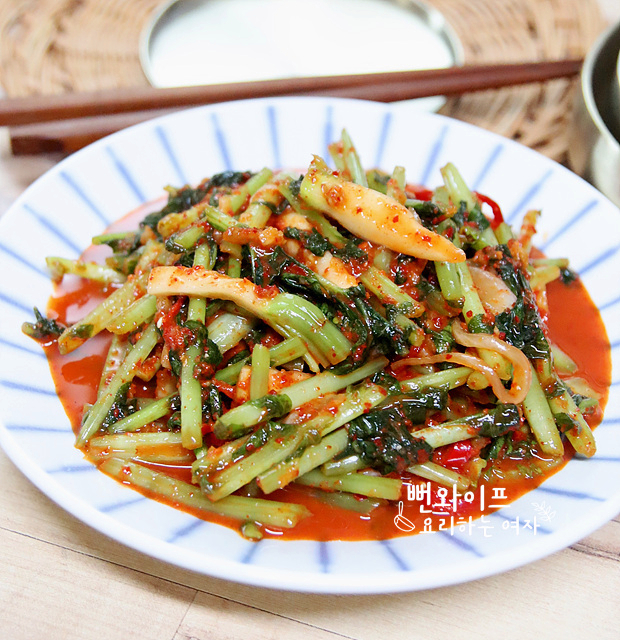
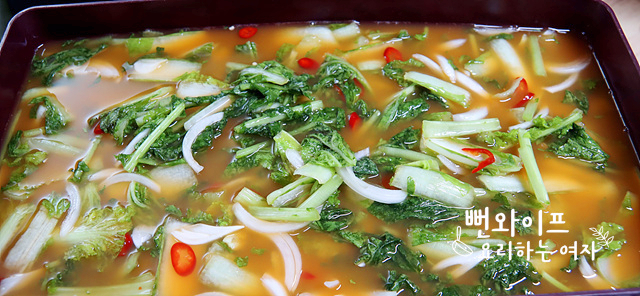
Chonggak Kimchi (Ponytail Radish Kimchi) with Rice Paste
A crisp autumn side dish made by tossing salted ponytail radishes in a seasoning blended with cooked rice.
Translated from Korean by AI and not yet checked by a native speaker. Amounts and numbers are taken directly from the original recipe. Read the Korean original →

This hearty side dish combines the crisp texture of autumn ponytail radishes with a spicy seasoning. Using blended cold cooked rice instead of simmering a glutinous rice paste simplifies the seasoning prep. Salt the radishes for 2 to 3 hours, toss them in the seasoning, and let them ferment for a day or two to bring out their full flavor.
- Servings
- about 8–10 servingsOriginal: 2 bunches altari radishes (3 kg)
- Difficulty
- Medium
- Spiciness
- Spicy
- Keeps
- 30 days
Ingredients
Ingredients
- Altari radish (ponytail radish)2 bunches, 3 kg
- Coarse sea salt1 cup
Seasoning
- Cold cooked rice1 bowl
- Water4 cups
- Gochugaru (Korean chili flakes)2 1/2 cups
- Sand lance fish sauce (or dried anchovies)2/3 cup
- Minced garlic1/2 cup
- Minced ginger1 tbsp
- Green plum syrup (maesil-cheong) (or 2 tbsp sugar)4 tbsp
- Toasted sesame seedsa little
- If making porridge with glutinous rice flour, combine 1/2 cup of glutinous rice flour with 4 cups of water, mix well, simmer until thick, and let it cool completely before using.
- If you dislike the aroma of fish sauce, you can use salted fermented shrimp alone, or mix equal parts of both.
Steps
Prepare the ingredients

A bunch of ponytail radish usually weighs 1 kg to 1.5 kg.
I am making kimchi using two 1.5 kg bunches, 3 kg in total.
They are quite clean and need very little prep. Pluck off any yellowed leaves or worm-eaten radish greens.
Trim the radishes
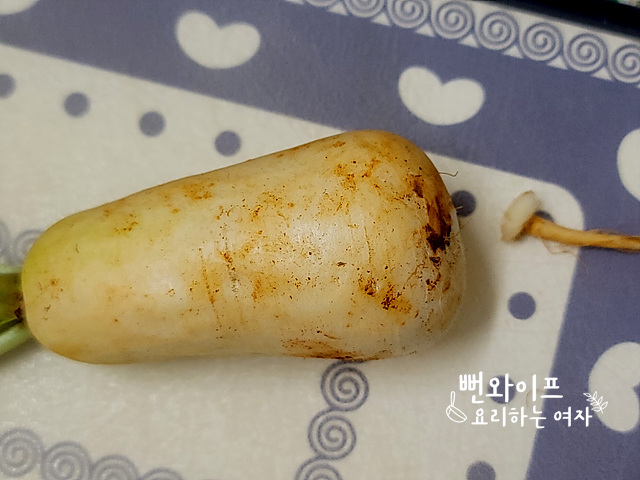
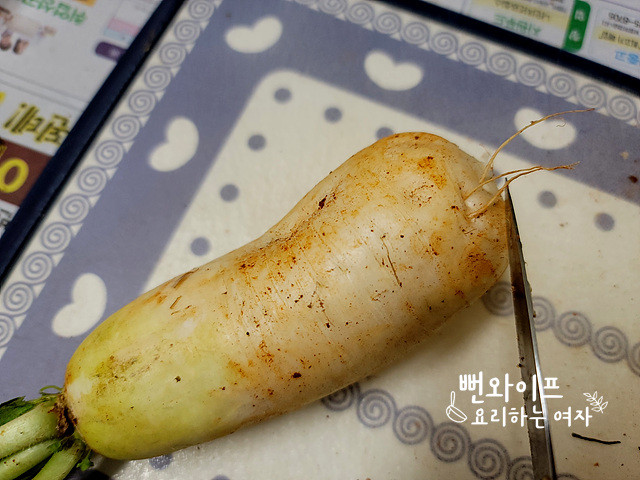
Trim off the root ends and scrape away any fine hair roots with a knife.
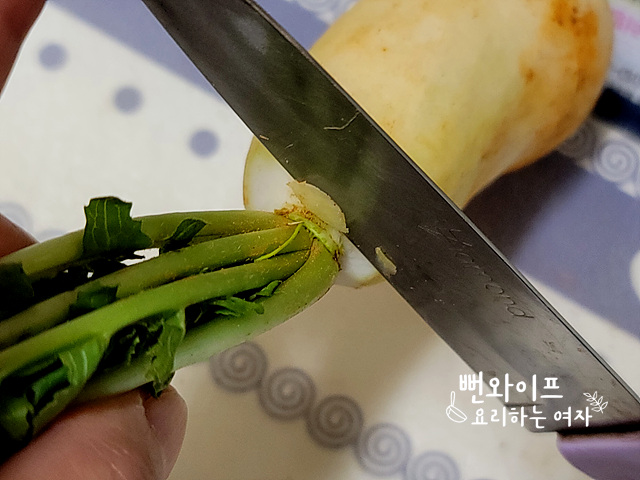
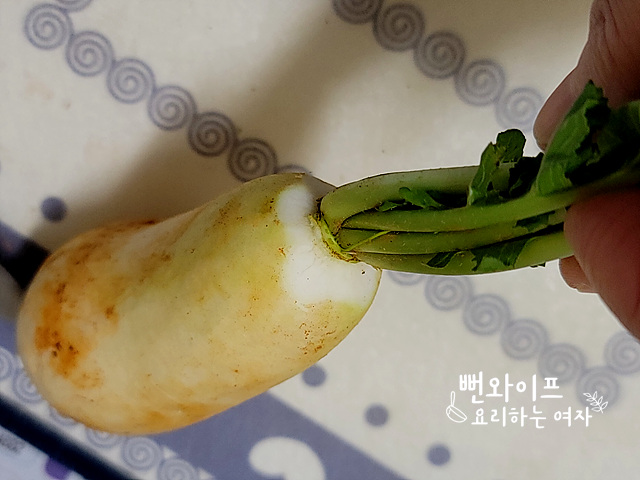
Dirt tends to collect between the radish and the greens, so tidy that area by trimming it with a knife.
Wash
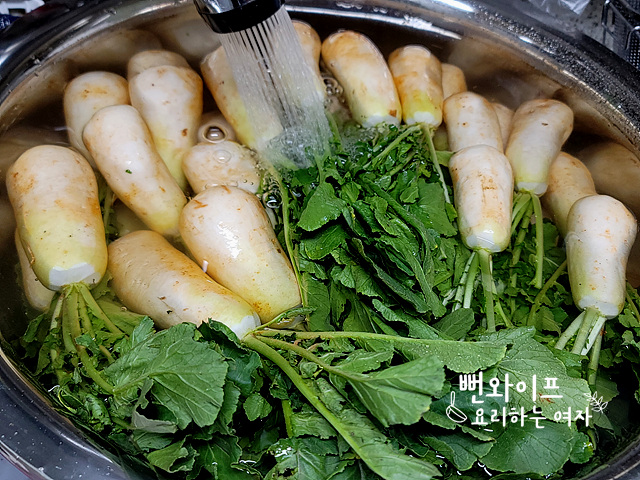
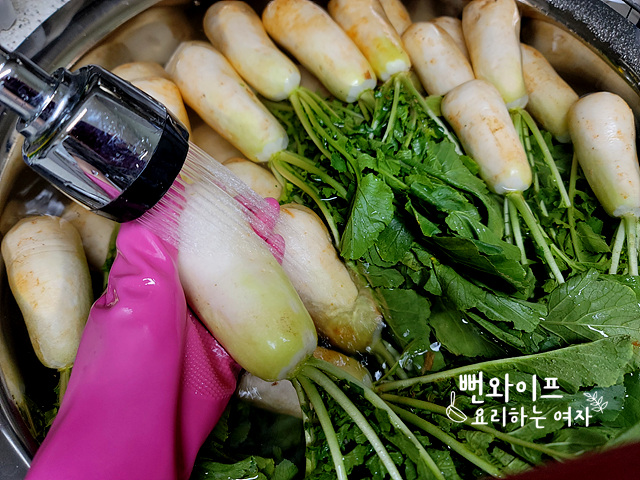
The radish skin is thin, so we will wash them without peeling.
Submerge them completely in water and let them sit for about 10 minutes so sand and dirt loosen and wash off easily.
First, rub the radish parts thoroughly with your hands until squeaky clean, then gently shake them in the water to rinse away any debris clinging to the radish greens.
Rinse several times until the water runs clear.
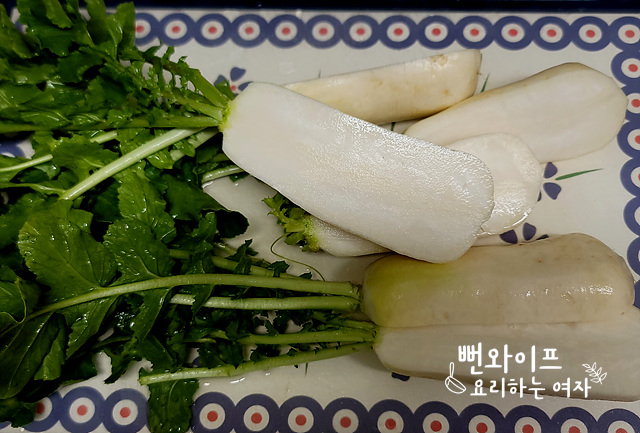
Cut any radishes that are too thick in half lengthwise.
Salt
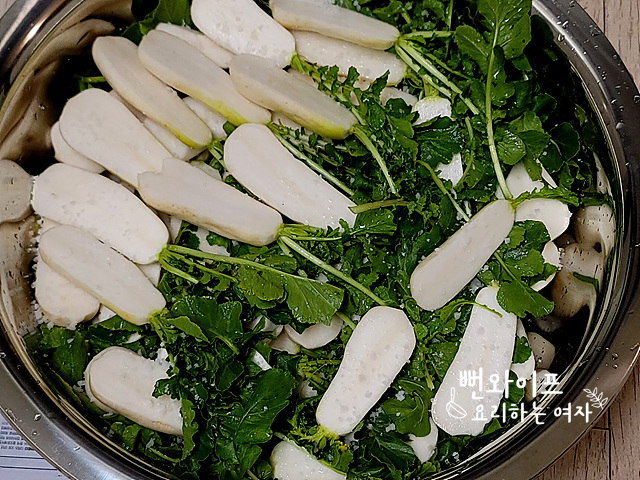
Without draining the water from the washed ponytail radishes, salt them in layers, sprinkling two to three tablespoons of coarse sea salt evenly over each layer.
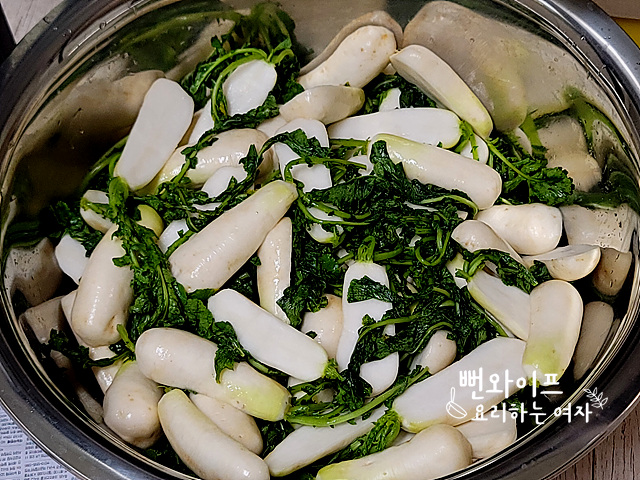
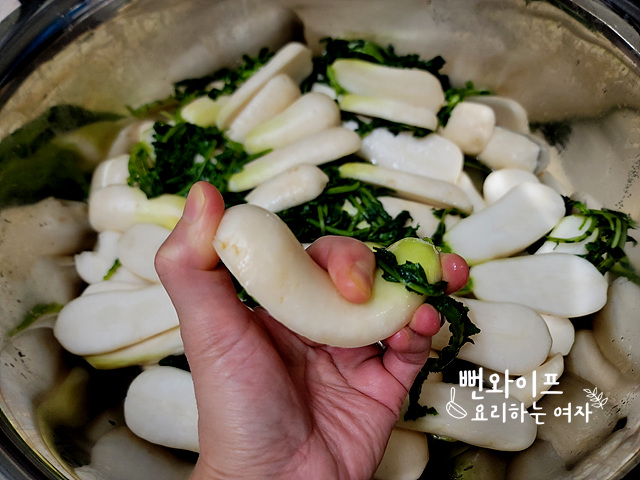
The salting time varies depending on the size and firmness of the radishes.
Usually, salt them for about 2 to 3 hours, turning them over halfway through.
They are ready when they bend slightly with your fingers. Wash a piece of radish and taste it; if it tastes too bland, increase the salting time, and if it tastes too salty, rinse it more times later.
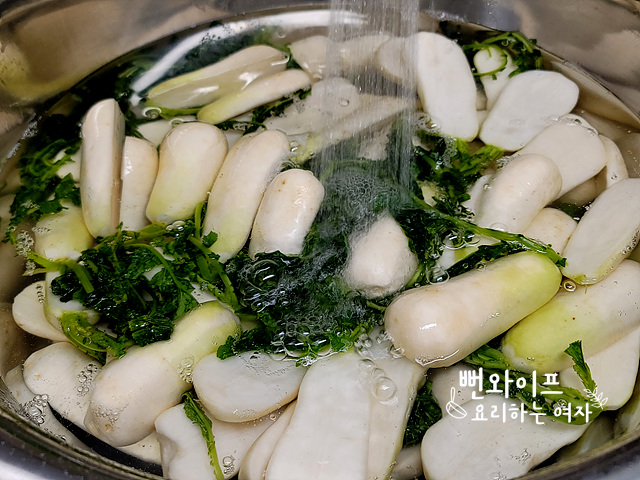
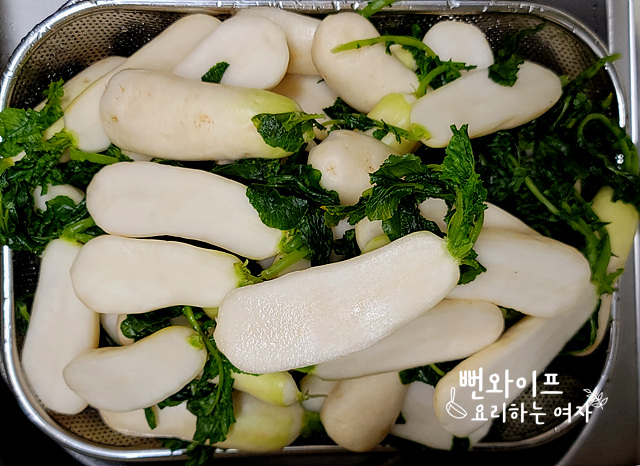
Rinse the salted ponytail radishes once and drain the water.
Make the chonggak kimchi seasoning
You can make the kimchi seasoning while the chonggak kimchi is salting.
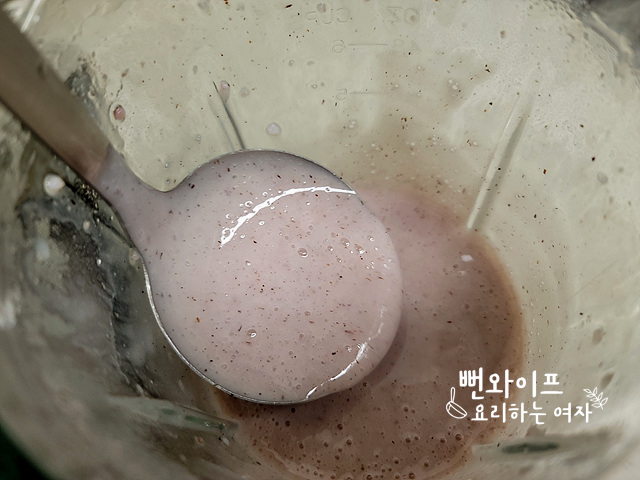
I poured 4 cups of water over a bowl of cooked rice and blended it.
Mine has mixed grains, which is why it looks this color. White rice or multigrain rice both work fine; just blend until finely pureed and thick like this.
If using glutinous rice flour (chapssal-garu), pour 4 cups of water over 1/2 cup of glutinous rice flour, mix well, simmer until thick, and let it cool.
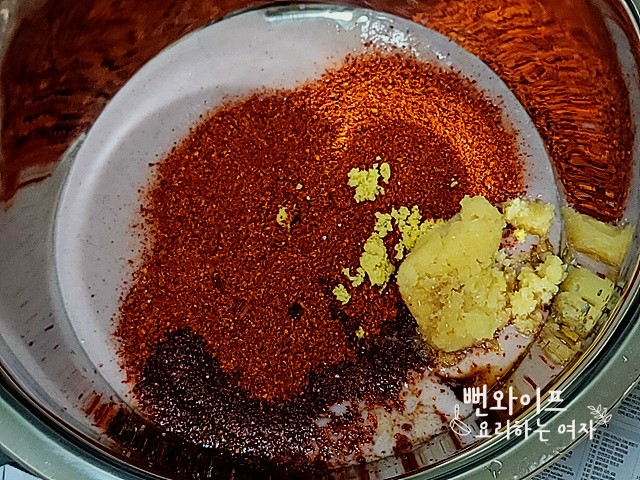
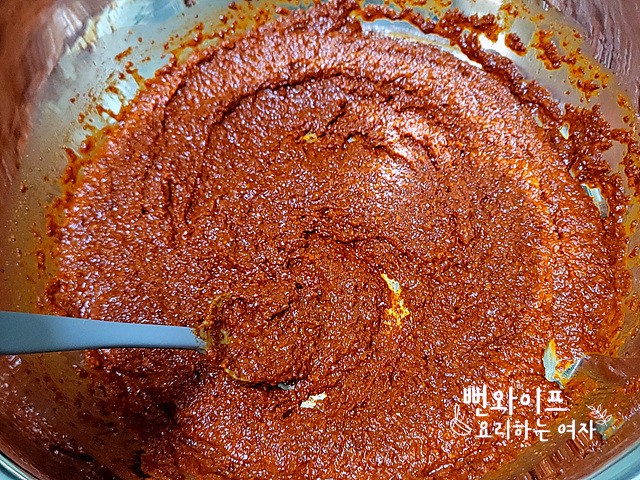
In a large mixing bowl for the kimchi, add the blended rice, 2 1/2 cups of gochugaru, 2/3 cup of fish sauce, 1/2 cup of minced garlic, 1 tbsp of minced ginger, and 4 tbsp of green plum syrup (or 2 tbsp of sugar), then mix well. The seasoning is really simple.
Leaving it to sit while the ponytail radishes are salting will soften the texture of the gochugaru and brighten the color.
Also, if you dislike the aroma of fish sauce, you can use salted fermented shrimp alone, or mix equal parts of both.
Toss
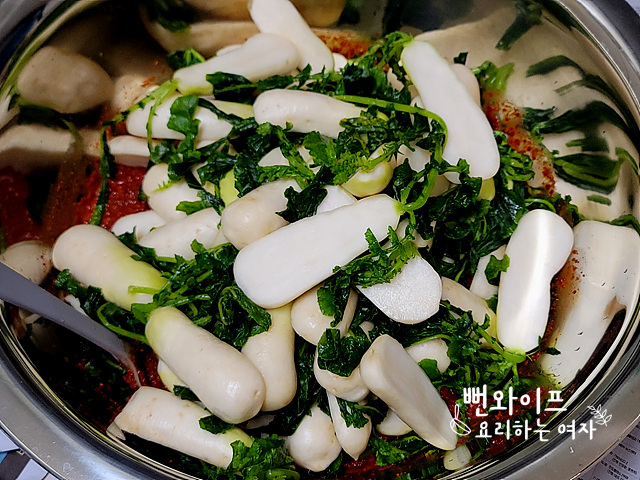
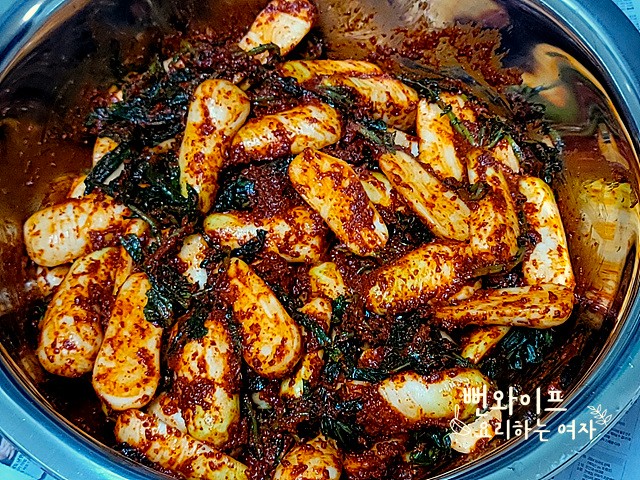
Add the salted ponytail radishes and toss until evenly coated with seasoning.
Taste, and adjust the seasoning with fish sauce or salt if needed.
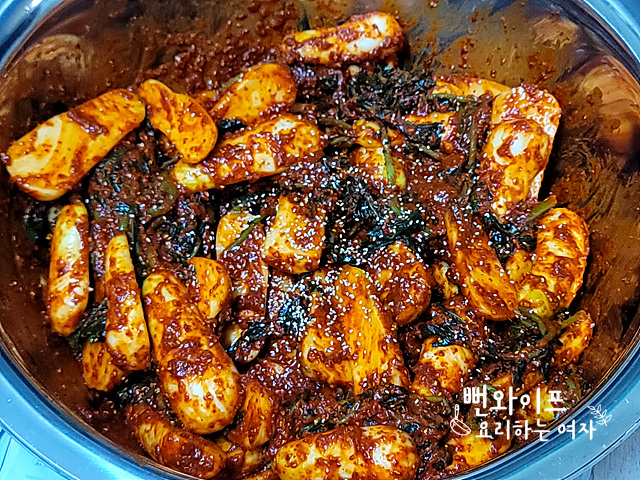
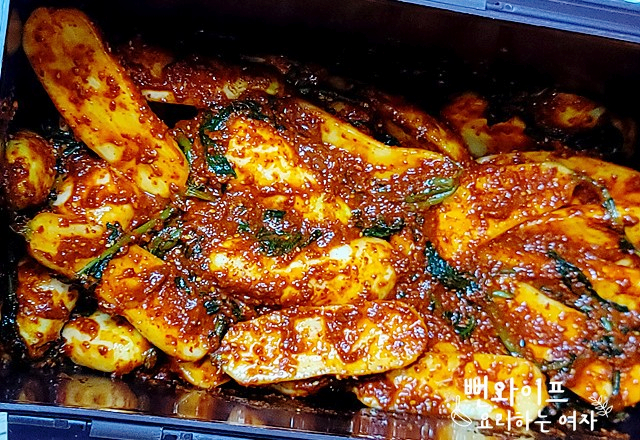
Finally, lightly mix in toasted sesame seeds, transfer to a container, and let ferment for one or two days until ready to eat.
Finish
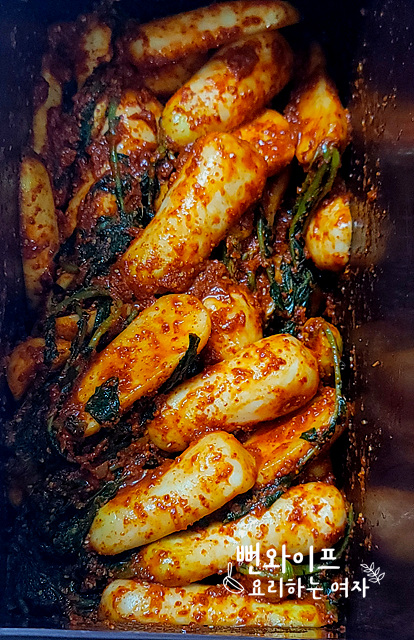

The next day, you will see liquid that has gathered at the bottom.
Mix well so the whole batch stays moist and juicy, then store it in the refrigerator and enjoy.
That is how I made kimchi with autumn ponytail radishes.

Until the big winter kimjang season, making kimchi with autumn-harvested ponytail radishes or scallions gives you a wonderful side dish to enjoy.
Have a wonderful day.
 Ppunwife's tips
- Submerge them completely in water and let them sit for about 10 minutes so sand and dirt loosen and wash off easily.
- They are ready when they bend slightly with your fingers. Wash a piece of radish and taste it; if it tastes too bland, increase the salting time, and if it tastes too salty, rinse it more times later.
- Leaving the seasoning to sit while the ponytail radishes are salting softens the texture of the gochugaru and brightens the color.
FAQ
Is it really fine to use cooked rice instead of making a separate glutinous rice paste?
Just pour 4 cups of water over a bowl of cold cooked rice and blend it finely in a blender. White rice or multigrain rice both work fine; simply blend until thick and mix into the seasoning for a hassle-free paste.
How can I tell when the ponytail radishes are properly salted?
They are done when they bend slightly when flexed with your hands. Rinse a piece of radish and taste it; if it tastes too bland, salt for a bit longer, and if it is too salty, rinse it a few extra times.
What can I do if the smell of fish sauce is too strong for me?
If you find the distinct aroma of sand lance or anchovy fish sauce overwhelming, you can substitute salted fermented shrimp entirely, or use half fish sauce and half salted fermented shrimp.
When should I put the tossed kimchi into the refrigerator?
Pack it into an airtight container and let it ferment at room temperature for one or two days. Once liquid collects at the bottom, mix well so the moisture distributes evenly throughout, then store it in the refrigerator to enjoy.